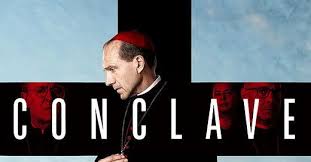
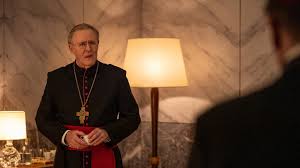
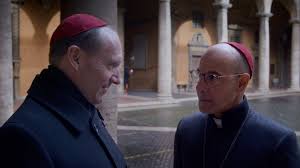
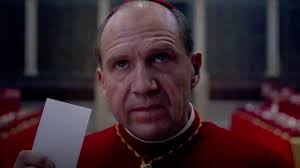
Featuring: Ralph Fiennes, Stanley Tucci, John Lithgow, Sergio Castellitto and Isabella Rossellini
Lawrence:“Our faith is a living thing precisely because it walks hand-in-hand with doubt. If there was only certainty and no doubt, there would be no mystery. And therefore no need for faith. Let us pray that God will grant us a Pope who doubts. And let him grant us a Pope who sins and asks for forgiveness and who carries on.”
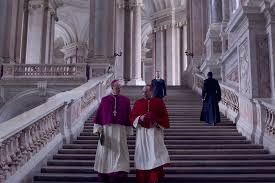
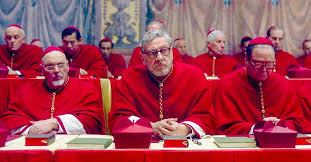
“Conclave,” directed by Edward Berger and released in October 2024, is a compelling drama that delves into the clandestine world of the Vatican’s papal election process. Adapted from Robert Harris’s 2016 novel, the film offers a meticulous portrayal of the political machinations and personal ambitions that surface following the unexpected death of the Pope.
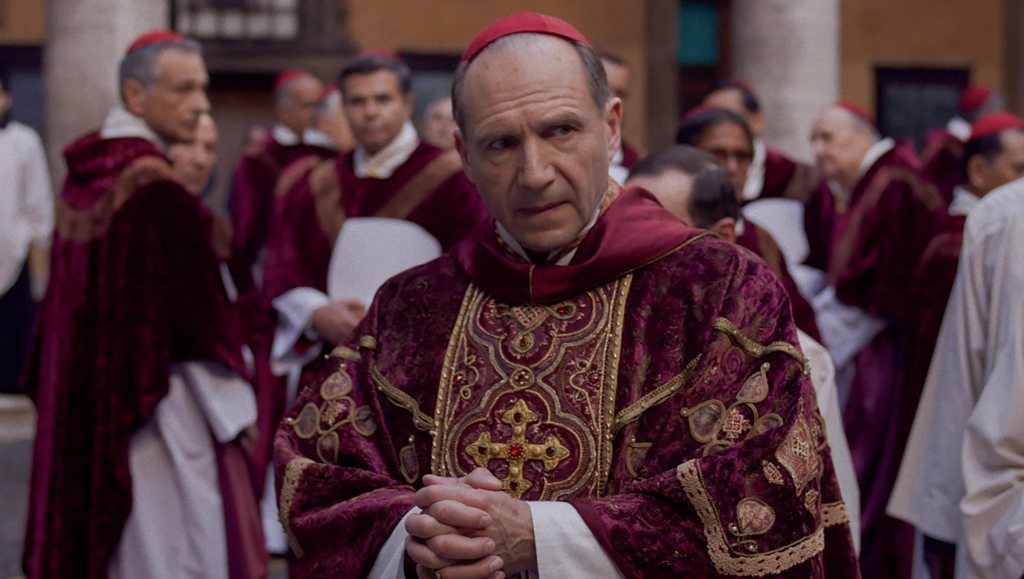
At the heart of the narrative is Cardinal Thomas Lawrence, portrayed by Ralph Fiennes, who is tasked with overseeing the conclave as the Dean of the College of Cardinals. Fiennes delivers a performance of remarkable depth, capturing Lawrence’s internal struggles and the weight of his responsibilities with subtlety and nuance. Critics have lauded Fiennes’s portrayal, with The Guardian describing it as “phenomenal” and among the finest pieces of acting in recent years.
The supporting cast enhances the film’s dynamic portrayal of Vatican intrigue. Stanley Tucci embodies Cardinal Bellini, bringing a blend of charm and cunning to the role. John Lithgow’s Cardinal Tremblay adds depth with his portrayal of a seasoned church leader navigating the complex political landscape. Isabella Rossellini’s Sister Agnes stands out with a performance that balances grace and assertiveness, contributing to the film’s tension and drama.
Berger’s direction is marked by a keen attention to detail, effectively capturing the opulence and austerity of the Vatican setting. The film’s cinematography employs symmetry and composition to reflect the rigid formality of the conclave, while overhead shots and close-ups convey the isolation and introspection of the characters. The use of sound, amplifying subtle noises like footsteps and breaths, further immerses the audience into the secluded world of the cardinals.
The screenplay, adapted by Peter Straughan, balances suspense and introspection, exploring themes of faith, doubt, and the intersection of the spiritual and the administrative within the Church. The dialogue is sharp and reflective, revealing the complexities of the characters’ motivations and the high stakes of the election process.
If there’s a standout feature of Conclave, it’s its ability to transform a dialogue-heavy narrative into gripping entertainment. Edward Berger’s direction keeps the tension simmering throughout the film, even during sequences that primarily involve the characters in conversation. The meticulous pacing ensures that the weight of every decision and exchange is felt, making the movie resonate with intensity.
The mystery surrounding the characters’ motivations and hidden agendas propels the plot forward. As the audience is slowly let in on secrets and personal dilemmas, the film subtly questions morality, authority, and ambition. Cardinal Lawrence, for instance, is written and portrayed as a man deeply conflicted by his faith and his worldly responsibilities. It’s in moments of introspection that Ralph Fiennes’s skill as an actor truly shines.
What truly elevates the narrative is its exploration of the dynamics within the conclave, which feels both deeply rooted in tradition and surprisingly contemporary in its political overtones. Straughan’s adaptation of Harris’s novel pays close attention to character development, ensuring that every interaction feels charged with layers of intent.
The production design deserves special mention. The intricately constructed sets convincingly recreate the grandeur of the Sistine Chapel and the Vatican, immersing viewers in the world of cardinals deliberating behind closed doors. The subdued lighting lends a sense of foreboding, while the music by Volker Bertelmann (of All Quiet on the Western Front) adds a quiet but insistent tension to the proceedings.
More than just a suspenseful drama, Conclave is a meditation on leadership and what it means to guide a spiritual community in an ever-changing world. This theme is especially potent in the film’s climax, which is both surprising and thought-provoking. Without spoiling the details, the resolution encourages viewers to reflect on the nature of power and whether it’s possible to wield it without compromise.
What sets Conclave apart is its universal appeal. While it is deeply rooted in the specifics of Catholic tradition and the unique rituals of the papal election process, its themes transcend religious boundaries. At its core, the film explores power, human fallibility, and the pursuit of justice—concepts that resonate universally. Whether you are devout, agnostic, or secular, the moral quandaries faced by the characters feel relevant and relatable.
The interplay of personal beliefs versus institutional demands is particularly poignant. As the cardinals grapple with their inner conflicts and external pressures, audiences are invited to question how individuals navigate systems of immense authority while maintaining personal integrity. These elements give the film a philosophical depth that elevates it beyond the scope of a typical political drama.
With awards season approaching, there’s considerable buzz around Conclave. Ralph Fiennes’s magnetic performance, in particular, positions him as a strong contender for Best Actor at the Academy Awards. Additionally, the film’s expert direction, sharp screenplay, and outstanding supporting cast make it a likely candidate for nominations in categories such as Best Adapted Screenplay, Best Director, and perhaps even Best Picture.
Edward Berger, fresh off his critical and commercial success with All Quiet on the Western Front, has once again demonstrated his ability to tackle complex narratives with sensitivity and insight. His work in Conclave is a reminder that even stories with modest settings and restrained action can be deeply cinematic and impactful.
While the film has been almost universally acclaimed, a few minor criticisms have emerged. Some viewers have noted that the dialogue-heavy structure may feel overly cerebral at times, potentially alienating those seeking more dynamic or action-oriented drama. Additionally, the film’s heavy reliance on the intricacies of Catholic procedure might leave some feeling slightly removed if they are unfamiliar with the traditions.
That said, these concerns are minor compared to the sheer quality and gravitas of the production. The film succeeds in maintaining a tight balance, ensuring that even the most procedural moments are imbued with tension and significance.
As the credits roll, one can’t help but feel the weight of the questions posed by Conclave. Who decides what is righteous? Is power inherently corruptive, or can it be wielded with purity and purpose? Can faith withstand the compromises required by leadership? These are questions that will leave audiences deep in thought, sparking conversations that extend far beyond the theater.
Ultimately, Conclave is more than just a cinematic achievement; it is a thought-provoking piece of art that challenges and engages its audience on multiple levels. For those who appreciate storytelling with depth, sophistication, and emotional resonance, Conclave is a film not to be missed.
It’s rare to see such an intricately crafted drama that manages to keep audiences on the edge of their seats while probing deeply into moral and philosophical issues. In doing so, Conclave carves out a special place for itself, both in the realm of cinema and in the hearts of its viewers.
“Conclave” is a meticulously crafted film that offers a riveting glimpse into one of the world’s most secretive institutions. With outstanding performances, particularly from Ralph Fiennes, and assured direction by Edward Berger, it stands as a significant cinematic achievement that engages both the mind and the senses.
Featuring: Mikey Madison, Mark Eydelshteyn, Yura Borisov, Karren Karagulian, Vache Tovmasyan and Aleksei Serebryakov
Ani:“When you give me health insurance, workers’ comp and a 401K, then you can tell me when I work.”
“Anora,” directed by Sean Baker, is a 2024 American comedy-drama that delves into the whirlwind life of Ani, a Brooklyn-based exotic dancer portrayed by Mikey Madison. The film masterfully intertwines elements of screwball comedy with poignant social commentary, offering a narrative that is both entertaining and thought-provoking.
Ani, known for her quick wit and vibrant personality, works at a strip club in Brighton Beach. Her life takes an unexpected turn when she meets Vanya Zakharov (Mark Eydelshteyn), the exuberant son of a Russian oligarch. What begins as a transactional relationship swiftly evolves into a lavish adventure, culminating in a spontaneous marriage in Las Vegas. However, the intrusion of Vanya’s powerful family forces Ani into a tumultuous journey, challenging her perceptions of love, autonomy, and societal structures.
Sean Baker, renowned for his authentic portrayals of marginalized communities, continues this tradition in “Anora.” His direction captures the raw energy of Brooklyn’s nightlife and the opulence of Vanya’s world, creating a vivid contrast that underscores the film’s central themes. Baker’s script is sharp and insightful, blending humor with moments of introspection. The dialogue is both natural and engaging, reflecting the complexities of the characters’ lives and relationships.
Mikey Madison delivers a standout performance as Ani, infusing the character with a blend of resilience, vulnerability, and charisma. Her portrayal has been widely acclaimed, with critics noting her ability to navigate the film’s tonal shifts seamlessly. Mark Eydelshteyn’s depiction of Vanya adds depth to the narrative, presenting a character who is both privileged and naive, yet endearing. The supporting cast, including Yura Borisov and Aleksei Serebryakov, contribute significantly to the film’s dynamic ensemble, each bringing authenticity to their roles.
Drew Daniels’ cinematography captures the contrasting worlds of Ani and Vanya with a keen eye for detail. The vibrant streets of Brooklyn and the extravagant settings of their escapades are depicted with equal care, enhancing the film’s immersive quality. Baker’s editing ensures a cohesive narrative flow, maintaining a balance between the film’s comedic and dramatic elements.
The film’s score, composed by Matthew Hearon-Smith, complements its narrative arc, blending contemporary tracks with original compositions. The music enhances the emotional depth of key scenes, reflecting Ani’s internal journey and the external chaos that surrounds her.
“Anora” explores themes of exploitation, socioeconomic mobility, and the transactional nature of relationships. It challenges traditional narratives by presenting a protagonist who is both empowered and constrained by her circumstances. The film also critiques the excesses of the super-rich, highlighting the disparities between different social strata.
“Anora” premiered at the 77th Cannes Film Festival, where it received the prestigious Palme d’Or. Critics have lauded the film for its energetic storytelling and compelling performances. Richard Lawson of Vanity Fair described it as “a wild, profane blast,” while Justin Chang of The New Yorker noted that it “plays like a wild dream—first joyous, then catastrophic, and always fiercely unpredictable.” The film has been nominated for multiple awards, including five Golden Globe nominations, reflecting its critical acclaim and industry recognition.
At its core, Anora uses Ani’s experiences to hold a mirror to societal dynamics, particularly the exploitation that persists in various relationships—both personal and systemic. Ani’s job as a dancer embodies the fine line between empowerment and objectification, where financial independence often comes with an emotional price. Through her interactions with Vanya and his world of excess, the film critiques the hollow promises of wealth and privilege. The stark juxtaposition of Ani’s grounded world with Vanya’s extravagant lifestyle exposes the absurdities of extreme affluence and the deep inequalities it perpetuates.
Sean Baker skillfully layers the commentary without ever being didactic, allowing the audience to reflect on the complexities of choice, freedom, and societal expectations. The film’s refusal to portray Ani as a victim or Vanya as merely a villain reinforces this nuanced approach. Instead, it presents each character as a product of their environment, influenced by circumstances but capable of growth and change.
The visual storytelling in Anora deserves particular praise. Baker employs a kinetic style that captures the energy of Ani’s life, oscillating between the gritty vibrancy of Brooklyn and the gaudy, almost surreal opulence of her escapades with Vanya. Handheld camera work and neon-lit scenes convey the chaos and allure of the strip club where Ani works, while sweeping wide shots of extravagant mansions and private jets underscore the absurdity and isolation of wealth.
Production designer Stephonik Youth and costume designer Kathryn Gallagher worked wonders in crafting Ani’s world. Her wardrobe evolves subtly over the course of the film, mirroring her inner journey—from bold, defiant pieces in Brooklyn to uncomfortable, ostentatious gowns in her attempts to navigate Vanya’s world, and finally to a more understated style that reflects her newfound clarity and agency.
One of Anora‘s greatest strengths is its complex characters. Ani is not a one-dimensional archetype of a woman trying to “escape” her circumstances. She is a deeply layered individual, proud of her work yet unafraid to critique its downsides. Mikey Madison imbues Ani with a raw authenticity, giving her humor and pathos that resonate deeply.
Vanya Zakharov, played with a perfect blend of charisma and vulnerability by Mark Eydelshteyn, is not reduced to a caricature of wealth. His genuine affection for Ani is clear, but his immaturity and inability to escape his family’s control complicate their dynamic. Supporting characters, including Ani’s loyal best friend Veronica (played by Zazie Beetz) and Vanya’s cunning father (a chilling Aleksei Serebryakov), add richness to the narrative, serving as foils that push Ani toward self-realization.
Beyond its captivating plot and performances, Anora taps into larger cultural conversations about class, gender, and power dynamics. It asks the audience to question the cost of aspiration in a world increasingly defined by transactional relationships—whether between romantic partners, family members, or institutions. The film subtly critiques late-stage capitalism through its portrayal of Vanya’s family empire, contrasting it with Ani’s scrappy resilience and resourcefulness.
The humor in the film—often quick and biting—keeps these heavy themes from feeling overbearing. There’s an inherent absurdity in the situations Ani finds herself in, from flying to an impromptu wedding on a private jet to dancing on the deck of a mega-yacht during a family feud. Yet, Baker ensures these moments serve the story rather than merely acting as spectacle.
Without spoiling too much, the film’s conclusion is as bold as Ani herself. Baker resists tying everything up in a neat bow, opting instead for an ending that feels earned yet open-ended. Ani finds herself at a crossroads, but the decision she makes speaks volumes about her growth throughout the narrative. It’s a triumphant moment, though not without its lingering uncertainties—a reflection of life’s messy, unpredictable nature.
In many ways, Anora feels like a culmination of Baker’s career to date. It captures his penchant for portraying marginalized communities with dignity and humanity while venturing into a larger, more flamboyant narrative space. The film resonates with audiences not just for its entertainment value but for its emotional and intellectual depth.
Critics have hailed it as a “modern-day fairytale with bite,” and audiences have embraced it for its relatability amidst the extravagance. The film’s multiple accolades and impressive box office performance ensure its place as one of the defining films of this era.
For viewers who enjoy character-driven stories laced with social commentary and humor, Anora is not to be missed. It’s a wild, unforgettable ride—much like its titular character.
As of January 12, 2025, “Anora” has grossed $32.5 million worldwide against a $6 million budget, marking it as Baker’s highest-grossing film to date. Its strong per-screen averages during the opening weekends indicate a positive reception from audiences, further solidifying its success.
“Anora” stands as a testament to Sean Baker’s ability to craft narratives that are both entertaining and socially relevant. Through its dynamic performances, sharp writing, and thematic depth, the film offers a nuanced portrayal of a woman’s journey through love, autonomy, and societal expectations. It is a compelling addition to contemporary cinema, resonating with audiences and critics alike.
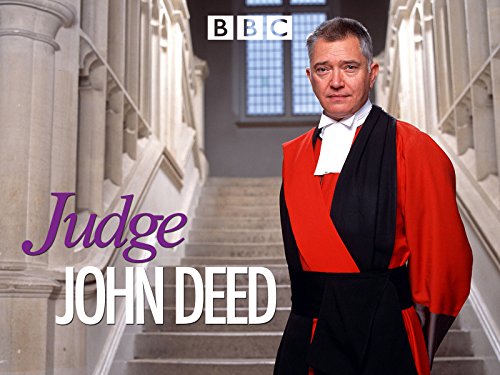
Featuring: Martin Shaw, Jenny Seagrove, Barbara Thorn, Louisa Clein and Simon Ward
Judge John Deed: [sentencing the producer of a TV game show after a contestant has died] “Celebrity. The pursuit of the talentless, by the mindless. It’s become a disease of the twenty-first century. It pollutes our society, and it diminishes all who seek it, and all who worship it. And you must bear some of the responsibility for foisting this empty nonsense onto a gullible public.”
Judge John Deed, a captivating British legal drama, centers around the eponymous High Court judge, portrayed with unwavering conviction by Martin Shaw. Deed is a man of unwavering principles, a maverick who refuses to bend to the pressures of the establishment, even when it means jeopardizing his career.
The series delves into a wide array of complex legal cases, each episode exploring a different social or political issue. From corporate corruption and medical negligence to racial discrimination and environmental damage, Deed tackles them all with a passionate commitment to justice. His courtroom battles are often intense and dramatic, filled with sharp legal arguments and witty repartee.
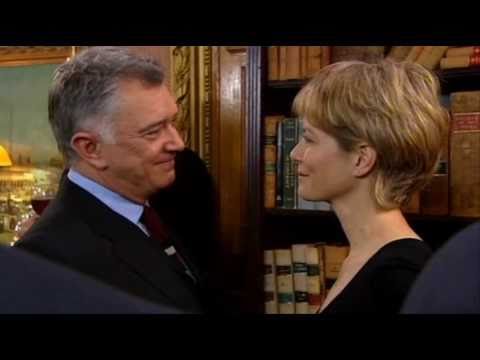
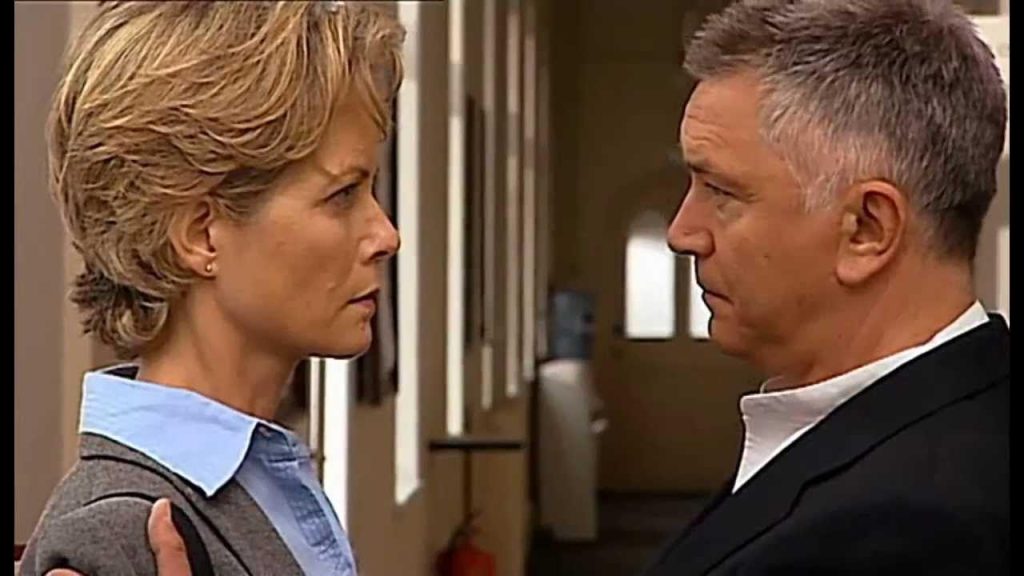
Beyond the courtroom, Deed’s life is equally compelling. His personal relationships, particularly his tumultuous love life, add another layer of depth to his character. His romantic entanglements, often with women involved in the cases he presides over, provide a source of both humor and conflict.
The supporting cast is equally impressive, with standout performances from Jenny Seagrove as his ex-wife and colleague, and Oliver Ford Davies as his formidable nemesis, Sir Ian Rochester. The chemistry between the actors is palpable, creating a sense of realism and intimacy.
One of the show’s greatest strengths is its ability to entertain while also provoking thought. Each episode raises important questions about the law, morality, and the role of the judiciary in society. It challenges viewers to question their own assumptions and consider the complexities of justice.
At the heart of it all is Sir John Deed (played with charismatic rumpledness by Martin Shaw), a High Court judge who, let’s be honest, is more renegade than robed. Deed is a brilliant legal mind, fiercely independent, and deeply principled. He’s not afraid to challenge the status quo, question authority, and, most importantly, follow his conscience even when it means putting his career and personal life on the line. This isn’t a saintly man; he’s flawed and often impulsive, but his dedication to truth and justice is unwavering.
This unwavering dedication is both the show’s greatest strength and its occasional frustration. He often bends the rules, takes unorthodox methods, and, let’s face it, sometimes acts recklessly. This makes him compelling to watch, but also sometimes infuriating. You find yourself rooting for him despite (or perhaps because of) his chaotic approach. He’s the antithesis of the cold, detached judge; he’s emotionally invested in his cases, often blurring the lines between objectivity and activism.
While the courtroom scenes are undeniably compelling, “Judge John Deed” is more than just procedural drama. It’s a show deeply concerned with societal issues, often tackling controversial and topical subjects. From environmental protests to medical malpractice to political corruption, the series fearlessly dives into the grey areas of morality and power. It’s not afraid to challenge the audience’s assumptions and force us to confront the uncomfortable realities of our world.
The writing is sharp, often biting, and consistently thought-provoking. The dialogue is intelligent and nuanced, and the cases are rarely straightforward. They often feature multiple layers of deceit and conflicting perspectives, highlighting the complexity of the legal system and the human condition within it. The show doesn’t offer easy answers; instead, it invites us to grapple with the ambiguities and ethical dilemmas alongside Deed.
Beyond Deed, the show boasts a rich and complex ensemble of supporting characters. From his brilliant but often conflicted ex-wife, Jo Mills QC (played with captivating intensity by Jenny Seagrove), to the ambitious and politically savvy Sir Monty Everard (the ever-excellent Simon Chandler), the cast brings depth and nuance to their roles. Each character contributes to the show’s exploration of power, ambition, and morality, often acting as foils to Deed’s uncompromising idealism.
The relationships within the show are complex and messy, mirroring the chaotic nature of Deed’s life. His relationship with Jo, in particular, is a central thread throughout the series, a constant push and pull of love, respect, and professional rivalry. The chemistry between Shaw and Seagrove is undeniable, adding another layer of compelling drama to the mix.
“Judge John Deed” is not a show for the faint of heart. The pacing can be uneven, sometimes slow and deliberate, other times frantic and high-stakes. The tone can shift from intense courtroom battles to quiet, introspective moments, reflecting the internal conflicts that plague Deed. This unpredictable nature can be frustrating at times, but it also keeps the show engaging and avoids predictability.
It’s worth noting that the series does occasionally venture into territory that might feel a bit far-fetched or melodramatic. Some plotlines, particularly in the later seasons, can feel overly convoluted or reliant on coincidence. However, even in these moments, the show’s commitment to exploring complex themes and presenting compelling characters keeps it watchable.
Despite being a product of the early 2000s, “Judge John Deed” remains remarkably relevant today. Its exploration of corruption, power imbalances, and the struggle for justice continues to resonate in our current political and social climate. The show’s core message – that individuals have a moral responsibility to speak truth to power, even at great personal cost – is as pertinent now as it was when the series first aired.
“Judge John Deed” is not perfect. It’s messy, flawed, and often frustrating. But it’s also brilliant, thought-provoking, and utterly captivating. It’s a show that demands your attention and doesn’t shy away from challenging your perspectives. It’s a show that stays with you long after the credits roll, prompting reflection on the complexities of justice, morality, and the human condition. If you’re looking for a legal drama that goes beyond the standard tropes and aren’t afraid to grapple with difficult themes, then give “Judge John Deed” a chance. You might just find yourself as captivated by its chaotic brilliance as I am. Just be prepared for a rollercoaster ride. You’ve been warned.
However, the show is not without its flaws. Some viewers may find Deed’s unwavering idealism to be unrealistic or even naive. The romantic subplots, while adding intrigue, can sometimes feel contrived or overly dramatic. Additionally, the series’ later seasons may not have quite the same impact as the earlier ones.
Despite these minor shortcomings, Judge John Deed remains a compelling and thought-provoking drama. It is a show that celebrates the power of individual conscience and the importance of fighting for what is right, even in the face of overwhelming odds. With its strong performances, engaging storylines, and sharp social commentary, it is a series that continues to resonate with audiences today.
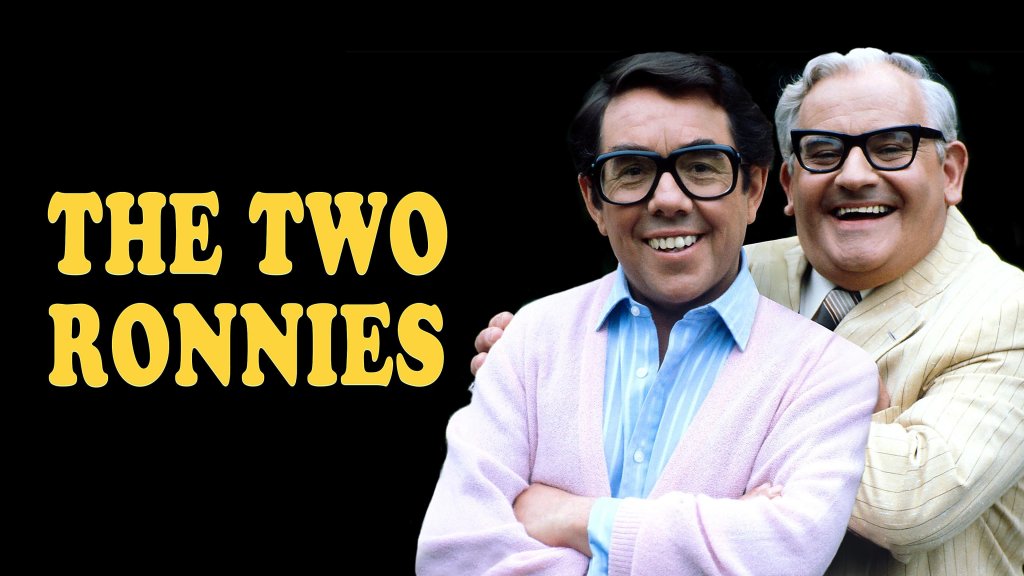
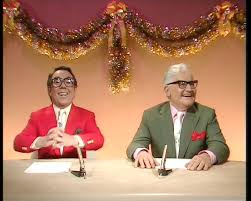
Few comedy duos have left as indelible a mark on British television as Ronnie Barker and Ronnie Corbett, collectively known as The Two Ronnies. Running from 1971 to 1987, the series remains a seminal work in the landscape of British humor, revered for its clever wordplay, diverse sketches, and undeniable charm. Its enduring legacy is a testament to the duo’s comic genius and their ability to blend timeless humor with an eclectic range of skits, songs, and parody.
One of the hallmarks of The Two Ronnies was its episodic structure, which lent a rhythmic quality to each installment. The show often began with the signature news desk segment, where Barker and Corbett exchanged satirical “news” reports. This recurring skit set the tone for the show—witty, unpredictable, and sharp. The comedic news delivered clever puns and observational humor, often poking fun at social norms, politics, and the absurdities of daily life.
Interspersed within the episodes were a variety of sketches, from bite-sized comedic vignettes to more elaborate serialized spoofs that spanned several episodes. Notable examples include the faux-soap opera The Phantom Raspberry Blower of Old London Town and the hilariously over-the-top murder mystery The Worm That Turned. These storylines allowed Barker and Corbett to adopt different roles, demonstrating their versatility as performers.
Music and songs also played a pivotal role in the show, often presented as parodies of popular genres. Barker’s and Corbett’s sharp lyricism, combined with their endearing musical performances, brought yet another layer to their humor. No review of The Two Ronnies would be complete without mention of Ronnie Corbett’s armchair monologues. These moments offered Corbett a chance to connect with the audience directly, weaving meandering anecdotes filled with self-deprecating wit and surprise punchlines.
Ronnie Barker was a master of wordplay, and his influence on The Two Ronnies cannot be overstated. Whether it was through tongue-twisting dialogue or ingenious double entendres, Barker’s scripts often turned language itself into a comedic playground. His talent shone through sketches such as Fork Handles (or “Four Candles”) and Mastermind, where a contestant’s specialist subject involved answering the question before last. These sketches are not only pillars of British comedy but also highlight Barker’s unmatched knack for twisting the mundane into the absurd.
While Barker often took on the role of the more expansive and bombastic character, Corbett’s humor relied on subtlety and charm. His monologues, often delivered while seated in an oversized chair, had a deceptive simplicity. What started as an innocuous story would build layer upon layer of comedic misdirection, culminating in a hilariously unexpected twist. Corbett’s affable demeanor made these segments feel intimate, as though he were sharing a private joke with each viewer.
Certain sketches from The Two Ronnies have attained legendary status, transcending generations. The aforementioned Four Candles sketch is perhaps the most iconic, perfectly encapsulating the duo’s comedic dynamic. Another highlight is the “Class Sketch,” featuring Barker, Corbett, and guest star John Cleese, which incisively pokes fun at Britain’s class system through brilliantly simple dialogue.
The show’s appeal lay in its ability to balance sophistication with silliness. Barker and Corbett’s humor often leaned on wordplay and clever constructions, but it never veered into pretension. They had an uncanny ability to unite audiences across class and age divides, crafting comedy that felt both intelligent and accessible.
While The Two Ronnies enjoys widespread acclaim, it is not immune to criticism. Some sketches, especially those reliant on cultural or social norms of the 1970s and 1980s, may feel dated to modern audiences. Occasionally, humor rooted in stereotypes can come across as out of sync with contemporary sensibilities. However, such instances are relatively sparse compared to the show’s broader catalog of evergreen comedy.
The Two Ronnies remains a masterpiece of British television, celebrated for its unique blend of sharp wit, absurdist humor, and timeless sketches. Ronnie Barker and Ronnie Corbett’s chemistry was the cornerstone of the show, with their contrasting styles complementing one another in perfect harmony. The series not only entertained millions during its original run but also laid the groundwork for future comedy duos and sketch shows.
In revisiting the series, one is reminded of the power of great writing and charismatic performance. Whether through an ingenious pun, a heartfelt monologue, or a cheeky parody, The Two Ronnies continues to bring joy and laughter, securing its place as an enduring treasure in the world of comedy.
Spiros Halikiopoulos:“Mrs. Durrells, I love to help, and your family gives me so many chances.”
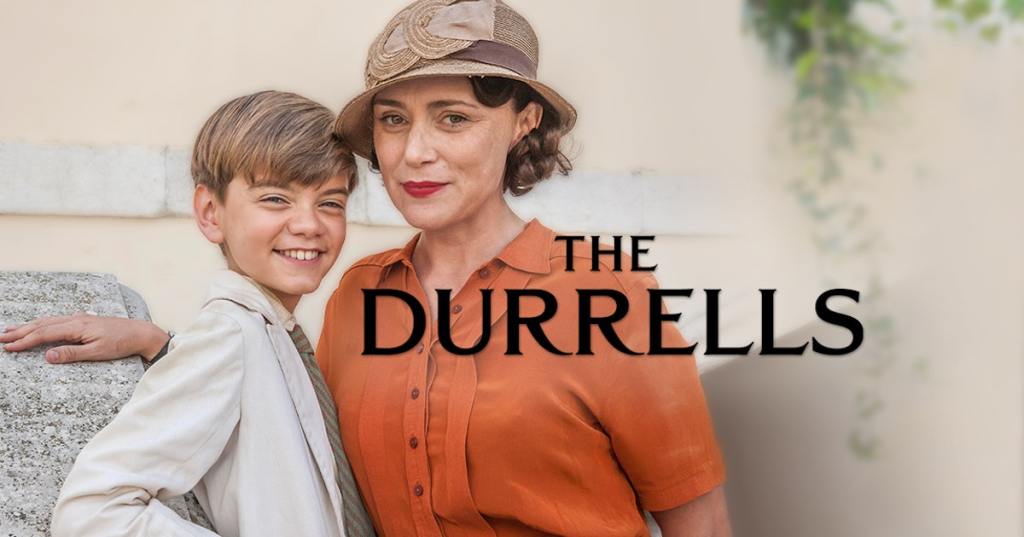
The Durrells, a charming British television series based on Gerald Durrell’s autobiographical trilogy, captures the whimsical adventures of the Durrell family as they relocate from England to the idyllic Greek island of Corfu in the 1930s. Spanning four delightful seasons, the series combines humor, heart, and stunning visuals, making it a standout among family dramas.
At its core, The Durrells tells the story of Louisa Durrell, played brilliantly by Keeley Hawes, a widowed mother of four struggling to make ends meet in Bournemouth. Frustrated with her family’s chaotic life and the bleakness of their prospects in England, Louisa makes the bold decision to uproot her family and start anew in Corfu. What follows is a heartfelt tale of resilience, self-discovery, and the unbreakable bonds of family.
The ensemble cast breathes life into the series. Louisa’s four children each have distinct personalities that add layers of depth to the narrative. Larry (Josh O’Connor), the eldest, is an aspiring writer whose sharp wit and intellectual pursuits often clash with his family’s more practical concerns. Margo (Daisy Waterstone) is a spirited and sometimes naïve teenager navigating the complexities of adolescence. Leslie (Callum Woodhouse), the practical and somewhat aimless middle child, is deeply invested in hunting and various entrepreneurial ventures. Lastly, Gerry (Milo Parker), the youngest, is an eccentric and passionate animal lover who finds endless fascination in the island’s wildlife.
The show’s strength lies in its ability to balance humor with poignant storytelling. The family’s frequent squabbles are often laced with comedic moments, but beneath the humor lies a profound exploration of their struggles, dreams, and personal growth. The picturesque Corfu setting adds a layer of escapism, with its sun-drenched landscapes, azure waters, and vibrant local culture providing a stunning backdrop to the Durrells’ antics.
One of the show’s most compelling elements is its portrayal of Louisa as a flawed yet fiercely loving mother. Keeley Hawes delivers a nuanced performance, capturing Louisa’s determination, vulnerability, and occasional exasperation with her unruly brood. Her journey from a beleaguered widow to a confident matriarch is both inspiring and relatable.
The supporting characters further enrich the narrative. From the eccentric locals, such as Spiros (Alexis Georgoulis), the family’s loyal and ever-resourceful friend, to Theo (Yorgos Karamihos), Gerry’s patient and knowledgeable mentor, the interactions between the Durrells and the island’s residents highlight themes of friendship, cultural exchange, and acceptance.
The Durrells also excels in its attention to historical context. Set against the backdrop of the looming Second World War, the series subtly weaves in the tensions and uncertainties of the era without overshadowing the family’s personal journey. This historical dimension adds depth and resonance to the narrative, grounding the Durrells’ idyllic adventures in a reality that feels both distant and familiar.
Another noteworthy aspect is the show’s ability to capture the spirit of Gerald Durrell’s original memoirs while adapting the material for modern audiences. The scriptwriters strike a fine balance between staying true to the source material and introducing new elements to keep the story engaging and fresh. The series’ blend of lighthearted escapades and tender moments ensures it appeals to viewers of all ages.
In addition to its storytelling, the show’s production values deserve special mention. The lush cinematography captures the beauty of Corfu in all its glory, making it almost a character in its own right. The costumes and set design effectively recreate the period, immersing viewers in the 1930s without feeling overly nostalgic or staged. The soundtrack, featuring a mix of Greek folk music and period-appropriate tunes, complements the visuals perfectly, enhancing the series’ authentic feel.
While The Durrells is primarily a heartwarming family drama, it does not shy away from exploring deeper themes. Issues such as financial hardship, grief, and the complexities of love are handled with sensitivity and depth, ensuring the series resonates on an emotional level. The interplay between comedy and drama is seamless, making the moments of levity all the more impactful against the occasional undertones of melancholy.
The show’s ending, while bittersweet, feels true to the spirit of the narrative. It acknowledges the impermanence of the Durrells’ idyllic Corfu life while celebrating the transformative impact of their time on the island. The final episodes tie up character arcs with grace, leaving viewers with a sense of closure while allowing room for the imagination to linger on what comes next for the family.
Moreover, the series’ enduring appeal lies in its universality. Regardless of the era or the viewer’s personal circumstances, the themes explored—family dynamics, self-discovery, and resilience—strike a chord that transcends time. The Durrells reminds us of the importance of seizing life’s moments, finding humor in adversity, and cherishing the relationships that ground us.
Beyond its narrative, The Durrells’ success showcases the value of adapting literature into visual media thoughtfully. By blending the distinct voice of Gerald Durrell with the visual vibrancy of Corfu and dynamic characters, the series honors its source material while creating something uniquely cinematic. It’s a masterclass in adaptation that inspires both seasoned and budding filmmakers.
As a whole, The Durrells is more than just a tale of a family seeking a better life; it’s a celebration of human connection, the healing power of nature, and the courage it takes to follow one’s heart. Few series manage to capture these elements so beautifully, making The Durrells not only a feast for the eyes but nourishment for the soul. A rare gem in modern television, it deserves a spot on every viewer’s watchlist.
In conclusion, The Durrells is a delightful series that offers a perfect blend of humor, heart, and visual splendor. Its compelling characters, rich storytelling, and stunning setting make it a joy to watch. Whether you’re a fan of period dramas, family sagas, or simply looking for an escapist retreat to the sunlit shores of Corfu, The Durrells is a series that will captivate and charm you from start to finish.
Warner Bros. Pictures and DC Studios have premiered the first trailer for James Gunn’s “Superman” film, the clip arriving approximately seven months ahead of the film’s release.
The clip gives us good looks at both the new Superman and Lois Lane who are already in a relationship in the film. There’s also looks at Krypto, the Fortress of Solitude, Lex Luthor, Mr. Terrific, Hawkgirl, Pa Kent, Green Lantern and more.
The new film will follow Superman as he looks to reconcile his Kryptonian heritage with his human upbringing, guided by human kindness in a world that sees kindness as old-fashioned.
“Superman” stars David Corenswet as Clark Kent/The Man of Steel, Rachel Brosnahan as Lois Lane, Nicholas Hoult as Lex Luthor, Isabel Merced as Hawkgirl, Nathan Fillion as Green Lantern Guy Gardner, Edi Gathegi as Mr. Terrific, Anthony Carrigan as Metamorpho, and Milly Alcock as Supergirl.
“Superman” is set to fly into cinemas on July 11th 2025.
Created by: Julian Jones, Jake Michie, Johnny Capps and Julian Murphy
Featuring: Colin Morgan, Angel Coulby, Bradley James, Katie McGrath, Anthony Head, Richard Wilson, John Hurt and Nathaniel Parker
[introduction to each episode]
The Dragon: [voiceover] “In a land of myth, and a time of magic, the destiny of a great kingdom rests on the shoulders of a young boy. His name… Merlin.”
Recently released on Blu-ray is the fantasy series “The Adventures of Merlin” (2008 – 2012) based around the Arthurian legend that has seen multiple reinventions over the decades, this one aimed at a teen audience so a majority of the characters are all in their teens or early 20s at least.The show is surprisingly effective and very good especially in the age of making this kind of series on a budget. “The Adventures of Merlin” also has an audience and quite a loyal one at that which is why it has had releases across multiple platforms.
“The Adventures of Merlin” is based around the titular character of Merlin, (Colin Morgan) a young, powerful warlock who arrives in the kingdom of Camelot after his mother arranges for him to stay with the court physician, Gaius (Richard Wilson). He discovers that the king, Uther Pendragon (Anthony Head), outlawed magic twenty years earlier in an event known as the Great Purge and imprisoned the last dragon, Kilgharrah (voice of John Hurt), in the caves beneath the castle. After hearing a mysterious voice inside his head, Merlin makes his way to the cavern beneath the keep to find that he was hearing the dragon’s voice. The Great Dragon tells Merlin that he has an important destiny: to protect Uther’s only son, Prince Arthur (Bradley James), who will return magic to Camelot and unite the land of Albion. When Merlin meets Arthur, Merlin considers him to be an arrogant bully, and Arthur, likewise, is less than impressed with Merlin. After saving the prince’s life, Merlin is appointed as his personal manservant. The two experience many adventures, over the course of which they come to respect and trust one another. But when Uther’s actions eventually cause his ward, Morgana (Katie McGrath), to turn against Camelot and pursue a path of evil, Merlin and Arthur must join forces with friends, old and new, to protect their home and secure their destinies.
Like most of these type of fantasy television shows it would be easy to shrug of this incarnation but in fact it is a very good introduction to the Arthurian legend as anything else around, or even a gateway to other fantasy books, television or movies especially in 2023 when there is so much being spent on this genre to make them look and feel as real as possible. Of course one element of the show that stands out now is that by the middle seasons there is a certain routine to the scripts as well as the series being a little trope laden. Like many shows of the time there is an odd blokey feel to it, much like the Heath Ledger “A Knight’s Tale” (2001) where the language and friendships seem to be of today rather than hundred of years ago.
Of course this may feel quaint ten years after its last season ended but in fact when it was released it was criticised for a perceived modern appearance, which may have been because it featured minorities and it has aged a little as the CGI was, even for the time relatively cheap looking. This is a fantasy series based on a legend from the Dark Ages, so there has been liberties taken with almost everything we see, but in the end it is fantasy, not fact.
It’s also worth remembering that the story of Arthur is essentially a tragedy. It ends with the king betrayed by Guinevere and Lancelot and destroyed by his own blood relative. Merlin’s optimistic tone could never survive the shift into a torrid tale of death and destruction.
Season One
Episodes
The Dragon’s Call: Young Merlin, sent by his mother from their village to start a better life, arrives in Camelot where he is to be apprenticed to Gaius, physician to the repressive King Uther. Uther, believing all magic evil, has made it punishable by death, so when Gaius finds that Merlin has magical, telekinetic powers, he agrees to keep the boy’s secret. The mother of a sorcerer Uther recently executed comes to Camelot for revenge in the guise of a pretty girl, charming the court to sleep with her singing. Only Merlin sees what is happening and, staying awake, saves the situation …
Valiant: King Uther Pendragon holds an annual tournament where Prince Arthur Pendragon is to defend his title against other knights of the realm. Sir Valiant comes with a magic secret weapon – a shield from which the painted poisonous serpents can come to life and attack (which Sir Valiant also used to murder its creator). By nursing snake-poisoned knight Ewan, Merlin finds out how this vile knight has been defeating adversaries as easily as Arthur. He informs the prince, but a servant’s word is worthless against a knight’s, and by the time the prince challenges Valiant, the …
The Mark of Nimueh: The dark sorceress Nimueh casts a spell on a dragon egg she throws into the castle’s water. The next day a plague causes people to die, their skin turning white with dark blue veins. When King Uther orders Prince Arthur to search all Camelot for the sorcerer he believes to have caused the epidemic, only a magic trick saves Merlin from having his book found. When Gwen’s father exhibits symptoms, Merlin waves Gaius’s warning by curing him. Arthur reports the recovery, and Uther orders her execution at the stake. Merlin tells Gwen’s caring mistress, Morgana, only Arthur …
The Poisoned Chalice: In poisoning a cup, Nimueh’s latest scheme jeopardizes a peace accord between two kingdoms, turns father against son, lays a foe low, and sends Arthur on a perilous quest alone.
Lancelot: Merlin would have been killed by a giant griffin (half eagle, half lion) if not for valiant Lancelot, who bravely attacked it and got them safely away. Learning Lancelot’s life dream is to become a knight, grateful Merlin brings him to court, but when told only noblemen may apply, magically forges proof of nobility. Lancelot passes hazing and close combat tests against Prince Arthur but is found out as commoner and jailed. When the griffin attacks Camelot – even inside the royal castle – the knights’ arms prove unable to penetrate it . Arthur frees Lancelot, who in …
A Remedy to Cure All Ills: Receiving tainted lilies collected by unsuspecting Gwen, royal ward Morgana falls ill with an unidentified brain disease Gaius can’t cure. Mysterious healer Edwin’s “remedy to cure all ills” seemingly works (by actually removing the cursed black beetle he hid in the lilies). As Edwin maneuvers grateful King Uther to instate him as new court physician, Gaius gets court archivist Geoffrey to allow him illegal access to the sealed records of Uther’s purge of magic, revealing Edwin’s parents as executed black sorcerers. After consulting the dragon (who says he must choose…
The Gates of Avalon: When Arthur becomes besotted with a mysterious girl, he stands to lose more than just his heart.
The Beginning of the End: When a druid boy’s father is caught by the king’s guards, the boy sends out a telepathic call for help, to which Merlin responds and offers sanctuary; but, under penalty of death to anyone harboring the boy, will Merlin be willing to put himself and his friends in mortal danger? And when Uther’s dungeon dragon hints of dark prophecies linked to the boy, will Merlin then turn a blind eye?
Excalibur: A black knight crashes Arthur’s coming-of-age ceremony, throwing down the gauntlet to any knight who will fight him, killing all who do, one day at a time. Gaius discovers he is Uther’s dead brother-in-law, now a wraith summoned from the grave by the witch Nimueh, seeking revenge for the death of his sister who died giving birth to Arthur. His intent: to eventually fight and kill Uther. Merlin learns that only a special sword burnished with a dragon’s fiery breath can kill the knight. To that end, he asks Gwen for the best sword her father ever forged (the sword later…
The Moment of Truth: Hearing that his village is being threatened by a warlord and his gang, Merlin travels home with Gwen, Morgana and Arthur, the latter doing his best to drill the peaceful villagers into a fighting force. Merlin’s friend William is dismissive of Arthur’s efforts, feeling they constitute egoism, though he ultimately saves the young prince’s life. Nonetheless the villagers are inexperienced in martial ways and Merlin must use magic and conjure up a wind-storm to help see off the bandits.
The Labyrinth of Gedref: While hunting, Arthur and Merlin see a unicorn. Despite Merlin’s protests, Arthur kills the beautiful creature to bring the crass Uther its horn as an ornament. The foolish father and son ignore Gaius’s warning that it is bad luck to kill a unicorn, but soon the crops wither and the well water turns to sand. The mystic Anhora, guardian of the unicorns, arrives in Camelot to tell Arthur that his stupidity has cursed the land and he alone can lift that curse. This involves his learning much-needed humility before riding to the Labyrinth of Gedref, where he will be …
To Kill the King: Gwen’s blacksmith father Tom is approached by Tauren, who possesses the alchemist’s stone and wants Tom’s help in turning base metal into gold – gold he intends using to overthrow the king. The palace guards raid the smithy; Tauren escapes but Tom is caught, sentenced to death for assisting sorcery and (unsuccessfully helped to escape by Morgana ) killed. Appalled by Uther’s callousness, she tells Tauren she will help him in his plot, unaware that Merlin is listening. On the pretext of visiting the grave of her father, for whose death she blames Uther, she rides out …
Le Morte d’Arthur: The Questing Beast is on the loose near Camelot, and Arthur, ignoring a warning from Morgana who has dreamed that it will kill him, is bitten by the creature before Merlin slays it. Arthur sinks into a coma and the Great Dragon tells Merlin he can only save him by traveling to the Isle of the Blessed. On arrival there Merlin meets the witch Nimueh, who gives him the antidote, water from the Cup of Life, but warns him that, to save Arthur’s life, another must be sacrificed. Arthur drinks the water and recovers but Merlin discovers the witch was not lying – his mother …
Season Two
The Curse of Cornelius Sigan: A treasure chamber is unearthed beneath Camelot, the centre-piece being a glowing blue stone in the sarcophagus lid of Cornelius Sigan. Decades earlier, Sigan was executed for sorcery and died vowing revenge. Greedy Cedric, hearing only of the treasure, comes to Camelot. Learning that Arthur has the one key to the vault, he worms his way into the dim young prince’s confidence and steals it, looting the chamber and prying away the stone (which is actually Sigan’s wicked soul). Consequently possessed by Sigan’s spirit, Cedric takes on his magic powers and animates the …
The Once and Future Queen: Realising that his jousting opponents always let him win because he is the royal prince, Arthur pretends to leave court and enters the lists in disguise to win on merit. He stays with Guinevere, who tells him some home truths about his arrogance, and they kiss. Moorish assassin Myror, paid by neighbouring king Odin (whose son challenged a reluctant Arthur to a duel and lost his life) arrives at Camelot to kill the young prince. He enters the joust with a lance hiding a dagger on its tip, but Merlin uses magic to defeat and kill him. Arthur has learned some humility by…
The Nightmare Begins: Morgana realizes she has magic powers when she sets her room on fire from her bed. Against the advice of Gaius and the dragon, Merlin sends her to seek advice from the Druids. Uther, believing she has been abducted, orders the deaths of all suspected sorcerers and their sympathizers unless she is returned, so Merlin goes after her. Locating her in the Druid village where chieftain Aglain tells her the truth (giving her confidence that magic can be used for good), Merlin must get her back to Camelot before Arthur and a vengeful search party catches up with them and …
Lancelot and Guinevere: Gwen is mistaken for Morgana and kidnapped. Against Uther’s wishes, Arthur heads out to fight for her freedom, with Merlin by his side to help him.
Beauty and the Beast: Part One: An ugly old troll drinks a potion transforming herself into the glamorous Lady Catrina, who arrives at Camelot with her servant Jonas. Gaius, who has met the real Catrina, and Merlin, who witnesses her true identity, are unable to convince bone-headed Uther of Catrina’s real nature, especially when she bewitches him by giving him a magic pendant. Merlin attempts magic to expose her but she is too strong and it is too late to stop her marrying the king and becoming the queen of Camelot.
Beauty and the Beast II: Merlin spies on the troll and steals the potion she uses to resemble Catrina, replacing it with a fake one made by Gaius. Consequently she turns back into a troll, in view of everybody, but Uther, still bewitched by her, fails to see this. Merlin learns that the only way to break the spell on him is to make him weep real tears. Thus Gaius prepares another potion, which Arthur drinks, and makes him appear to be dead. This does the trick and the king finally comes to his senses. Arthur kills the troll and Jonas and thanks Merlin for his efforts.
The Witchfinder: In his determination to rule magic out of Camelot forever, Uther hires the services of Aredian, a terrifying witch hunter who is most feared due to the fact that he stops at nothing in the quest to uncover all and every kind of sorcery. Even though no one is under direct suspicion, several people in Camelot are afraid that the witch hunter could see straight through them: Morgana is worried that Uther might have her executed and Gaius is concerned for the fate of Merlin and his own, since caring for the young warlock is considered crime and treason. Will all three be …
The Sins of the Father: When a mysterious warrior challenges Arthur to a duel, no one could possibly predict the devastating chain of events it sets in motion – least of all the young prince himself. Arthur and Merlin soon find themselves on a strange quest at the behest of the beautiful Morgause. Through her, Arthur discovers a dark secret which threatens to bring about the downfall of the kingdom.
The Lady of the Lake: Merlin saves a Druid girl from a bounty hunter’s cage, but there is more to her than meets the eye.
Sweet Dreams: Rulers from the Five Kingdoms converge on Camelot for a peace conference, including King Olaf and his spoilt, over-protected daughter Vivian. King Alined is also present, along with his jester, the wizard Trickler. He is a disruptive force who wants to cause discord between Olaf and Uther to gain ultimate power for himself. To this end he gets Trickler to bewitch Vivian and Arthur so that they fall in love and incur the annoyance of Olaf, who will challenge Arthur to a duel. This time it is down to Guinevere, rather than Merlin, to break the spell.
The Witch’s Quickening: Mordred brings a warlock, Alvarr, to see Morgana, and they persuade her to steal a crystal with magical properties from the vaults of Camelot. Alvarr tells her it can be used to help people like themselves with special powers, though he really intends to destroy Camelot with it. Merlin and Arthur pursue him, returning him and the crystal to court. Mordred escapes, and Morgana (having disowned Uther), springs Alvarr from prison by drugging the guards. Merlin, having looked into the crystal, is alarmed by a vision of chaos, but Gaius assures him that it is far into the …
The Fires of Idirsholas: Using an incantation, Morgause revives the deadly Knights of Medhir and, whilst Merlin and Arthur are the sole survivors of the party sent to beat the knights, Morgause uses Morgana to bewitch Camelot so that everybody except Morgana herself falls asleep, rendering the court defenseless when the knights approach, intent on killing the king. Merlin learns from the Great Dragon that the only way to break the spell is to kill Morgana, so he uses her as his bargaining power to force Morgause to call off the attack. As a consequence he must honour his pledge to free the …
The Last Dragonlord: Morgana has gone with Morgause, and the dragon, freed by Merlin, repeatedly attacks Camelot, causing huge fire damage. Only a dragon-lord is capable of containing the beast, men whom Uther persecuted years earlier, from which only one still survives (Balinor), who lives like a hermit in a cave. Gaius, who helped him escape Camelot, tells Merlin this is his father, and when Merlin and Arthur trace him, Merlin reveals himself to Balinor (though they keep it from Arthur). Balinor agrees to come to Camelot to assist, but there is further drama before Merlin proves himself…
Season Three
The Tears of Uther Pendragon: A year after being whisked away from Camelot, Morgana is found, disheveled and bruised in the forest and claiming abduction by bandits. Superficially contrite and charming, she remains in league with Morgause, for whom she collects tears shed by Uther. These Morguase uses to curse him through a doll fashioned from mandrake root, which Morgana places under his bed. As it slowly starts to drive the king mad with hallucinates of ghosts, Morgause – after taking Merlin prisoner – induces rival king Cenred to invade the weakened kingdom, for which Merlin summons the Great …
The Tears of Uther Pendragon: Part Two: The Great Dragon returns Merlin to Camelot where, convincing Gaius of Morgana’s treachery, they break the curse on Uther by burning the mandrake doll. Nonetheless, they feel he would not believe them if they exposed Morgana. Whilst Cenred’s men lay siege to the castle, Morgana uses a rowan wood magic staff to create an army of sword-wielding skeletons to fight the knights inside Camelot. Merlin destroys the staff, the skeletons disintegrate and, as the tide turns in favour of Camelot, Cenred calls off his siege. Morgana, however, takes the credit for destroying the …
Goblin’s Gold: Merlin finds a secret chamber and accidentally releases a Goblin, which wreaks havoc.
Gwaine: A heroic stranger causes trouble for Merlin after risking his life to save Arthur.
The Crystal Cave: Fleeing enemies, Merlin and Arthur take refuge in The Valley of the Fallen Kings. There, the sorcerer Taliesin cures the wounded Arthur and shows Merlin the Crystal Cave, which provides a disturbing vision of the future in which Morgana stabs a sleeping Uther. Come her birthday, Morgana, given a dagger by Arthur, steals into the king’s room to kill, secretly followed by Merlin, who uses magic to thwart her. She is temporarily put into a coma, during which time Uther confides in Gaius that she is his natural daughter – a fact of which she is also aware. Gaius believes …
The Changeling: Arthur is pressured into an arranged marriage with a visiting princess, but there’s more to her than mere gracelessness and a taste for frogs.
The Castle of Fyrien: Gwen faces an impossible dilemma when she is forced to choose between saving the life of her estranged brother (Elyan) or Arthur.
The Eye of the Phoenix: Arthur must journey alone to seek out an ancient sorcerer, the Fisher King, and retrieve a golden trident to prove his right to the throne. Morgana gives him an amulet, the Eye of the Phoenix, which will weaken and kill him if worn for too long. Discovering this, Merlin sets out after him, collecting Gwaine, and they save the debilitated prince from two attacking wyverns, discarding the amulet. Arthur believes the quest is his but Merlin, separated from the others, meets the Fisher King, who tells him he is the chosen one. He gives him a bottle of water from the lake …
Love in the Time of Dragons: A healer is in Camelot using magic to heal the sick, and Gaius quickly realizes it is Alice, a woman whom he was about to marry many years earlier until she had to flee from Uther’s persecution of sorcerers. Now Gaius is happy to work with Alice again in preparing potions, but he is unaware that Alice is being controlled by a mythical monster, a manticore, which urges her to poison the cold-hearted king. To break the manticore’s hold over Alice and ultimately save her from execution, Gaius has to perform the magic that he possessed but had forsaken long ago.
Queen of Hearts: Prophetic dreams of Guinevere becoming Camelot’s Queen torment Morgana. Morgause encourages her to reveal Arthur and Gwen’s courtship to Uther, knowing the king will do whatever it takes to stop his son from marrying a serving girl. As a result, Uther banishes Gwen from the kingdom, forcing Arthur to make the ultimate sacrifice of leaving Camelot to join her. Determined to stop the loving couple, Morgana frames Gwen for the unpardonable crime of enchanting the prince. With destiny once again at stake, Merlin will be compelled to risk everything to save Gwen from a …
The Sorcerer’s Shadow: Camelot’s legendary tournament only has one rule: there are no rules whatsoever. Terrifying warriors start to fill the mythical city, Gilli amongst them. Despite his small stature, Gilli is ready to join the action and committed to achieve victory with a secret weapon to help him: magic. When Gilli begins to realize the full extent of his powers, Merlin becomes torn since his new friend is putting his own life in danger as well as threatening the very heart of Camelot with his actions. Will Merlin be able to make Gilli see sense before it’s too late?
The Coming of Arthur: Part One: Sir Leon is nursed back to health by Druids using the Cup of Life after he is the sole survivor of an attack by Cenred’s men. It purportedly grants immortality to those who drink from it, and Arthur and Merlin retrieve it from the Druids to prevent it falling into Cenred’s hands. However, they, along with Gwaine, are ambushed and the cup stolen. Having killed Cenred, Morgause makes his soldiers drink from it and, under her orders, they successfully attack Camelot. By the time the three young men arrive back at the court, Uther is in chains and Camelot has a new ruler.
The Coming of Arthur: Part Two: The new queen of Camelot proves to be far crueler than Uther, who is made to watch from his dungeon as she slaughters innocents. Guinevere helps Sir Leon escape from prison and joins her brother Elyan, Gaius, Merlin, Arthur and Gwaine, who are hiding in the woods. Soldiers follow but they are saved by Lancelot and a youth of immense strength, Percival. Merlin looks into the waters of Avalon in the phial given him by the Fisher King, which directs him to Excalibur, the sword which will defeat the enemy. The fugitives find a round table, around which they movingly …
Season Four
The Darkest Hour: Morgana takes the dying Morgause to the Isle of the Blessed where she unwittingly tears the veil to the spirit world, unleashing the Dorocha, invisible ghosts that begin to attack the kingdom. At Camelot, where a weakened Uther has given over much of his rule to his scheming brother Agravaine, Merlin senses what is happening but finds his magic inadequate to stop it. As Camelot fills with refugees, Gaius reasons that, as one death opened the portal, only another will close it. Arthur offers himself as the sacrifice and travels to the Isle of the Blessed with Merlin …
The Darkest Hour: Part Two: The kingdom is on the brink of collapse, with Morgana poised to strike. As Lancelot races back to Camelot with the dying Merlin, Arthur must continue on his mission to vanquish the Dorocha without them. Though the knights know their journey to the Isle of the Blessed is fraught with danger, none anticipate the sacrifice Arthur intends to make there. Friendship and loyalty are tested to the limit, but in the end, it is the power of love that changes all their lives forever.
The Wicked Day: The mighty citadel is buzzing in anticipation of the prince’s birthday celebrations, but Arthur’s old adversary, Odin, promises to ensure this is one party Camelot will never forget, for amongst the assembling guests lurks a deadly assassin, set to strike. As the dust settles, Camelot is left devastated, but just how far is Merlin prepared to go to put things right? Would he really risk everything and reveal his secret?
Aithusa: The mysterious Julius Borden arrives in Camelot with news of a magical secret that threatens to change the landscape of the kingdom forever. He has located the final part of the key to the tomb of Ashkanar, an ancient mausoleum which holds a very special treasure: the last remaining dragon’s egg. Merlin is understandably drawn in by Borden’s news, and promises to help him, but just who is the enigmatic stranger and, more importantly, what does he really want with the egg?
His Father’s Son: Arthur faces his first true test as King when he incurs the wrath of the formidable Queen Annis. With the lives of thousands hanging in the balance, Arthur must find the strength to be his own man and become the leader Camelot so desperately needs.
A Servant of Two Masters: When Merlin falls into Morgana’s hands, he becomes a deadly weapon in her fight for supremacy. Using ancient magic, she pits friend against friend to create the perfect assassin. An oblivious Arthur is in great danger. Will anyone notice Merlin’s unusual behaviour before he does the king some serious harm?
The Secret Sharer: Following her defeat by Emrys, Morgana joins forces with the wizard Alator and kidnaps Gaius in an effort to find out more about her arch-enemy.
Lamia: When the menfolk of Guinevere’s home village fall victim to a mysterious illness, Gaius sends Merlin, along with Guinevere and the knights, to cure them, but they are side-tracked by a waif-like girl, Lamia. Only Merlin and Guinevere suspect, rightly, that she is a witch, and soon the knights fall under her spell, succumbing to the same sickness. Arthur rides out with Gaius, who has realized the girl’s secret, but will they rescue Merlin and Guinevere or can Merlin defeat Lamia without revealing his magic powers?
Lancelot du Lac: Learning from Agravaine that Arthur plans to wed Guinevere, Morgana uses necromancy to revive Lancelot, though he has no proper recollection of his past life and, grateful to Morgana, returns to Camelot to seduce the future queen. Guinevere resists, until she is presented with an enchanted bracelet supplied by Morgana for Lancelot to give her. The two meet in secret and are observed by Arthur. Merlin, suspicious of events, convinces Gaius of how the knight was resurrected, but can they stop Arthur from banishing Guinevere and putting Lancelot to death?
A Herald of the New Age: The watery ghost of a slain Druid boy haunts Elyan and captures the conscience of the king.
The Hunter’s Heart: King Arthur’s engagement to Princess Mithian presents him something he’s never faced before – a perfect match.
The Sword in the Stone: Part One: As Morgana’s forces capture Camelot, Arthur at last comes to see his uncle’s treachery. He is reluctant to flee, but Merlin bewitches him into escaping with him, temporarily blocking his memory and dressing him as a peasant. Elyan, Gaius, and Gwaine are taken prisoner, though Morgana is impressed by Gwaine’s performance in trials by combat. Separated from Leon and Percival, Merlin and Arthur fall in with smugglers Tristan and Isolde, during which Merlin’s spell wears off and the young king can reveal his identity to them. The quartet escapes to Ealdor, Merlin’s …
The Sword in the Stone: Part Two: Merlin summons the dragon to vanquish the pursuers and uses his magic to kill Agravaine. Hiding in the woods with Guinevere, Tristan and Isolde, Arthur confesses his self-doubt to Merlin and feels he has failed his subjects, but Merlin proves to him that he is worthy to be king by getting him to extract the legendary sword from its stone. In front of Leon and Percival and many other fugitives from the court, Arthur accomplishes the feat, inspiring them to claim back Camelot by entering through the same siege tunnels and freeing the prisoners. Finally, Camelot will be …
Season Five
Arthur’s Bane: Part One: Arthur has been king for three years without incident, but now an expedition north to the land of Ismere, led by Gwaine and Percival, is captured by Morgana and fellow sorcerer Ruadan and set to work in the mines to locate a mystical key. A search party headed by Arthur and Merlin goes after them, coming upon a village whose inhabitants have been massacred, A dying Druid warns Merlin of Arthur’s bane – a battle where the young king will be slain. Ruadan’s daughter Sefa is a spy working as Guinevere’s maid, who warns her father of Arthur’s army heading for Ismere …
Arthur’s Bane: Part Two: Ruadan rescues his daughter but is fatally wounded in the process. Merlin and Arthur are route-marched to Morgana’s wintry hide-out. Mordred shows them some kindness but Merlin, having glimpsed the future, mistrusts him. Merlin and Arthur escape and arrive in the mines below the castle, where they free all the slaves and meet a spirit called the Euchdag, who is herself the Diamar, the “key” which Morgana had been seeking. Mordred saves Arthur from Morgana’s attempt to kill him and is rewarded with a knighthood on the return to Camelot. Merlin remains wary despite the …
The Death Song of Uther Pendragon: Arthur rescues an old lady accused of sorcery, who gives him a horn with which to summon the spirit world. Despite Gaius’s warning, he uses it to briefly meet his father but soon realises his error as Uther terms him weak for his non-political marriage, his practice of knighting ordinary young men on merit, and his lack of cruelty to make his subjects fear him. When Camelot falls prey to poltergeist attacks, with Guinevere the principal victim, it becomes clear that Arthur has unwittingly released his disapproving, vengeful father’s spirit on the court. With a potion …
Another’s Sorrow: With the help of King Odin who blames Arthur for the death of his son Morgana invades the Kingdom of Nemeth in another attempt to take over Camelot. While Odin holds King Rodor of Nemeth hostage Morgana in disguise as a lady in waiting and Princess Mithian seek help from Arthur and his knights.
The Disir: The druid Osgar delivers the judgment of the disir to Arthur.
The Dark Tower: After visiting her father’s grave, Guinevere is captured by Morgana and imprisoned in the infamous Dark Tower haunted by ghostly visions and screams. Merlin and Arthur lead the knights in a rescue mission but get lost in the thick and aptly named Impenetrable Forest. Mab, the fairy queen of this forest, appears to Merlin and shows him how to guide the others through it but tauntingly reveals that one will not return. Arriving at the tower, they save Guinevere but at the cost of a man. None, however, realise that Guinevere is a changed woman thanks to Morgana.
A Lesson in Vengeance: After Arthur is unseated from his horse, his saddle is shown to have been tampered with and stable groom Tyr Seward blamed. Imprisoned, he tells Merlin he saw the true culprit but was told his mother would die if he informed on them. The actual saboteur, Guinevere (enchanted by Morgana) kills Tyr, and Arthur realises too late his innocence. Guinevere then poisons Arthur and casts the blame on Merlin, leaving an imprisoned Merlin to use magic to save himself and the king. To cover herself, Guinevere summons the apothecary from whom Morgana purchased the poison to pass …
The Hollow Queen: Earnest young druid Daegal begs Merlin to come to his village and save his dying sister, but the boy leads him into a trap where he’s left to die by Morgana. Arthur meanwhile hosts the ruthless Sarrum of Amata, with whom he plans to form an alliance; however, with Merlin deliberately put out of the way, the bewitched Guinevere, appealing to the Sarrum’s lust for power, persuades him to assassinate Arthur on the promise of a share of the kingdom. He accepts (though plans on killing her, too). Guilt-ridden, Daegal returns to save Merlin and they make it back to Camelot …
With All My Heart: Friendship, love, and loyalty between Arthur, Gwen, and Merlin.
The Kindness of Strangers: Morgana captures Alator – her former ally who later sided against her – in order to find out the identity of the legendary warlock known to the Druids as Emrys (still unaware this is Merlin). Merlin is approached by a mysterious woman, Finna, who warns him of danger and asks him to meet her at the temple of Erui. Though she is sent by Alator, Gaius suspects a trap and alerts Arthur to send his knights to find her, though she escapes with Merlin. She gives him a box and warns him against Mordred before willingly sacrificing herself to divert the pursuing Morgana. Back …
The Drawing of the Dark: Merlin sees Mordred helping Kara, a wounded Druid with whom he was once in love, but agrees to keep it secret. Later Kara tries to kill Arthur and is sentenced to death, with Arthur turning down Mordred’s pleas for mercy. Mordred uses magic to help Kara escape but they are recaptured and Kara is executed. Merlin rightly fears this will make Mordred determined to destroy Arthur; and, sure enough, he flees and goes to see Morgana, revealing to her that Emrys is Merlin.
The Diamond of the Day: Part One: Merlin finds himself facing the future he’s fought so long to avoid.
The Diamond of the Day: Part Two: With Arthur’s forces outnumbered, Merlin arrives in his guise as the aged sorcerer to defeat Morgana’s army with magic. Arthur kills Mordred but is wounded and rescued by Merlin, who reveals that he is a wizard. Arthur is initially hostile but, advised by Gaius, allows Merlin to take him to the healing lake of Avalon. On the journey, Arthur comes to appreciate everything Merlin has ever done for him and eyes him with a new respect, even softening in his attitude to magic, but Morgana is pursuing them. Can they make it to Avalon ahead of her?
Written by: Royal Cole, William Lively and Sol Shor
Directed by: Fred C. Brannon
Featuring: Tristram Coffin, Mae Clarke, Don Haggerty, House Peters, Jr., James Craven and I. Stanford Jolley
Glenda Thomas:“Am I glad you caught up with me again.”
Jeffrey King:“It’s getting to be a habit that I’d like to break.”
Glenda Thomas:“Well, I was only trying to help.”
Jeffrey King:“The best you can do is help yourself to a ride back to town. The highway is right over there.”
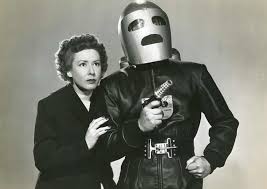
King of the Rocket Men is a charming piece of cinema history that embodies the thrilling spirit of post-WWII American adventure serials. Released in 1949, it offers an engaging mix of science fiction, action, and pulp-style heroics, making it a formative step in the legacy of superhero cinema.
The story centers on Jeff King (Tristram Coffin), a scientist working with a clandestine research group known as Science Associates. After discovering that one of their own has turned villain, King dons a rocket-powered flight suit to combat the evildoer known as Dr. Vulcan. The narrative unfolds across 12 chapters, each ending in a dramatic cliffhanger that epitomizes the serial format of the era.
Pioneering Special Effects: The flying sequences are remarkably effective for their time, showcasing the ingenuity of Republic Pictures’ special effects team. While the effects may appear rudimentary by modern standards, they carry a vintage charm that sparks admiration for the creativity of 1940s cinema.
Fast-Paced Storytelling: True to its serial roots, the plot races from one perilous situation to another, maintaining a gripping pace that rarely leaves room for dull moments.
Iconic Hero Design: The sleek, minimalist rocket suit with its bullet-shaped helmet is undeniably iconic. Its design remains an inspiration for subsequent iterations of jetpack-powered heroes, most notably Disney’s The Rocketeer(1991).
Tristram Coffin’s Performance: Coffin brings a likable determination to Jeff King, anchoring the story with a straightforward but earnest heroism that fits the time period.
Simplistic Characters: As is typical for serials, character development takes a backseat to action. The villains, including the shadowy Dr. Vulcan, lack depth, and their motivations remain generic.
Formulaic Structure: Each episode largely adheres to the same pattern: setup, conflict, chase, and cliffhanger. While this is a hallmark of serials, modern audiences may find it repetitive.
Dated Effects and Production Values: The low budget occasionally shows, with noticeable use of stock footage and sparse sets. The “science” behind the rocket suit is delightfully implausible, adding to the era’s naive view of technology.
When viewed through the lens of cinematic history, King of the Rocket Men represents both an artifact of its time and a creative precursor to modern superhero and science fiction genres. It’s a classic Republic Pictures serial that revels in daring stunts, melodramatic intrigue, and the promise of scientific advancement—all hallmarks of a postwar optimism for the future.
The serial begins with a mystery: members of the prestigious Science Associates are being mysteriously murdered by Dr. Vulcan, a villain who aims to steal their advanced technologies for his own nefarious plans. After narrowly escaping an attempt on his life, Jeff King, the stoic protagonist, vows to stop Vulcan. Armed with the newly developed experimental rocket suit created by his colleague Dr. Millard, Jeff King becomes the titular “Rocket Man.”
The serialized chapters follow Jeff as he battles Vulcan’s henchmen, thwarts sabotage attempts, and uncovers a plot to unleash catastrophic destruction on New York City. Each chapter builds to a suspenseful cliffhanger, ranging from exploding planes to collapsing buildings, designed to bring audiences back week after week.
Direction and Cinematography Fred C. Brannon, a veteran of Republic Pictures’ serials, helms King of the Rocket Men with efficiency, crafting kinetic action sequences despite a limited budget. The camerawork emphasizes movement and spectacle, while clever editing tricks keep the pacing brisk.
Action and Stunts For an era when CGI was inconceivable, the filmmakers relied on stuntmen and innovative visual effects techniques. Acclaimed stuntman David Sharpe brought dynamic energy to the role, performing much of the action in costume during ground-bound sequences. The flying scenes used a mix of models, wirework, and rear-projection technology to convincingly simulate flight for its time.
Special Effects Howard Lydecker, a pioneer in practical effects, created some of the era’s most memorable visuals for the serial. Miniature models of planes and buildings, often set ablaze or blown to pieces, deliver explosions and crashes with impressive scale for a B-movie production. The shots of the Rocket Man in mid-flight, using a life-size mannequin mounted on wires, remain both charming and inventive.
Notable Characters
Jeff King (Tristram Coffin) While not the most nuanced hero, Jeff King serves as a stand-in for the dashing, all-American ideal of 1940s protagonists. His stoic resolve contrasts with his inventive reliance on technology rather than brute force, paving the way for more cerebral science-based heroes like Tony Stark/Iron Man in later years.
Glenda Thomas (Mae Clarke) As the typical “intrepid reporter” love interest, Glenda adds a touch of wit to the serial. Though her role aligns with the gender norms of the time, her courage and tenacity make her more than a mere damsel in distress, providing occasional comic relief and investigative insights.
Dr. Vulcan The shadowy antagonist epitomizes the scheming mastermind trope. Despite his lack of a physical presence until the final chapters, his calculating menace is palpable. Vulcan’s eventual unmasking may seem anticlimactic today but was likely a thrill for 1949 audiences.
Thematic Relevance
King of the Rocket Men reflects the cultural zeitgeist of the late 1940s: a mix of wariness toward unchecked scientific advancements and hope for a better future through innovation. The rocket suit, a marvel of fictional technology, symbolizes the aspirations for human flight and exploration—ideas that would gain serious momentum in the real-world space race of the following decades.
The serial also addresses themes of trust and betrayal in science, with its plot hinging on the dangerous misuse of technology. Dr. Vulcan’s sabotage speaks to Cold War-era fears of espionage and technological theft, mirroring contemporary anxieties in a digestible, action-packed format.
Cultural Impact and Legacy
Beyond its immediate success as a Saturday matinee crowd-pleaser, King of the Rocket Men cemented the rocket-powered hero as a staple of American science fiction. Its enduring influence can be seen in projects like:
The Rocketeer (1991): Dave Stevens’ graphic novel and subsequent film adaptation are a loving homage, drawing clear visual inspiration from the Rocket Man design.
Iron Man and Other Superheroes: Jeff King’s reliance on a powered suit was an early prototype for countless armored heroes in popular media.
Jetpack Imagery in Pop Culture: The concept of a flying human with a jetpack became an enduring visual motif, appearing in everything from James Bond films (Thunderball) to video games (Fallout and Jetpack Joyride).
Audience Appeal Today
While its episodic structure and dated production values might alienate some modern viewers, King of the Rocket Men is a treasure trove for fans of vintage cinema. It captures the joyful simplicity of a time when science fiction was driven by optimism and unbounded imagination. Its melodramatic cliffhangers, hokey dialogue, and rudimentary effects are part of its appeal, offering a charming contrast to today’s polished, CGI-laden blockbusters.
Recommended for viewers who appreciate old-school action, sci-fi historians, and collectors of cultural nostalgia. It’s a thrilling time capsule of an era where cinema dreamed as boldly as its heroes soared.
Despite its imperfections, King of the Rocket Men holds an important place in the evolution of science fiction and superhero media. The imagery of a man soaring through the sky with the aid of a jetpack captured imaginations in 1949 and continues to resonate today.
If you’re a fan of classic sci-fi or historical curiosities in film, King of the Rocket Men is a delightful viewing experience. It might not possess the narrative or technical sophistication of contemporary works, but its earnest spirit and historical significance make it a must-see for aficionados of early adventure filmmaking.
This serial is best enjoyed as a nostalgic trip to a bygone era when heroes were defined by their courage, and science fiction was bound only by the filmmakers’ imaginations.
Special Features and Technical Specs:
1080p high-definition presentation of all 12 chapters
Audio Commentary on select chapters by Heath Holland from Cereal At Midnight podcast (2024)
Lost Planet Airmen – 1080p high-definition presentation of the feature film version of the serial
Across the Stratosphere – Video Essay by film historian Phillipa Berry (2024)
A24 has finally unveiled the first trailer for “Vox Lux” and “The Childhood of a Leader” filmmaker Brady Corbet’s new 3.5-hour epic biographical drama “The Brutalist”.
Adrien Brody stars as a Hungarian Holocaust survivor struggling to revive his career as an architect in the United States.
It traces his life over nearly four decades as he immigrates to the U.S. and begins working for a rich but hot-headed man (Guy Pearce) who wants to build an ambitious community center.
He helps the survivor reunite with his ailing wife (Felicity Jones) and begin to construct the brutalist building of his dreams, but a fateful incident changes all of their lives forever.
Joe Alwyn, Alessandro Nivola, Stacy Martin, Raffey Cassidy, Stacy Martin, Jonathan Hyde and Isaach De Bankolé co-star.
“The Brutalist” will open in cinemas on December 20th.
Following the poster and a cryptic teaser over the weekend, Sony Pictures has now released the first trailer for Danny Boyle’s “28 Years Later” – a long awaited follow-up to his iconic 2002 horror feature “28 Days Later” and its sequel “28 Weeks Later”.
It has been almost three decades since the rage virus escaped a biological weapons laboratory, and now, still in a ruthlessly enforced quarantine, some have found ways to exist amidst the infected.
One such group of survivors lives on a small island connected to the mainland by a single, heavily-defended causeway.
Jodie Comer, Aaron Taylor-Johnson, Jack O’Connell and Erin Kellyman co-star in the film which was made on a budget of $75 million and was reportedly shot with an iPhone 15 by Boyle’s usual cinematographer Anthony Dod Mantle.
Filmmaker Alex Garland has returned to write the script for not just this but two further films in a planned trilogy. The second film, directed by Nia DaCosta, has already been shot and will likely arrive in 2026.
“28 Years Later” opens in cinemas in June next year.
Written by: John Brownjohn, Roman Polanski and Enrique Urbizu
Directed by: Roman Polanski
Featuring: Johnny Depp, Lena Olin, Frank Langella, James Russo, Jack Taylor and Emmanuelle Seigner
Boris Balkan:“There’s nothing more reliable than a man whose loyalty can be bought for hard cash.”
Roman Polanski’s The Ninth Gate stands as a dark, atmospheric blend of mystery and occultism, exploring themes of greed, power, and the seductive allure of forbidden knowledge. Adapted from Arturo Pérez-Reverte’s novel The Club Dumas, the film follows rare book dealer Dean Corso (Johnny Depp) on a journey to authenticate a diabolical text said to grant its reader access to the gates of hell. It is a slow-burning thriller that straddles the line between supernatural intrigue and existential dread, enveloped in Polanski’s signature tone of ambiguity and unease.
The film’s narrative is built around Corso’s commission by a wealthy collector, Boris Balkan (Frank Langella), to verify the authenticity of The Nine Gates of the Kingdom of Shadows. This rare 17th-century book is rumored to have been co-authored by Satan himself. Balkan owns one of the only three known copies and is obsessed with uncovering its secrets. Corso embarks on a globetrotting investigation, comparing Balkan’s copy to the other two, which are held by eccentric collectors in Portugal and France. Along the way, he encounters mysterious deaths, cryptic symbols, and a seductive, unnamed woman (Emmanuelle Seigner), whose supernatural nature becomes increasingly evident.
The film thrives on its slow pace, methodically unraveling layers of intrigue while immersing viewers in the arcane world of rare books and Satanic lore. The plot’s ambiguity is both its strength and its weakness. While it compels audiences to question what is real versus imagined, the lack of definitive answers may frustrate viewers seeking concrete resolutions.
Johnny Depp’s portrayal of Corso is a highlight. He eschews the heroic tropes often associated with lead characters, presenting Corso as a morally ambiguous, self-serving antihero. Depp’s understated performance captures Corso’s cynicism and gradual unraveling as he delves deeper into the book’s mysteries. Frank Langella is captivating as Balkan, exuding an imposing presence and megalomania that perfectly complements the film’s dark tone.
Emmanuelle Seigner’s enigmatic character remains one of the film’s most puzzling elements. Her otherworldly demeanor and cryptic role in Corso’s journey add to the film’s supernatural allure, though her character often feels underexplored. Lena Olin’s portrayal of Liana Telfer, the seductive widow with her own stake in the book’s secrets, is deliciously over-the-top, injecting moments of theatrical flair into the narrative.
Visually, The Ninth Gate excels in creating an oppressive, Gothic atmosphere. The cinematography by Darius Khondji bathes the film in muted tones, creating a sense of unease that permeates every frame. The European locales—crumbling libraries, dimly lit mansions, and foggy countryside—serve as perfect backdrops for the story’s occult underpinnings. Polanski’s meticulous attention to detail is evident in the design of the book itself, with its woodcut illustrations playing a pivotal role in the narrative.
Wojciech Kilar’s haunting score underscores the film’s unsettling mood. The music shifts seamlessly between subtle, eerie undertones and dramatic crescendos, enhancing the tension without overpowering the visuals.
The film explores themes of ambition, the corrupting nature of power, and humanity’s eternal fascination with the unknown. Corso’s journey is as much an exploration of his own moral boundaries as it is a quest for the book’s secrets. The titular gates symbolize the dual nature of human curiosity—both the pursuit of knowledge and the temptation to overreach.
The ambiguity surrounding the supernatural elements is a key aspect of the film’s thematic depth. While the narrative hints at demonic forces and divine interventions, it refrains from providing definitive proof, leaving the audience to ponder the true nature of Corso’s journey.
Despite its strengths, The Ninth Gate is not without flaws. The film’s deliberate pacing may feel sluggish, particularly for viewers expecting a more action-driven narrative. The climax, while visually striking, leaves many questions unanswered, which can feel unsatisfying after the intricate buildup. Additionally, some secondary characters lack depth, serving more as plot devices than fully realized individuals.
The film’s reliance on ambiguity is a double-edged sword. While it invites interpretation and discussion, it risks alienating viewers who prefer clarity in storytelling. For instance, the exact role of Seigner’s character and the true nature of Balkan’s fate are left frustratingly vague.
Expanding on The Ninth Gate, the film’s allure lies in how it integrates layers of storytelling, character development, and thematic exploration, challenging audiences to navigate a maze of intellectual and emotional engagement. Its enigmatic quality makes it a rewarding study for those willing to invest deeply in its subtext and aesthetic choices.
The central mystery of The Ninth Gate revolves around uncovering the authenticity and purpose of The Nine Gates of the Kingdom of Shadows. Unlike conventional thrillers that rely on overt supernatural manifestations or dramatic action sequences, the film’s power comes from its subtler elements: coded messages, symbolic illustrations, and nuanced character interactions. Each woodcut illustration in the book plays a pivotal role, not just as plot devices but as riddles within riddles that demand interpretation.
The narrative operates on dual levels: the surface plot of Corso’s quest and the underlying exploration of metaphysical themes like the price of knowledge and the boundaries of human ambition. The film intertwines these layers without spelling them out, giving viewers the sense that they, too, are participants in unraveling the mystery. This approach mirrors the works of Stanley Kubrick, where meaning is often implied rather than directly presented.
Corso as the Antihero: A Study in Moral Ambiguity
Dean Corso is a refreshingly atypical protagonist. In most films of this nature, the lead might be a heroic figure battling against forces of evil. Not so with Corso. He begins as a purely transactional character—a rare book dealer willing to exploit his expertise for profit without a moral compass. Depp’s portrayal makes Corso both relatable and repellent, grounding his character in a gritty realism that makes his transformation throughout the film more compelling.
Unlike Balkan, whose ambitions are grandiose and apocalyptic, Corso’s motivations are more self-serving. This contrast between the characters serves as a meditation on the degrees of human ambition. Corso’s journey, from cynicism to genuine curiosity and, finally, to obsession, mirrors the audience’s own shifting engagement with the narrative.
Polanski’s decision to leave much of the supernatural elements ambiguous is central to the film’s appeal. The audience is never fully sure if the events they’re witnessing are genuinely occult in nature or simply the result of human greed and manipulation. This deliberate vagueness invites multiple interpretations:
Is the woman (Emmanuelle Seigner) truly a supernatural entity? Her physical prowess, cryptic advice, and eerie calm suggest that she might be a demonic guide—or even Satan themselves. Yet the film provides no concrete evidence.
Does the book hold actual power? While Balkan’s climactic ritual appears to fail spectacularly, Corso’s final discovery and apparent ascension to the ninth gate imply that the book does contain otherworldly truths. This dichotomy raises questions about Balkan’s failure—was it due to human arrogance or a deeper truth about the nature of evil?
The ambiguity allows the film to transcend the confines of a typical horror-thriller and venture into philosophical territory. It reflects Polanski’s broader thematic concerns, seen in his other works like Rosemary’s Baby, where the line between the psychological and supernatural is intentionally blurred.
One of The Ninth Gate’s most compelling aspects is its atmosphere. The film leans heavily on its setting to create tension and immerse the viewer in its world. Each location, from dusty bookshops to opulent mansions, is richly textured and alive with subtle details. Polanski uses space to evoke both wonder and dread—libraries feel like temples to hidden knowledge, and shadowy corridors seem to stretch endlessly, hinting at the mysteries lurking within.
Lighting plays a crucial role in building this atmosphere. Scenes are often shrouded in dim light, with flickering candles and muted sunlight creating a chiaroscuro effect that evokes the works of Baroque painters. The interplay between light and shadow mirrors the film’s thematic concerns: the eternal struggle between knowledge and ignorance, good and evil.
As a director, Polanski brings a distinctive sensibility to The Ninth Gate. Known for his ability to blend psychological horror with visual elegance, he uses these talents to create a world that feels simultaneously grounded and otherworldly. Polanski’s pacing is deliberate, allowing the story to unfold organically and giving the audience time to absorb the film’s nuances.
His framing choices are particularly notable. Polanski often uses symmetrical compositions to evoke a sense of order and control, only to subvert them when chaos or violence intrudes. This visual technique mirrors the film’s thematic tension between humanity’s desire for order (represented by the quest for knowledge) and the inherent chaos of the unknown.
At its core, The Ninth Gate is a study of humanity’s insatiable desire for power and the lengths to which individuals will go to obtain it. Each character represents a different facet of this desire:
Boris Balkan: The archetypal megalomaniac, Balkan is willing to sacrifice everything—including his humanity—in his pursuit of ultimate knowledge. His failure is a cautionary tale about the dangers of hubris.
Liana Telfer: Liana’s obsession with reclaiming the book reflects a more personal form of ambition, rooted in lust and vanity. She serves as a foil to Balkan’s grandiose goals, illustrating the varied ways ambition manifests.
Dean Corso: Initially indifferent to the book’s supposed power, Corso’s growing fascination reveals how easily even the most cynical individuals can be drawn into the allure of the unknown.
These characters, combined with the film’s ambiguous ending, suggest that the pursuit of forbidden knowledge is not inherently evil but deeply human. It is the choices we make in that pursuit—and the motivations driving us—that determine our fate.
The Ninth Gate is not a film for everyone. Its leisurely pace, open-ended narrative, and cerebral approach to horror may alienate viewers seeking instant gratification or conventional scares. However, for those willing to engage with its layers of meaning and immerse themselves in its haunting atmosphere, it offers a richly rewarding experience.
Roman Polanski crafts a film that is both timeless and timely, a meditation on the eternal struggle between knowledge and ignorance, ambition and humility. It is a film that invites—and rewards—repeated viewings, each one uncovering new layers of meaning and symbolism. In the end, The Ninth Gate stands as a testament to the power of storytelling to probe the darkest corners of the human soul.
The Ninth Gate is a polarizing film, its appeal lying in its atmospheric storytelling, strong performances, and thematic richness. While its deliberate pacing and ambiguous narrative may not suit everyone’s taste, it remains a compelling exploration of the dark intersections of human ambition and the occult. Roman Polanski crafts a cinematic experience that lingers in the mind long after the credits roll—a testament to his ability to weave psychological intrigue with visual artistry.
For those who appreciate cerebral, slow-burn thrillers that challenge rather than coddle their audience, The Ninth Gate is a devilishly intriguing ride. For others, its cryptic nature may leave them stranded at the gates, yearning for answers that lie just out of reach.
Featuring: Sigourney Weaver, Ben Kingsley and Stuart Wilson
Dr. Roberto Miranda:“How can I confess to something I haven’t done?”
Roman Polanski’s Death and the Maiden, based on Ariel Dorfman’s acclaimed stage play, is an intense psychological drama that delves deep into themes of justice, revenge, and the fragility of truth. Set against the backdrop of a nameless South American country recovering from years of dictatorship, the film offers a gripping chamber piece, masterfully directed and performed by its small but potent cast of Sigourney Weaver, Ben Kingsley, and Stuart Wilson.
The film begins with Paulina Escobar (Sigourney Weaver), a former political prisoner, living in isolation with her husband, Gerardo Escobar (Stuart Wilson), in a remote coastal home. Gerardo, a lawyer, has just been appointed to a government commission investigating human rights abuses committed during the dictatorship. A chance encounter brings Dr. Roberto Miranda (Ben Kingsley) to their home, ostensibly to return a flat tire. Paulina becomes convinced that Roberto is the man who tortured and raped her during her imprisonment, recognizing his voice, mannerisms, and habits.
The story unfolds as Paulina holds Roberto captive, seeking a confession and exacting her own form of justice. Gerardo finds himself torn between his wife’s traumatic past, the principles of due process, and his own doubts about Roberto’s guilt or innocence. What follows is a taut and claustrophobic exploration of moral ambiguity, trauma, and power dynamics.
Sigourney Weaver delivers a career-defining performance as Paulina. She portrays a woman haunted by unspeakable horrors, teetering between vulnerability and ferocious resolve. Weaver’s portrayal is raw and visceral, making Paulina’s pain and thirst for justice palpable.
Ben Kingsley, as Dr. Miranda, is equally compelling. He walks a fine line between urbane charm and possible malevolence, leaving the audience perpetually guessing his true nature. Kingsley imbues Miranda with enough ambiguity to keep the narrative tension alive, refusing to tip the scales toward either innocence or guilt too easily.
Stuart Wilson, while overshadowed by his co-stars, is effective as Gerardo. He embodies the rationalist perspective, caught between the polarizing forces of his wife’s unwavering conviction and the societal demands for measured justice.
Roman Polanski’s direction amplifies the play’s psychological intensity, transforming the intimate setting into a pressure cooker of emotion and suspense. Polanski’s mastery lies in his ability to make the confined space of the Escobar home feel simultaneously suffocating and expansive, a battleground for memory and morality. The film’s claustrophobic atmosphere mirrors the characters’ internal struggles, while the stormy, isolated setting enhances the sense of inescapable reckoning.
Tonino Delli Colli’s cinematography is restrained but effective, employing dim lighting and tight framing to reflect the dark themes. The camera often lingers uncomfortably on the characters’ faces, forcing viewers to confront their emotions and motives directly.
At its core, Death and the Maiden grapples with the complexities of justice in the aftermath of tyranny. It asks probing questions: Can justice ever be truly achieved in the shadow of past atrocities? How does one reconcile personal trauma with the collective need for reconciliation? The film also explores the psychological toll of torture and the long-lasting scars it leaves, both for victims and society at large.
The ambiguity surrounding Roberto’s guilt is the film’s most provocative element. By never fully confirming or denying Paulina’s accusations, the narrative challenges the audience to examine their biases and assumptions about truth and accountability.
Some critics argue that the film’s stage origins are too evident, with the limited setting and dialogue-heavy script occasionally feeling static. While this containment works to heighten the tension, it may also test the patience of viewers expecting more visual dynamism or action. Additionally, the film’s refusal to provide a definitive resolution may frustrate those seeking closure.
Nearly three decades after its release, Death and the Maiden remains a significant piece of cinema, not only for its exploration of justice and trauma but also for its bold storytelling. The film’s refusal to hand its audience easy answers makes it an enduring conversation piece. In an era where the demand for accountability—be it for war crimes, systemic oppression, or personal abuses of power—continues to shape global discourse, the questions the film raises feel especially prescient.
Polanski’s approach to the story invites viewers to grapple with the complexities of human psychology and the subjective nature of truth. While modern audiences might view the film through a more critical lens due to Polanski’s controversial personal history, his skill as a director in crafting tension and emotional depth cannot be overlooked.
When compared to other stage-to-screen adaptations, Death and the Maiden excels in maintaining the intimacy and immediacy of the original play while expanding its emotional and thematic scope. It sits comfortably alongside other minimalist thrillers like 12 Angry Men and Carnage, which rely on dialogue and performance to drive their narratives. However, its unique focus on the aftermath of political violence sets it apart, making it a haunting allegory for post-dictatorial societies.
Death and the Maiden is best appreciated by viewers who enjoy character-driven dramas and are willing to engage with morally ambiguous material. Fans of psychological thrillers like The Night Of, Prisoners, or The Lives of Others will find its themes of justice and redemption compelling. Additionally, anyone interested in the interplay of politics and personal trauma will find this film to be an intellectually stimulating watch.
While it may not cater to those looking for fast-paced action or overt resolutions, it rewards patience and thoughtfulness with a profoundly moving exploration of human resilience and the quest for justice.
If you haven’t yet seen Death and the Maiden, it is a film that demands attention not just for its masterful craft, but for the way it challenges us to confront the darker corners of human experience. It is not merely a story but an interrogation of our shared humanity. Whether you agree with its methods or conclusions, it is impossible to walk away unaffected.
Death and the Maiden is a gripping, morally complex thriller that leaves a lasting impression. Polanski’s meticulous direction, combined with powerhouse performances from Weaver and Kingsley, creates an experience that is both thought-provoking and emotionally harrowing. While its stage-bound roots may not appeal to all audiences, the film’s exploration of justice and trauma remains as relevant today as it was at its release. For those willing to engage with its moral intricacies, Death and the Maiden offers a cinematic tour de force that lingers long after the credits roll.
Written by: Roman Polanski, Gérard Brach and John Brownjohn
Directed by: Roman Polanski
Featuring: Peter Coyote, Emmanuelle Seigner, Hugh Grant, Kristin Scott Thomas and Victor Banerjee
Oscar:“Have you ever truly idolized a woman? Nothing can be obscene in such love. Everything that occurs in between it becomes a sacrament.”
Roman Polanski’s Bitter Moon is a provocative exploration of passion, obsession, and the dark recesses of human relationships. Blending psychological drama, eroticism, and biting satire, the film delves into themes of love’s potential to both elevate and destroy. Anchored by gripping performances and a narrative that oscillates between beauty and cruelty, Bitter Moon is an unforgettable, if divisive, cinematic experience.
The story follows Nigel and Fiona Dobson (Hugh Grant and Kristin Scott Thomas), a buttoned-up British couple traveling aboard a luxury cruise ship. Their seemingly placid marriage becomes increasingly unsettled when they encounter the mysterious Mimi (Emmanuelle Seigner) and her paraplegic husband, Oscar (Peter Coyote).
Oscar, a failed writer, recounts the sordid details of his relationship with Mimi, from its initial fiery passion to its eventual descent into sadism, manipulation, and mutual destruction. As Nigel becomes enraptured by Oscar’s tales—and increasingly attracted to Mimi—the film pulls back layers of repression, revealing how easily love can transform into toxic obsession.
Polanski masterfully creates an atmosphere of unease, juxtaposing the glitzy, sterile setting of the cruise ship with the hedonistic, chaotic flashbacks of Oscar and Mimi’s relationship. Thematically, Bitter Moon examines the boundaries of love and desire, pushing characters (and audiences) to confront uncomfortable truths about their own fantasies and insecurities.
At its heart, the film explores power dynamics in relationships, particularly how intimacy can be wielded as a weapon. Oscar and Mimi’s romance initially seems intoxicatingly free-spirited, but it soon reveals itself as a dance of dominance and submission. Their unraveling contrasts sharply with the repressed, stagnant connection between Nigel and Fiona, creating a commentary on the varying ways relationships can become prisons—whether through excess or neglect.
Peter Coyote delivers a magnetic performance as Oscar, seamlessly transitioning between sardonic humor, bitterness, and vulnerability. His narration is as seductive as it is repulsive, drawing Nigel (and viewers) into the sordid web of his past. Emmanuelle Seigner’s Mimi is a force of nature—seductive, enigmatic, and ultimately tragic. Her chemistry with Coyote is palpable, making their toxic relationship simultaneously horrifying and mesmerizing.
Hugh Grant and Kristin Scott Thomas are equally compelling in more restrained roles. Grant, in particular, brings a subtle transformation to Nigel, whose initial moral superiority gradually gives way to voyeuristic fascination. Thomas, though given less screen time, imbues Fiona with a quiet dignity that underscores the film’s exploration of repression and betrayal.
Polanski’s direction is meticulous, with every frame serving the film’s layered storytelling. The cruise ship becomes a microcosm of societal facades, while the flashbacks—set in Paris—are drenched in sensuality and decadence. Cinematographer Tonino Delli Colli captures the duality of the narrative beautifully, alternating between the sterile elegance of the present and the lush, chaotic vibrancy of the past.
The film’s pacing is deliberate, reflecting the way Oscar doles out his story in tantalizing pieces. This structure keeps the audience, much like Nigel, on edge—both eager and afraid to learn what happens next.
Bitter Moon is not without its flaws. The film’s overt eroticism and unflinching portrayal of cruelty may alienate some viewers, and its tonal shifts—from dark comedy to melodrama—can feel jarring. Additionally, the characters’ actions and motivations occasionally stretch believability, particularly Nigel’s passive acceptance of Oscar’s shocking revelations.
However, these elements also contribute to the film’s audacious charm. Polanski’s willingness to embrace excess and moral ambiguity makes Bitter Moon a deeply provocative piece of cinema that defies easy categorization.
Bitter Moon is a dark, daring film that lingers long after the credits roll. Its exploration of love’s darker side is both uncomfortable and compelling, bolstered by outstanding performances and Polanski’s confident direction. While its provocative content ensures it won’t appeal to everyone, those willing to engage with its raw and uncompromising vision will find a richly layered, thought-provoking work.
This is a film that dares to ask: how far are we willing to go in the name of love, and at what cost? For better or worse, Bitter Moon offers no easy answers—only a mirror reflecting humanity’s deepest desires and fears.
This ambiguity is one of Bitter Moon’s greatest strengths. Rather than providing moral clarity, the film forces viewers to wrestle with the uncomfortable truths it lays bare. The cyclical nature of Oscar and Mimi’s relationship, where love and hate become indistinguishable, serves as a cautionary tale about the perils of unchecked passion. Yet, Polanski resists the temptation to fully condemn their behavior, leaving room for empathy amidst the chaos.
The ending of the film, which shifts the focus back to Nigel and Fiona, is particularly striking. As Nigel becomes entangled in Oscar and Mimi’s world, his own seemingly stable marriage begins to unravel. Polanski uses this parallel to suggest that repression and prudishness can be just as destructive as indulgence and excess. The final moments are haunting, suggesting that once one is exposed to the extremes of human emotion, it’s impossible to return to a state of ignorance.
When viewed through the lens of Polanski’s filmography, Bitter Moon feels like a natural extension of his recurring themes. The director has long been fascinated by the darker aspects of human nature, exploring them in works like Repulsion (1965) and The Tenant (1976). Bitter Moon stands out for its overt sensuality and its blackly comedic tone, offering a more playful yet equally unsettling examination of the human psyche.
The film’s release in 1992 positioned it as a stark contrast to more mainstream depictions of romance during the period. While Hollywood was churning out polished love stories and romantic comedies, Polanski offered an uncompromising look at love’s potential for toxicity. This boldness, while polarizing, earned Bitter Moon a cult following over the years, with many praising its unflinching honesty.
Bitter Moon remains a polarizing film to this day, with critics and audiences divided over its merits. For some, it’s a masterpiece of erotic drama and psychological insight; for others, it’s an overly cynical and melodramatic take on relationships. However, its ability to provoke strong reactions is a testament to its enduring power.
Decades after its release, the film continues to resonate, particularly in the #MeToo era, as audiences reevaluate the dynamics of power and consent in relationships. While some aspects of Bitter Moon may feel dated or overly exaggerated, its core message about the fragility and complexity of human connection remains timeless.
For viewers willing to confront its darker themes, Bitter Moon offers a raw, unvarnished look at love’s most destructive tendencies. It’s a film that challenges, provokes, and seduces in equal measure, leaving a lasting impression that’s impossible to shake. Polanski’s bold direction, combined with unforgettable performances by Peter Coyote and Emmanuelle Seigner, makes this a must-watch for fans of daring, uncompromising cinema. While it may not be a comfortable watch, Bitter Moon is a film that dares to bare its soul—and demands that its audience do the same.
Featuring: Kim Director, Jeffrey Donovan, Erica Leerhsen, Tristine Skyler and Stephen Barker Turner
Sheriff Cravens:“Wipe that shit off your face! You think that your makeup and black clothes give you POWER… but you’re just a scared, cowardly, little girl underneath all that.”
When The Blair Witch Project hit theaters in 1999, it revolutionized the horror genre, popularizing the found-footage format and delivering a raw, minimalist experience that blurred the line between fiction and reality. In stark contrast, its sequel, Book of Shadows: Blair Witch 2, released just a year later, took a sharp turn into a more conventional narrative structure. Directed by Joe Berlinger, a filmmaker renowned for his work in documentaries, the sequel aimed to deconstruct the hysteria surrounding the first film. Unfortunately, Book of Shadows became a polarizing piece of cinema, criticized for its tonal inconsistencies, lack of scares, and departure from its predecessor’s groundbreaking approach.
Book of Shadows opens with an intriguing meta-layer: the events of The Blair Witch Project are treated as fictional within this film’s universe, and the story focuses on a group of fans drawn to Burkittsville, Maryland, to explore the legend. Jeff (Jeffrey Donovan), a local tour guide with a dark past, leads the group, including a Goth psychic (Kim Director), a Wiccan (Erica Leerhsen), and a skeptical academic couple (Tristen Skyler and Stephen Barker Turner). After a night in the woods, the group awakens to find evidence of inexplicable occurrences. Paranoia sets in as they try to piece together what happened, leading to disturbing revelations and tragic consequences.
Strengths
Meta Commentary: The film’s most compelling aspect is its attempt to critique the media frenzy surrounding the original Blair Witch. By incorporating themes of mass hysteria, groupthink, and the power of belief, it tries to transcend simple scares and delve into psychological territory.
Atmosphere: The film captures a genuinely eerie tone, especially in its woodland sequences. The use of quick-cut visuals, unsettling flashbacks, and grainy security footage adds a layer of discomfort.
Soundtrack: Featuring artists like Marilyn Manson and Queens of the Stone Age, the soundtrack is a time capsule of early 2000s alt-rock and industrial music, setting a dark, angsty mood.
Weaknesses
Lack of Cohesion: Book of Shadows struggles to decide what it wants to be. It oscillates between a psychological thriller, a meta-commentary, and a supernatural horror film, often failing to deliver on any front. This lack of focus makes the story feel disjointed and unfulfilling.
Characterization: The characters are one-dimensional and often unlikable, making it difficult for audiences to connect with their plight. Their decisions often feel illogical, detracting from the tension the film tries to build.
Studio Interference: Berlinger’s original vision for a slow-burning psychological drama was re-edited by the studio, which added jump scares, gore, and a nonlinear structure to cater to mainstream audiences. This tampering resulted in a film that feels tonally inconsistent and unfinished.
Visuals: Despite some effective moments, much of the visual storytelling feels overly stylized and artificial compared to the raw, visceral simplicity of the original. The glossy cinematography clashes with the grounded, documentary-like aesthetic that defined The Blair Witch Project.
At the time of its release, Book of Shadows was a critical and commercial disappointment. It was lambasted for abandoning the found-footage format, lacking genuine scares, and being derivative of other psychological horror films of the era. Over time, however, it has garnered a cult following. Some viewers appreciate its ambition and thematic depth, even if its execution leaves much to be desired.
For those willing to approach it as a standalone film rather than a direct sequel, there are intriguing ideas to be found. It’s a bold, if flawed, attempt to do something different rather than simply rehashing the original.
As a sequel, Book of Shadows: Blair Witch 2 faced the daunting challenge of living up to its predecessor’s cultural impact. Its failure to meet expectations has cemented its place in the annals of disappointing follow-ups. Yet, the film’s daring approach and thematic aspirations invite reconsideration.
Berlinger’s decision to explore the cultural aftermath of The Blair Witch Project was bold. By addressing the lines between reality, fiction, and perception, the film posed intriguing questions: How do media and mass hysteria shape belief systems? How does collective paranoia breed violence and confusion? These ideas resonate, especially in a modern context where “fake news” and viral phenomena dominate public discourse.
However, the film fails to weave these themes seamlessly into its narrative. The critique of sensationalism often feels like an afterthought, overshadowed by conventional horror tropes. It’s a classic case of ambition exceeding execution, with the film struggling to find a balance between intellectual exploration and visceral entertainment.
Joe Berlinger, known for documentaries like Paradise Lost, initially envisioned Book of Shadows as a grounded psychological thriller that would reflect on how people internalized and exploited the Blair Witch mythology. His approach leaned heavily on ambiguity and psychological tension rather than overt scares or supernatural elements.
Unfortunately, Berlinger’s vision was compromised by studio interference. Test screenings led to reshoots that inserted gratuitous gore, quick-cut horror sequences, and a fragmented narrative structure. The studio’s desire to replicate the visceral intensity of the first film undermined the deliberate pacing and ambiguity that Berlinger had aimed for. As a result, the final product is a jumbled hybrid that alienated fans of the original while failing to attract a new audience.
In the years since its release, Book of Shadows has found a niche audience that appreciates its ambition and willingness to subvert expectations. Its exploration of belief systems and the human psyche has earned it a degree of scholarly attention, with some viewing it as an underrated gem trapped in the wrong marketing strategy.
Modern audiences, who approach the film without the burden of 1999’s Blair Witch hype, may find it more palatable. In an era dominated by nostalgia-driven reboots and sequels, Book of Shadows stands out as a sequel that dared to chart its own course—albeit clumsily.
Book of Shadows: Blair Witch 2 is a fascinating misfire. While it deserves credit for its ambition and willingness to take risks, its muddled execution and identity crisis prevent it from standing on its own merits. Fans of experimental horror or meta-narratives might find it worth revisiting, but for most, it remains a cautionary tale of how not to follow up a cultural phenomenon.
Special Features & Technical Specs:
1080p high-definition presentation on Blu-ray
Audio Commentary by director Joe Berlinger
Audio Commentary on select scenes by composer Carter Burwell
NEW Created by Hysteria: Directing Book of Shadows – Interview with co-writer / director Joe Berlinger (2024)
NEW We Brought Something Back: Filming Book of Shadows – interview with director of photography Nancy Schreiber (2024)
The Secret of Esrever – archival featurette
Shadow of The Blair Witch – documentary (2000)
Burkittsville 7 – documentary (2000)
Soundtrack Trailer and Live Performance by Godhead
Written and directed by: Daniel Myrick and Eduardo Sánchez
Featuring: Heather Donahue, Michael Williams and Joshua Leonard
Heather Donahue:“I just want to apologize to Mike’s mom, Josh’s mom, and my mom. And I’m sorry to everyone. I was very naive. I am so so sorry for everything that has happened. Because in spite of what Mike says now, it is my fault. Because it was my project and I insisted. I insisted on everything. I insisted that we weren’t lost. I insisted that we keep going. I insisted that we walk south. Everything had to be my way. And this is where we’ve ended up and it’s all because of me that we’re here now – hungry, cold, and hunted. I love you mom, dad. I am so sorry. What is that? I’m scared to close my eyes, I’m scared to open them! We’re gonna die out here!”
Released in 1999, The Blair Witch Project is a cultural phenomenon that redefined the horror genre. Directed by Daniel Myrick and Eduardo Sánchez, this found-footage film utilized an innovative approach to storytelling that blurred the lines between fiction and reality, delivering an experience as terrifying as it is unique.
The Blair Witch Project centers on three student filmmakers—Heather (Heather Donahue), Josh (Joshua Leonard), and Mike (Michael C. Williams)—who venture into the woods of Burkittsville, Maryland, to document the local legend of the Blair Witch. The film is presented as the “recovered footage” of their ill-fated expedition, creating a sense of raw authenticity.
What makes the concept so effective is the minimalism of its execution. There are no traditional special effects, no elaborate sets, and no visible monster. Instead, the terror lies in what is unseen. The filmmakers cleverly use sound design, subtle environmental changes, and the increasingly frayed mental states of the characters to build tension. This approach capitalizes on the audience’s imagination, making the film’s horror deeply personal and subjective.
The cast, comprised of unknown actors at the time, delivers performances that feel startlingly real. Heather Donahue, in particular, gives a standout performance. Her now-iconic confessional scene, where she tearfully apologizes to her friends’ families, encapsulates the raw fear and desperation that defines the film. The actors improvised much of their dialogue, further enhancing the realism. Their escalating paranoia and conflicts feel organic, as if we are witnessing a genuine descent into madness.
A significant part of The Blair Witch Project‘s success lies in its marketing. The filmmakers launched a guerrilla-style campaign, creating a website with fabricated police reports, interviews, and folklore to convince audiences that the events depicted were real. The ambiguity surrounding the film’s authenticity generated buzz and contributed to its viral word-of-mouth appeal—a feat especially impressive in the pre-social media era.
This marketing strategy made the experience of watching the film feel like uncovering a dark, hidden truth. Many audience members entered theaters believing they were about to witness real events, amplifying the film’s impact.
One of the film’s greatest strengths is its ambiguity. It never explains what the Blair Witch is or if it even exists. Is the group being stalked by a supernatural entity, or are they succumbing to paranoia and their own frailties? The film refuses to provide clear answers, leaving viewers to interpret the events for themselves. This ambiguity ensures that the horror lingers long after the credits roll.
The Blair Witch Project sparked a revolution in the horror genre. Its success ($248 million gross on a $60,000 budget) inspired a wave of found-footage films, including Paranormal Activity and Cloverfield. While many imitators have emerged, few have captured the original’s authenticity and psychological depth.
Its influence extends beyond cinema, shaping how stories are told in other media, from video games to ARGs (alternate reality games). The film’s minimalist approach also demonstrated that a compelling story and innovative technique can outweigh big budgets and high-tech effects.
Despite its acclaim, the film is not without its detractors. Some viewers found the shaky camera work disorienting and the pacing slow. Others were frustrated by its lack of a traditional climax or resolution. However, these very elements are what endear the film to its fans, as they align with its commitment to realism and subversion of horror conventions.
The Blair Witch Project thrives on universal fears that transcend cultural and generational boundaries.
Fear of the Unknown: At its core, the film exploits humanity’s primal fear of the unknown. The Blair Witch herself is never seen, leaving her existence entirely to the viewer’s imagination. The film understands that what we don’t see or understand is often far scarier than what we do.
Isolation: The characters’ journey into the dense, sprawling woods symbolizes a descent into isolation. As they lose their bearings, both physically and emotionally, their detachment from the outside world amplifies their vulnerability. The woods become a labyrinth, a place where time and direction seem meaningless, reflecting their psychological unraveling.
Breakdown of Trust: A significant aspect of the film’s horror lies in the deteriorating relationships between Heather, Josh, and Mike. As their situation grows more dire, accusations, paranoia, and anger drive them apart. The tension among the trio mirrors the broader existential fear of being alone in our struggles.
Folklore and Urban Legends: The film brilliantly intertwines folklore with the narrative, grounding its supernatural premise in local legend. The filmmakers created an entirely fabricated mythology around the Blair Witch but presented it with such authenticity that it felt like a longstanding part of cultural lore. This use of storytelling echoes the way myths and legends have historically been used to explain the unexplainable.
Cinematic Techniques
The brilliance of The Blair Witch Project lies in its ability to craft terror through subtle yet masterful techniques:
Sound Design: The absence of a musical score allows the natural sounds of the environment to dominate. The crunch of leaves underfoot, distant whispers, and chilling nocturnal disturbances create an atmosphere of dread. The sound of children’s laughter in the dead of night, for instance, is terrifying because it is so out of place in the vast, empty woods.
Visual Minimalism: The film’s handheld camera work adds to its sense of authenticity but also serves as a metaphor for the characters’ disoriented state. The limited field of view creates a claustrophobic effect, even in the open forest. The use of darkness and shadows ensures the viewer is constantly scanning the frame for threats, even when nothing appears.
Improvised Storytelling: The directors intentionally withheld key details from the actors, letting them react naturally to the scenarios presented. This improvisational style led to genuine expressions of confusion and fear. For example, the cast did not know what to expect during the night scenes, leading to unfiltered, visceral reactions to the scripted disturbances.
Pacing and Restraint: Unlike traditional horror films, The Blair Witch Project does not rely on jump scares or fast-paced action. It is a slow burn, where tension builds incrementally. The monotony of the characters’ days, juxtaposed with the terror of their nights, mimics the exhausting rhythm of real-life survival situations.
Analyzing the Ending
The film’s ambiguous ending remains one of the most debated aspects of The Blair Witch Project. When Heather and Mike discover an abandoned house in the woods, their frantic search for Josh ends with a chilling image: Mike standing motionless in the corner, facing the wall, before the camera abruptly cuts to black.
This moment ties directly to the legend of Rustin Parr, a hermit supposedly influenced by the Blair Witch to murder children. According to the lore, Parr would make one child stand in the corner while he killed the other, as he couldn’t bear their eyes on him. This subtle callback gives the ending its eerie power.
However, the lack of resolution leaves viewers with more questions than answers. Was the Blair Witch real? Did the trio succumb to hysteria or a more mundane but equally grim fate, such as being targeted by a human predator? This refusal to spoon-feed conclusions is a hallmark of great horror, ensuring the story stays with the audience long after the film ends.
The Cultural Phenomenon
The release of The Blair Witch Project coincided with the rise of the internet, making it a pioneer in viral marketing. The film’s website, with its mockumentary-style content, blurred the line between fiction and reality, setting a new standard for immersive storytelling.
Even after the film’s release, discussions about its authenticity persisted. Fans dissected every frame for hidden clues, while skeptics analyzed its inconsistencies. This participatory aspect of the film’s narrative turned audiences into investigators, deepening their engagement.
Moreover, the movie’s success as an independent production inspired countless filmmakers, proving that a compelling concept and innovative execution can rival the biggest Hollywood blockbusters.
Revisiting The Blair Witch Project Today
In the years since its release, The Blair Witch Project has retained its place in the horror canon. Modern viewers accustomed to high-budget, effects-driven horror may initially find its lo-fi aesthetic jarring. However, those who embrace its atmosphere and psychological complexity will find it as unnerving as ever.
The film’s lasting influence is evident in the continued popularity of the found-footage genre. While some successors have expanded on the format with more elaborate effects, few have matched the authenticity and raw emotional impact of the original.
The Blair Witch Project is more than a movie; it is a masterclass in atmospheric horror and a cultural milestone. Its ability to tap into primal fears—of being lost, of the unknown, of our own minds turning against us—ensures its place as one of the most impactful films of its time. While it may not appeal to everyone, its ingenuity and legacy are undeniable.
For those willing to surrender to its immersive storytelling and embrace its unsettling ambiguity, The Blair Witch Projectoffers a uniquely haunting experience that continues to resonate in the annals of horror history.
Special Features and Technical Specs:
1080p high-definition presentation on Blu-ray
NEW Audio Commentary by Matt Blazi, author of “8 Days in the Woods: The Making of The Blair Witch Project” (2024)
Audio Commentary by writers/directors Daniel Myrick & Eduardo Sánchez and producers Rob Cowie, Greg Hale & Mike Manello (1999)
Curse of the Blair Witch – documentary (1999)
The Blair Witch Legacy – archival featurette
Archival interview with writers–directors Daniel Myrick & Eduardo Sanchez
Fear – interviews with psychological and supernatural experts
Narrator: “All irregularities will be handled by the forces controlling each dimension. Transuranic heavy elements may not be used where there is life. Medium atomic weights are available: Gold, Lead, Copper, Jet, Diamond, Radium, Sapphire, Silver and Steel. Sapphire and Steel have been assigned.”
There really is something very special about British science fiction television series of any age really, but the period of the 1970s through to the mid 1980s saw some of not only the most iconic or greatest shows but also some of the most unfathomable, in particular the series “Sapphire and Steel” (1979 – 1982) which has been released on DVD for at least the third time still shows no sign of aging. In fact it seems to be a smart more aloof diversion to more popular serials of the day such as the juggernaut that was “Doctor Who” (1963-present), the most obvious series to compare it to. When viewing the series the show was more Nigel Kneale’s ‘Quatermass’ than the aforementioned ‘Dotor Who’ as it asked the viewer to invest some of their own sci-fi expertise to fully internalise what was going on with the lead characters, which for someone young was baffeling. Over the intervening years I have gron to love the series with its existentialist narrative as well as the very little known backgrounds of its titular chaarters, there was even a question around whether they were heroes or villians. Of course the figuring out was part of the fun, as it remains to this very day, it helps the show that David McCallum and Joanna Lumley portrayed the leads that then and now are absolutely fascinating in their portrayal as well as their endless charisma that informs their roles.
The series itself centered on a pair of interdimensional operatives, the titular ‘Sapphire and Steel’. There is not much revealed about their actual purpose or backgrounds in the course of the series but they appear to be engaged in guarding the continuing flow of time. They are two of several elements that assume human form and are sent to investigate strange events; others include Lead, who takes the aspect of a jovial, friendly giant, and Silver, a technician who can melt metals in his hands.
In the series, it is explained that Time is like a progressing corridor that surrounds everything, but there are weak spots where Time – implied to be a malignant force – can break into the present and take things. There are also creatures from the beginnings and ends of time that roam the corridor looking for the same weak spots to break through.
These breaks are most often triggered by the presence of something old in a modern situation, for example a traditional nursery rhyme, an old photograph, or a house decorated with antiques. Holding onto something of the past opposes progress and allows ‘Time’ to break into the present – the more old things present, the easier it is for this to occur (such as is seen in episode 1 where the house is full of antiques in which a traditional nursery rhyme is read). When this breaking-in of ‘Time’ occurs, Investigators will be sent to assess the situation and then, if intervention is warranted, Operators are assigned to deal with the problem by a mysterious unseen authority, to be assisted by Specialists if necessary.
What made “Sapphire and Steel” so special was the top notch writing, production as well as the acting that combined to make an incredibly restrained yet knife-edged and electric atmosphere that was readily apparent whenever an episode is viewed, this atmosphere remains one of the prime constants of the entire series
Written by Peter J. Hammond as well as featured writers Don Houghton and Antony Read took very familiar ghost stories, emphasising atmosphere and as such favouring patient, delectable build-up that drew out the tension masterfully. This is coupled with the use of small, intimate groups of characters often confined to tight, boxed-in locations like railway stations and lost & found stores to ramp up the feeling of claustrophobia.
The fact that so little is made explicit in the show helps drive the feeling of being beset by abstract, incomprehensible forces that seem to skirt reality in ways many lessor shows attempt to do now but rarely succeed in the ways “Sapphire & Steel” did for surely too short a time which is the real shame of the series.
To be fair along with the great writing and the amazing production as well as the attention to detail would be for nothing without the genius casting in the leads with Joanna Lumley and David McCallum. The cool detachment and aloof natures of the agents reinforce the sense that events are beyond the humans both in the series and viewing it. Yet, when on the rare occasions that these calm, measured performances are broken this only serves to heighten the importance and tension of the proceedings.
The fact that this series works at all almost forty years later is a mark of the quality of it as well as the daring that existed in its creation. With so many science fiction properties caught up in the never-ending explanations or deep background narratives that exist it is a treat as well as a promise of quality that there never needed to be explanations which goes to the existence of life itself within a time narrative. As with a narrative device such as time there is a concentration on the importance of artifacts, much like in our daily lives where as we age there is am importance on old photos, or items that relatives and friends have either owned or given us that have the power to make us reminisce – something that is powerful in the way we as humans think and operate in our day to day lives. Imagine if these items had real power to literally physically break into the present, there would be nothing more powerful, now imagine if that breaking in had the effect of being destructive; this is what the series is about. Taking this one step further the power lies in asking a question that if there was a break in time, this would lead to being able to revisit older times with people long gone, who would not want this?
So this is the genius behind “Sapphire & Steel” which is out now on DVD, a show worth owning to view, then view again, it is that good as well as overlooked, possibly taken for granted.
Series Breakdown:
Series 1:
Serial One: A happy family lives in an 18th-century house filled with clocks and antiques. One night, a nursery rhyme (“Ring a Ring o’ Roses”) read aloud to Helen, the little girl, triggers a time fracture that takes away her parents. As Rob, Helen’s older brother, tries to understand what has happened, two mysterious strangers appear, promising to fix things. Sapphire and Steel eventually gain Rob’s trust and work out a solution to the problem. Lead also arrives to provide assistance.
Serial Two: In an abandoned railway station, ghost hunter George Tully conducts an investigation. His solitary task is interrupted by the two interdimensional operators, who have an investigation of their own. A sinister, growing force known as the Darkness is feeding on the resentment of the dead, using as a focus Private Sam Pearce, the apparition of a World War I soldier shot and killed eleven minutes after the armistice had been signed at the eleventh hour of the eleventh day of the eleventh month in 1918. The Darkness ‘recruits’ other resentful shades from the past who also died ‘unfairly’ as a result of a coming or completed conflict — such as the crew of an experimental submarine whose air-pumps failed, and a World War II bomber pilot killed in a crash just one flight away from being demobbed. It is up to Sapphire and Steel to decide if the life of one living human is worth the price of the danger presented to Reality.
Series 2:
Serial Three: Rothwyn and Eldred, a couple living in a modern apartment, are not what they seem. In fact, they are from the 35th Century, the apartment is their time capsule, which is situated on the roof of a modern day tower block, and the experiment is to live as 20th Century humans. But trouble starts when the couple discover that they can neither contact their controllers in the future nor two other similar time capsules in the present day. The biomechanical system that runs the capsule has experiments of its own that it plans to perform on the occupants – resenting the fact that in the 35th century, Mankind is the only animal not extinct; all other creatures, flora, fauna and even germs having been ruthlessly eradicated in order to preserve the purity of the human race. This time, Sapphire and Steel have help in the form of Silver, an interdimensional technician.
Serial Four: Phantom children with sepia-toned skin play in an almost deserted apartment building. Both the landlord and a tenant have mysteriously disappeared. A man without a face appears on the stairs. Something has emerged from a photograph; something which has appeared in every photograph ever taken anywhere in the world and is powerful enough to turn Sapphire and Steel into literal two-dimensional versions of themselves.
Series 3:
Serial 5: Dressing up and pretending that it was once again the 1930s seemed to be a novel idea for a dinner party hosted by Lord Mullrine, a wealthy industrialist, at his country mansion to celebrate fifty years since his company was founded with the late Dr. George McDee. Mullrine has even gone so far as to have every room in the house, with the exception of his office, put back to its original style. Then, strange things start to happen: McDee himself turns up at the party along with other anachronisms, and then, one by one, the guests begin to be murdered – their bodies vanishing shortly afterwards. Secrets and lies involving McDee from fifty years before are resurfacing, Time is trying to rewrite history, and the only ones who can stop it are two uninvited guests — Sapphire and Steel.
Series 4:
Serial 6: The scene for Sapphire and Steel’s latest investigation is an abandoned roadside café where time has stopped. However, they find that Silver has arrived before them – which is against normal procedure. The interdimensional operatives remain uncertain as to exactly what they are supposed to be investigating. The key may lie in two humans in the café who claim to be from 1948.
Created by: Donald P. Bellisario and Glen A. Larson
Featuring: Tom Selleck, John Hillerman, Roger E. Mosley and Larry Manetti
Thomas Sullivan Magnum III:“Now I know what you’re thinking.”
The 1980s television series Magnum, P.I. is an iconic entry in the pantheon of classic detective shows, blending action, humor, and mystery with the scenic beauty of Hawaii. Starring Tom Selleck as the charming and resourceful private investigator Thomas Magnum, the series ran for eight seasons from 1980 to 1988, captivating audiences with its blend of charisma and adventure. Let’s dive into a comprehensive review of this beloved series.
Magnum, P.I. is set in the lush, tropical paradise of Oahu, Hawaii, where Thomas Magnum serves as the head of security for the luxurious estate of reclusive, unseen novelist Robin Masters. The estate, referred to as “Robin’s Nest,” provides Magnum with a luxurious lifestyle, including access to a red Ferrari 308 GTS, in exchange for his services. Magnum balances his duties with his work as a private investigator, solving cases that range from murder mysteries to missing person searches.
The show’s Hawaiian setting plays a pivotal role, offering a unique aesthetic that sets it apart from the grittier urban environments of its contemporaries. The idyllic beaches, vibrant landscapes, and cultural touches add a layer of escapism that became a key draw for viewers.
At the heart of the series is Tom Selleck’s portrayal of Magnum. Selleck’s performance is magnetic, combining roguish charm, wit, and a subtle vulnerability that makes the character deeply relatable. Magnum is not the stereotypical tough-guy detective; he’s a flawed, human protagonist who struggles with self-doubt, memories of his Vietnam War service, and an ongoing quest for personal fulfillment. His signature Hawaiian shirts and mustache became cultural touchstones of the 1980s.
The supporting cast is equally compelling. Jonathan Quayle Higgins III, played by John Hillerman, serves as Robin’s Nest’s uptight British caretaker. Higgins’ banter with Magnum—rooted in their differing personalities—is one of the series’ highlights. Their dynamic, marked by grudging respect and occasional comedic conflict, adds a layer of humor and depth to the show.
Magnum’s close friends, T.C. (Roger E. Mosley) and Rick (Larry Manetti), round out the core ensemble. T.C., a helicopter pilot, and Rick, a bar owner with connections to the island’s underworld, provide both comic relief and loyal support for Magnum. Their camaraderie feels genuine and anchors the show in a sense of family and friendship.
Though Magnum, P.I. often leans into lighthearted adventure, it’s not afraid to tackle darker, more poignant themes. Magnum’s past as a Navy SEAL and Vietnam veteran is a recurring thread, providing the show with emotional weight and giving Magnum depth beyond the carefree facade he often projects. Episodes dealing with PTSD, loss, and moral dilemmas stand out as some of the series’ most impactful.
The mysteries and cases themselves are a mix of compelling and formulaic, with the show’s best episodes often emphasizing character development over procedural twists. Magnum’s internal monologues, delivered through voiceover, add a noir-inspired touch and offer insight into his thoughts, fears, and motivations.
The production values of Magnum, P.I. were high for its time, with impressive stunts, action sequences, and location shooting. The use of actual Hawaiian settings gives the series a distinct authenticity. The iconic Ferrari and Magnum’s Hawaiian shirts became symbolic of the show’s laid-back, adventurous tone.
The music, particularly the unforgettable theme composed by Mike Post and Pete Carpenter, deserves special mention. Energetic and instantly recognizable, the theme perfectly captures the show’s mix of excitement and fun.
Magnum, P.I. left an indelible mark on pop culture. It cemented Tom Selleck’s status as a leading man and influenced countless detective and action shows that followed. Its balance of character-driven storytelling, humor, and drama remains a model for episodic television.
The series also handled its ending with rare finesse, delivering a satisfying conclusion that addressed lingering storylines and gave Magnum a fitting sendoff. The final episodes were emotionally charged, reflecting the show’s ability to evolve beyond its adventurous roots.
While Magnum, P.I. is a classic, it’s not without flaws. Some episodes fall into predictable patterns, with cases that feel repetitive or less compelling. The portrayal of women, though a product of its time, often leans into dated stereotypes, with female characters frequently serving as damsels in distress or romantic interests for Magnum.
Additionally, the depiction of Hawaiian culture sometimes feels superficial, with the series occasionally prioritizing its tourist-friendly aesthetic over a deeper exploration of the island’s history and people.
The loyal fan base of Magnum, P.I. has kept the show alive in the cultural consciousness. Fan conventions, online communities, and merchandise continue to celebrate the series decades after its final episode aired. Magnum’s Ferrari, often ranked among the most iconic vehicles in TV history, remains a coveted piece of nostalgia for automobile and television enthusiasts alike.
Moreover, Magnum, P.I. has been referenced and parodied in various forms of media, from cartoons like The Simpsons to other detective shows and comedies. These nods acknowledge its significance and showcase its broad influence. The show’s ability to balance humor with action inspired many later series that sought to replicate its winning formula, though few succeeded in capturing its unique blend of charm and depth.
Beyond the fun and action, Magnum, P.I. often delved into deeper themes, giving it an unexpected philosophical layer. Magnum’s internal monologues were more than just exposition; they frequently explored issues of morality, justice, and personal responsibility. His reflections on his choices and experiences, particularly as a Vietnam War veteran, gave the series an emotional resonance that elevated it above simple procedural drama.
Episodes like “Home from the Sea” (Season 4), in which Magnum survives a harrowing ordeal in the ocean, exemplify the show’s ability to merge suspenseful storytelling with introspective character development. Magnum’s struggle against the sea mirrors his internal battles, showcasing the series’ knack for weaving metaphor into its narratives.
As a product of the 1980s, Magnum, P.I. adhered to the episodic format common at the time. Each episode typically presented a self-contained mystery or adventure, with overarching character arcs woven subtly through the series. While this format may seem outdated compared to today’s serialized storytelling, it allowed viewers to tune in without needing to follow every episode in sequence.
This episodic structure also enabled the show to experiment with tone and genre, from lighthearted capers to darker, emotionally charged tales. The variety kept the series fresh and showcased its range, making it accessible to a wide audience.
In an era dominated by prestige dramas and complex serialized storytelling, Magnum, P.I. serves as a refreshing reminder of the joys of simpler, character-driven television. Its emphasis on relationships, humor, and moral dilemmas makes it timeless, even as certain aspects of its production and social attitudes reflect the era in which it was made.
Watching Magnum, P.I. today is not just an exercise in nostalgia; it’s an opportunity to experience a show that knew exactly what it wanted to be: entertaining, heartfelt, and occasionally profound. For modern viewers, it offers a window into a golden age of television, where charm and earnestness were enough to capture millions of hearts.
Magnum, P.I. is a quintessential 1980s series that strikes a balance between lighthearted escapism and meaningful storytelling. Its combination of a charismatic lead, a strong supporting cast, and a gorgeous setting ensures its place as a beloved classic. Despite its occasional missteps, the series’ charm, humor, and heart make it a timeless piece of television history. For fans of detective shows or 1980s nostalgia, Magnum, P.I. remains a must-watch.
Featuring: Jack Lord, James MacArthur, Kam Fong, Zulu, Al Harrington, Doug Mossman, Herman Wedemeyer, William Smith, Sharon Farrell and Moe Keale
Det. Steve McGarrett:“Book him, Danno. Murder one.”
The 1980s era of Hawaii Five-O captures the essence of a classic police procedural with a distinct tropical flair. Though the show originally premiered in 1968 and ran until 1980, its influence carried over into subsequent decades, cementing it as a cultural touchstone of crime television.
The most notable feature of Hawaii Five-O is its iconic setting. Filmed in Hawaii, the show made excellent use of the lush landscapes, pristine beaches, and urban Honolulu backdrops to create a unique atmosphere. The sunny aesthetic juxtaposed the often gritty and intense crime plots, making it visually engaging.
Jack Lord’s portrayal of Steve McGarrett remains one of the highlights. His commanding presence and sharp delivery of the catchphrase “Book ’em, Danno!” made him one of TV’s most memorable law enforcement figures. The chemistry between the team members was strong, with characters like Danny “Danno” Williams and Chin Ho Kelly providing reliable and likable support.
The storytelling often reflected the era’s issues, from organized crime to political corruption, giving it a sense of realism. The show maintained a balance between serialized plots and self-contained episodes, allowing viewers to jump in at any point without feeling lost.
While groundbreaking in many ways, the show occasionally falls into the pitfalls of its time. Its portrayal of certain cultural elements could be seen as dated or overly simplified by today’s standards. Additionally, the dialogue, though charmingly retro, can come across as melodramatic to modern viewers.
The pacing may feel slow compared to contemporary police dramas, as episodes often focus heavily on exposition rather than action. This, however, was a product of the era’s storytelling style rather than a flaw per se.
The original Hawaii Five-O, which ran from 1968 to 1980, was a cornerstone of American television, offering viewers a window into crime-solving set against the exotic backdrop of Hawaii. By the time the show entered the 1980s, it had become a well-oiled machine, with established characters, a devoted fan base, and a reputation for thrilling stories. While its final seasons showed signs of wear, the show still managed to uphold much of what made it groundbreaking during its earlier years.
One of Hawaii Five-O‘s enduring strengths was its ability to blend conventional police procedural elements with the uniqueness of its location. The show often tackled cases involving international intrigue, organized crime, political corruption, and local Hawaiian culture. Themes of loyalty, justice, and morality were recurring, with the writers making efforts to include topical issues of the time, such as drug trafficking, espionage, and even ecological concerns.
Episodes often followed a tried-and-true format: a crime occurs, the Five-O team investigates, and McGarrett leads a dramatic takedown or confrontation. This formula was straightforward but highly effective, especially when paired with tension-filled action scenes and clever detective work.
However, by the 1980s, the stories occasionally veered into more formulaic territory. As the series aged, some plots began to feel repetitive, with fewer groundbreaking episodes to match earlier classics like “Hookman” or “The Singapore File.” The 12th and final season saw a notable decline in quality, with Jack Lord’s McGarrett often carrying the show alone due to cast turnover and less engaging narratives.
Jack Lord as Steve McGarrett was undoubtedly the heart and soul of Hawaii Five-O. Lord’s steely demeanor, sharp intellect, and unwavering commitment to justice made McGarrett one of TV’s quintessential detectives. His leadership was balanced by his moments of humanity, which added depth to the character.
James MacArthur as Danny “Danno” Williams provided a grounded foil to McGarrett’s intensity, often injecting humor and a more relatable perspective into the team dynamic. Kam Fong Chun as Chin Ho Kelly and other key team members like Zulu (Kono Kalakaua) and Al Harrington (Ben Kokua) brought their own unique personalities to the table, making the ensemble feel cohesive.
In the later seasons, cast changes weakened the group’s chemistry. The departure of James MacArthur before Season 12, for instance, left a noticeable gap, and the introduction of new characters like Truck Kealoha and Lori Wilson never quite captured the same magic. Still, Lord’s commanding presence ensured that the show retained its central appeal.
Perhaps the most defining feature of Hawaii Five-O was its setting. The show made Hawaii itself a character, capturing the islands’ natural beauty, urban life, and cultural richness. From sweeping shots of Oahu’s mountains and beaches to bustling scenes in Honolulu, the series showcased Hawaii in a way no other show had done before.
The inclusion of local actors and cultural references, while imperfect by today’s standards, was a bold move for its time. It helped bring Hawaiian culture into the homes of millions of viewers, albeit sometimes through the lens of mainland perspectives. Despite occasional missteps, Hawaii Five-O deserves credit for attempting to give Hawaii a voice in an era when diverse representation was rare.
The action sequences in Hawaii Five-O were another highlight. Car chases, shootouts, and undercover operations were staples, and while they might feel tame compared to today’s high-octane standards, they were exciting and well-staged for their time. The show’s cinematography, particularly its outdoor shots, elevated the viewing experience, blending crime drama with the natural beauty of its setting.
The production values remained consistent throughout most of the series, though by the 1980s, some aspects began to feel dated. The reliance on stock footage and occasional budget constraints were more noticeable in the final seasons, but the iconic opening credits and Morton Stevens’ unforgettable theme music kept the show feeling larger than life.
Hawaii Five-O was more than just a crime drama—it was a pop culture phenomenon. The phrase “Book ’em, Danno!” entered the lexicon, and the show’s theme song became instantly recognizable. It also paved the way for future crime dramas that emphasized location, such as Miami Vice and Magnum, P.I. (another Hawaiian-set series).
The series’ legacy endures, both through its influence on television and the successful 2010 reboot. The original remains a time capsule of a specific era in TV history, blending procedural storytelling with a uniquely Hawaiian twist. While the final seasons may not represent the show at its peak, Hawaii Five-O as a whole is a testament to the enduring appeal of good storytelling, compelling characters, and the allure of paradise.
Despite its dated aspects, Hawaii Five-O has left a lasting impression on the genre. Its influence is evident in later procedural dramas, and the 2010 reboot paid homage to the original’s legacy while updating the formula for modern audiences.
For fans of classic TV or those intrigued by vintage crime dramas, the original Hawaii Five-O offers a fascinating glimpse into the evolution of the genre. It remains a symbol of its time—bold, stylish, and unafraid to dive into the complexities of crime in paradise.
Special Features – Emme’s Island Moments: Memories of Hawaii Five-O – Hawaii Five-O Syndication Sales Reel – Jack Lord on “The Mike Douglas Show” – Clip from “The Winners’ Circle – 1968 CBS Fall Preview Show – Inside Edition and Entertainment Tonight Segments – Series Promo and Select Episode Promos
Featuring: Elliott Gould, James Brolin, Brenda Vaccaro, Sam Waterston, O. J. Simpson, Hal Holbrook, David Huddleston, David Doyle, Karen Black and Telly Savalas
Lt. Col Peter Willis:“Anybody hungry? Oh, the marvels of American science. Here we are millions of miles from earth, and we can still send out for pizza.”
Capricorn One, directed by Peter Hyams, is a gripping conspiracy thriller that skillfully blends suspense, science fiction, and political commentary. Released in the late 1970s, the film resonates with the post-Watergate era’s pervasive distrust of government institutions and the media, making it a fascinating product of its time.
The film opens with the ambitious Capricorn One mission, the first manned flight to Mars, poised to make history. However, just before launch, NASA discovers a fatal flaw in the spacecraft’s life-support system. Faced with the humiliation of failure and the potential loss of funding, NASA official Dr. James Kelloway (Hal Holbrook) orchestrates an elaborate hoax. Astronauts Charles Brubaker (James Brolin), Peter Willis (Sam Waterston), and John Walker (O.J. Simpson) are removed from the spacecraft moments before liftoff and transported to a remote desert soundstage to fake the Mars landing.
The astronauts reluctantly go along with the charade, but their conscience begins to weigh heavily on them. When the empty spacecraft burns up upon re-entry due to a mechanical failure, the government decides that the astronauts must die to protect the secret. What follows is a tense game of cat-and-mouse as the astronauts attempt to escape their captors, while investigative journalist Robert Caulfield (Elliott Gould) uncovers clues to the conspiracy.
Engaging Premise: The central idea of faking a Mars landing taps into the enduring fascination with space exploration and conspiracy theories, particularly the popular notion that the Apollo moon landings were staged. Hyams uses this premise to craft a story that feels plausible and unnervingly relevant.
Taut Direction and Pacing: Hyams builds tension masterfully, alternating between the astronauts’ desperate escape and Caulfield’s dogged investigation. The desert sequences, in particular, are beautifully shot and evoke a sense of isolation and vulnerability.
Strong Performances: James Brolin anchors the film with a convincing portrayal of a reluctant hero, while Sam Waterston adds a touch of humor and humanity. Hal Holbrook is chilling as the morally compromised NASA official, delivering his monologues with a blend of conviction and weariness. Elliott Gould brings charm and tenacity to his role as the journalist, offering a touchstone for the audience.
Atmospheric Score: Jerry Goldsmith’s haunting score heightens the tension and complements the film’s mood. His use of eerie, minimalist motifs underscores the astronauts’ plight and the overarching sense of paranoia.
Cultural Commentary: The film’s exploration of governmental deception and media manipulation reflects the public’s growing skepticism in the wake of real-life scandals like Watergate and the Vietnam War. This subtext adds depth to the narrative, elevating Capricorn One beyond a simple thriller.
Character Development: While the performances are strong, the script doesn’t delve deeply into the astronauts’ internal conflicts. A more nuanced exploration of their moral struggles could have added emotional weight to the story.
Some Plot Contrivances: The journalist’s investigation occasionally relies on convenient coincidences, which might stretch credibility for some viewers. For instance, Caulfield’s discovery of key clues sometimes feels a bit too serendipitous.
Dated Elements: Certain aspects of the film, including the technology depicted and some of the dialogue, feel dated. Additionally, O.J. Simpson’s presence may overshadow the film for contemporary viewers, given his later notoriety.
Capricorn One remains a cult favorite and a significant entry in the conspiracy thriller genre. Its themes of institutional corruption and the manipulation of truth have only grown more relevant in the digital age, where misinformation spreads rapidly. The film has inspired countless parodies and discussions, particularly among fans of speculative fiction and conspiracy theories.
Even decades after its release, Capricorn One continues to captivate audiences due to its timeless themes and gripping narrative. The movie’s central conceit—the idea of a government faking a monumental event to preserve its reputation—remains a topic of speculation and debate in pop culture. This enduring relevance highlights Peter Hyams’ success in crafting a story that transcends its era.
The film also serves as a cautionary tale about the relationship between power and truth. It suggests that in an age of technological advancements and media spectacle, the line between reality and illusion can blur alarmingly. This message is particularly prescient in today’s world of deepfakes, artificial intelligence, and widespread skepticism toward authoritative institutions.
One of the most commendable aspects of Capricorn One is its visual storytelling. The vast, barren desert where the astronauts are stranded is a striking metaphor for their isolation—not just physical, but also moral. These landscapes underscore the stark contrast between the glory of a Mars landing and the grim reality of their predicament.
The action sequences are well-executed, particularly the thrilling climactic chase involving helicopters and a biplane. Hyams orchestrates these scenes with precision, creating a palpable sense of danger and urgency. This sequence alone demonstrates why Capricorn One is often regarded as a standout entry in 1970s cinema.
The film taps into a deep-seated cultural fascination with space exploration and its potential for both wonder and deception. At the time of its release, the U.S. space program was at a crossroads, with the excitement of the Apollo missions giving way to questions about the cost and purpose of further exploration. Capricorn One channels these anxieties, turning them into a narrative that questions the price of ambition.
Moreover, the movie engages with the broader distrust in institutions that defined the 1970s. It’s not just a story about NASA; it’s about the lengths to which powerful organizations will go to control narratives and protect their interests. This universal theme has kept the film relevant across generations.
Capricorn One is an intelligent and suspenseful film that expertly combines entertainment with social commentary. While not without its flaws, it stands as a thought-provoking exploration of trust, ethics, and the human desire for truth. Its enduring appeal lies in its ability to engage the audience both as a thrilling narrative and a reflection on the fragility of public trust.
Special Features and Technical Specs
Disc One – Theatrical Cut
1080p High-definition presentation on Blu-ray
Audio Commentary by director Peter Hyams
Flights of Fancy: The Politics and Paranoia of Capricorn One – vintage featurette
What If?: The Making of Capricorn One – vintage featurette – vintage featurette
On Set with Capricorn One – vintage location footage
Theatrical Trailer
Photo Gallery
Audio English LPCM 2.0 Stereo
Original Aspect Ratio 2.35:1
Optional English HOH Subtitles
Disc Two – Extended Cut
1080p High-definition presentation on Blu-ray
Audio Commentary by film historian/filmmaker Daniel Kremer and screenwriter Daniel Waters (2024)
Conspiracy Busting – Interview with actor Elliott Gould (2024)
Confessions of an Astronaut’s Wife – Interview with actress Brenda Vaccaro (2024)
How the Capricorn Was Won: Getting the Greenlight – Interview with producer Paul Lazarus (2024)
A Lady of Wondrous Abandon: Remembering the Incomparable Karen Black (2013 eulogy by Elliott Gould)
Orchestrating a Conspiracy – movie music guru Daniel Schweiger on the Capricorn One score (2024)
Teaser: “Mission: Impossible: The Final Reckoning” (2025)
Paramount Pictures has unveiled the first trailer for “Mission: Impossible: The Final Reckoning,” the eighth and seemingly final film in the franchise.
The project was hit by various delays – a nine-month delay due to the actors/writers strikes, a shorter one caused by a submarine malfunction, and commitments to finish and promote the seventh film in mid-2023 all impacted the shoot so that it was somewhat stop-and-go over that lengthy period.
A report earlier this year suggested the eighth film was already “running well over $300 million in production costs” so this one needs to be a success for Paramount.
“Mission: Impossible: The Final Reckoning” opens in cinemas on May 23rd 2025.