Sony Pictures has released the final trailer for “Venom: The Last Dance” several weeks ahead of the film’s opening in late October.
The third and final “Venom” film sees Eddie and Venom on the run, hunted by both of their worlds.
With the net closing in, the duo are forced into a devastating decision that will bring the curtains down on Venom and Eddie’s last dance.
Boasting a budget of over $110 million, the film also stars Juno Temple, Chiwetel Ejiofor, Peggy Lu, Stephen Graham, Rhys Ifans, Alanna Ubach and Clark Backo.
Kelly Marcel, who wrote the previous two films, pens and directs this third outing which hits cinemas and IMAX screens on October 25th.
Featuring: Anya Taylor-Joy, Chris Hemsworth, Tom Burke and Alyla Browne
Dementus:“You fabulous thing. You crawled out of a pitiless grave, deeper than hell. Only one thing that is going to do that for you. Not hope. Hate. No shame in hate. It’s one of the greatest forces of nature.”
Critical Commentary
“Furiosa,” the highly anticipated prequel to George Miller’s acclaimed “Mad Max: Fury Road,” plunges viewers into a savage, post-apocalyptic landscape, further enriching the Mad Max universe. With Anya Taylor-Joy stepping into the boots of the fierce Imperator Furiosa, the film explores her origins, tracing the path that led her to become the formidable warrior we met in “Fury Road.”
“Furiosa” takes us back to a time before the reign of Immortan Joe, unveiling the brutal and chaotic rise of this iconic character. The film delves into Furiosa’s early life, from her abduction and enslavement to her eventual escape and fight for survival. The narrative is both expansive and intimate, weaving together grand-scale action with personal moments of struggle and resilience. The storyline is tightly paced, maintaining a relentless momentum that echoes the frenetic energy of its predecessor while providing a deeper emotional core.
Anya Taylor-Joy delivers a powerhouse performance as Furiosa, capturing the character’s inner turmoil and unwavering determination. Her portrayal is nuanced, blending vulnerability with a steely resolve that makes Furiosa both relatable and awe-inspiring. Supporting roles by Chris Hemsworth and Yahya Abdul-Mateen II add depth to the story, each bringing their unique gravitas and charisma. Hemsworth, in particular, shines as a complex antagonist, providing a worthy foil to Furiosa’s burgeoning heroism.
George Miller’s direction is, once again, a masterclass in visual storytelling. His vision for the dystopian world is both grand and meticulously detailed, with every frame brimming with kinetic energy. The cinematography by John Seale captures the stark beauty of the wasteland, contrasting vast, desolate expanses with the chaotic intensity of the action sequences. The film’s practical effects and stunts are jaw-dropping, showcasing Miller’s commitment to creating visceral, immersive experiences.
The action set-pieces in “Furiosa” are nothing short of spectacular. From high-octane car chases to brutal hand-to-hand combat, the film keeps viewers on the edge of their seats. The use of practical effects over CGI lends a tangible, gritty realism to the action, making every explosion and collision feel impactful. The film’s design, from the grotesque war rigs to the flamboyant costumes, is both imaginative and grounded, enhancing the film’s immersive quality.
“Furiosa” explores themes of survival, identity, and resistance, delving into the psychological scars of its characters. The film’s emotional resonance lies in Furiosa’s journey from captivity to empowerment, making her a symbol of defiance and hope. The narrative doesn’t shy away from the brutality of its world, but it also highlights the strength and resilience of the human spirit.
“Furiosa” is a triumphant addition to the Mad Max saga, offering a rich backstory to one of its most compelling characters. Anya Taylor-Joy’s stellar performance, combined with George Miller’s visionary direction, ensures that the film stands tall in the franchise. It’s a gripping, emotional, and visually stunning ride that fans of the series and newcomers alike will find captivating. “Furiosa” not only expands the mythos of the Mad Max universe but also solidifies Furiosa’s place as one of the most iconic heroines in modern cinema.
Technical Commentary
Video
“Furiosa” debuts on Ultra HD with a spectacular, reference-quality HEVC H.265 encode, with stunning clarity and definition from start to finish with a full array of colors. Shot entirely on the Arri Alexa 65 camera system, the freshly minted, native 4K transfer comes with sharp details in the costumes, the vehicles and the Australian landscape, including all the CG-heavy sequences. The Dolby Vision HDR presentation has great contrast providing the 2.39:1 image with an incredibly three-dimensional, cinematic quality. Simon Duggan’s photography illustrates amazing animated primaries and a lavish display of full-bodied secondary hues, showboating an opulent selection of earth tones, vibrant yellows and fiery oranges throughout. The 4K HDR video is an incredible piece of work that is of reference quality.
Audio
“Furiosa” also has a great shound that will push any home theater with a phenomenal, demo-quality Dolby Atmos soundtrack that immediately immerses viewers into this post-apocalyptic world right from the start and nearly never lets up.
Special Features
Highway to Valhalla: In Pursuit of Furiosa (HD, 57 min) is an impressive making-of doc featuring various cast & crew interviews, along with great insights into the production and tons of BTS footage.
Metal Beasts & Holy Motors (HD, 15 min) looks at the design and creation of the vehicles, props and costumes with informative interviews by the people responsible for building them.
Furiosa: Stowaway to Nowhere (HD, 11 min) is an in-depth look at a pivotal action sequence and the enormous amount of work, time and stunts that went into crafting the entire thing.
Darkest Angel: Anya Taylor-Joy as Furiosa (HD, 10 min) focuses on the titular character and the performance as told by cast & crew interviews, particularly from the actor and the director.
Motorbike Messiah: Chris Hemsworth as Dementus (HD, 10 min) is similar to the above but with a bit more attention on the actor finding the right performance for the character.
Featuring: Harvey Keitel, Iain Glen, John Wood, Terence Rigby, Keith Allen, Craig Kelly, Thandie Newton and Viggo Mortensen
“London Is Not Only Losing Her Soul To The Americans, She’s Selling It.”
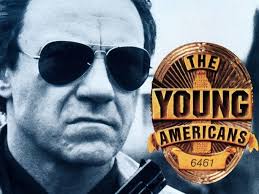
“Young Americans” (1993) is a British crime drama film directed by Danny Cannon, and it stars Harvey Keitel, Iain Glen, and Thandiwe Newton. It is often remembered for its dark and gritty depiction of London’s criminal underworld and an impressive performance by Harvey Keitel, who plays an American cop brought in to assist with a string of violent crimes.
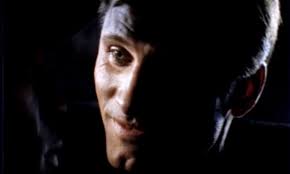
The story follows Detective John Harris (Harvey Keitel), an experienced New York cop, who is called to London to help investigate a series of brutal gangland killings involving young, reckless members of a dangerous American gang. These crimes are orchestrated by a charismatic yet ruthless gang leader, Carl Frazer (Viggo Mortensen), who is attempting to expand his criminal empire from the United States into London. As Harris teams up with Scotland Yard detective Edward Foster (Iain Glen), he finds himself immersed in a world of violence, betrayal, and a clash of cultures. As the investigation unfolds, Harris and Foster must navigate through the complexities of London’s criminal world, filled with deceit, corruption, and personal vendettas.
Harvey Keitel delivers a strong performance as Detective John Harris, bringing a sense of gravitas and world-weariness to his role. His portrayal of an American detective navigating the unfamiliar British system and customs adds a layer of fish-out-of-water humor, which contrasts with the darker tones of the story. Iain Glen, as the local detective Foster, provides a solid performance, effectively portraying a character caught between his professional duties and his personal struggles. The dynamic between Harris and Foster, though not groundbreaking, is compelling enough to keep viewers engaged.
Viggo Mortensen’s performance as Carl Frazer is one of the film’s highlights. He manages to bring a menacing charm to the character, making Frazer a memorable and formidable villain. Mortensen’s portrayal is both chilling and charismatic, adding depth to a role that could have easily fallen into cliché territory.
Thandiwe Newton, in one of her early roles, plays Rachael Stevens, a young woman caught in the crossfire of the gang’s violent world. Although her screen time is limited, Newton’s presence adds an emotional core to the story, providing a human element amidst the chaos and violence.
Danny Cannon’s direction gives “Young Americans” a distinctly dark and atmospheric feel, capturing the grimy, rain-soaked streets of London in a way that enhances the film’s noirish qualities. The film’s cinematography by Vernon Layton plays a significant role in setting the tone, with moody lighting and sharp contrasts that accentuate the tension and sense of danger. The action sequences are competently handled, and Cannon’s background in TV crime dramas is evident in the way the plot unfolds, though at times, it leans heavily on familiar tropes of the genre.
“Young Americans” explores themes of cultural clash, loyalty, and the seductive allure of power and violence. The film delves into the complexities of American versus British policing styles and highlights the generational divide between the older, more experienced Harris and the younger, more impulsive British officers. Additionally, the film touches on the impact of American pop culture and criminal enterprises on British society, presenting a critique of the influence of American gang culture abroad.
The portrayal of gang life and the allure it holds for young people is depicted with a gritty realism, though the film doesn’t delve too deeply into the social or economic factors driving these characters. Instead, it focuses more on the surface-level appeal of the gang lifestyle, with its fast cars, guns, and sense of belonging. This approach, while visually engaging, occasionally leaves the narrative feeling somewhat superficial.
One of the film’s major criticisms is its reliance on genre clichés. The “tough cop brought in to solve a crime” narrative is a well-worn trope, and while “Young Americans” tries to put its own spin on it, the plot does little to stray from predictable paths. The film’s pacing also suffers in places, with some scenes feeling unnecessarily drawn out, which can detract from the overall tension. The dialogue, at times, veers into melodrama, particularly in the interactions between Harris and Frazer, where the cat-and-mouse dynamic feels a bit forced.
Additionally, while the film attempts to explore the complexities of its characters, it often does so in a way that feels rushed or underdeveloped. Harris’ backstory, for example, is hinted at but never fully explored, which leaves his character feeling somewhat one-dimensional. Similarly, the relationship between Harris and Foster, while central to the plot, lacks the depth needed to make their partnership truly compelling.
The soundtrack of “Young Americans” features a mix of early 90s tracks, which serve to underscore the film’s edgy and youthful vibe. Notably, the movie’s theme song “Young Americans” by David Bowie, gives a nod to the cultural themes of the movie, although its inclusion feels more like a marketing decision than an artistic one.
While “Young Americans” boasts some strong performances, its character development is uneven. Harvey Keitel’s Detective John Harris is portrayed as a seasoned, no-nonsense cop with a hidden vulnerability, hinted at through subtle cues about his past. However, the film doesn’t delve deeply enough into his character, leaving much of Harris’s backstory and motivations unexplored. This lack of depth makes it challenging for the audience to fully connect with him beyond his role as the stereotypical tough cop.
Edward Foster, played by Iain Glen, is the ambitious local detective eager to prove himself. His character is somewhat more layered, revealing glimpses of his personal struggles and moral dilemmas, particularly in his interactions with the younger gang members who remind him of his own youthful recklessness. Foster’s internal conflict about the direction his life could have taken adds a layer of introspection to his character, though the film often prioritizes action over deeper character moments, which can cause these elements to feel underdeveloped.
Viggo Mortensen’s Carl Frazer, on the other hand, is a compelling antagonist whose charismatic and chilling presence dominates every scene he’s in. Mortensen brings a sense of unpredictability to Frazer, making him both fascinating and terrifying. However, Frazer’s motivations and backstory are kept somewhat vague, which, while adding to his enigmatic nature, also limits the audience’s understanding of what drives him beyond a basic thirst for power and control.
The film employs a variety of cinematic techniques to convey its gritty, noir atmosphere. Cannon uses handheld camera work during chase scenes to create a sense of immediacy and chaos, immersing the viewer in the action. This approach is effective in heightening tension but occasionally results in disorienting sequences that can be difficult to follow.
The use of London as a backdrop is one of the film’s strengths. The city is depicted in all its grimy glory, with dark alleys, neon-lit streets, and a constant drizzle that adds to the film’s moody ambiance. This portrayal of London not only serves the story but also acts as a character in its own right, with the city’s underbelly providing a fitting stage for the film’s unfolding drama. The stark contrast between the glamorous allure of the gang’s lifestyle and the bleak reality of their actions is visually underscored by the film’s setting.
Editing plays a crucial role in shaping the film’s narrative flow, but “Young Americans” struggles with maintaining a consistent pace. Some scenes linger longer than necessary, which can detract from the momentum, while others are rushed, glossing over potentially important character moments or plot details. This inconsistent pacing affects the overall rhythm of the film, making certain sequences feel disjointed.
The climactic moments, including confrontations between Harris and Frazer, are built up effectively but sometimes fall short in execution. The final showdown, while tense, doesn’t fully capitalize on the psychological battle between the characters, opting instead for a more straightforward action resolution. This choice, while providing a satisfying conclusion for action fans, may leave viewers seeking a deeper exploration of the characters’ psychological states wanting more.
“Young Americans” touches on themes of youth disillusionment and the seductive nature of gang culture, highlighting how young people are often drawn into crime as a means of seeking identity, power, or a sense of belonging. The film attempts to critique the glamorization of violence and the impact of American cultural exports on British youth. However, these themes are more implied than explicitly explored, and the film stops short of providing a nuanced commentary on the socio-economic conditions that drive these behaviors.
Moreover, the film briefly touches on the differences in policing styles between the American and British forces, illustrating a clash of ideologies. Harris’s brash, by-any-means-necessary approach contrasts sharply with the more procedural and bureaucratic style of the British police. This clash not only highlights cultural differences but also serves as a commentary on the varying approaches to law enforcement and the challenges of cross-border crime-fighting in a globalized world.
Upon its release, “Young Americans” received mixed reviews. Critics praised the performances, particularly those of Keitel and Mortensen, and the film’s dark, stylish aesthetic. However, it was also criticized for its reliance on genre clichés and its lack of a fully fleshed-out narrative. The film struggled to stand out in a crowded field of early ’90s crime dramas, many of which offered more innovative storytelling or more memorable characters.
Over time, “Young Americans” has garnered a modest cult following, appreciated for its atmospheric depiction of London’s criminal landscape and its performances. It remains a notable entry in the crime genre, especially for fans of the actors involved, but it is often seen as a film that had the potential to be more than the sum of its parts. Its exploration of transatlantic crime connections and the cultural influences of American gangs on British soil were ahead of its time, though the film’s execution didn’t fully realize the depth and complexity of these ideas.
“Young Americans” is a gritty, atmospheric crime drama that benefits from strong performances, particularly from Keitel and Mortensen, and a solid visual style. However, it falls short in terms of narrative depth and originality. While the film provides an interesting look at the clash between American and British crime cultures, it ultimately relies too heavily on familiar genre conventions, preventing it from reaching the heights of more memorable crime dramas. Nevertheless, for fans of the genre, “Young Americans” offers a decent, if somewhat formulaic, dive into London’s criminal underworld.
Special Features and Technical Specs:
1080p High-definition presentation on Blu-ray
Audio Commentary by film critic Bilge Ebiri (2024)
The Outsider– interview with director Danny Cannon (2024)
Young Blood – interview with actor Craig Kelly (2024)
No London I Recognize – interview with production designer Laurence Dorman (2024)
The Lighting American – interview with director of photography Vernon Layton (2024)
The Young Producer– interview with producer Paul Trijbits (2024)
Zoe:“Vampires are lucky, they can feed on others. We gotta eat away at ourselves. We gotta eat our legs to get the energy to walk. We gotta come, so we can go. We gotta suck ourselves off. We gotta eat away at ourselves til there’s nothing left but appetite. We give, and give and give crazy. Cause a gift that makes sense ain’t worth it. Jesus said seventy times seven. No one will ever understand why, why you did it. They’ll just forget about you tomorrow, but you gotta do it.”
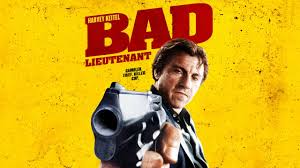
“Bad Lieutenant” is a 1992 crime drama directed by Abel Ferrara, starring Harvey Keitel in one of his most compelling and raw performances. This film is a deep dive into the tortured psyche of a morally corrupt New York City police lieutenant, whose descent into vice and degradation serves as a harrowing character study. “Bad Lieutenant” is not just about crime; it’s about the human capacity for self-destruction and the possibility of redemption, making it one of the most unsettling yet profound films of the early ’90s.
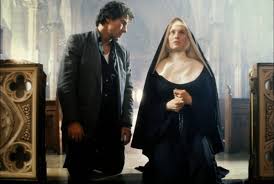
The film follows an unnamed lieutenant, played by Keitel, who is mired in addiction, corruption, and self-loathing. He spends his days engaging in illicit activities such as drug use, gambling, and abuse of power. His personal life is in shambles, characterized by estrangement from his family and a lack of meaningful connections. The plot intensifies when the lieutenant investigates the brutal rape of a nun. However, instead of simply pursuing justice, he spirals further into his vices, using the investigation as an opportunity to indulge in his darkest impulses.
Throughout the film, the lieutenant’s self-destructive behavior escalates. He loses vast sums of money on baseball bets, creating a sense of impending doom. The case of the raped nun becomes a mirror reflecting his own moral failings. Unlike him, the nun displays an unfathomable level of forgiveness towards her attackers, challenging the lieutenant’s cynical worldview. This juxtaposition of the nun’s purity and the lieutenant’s depravity is central to the narrative, driving the story toward its climax, where the lieutenant’s confrontation with the rapists becomes a pivotal moment of reckoning.
“Bad Lieutenant” is rich with themes of guilt, redemption, and the search for grace. At its core, the film examines the dichotomy between sin and forgiveness. The lieutenant’s journey is marked by a profound sense of guilt; his every action is driven by an inner torment that he cannot escape. This guilt is amplified by the Catholic iconography that pervades the film, symbolizing the lieutenant’s deep-seated religious conflict. He is a man who understands the concept of sin but finds himself powerless to break free from his vices.
The film also delves into the idea of redemption, though not in the traditional sense. The lieutenant’s redemption is not about becoming a better person but rather about reaching a state of self-awareness. His encounter with the nun’s attackers is less about justice and more about his own desperate need for catharsis. This moment is one of the most powerful in the film, as it forces the lieutenant to confront his own capacity for forgiveness. By the end of the film, his actions suggest a complex, ambiguous form of redemption—one that leaves audiences questioning the true nature of morality and atonement.
Harvey Keitel’s performance is the film’s centerpiece. His portrayal of the lieutenant is unflinchingly raw, pushing the boundaries of what audiences might expect from a leading role. Keitel’s commitment to the character is evident in every scene, from his unrestrained physicality to the emotional nakedness he brings to the role. He embodies the lieutenant’s rage, despair, and yearning for salvation with a visceral intensity that is both mesmerizing and uncomfortable to watch. Keitel’s work in “Bad Lieutenant” is often considered one of his finest performances, as he fully immerses himself in the character’s depravity, making the lieutenant both repulsive and pitiable.
Abel Ferrara’s direction is gritty and unflinching, perfectly complementing the film’s themes. Ferrara is known for his ability to portray the underbelly of urban life, and “Bad Lieutenant” is no exception. The film’s visual style reflects the lieutenant’s inner turmoil, with its grainy cinematography and unpolished look capturing the bleakness of his existence. The use of New York City as a backdrop adds to the film’s authenticity, with its dark alleys, seedy bars, and grimy streets serving as a reflection of the lieutenant’s fractured soul.
Cinematographer Ken Kelsch uses light and shadow effectively to underscore the lieutenant’s moral ambiguity. The film’s visual language often places the lieutenant in harsh, unforgiving light, highlighting his vulnerability and the severity of his situation. The city itself becomes a character, its relentless pace and unforgiving nature mirroring the lieutenant’s internal chaos. The handheld camera work creates a sense of immediacy and intimacy, drawing the audience into the lieutenant’s world in a way that is both immersive and unsettling.
“Bad Lieutenant” was controversial upon its release, primarily due to its explicit content and unapologetic portrayal of the lieutenant’s vices. The film’s graphic depictions of drug use, sexual violence, and moral degradation were shocking to many viewers and sparked debates about the limits of on-screen content. However, it is precisely this unflinching portrayal that has solidified the film’s status as a cult classic. Ferrara and Keitel did not shy away from the darker aspects of the story, instead embracing the rawness that defines the film’s impact.
The movie’s legacy extends beyond its initial reception; it has influenced numerous films and television shows that explore similar themes of moral ambiguity and the complexities of human behavior. “Bad Lieutenant” set a standard for gritty, character-driven narratives that focus on deeply flawed protagonists, paving the way for more nuanced portrayals of anti-heroes in cinema. The film also sparked a loose sequel, “Bad Lieutenant: Port of Call New Orleans,” directed by Werner Herzog and starring Nicolas Cage. Though not directly connected, the sequel revisits the themes of moral corruption and personal redemption in a similarly provocative manner.
One of the most striking aspects of “Bad Lieutenant” is its relentless focus on the lieutenant’s character. Unlike traditional crime dramas that balance the protagonist’s flaws with moments of heroism, this film makes no such concessions. The lieutenant is depicted as a man almost entirely devoid of virtue, lost in a sea of addiction, despair, and nihilism. His journey is not a redemption arc in the conventional sense but rather a depiction of self-destruction, where each decision digs him deeper into his own personal hell.
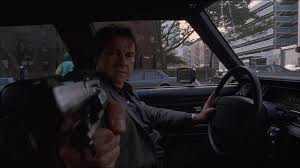
His addictions are not portrayed with glamour or allure; instead, they are shown as compulsions that strip him of his humanity. Whether snorting cocaine, smoking crack, or engaging in degrading sexual encounters, the lieutenant’s actions are less about seeking pleasure and more about numbing an insatiable pain. This is perhaps best exemplified in a scene where he confronts two young women in a car, coercing them in a display of power that is both pathetic and horrifying. This moment, like many others in the film, forces viewers to witness the depths of his depravity without the usual cinematic buffers that might soften his actions.
Religion is a pervasive element in “Bad Lieutenant,” used to underscore the lieutenant’s inner conflict. Catholicism, with its emphasis on sin, guilt, and the possibility of redemption, serves as a thematic backbone. The nun’s rape case is the central narrative device that forces the lieutenant to confront his own sense of morality—or lack thereof. Her willingness to forgive her attackers contrasts sharply with his inability to forgive himself, highlighting his internal struggle.
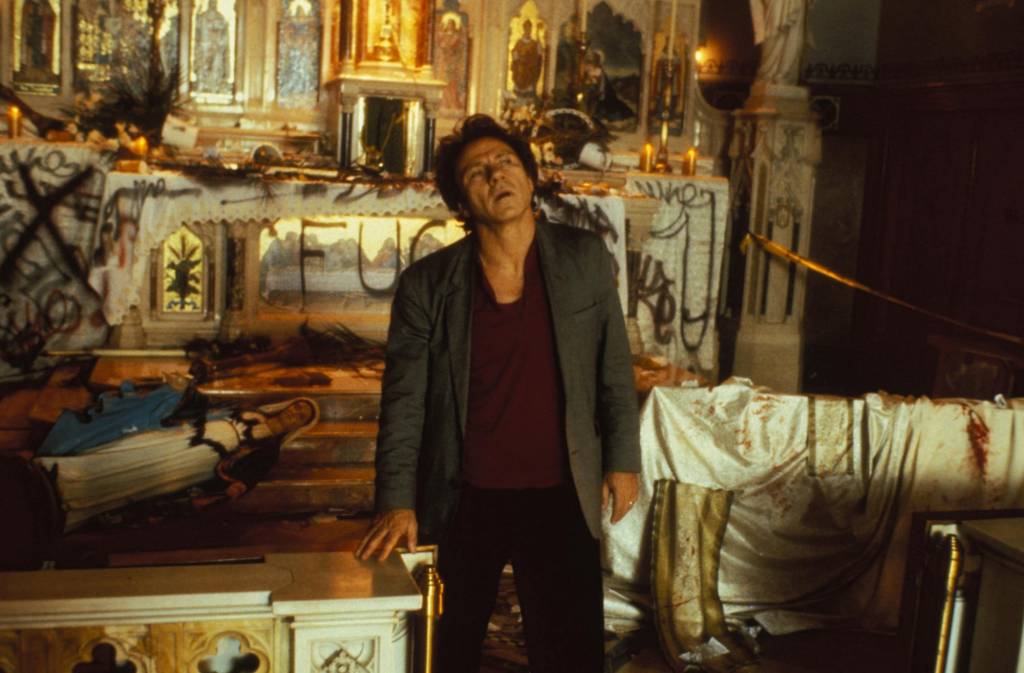
The lieutenant’s interactions with religious icons, such as the crucifix and various statues of saints, serve as visual representations of his inner turmoil. These symbols are not just decorative; they are reminders of the spiritual and moral codes that the lieutenant continually violates. One of the film’s most intense scenes involves the lieutenant in a church, hallucinating a vision of Jesus. This moment is pivotal, as it encapsulates his desperate need for absolution, yet also his profound disconnection from any real sense of faith or forgiveness.
Ferrara uses these religious motifs not as answers but as questions, leaving the lieutenant—and the audience—to grapple with their meaning. Is the lieutenant capable of redemption, or is he too far gone? The film does not offer a clear resolution, instead leaving this question open to interpretation. The religious symbolism in “Bad Lieutenant” elevates it from a simple crime drama to a meditation on the human soul’s capacity for both evil and grace.
The soundtrack of “Bad Lieutenant” plays a subtle yet significant role in enhancing the film’s oppressive atmosphere. Ferrara, known for his use of music to underscore emotional landscapes, selects tracks that reflect the lieutenant’s chaotic inner world. The film’s score, composed by Joe Delia, combines haunting melodies with dissonant sounds that evoke a sense of dread and unease. These musical elements, paired with the diegetic sounds of New York City—the honking of car horns, the chatter of street vendors, the distant wail of sirens—create an auditory backdrop that immerses the viewer in the lieutenant’s environment.
Particularly effective are the moments of silence or minimal sound, which Ferrara uses to punctuate the lieutenant’s moments of introspection or despair. These quieter scenes allow the audience to sit with the weight of the character’s actions and the film’s themes, creating a space for reflection amidst the otherwise relentless pace of the lieutenant’s downward spiral.
“Bad Lieutenant” is often compared to Martin Scorsese’s “Taxi Driver” (1976) in its portrayal of a man at war with his own demons, navigating a city that seems indifferent to his suffering. Both films explore themes of alienation, moral decay, and the quest for some form of justice, however misguided. However, where Travis Bickle in “Taxi Driver” seeks to cleanse the streets of its perceived corruption, the lieutenant in “Bad Lieutenant” is entrenched within that very corruption. He is not an outsider looking in; he is part of the rot that he simultaneously despises.
Another point of comparison is with Ferrara’s own earlier works, such as “King of New York” (1990), which also examines the lives of morally ambiguous characters in an urban setting. However, “Bad Lieutenant” is distinct in its unrelenting focus on a singular character’s psychological disintegration, making it a more intimate and, at times, claustrophobic viewing experience.
The film’s influence can be seen in later works that explore the complexities of anti-heroes, such as Darren Aronofsky’s “Requiem for a Dream” (2000) or Nicolas Winding Refn’s “Drive” (2011), both of which feature protagonists caught in cycles of violence and addiction. “Bad Lieutenant” helped pave the way for this darker, more nuanced approach to character study in cinema, challenging audiences to empathize with deeply flawed individuals.
Upon its release, “Bad Lieutenant” was met with polarizing reactions from critics and audiences alike. Some praised it as a masterpiece of character-driven storytelling, lauding Keitel’s fearless performance and Ferrara’s uncompromising direction. Others criticized the film for its explicit content and bleak outlook, finding it difficult to connect with a protagonist who seems irredeemable. However, over time, the film has gained recognition as a cult classic, appreciated for its bold approach and willingness to tackle difficult themes.
Critically, “Bad Lieutenant” has been analyzed through various lenses, including psychoanalytic theory, religious symbolism, and postmodernism. Scholars have explored the lieutenant’s character as a representation of the fractured modern self, torn between desire and duty, sin and salvation. The film’s refusal to provide easy answers has been interpreted as a commentary on the nature of human existence itself, which is often messy, contradictory, and unresolved.
“Bad Lieutenant” endures as a powerful, provocative exploration of the human condition. Its stark portrayal of addiction, guilt, and the elusive search for redemption challenges viewers to look beyond conventional narratives of good versus evil. Harvey Keitel’s performance remains a touchstone for actors portraying deeply troubled characters, setting a high standard for vulnerability and intensity on screen.
Abel Ferrara’s vision, though often bleak, is not without its moments of grace. The film suggests that even in the darkest corners of human experience, there exists the possibility of connection, understanding, and perhaps even forgiveness. The lieutenant’s story is not just about a man lost to his vices; it is about the struggle to find meaning in a world that offers little in the way of comfort or clarity.
In the end, “Bad Lieutenant” does not ask us to forgive the lieutenant, nor does it insist on his redemption. Instead, it presents a portrait of a man grappling with the weight of his own choices, set against the backdrop of a city that is as unforgiving as it is vibrant. It is a film that invites reflection on our own moral boundaries and the ways in which we navigate our personal journeys toward understanding and peace. In doing so, “Bad Lieutenant” remains a timeless, if unsettling, piece of cinema that continues to resonate with audiences seeking more than just entertainment, but a deeper engagement with the complexities of the human soul.
“Bad Lieutenant” is not an easy film to watch, nor is it meant to be. It challenges viewers to confront uncomfortable truths about human nature and the potential for both destruction and redemption within each of us. Harvey Keitel’s performance is nothing short of transformative, and Abel Ferrara’s direction creates a world that is as haunting as it is authentic. The film’s exploration of sin, forgiveness, and the quest for meaning in a seemingly meaningless existence is as relevant today as it was upon its release.
Ultimately, “Bad Lieutenant” is a film about a man on the edge, grappling with the weight of his own sins and searching for a way out of the darkness. It is a stark reminder of the fragility of the human spirit and the complexities of the human condition. The film doesn’t offer easy answers or a neat resolution; instead, it presents a portrait of a man whose journey is as tragic as it is compelling. For those willing to engage with its challenging content, “Bad Lieutenant” offers a powerful cinematic experience that lingers long after the credits roll.
Special Features and Technical Specs:
1080p High-definition presentation on Blu-ray
Audio Commentary by director Abel Ferrara and director of photography Ken Kelsch
It All Happens Here: Abel Ferrara & the Making of ‘Bad Lieutenant’– documentary (2009)
NEW All on the Line – interview with director Abel Ferrara (2024)
NEW Forgive Me, Father: Channeling the Lord – interview with actor Paul Hipp (2024)
NEW Entirely Uncompromised: ‘Dangerous Game’ and ‘Bad Lieutenant’ – interview with composer Joe Delia (2024)
NEW Editor Provocateur: Crafting the Chaos of ‘Bad Lieutenant’– interview with editor Anthony Redman (2024)
NEW Building Bad: The Making of ‘Bad Lieutenant’ – interview with producer Diana Phillips (2024)
Featuring: Steve Carell, Kristen Wiig, Pierre Coffin, Joey King, Miranda Cosgrove, Stephen Colbert, Sofía Vergara, Steve Coogan, Madison Polan, Dana Gaier, Chloe Fineman and Will Ferrell
Gru:“You seriously want to kidnap a honey badger? Do you have any idea how dangerous they are? They literally eat bees and cobras for breakfast, honey badger don’t care!”
Illumination’s Despicable Me 4 marks a welcome return to the beloved franchise that has delighted audiences for over a decade. Picking up where Despicable Me 3 left off, the film continues to balance heartwarming family drama with outrageous comedy and lovable characters.
Gru, the former supervillain turned adoptive father, is still navigating his new role as a family man. His daughters, Margo,Edith, and Agnes, are growing up, each with their own unique personalities and challenges. Meanwhile, Gru’s mischievous Minions continue to provide endless chaos and laughter.
The film’s central plot revolves around a mysterious new villain, who poses a significant threat to Gru and his family. The antagonist’s motivations are intriguing, and the climactic confrontation is both exciting and satisfying. However, it’s the smaller moments that truly shine. The interactions between Gru and his daughters are heartwarming, and the Minions’ antics are as hilarious as ever.
One of the standout aspects of Despicable Me 4 is its visual appeal. The animation is vibrant and detailed, creating a colorful and imaginative world. The film’s soundtrack is also excellent, featuring a mix of catchy original songs and classic tunes that complement the action on screen.
While the film may not break new ground in terms of storytelling, it delivers exactly what fans have come to expect from the franchise: a fun, family-friendly adventure filled with humor, heart, and lovable characters. Despicable Me 4 is a worthy addition to the series and is sure to please both longtime fans and newcomers alike.
While the surface-level plot of Despicable Me 4 may seem familiar to fans of the series, the film offers a deeper exploration of themes such as family, friendship, and self-discovery. Gru’s journey as a father is particularly poignant, as he grapples with the challenges of balancing his own desires with the needs of his growing family.
The film also delves into the complexities of friendship, particularly between Gru and his former nemesis, Lucy Wilde.Their evolving relationship adds a layer of depth and nuance to the story, demonstrating that even the most unlikely of pairings can form strong bonds.
Perhaps most importantly, Despicable Me 4 is a celebration of individuality. Each character, from Gru and Lucy to the Minions, is unique and brings their own special qualities to the story. This emphasis on diversity and acceptance is a refreshing and timely message.
While Despicable Me 4 is undoubtedly a fun and entertaining film, it’s not without its flaws. Some critics have argued that the film’s plot is overly predictable, and that the villain’s motivations are somewhat lacking in depth. Additionally, the Minions’ antics, while undoubtedly funny, can sometimes feel excessive and detract from the overall narrative.
Despite these criticisms, Despicable Me 4 remains a solid addition to the franchise. Its strong characters, vibrant animation, and heartwarming themes make it a worthwhile watch for audiences of all ages. While it may not be the most groundbreaking film of the year, it delivers on its promise of providing a fun and family-friendly experience.
Paramount+ has unleashed the trailer for the psychological thriller “Apartment 7A” which serves as a prequel to Roman Polanski classic “Rosemary’s Baby”.
An ambitious young dancer Terry Gionoffrio (Julia Garner) dreams of fame and fortune in New York City, but after suffering a devastating injury, an older, wealthy couple (Dianne Wiest and Kevin McNally) welcomes her into their home in the luxury apartment building the Bramford.
When fellow resident and influential Broadway producer (Jim Sturgess) offers her another chance at fame, it seems that all her dreams are finally coming true.
Marli Siu, Andrew Buchan, Rosy McEwen and Kobna Holdbrook-Smith co-star. “Relic” director Natalie Erika James helms the project which has John Krasinski and Michael Bay’s Platinum Dunes label producing.
Featuring: Patrick Macnee, Ian Hendry, Honor Blackman, Julie Stevens, Diana Rigg, Linda Thorson and Patrick Newell
John Steed:“Gale, we’re needed.”
The Avengers DVD set featuring Honor Blackman is a delightful collection for fans of classic British television and vintage spy dramas. This set captures the essence of the 1960s television series at its peak, with Honor Blackman playing Cathy Gale, the fierce and intelligent leather-clad partner to John Steed (Patrick Macnee).
Performance and Character Dynamics: Honor Blackman is an absolute standout in her role as Cathy Gale, bringing a unique blend of elegance, intelligence, and physicality that broke the mold for female characters on television at the time. Her dynamic with Patrick Macnee’s debonair John Steed is electric and adds a layer of sophistication and wit to each episode.
Blackman’s portrayal is nuanced, capturing a character who is equal parts brains and brawn, and her martial arts skills bring an exciting, modern twist to the show’s action sequences.
Episodes and Quality: This DVD set features many of the best episodes from the early 1960s, showcasing a range of creative, quirky, and sometimes downright bizarre storylines that have become synonymous with The Avengers. From espionage capers to encounters with eccentric villains, each episode is filled with witty dialogue, clever plot twists, and a distinctive blend of humor and suspense. The transfer quality on the DVDs is decent, maintaining the charm of the original black-and-white footage, although viewers should not expect modern remastering standards.
Extras and Packaging: The packaging of the DVD set is sleek and elegant, reflecting the sophisticated style of the show. Unfortunately, the set does lack extensive special features or behind-the-scenes content that would have enriched the viewing experience, such as interviews with the cast or crew or retrospectives on the series’ impact. However, the episodes themselves are presented in their entirety, providing hours of nostalgic entertainment.
Overall Appeal: For fans of Honor Blackman or those interested in classic television, this DVD set is a must-have. It serves as a time capsule of 1960s British culture and entertainment, capturing the charm and wit of The Avengers at its height. The set is a celebration of Honor Blackman’s trailblazing role, which paved the way for future female action heroes.
Cultural Impact and Legacy: One of the most striking elements of this DVD set is how it highlights the cultural impact of The Avengers, particularly during the 1960s. Honor Blackman’s Cathy Gale was a groundbreaking character, representing a new kind of female television presence—confident, assertive, and capable of standing her ground in any situation. At a time when female characters were often relegated to secondary roles, Gale was an equal partner to Steed, both in wit and in combat. Blackman’s performance contributed to the growing feminist movement, providing a role model for independent, intelligent women.
Stylish Production Design and Iconic Fashion: The show’s production design remains one of its standout features. The DVD set captures the distinctively stylish, surreal world that The Avengers is known for, with its bold set designs, elaborate props, and imaginative cinematography. Blackman’s costumes, particularly her leather outfits, became iconic in their own right, helping to set fashion trends of the era. The stylish visuals and unique aesthetic—marked by its mix of mod culture, British eccentricity, and a dash of surrealism—make this collection as much a feast for the eyes as it is an engaging series of stories.
Range of Episodes and Tone: The episodes included in this DVD set span a wide range of tones and genres, showcasing the flexibility of the series. From gritty noir to science fiction, and from satirical comedy to psychological thrillers, the set provides a broad sampling of the show’s eclectic style. For instance, episodes like “The Golden Fleece” and “Death of a Batman” explore themes of espionage and intrigue, while “The Nutshell” and “The Little Wonders” delve into darker, more mysterious territory. Each episode presents a self-contained story that is rich with unpredictable plots, quirky characters, and the show’s signature offbeat humor.
Technical Considerations and Restoration: While the DVD set is a treasure trove for fans, it’s worth noting that the video quality may not be pristine by today’s high-definition standards. Some viewers might notice grain or minor imperfections in the transfer, which are typical for shows of this era. However, these minor issues are unlikely to detract from the overall enjoyment of the series, and for many fans, they may even add to the nostalgic charm of the original broadcast presentation. The sound quality, while generally clear, may also reflect the limitations of 1960s recording technology.
Overall Experience and Recommendation: This DVD set is an excellent introduction to one of the most innovative television series of its time. It’s perfect for those who appreciate sharp dialogue, clever plotlines, and the unmistakable flair of 1960s television. Honor Blackman’s contribution to The Avengers is immeasurable; her portrayal of Cathy Gale remains a highlight of the series, making this collection particularly special. The chemistry between Blackman and Macnee is palpable, and their on-screen banter elevates each episode, creating a timeless appeal that still resonates today.
In short, this DVD collection is a perfect homage to a beloved series and a phenomenal actress who helped redefine television’s portrayal of women in action roles.
Featuring: Cailee Spaeny, David Jonsson, Archie Renaux, Isabela Merced, Spike Fearn and Aileen Wu
Andy:“The solution for a claustrophobic astronaut is to give him more space.”
“Alien: Romulus” marks a triumphant return to the horror and sci-fi roots of the iconic Alien franchise. Director Fede Álvarez has crafted a thrilling and suspenseful film that manages to both pay homage to the series’ legacy while also carving out its own unique identity.
The film’s narrative, set between the events of the original Alien and Aliens, follows a group of young survivors from a desolate mining colony who embark on a perilous journey to a derelict space station. Their hopes of finding a better life quickly turn into a nightmare as they encounter a horrifying new Xenomorph variant.
Romulus excels in its atmosphere and tension. The desolate, claustrophobic setting of the space station is brilliantly realized, creating a constant sense of dread and unease. The Xenomorph design is both familiar and terrifying, with the creature’s predatory nature and grotesque appearance evoking a visceral sense of fear.
The performances are uniformly strong. Cailee Spaeny delivers a compelling performance as Rain, a resilient young woman who must overcome her fears to protect her friends. David Jonsson is equally impressive as Andy, a loyal android with a complex relationship to his human companions.
One of the film’s greatest strengths lies in its ability to balance horror and character development. While the Xenomorph threat is always present, the film also takes the time to explore the relationships between the characters, giving them depth and humanity. This ensures that the audience is invested in their survival and the stakes feel genuinely high.
“Alien: Romulus”is a must-see for fans of the Alien franchise and horror fans in general. It’s a film that delivers on every level, offering a thrilling, suspenseful, and thought-provoking cinematic experience.
While the film’s surface-level appeal lies in its horror and action elements, ”Alien: Romulus”also offers a rich tapestry of themes that delve into the nature of humanity, technology, and the dangers of unchecked corporate greed.
Humanity and Survival: The film’s central conflict revolves around the survivors’ struggle to stay alive in a hostile environment. This theme echoes the original Alien, where the crew of the Nostromo were forced to confront their own mortality and the fragility of human existence. However, Romulus takes this theme a step further by exploring the psychological toll of isolation and the lengths to which humans will go to protect themselves.
Technology and Alienation: The film also examines the relationship between humans and technology. The androids in Romulus, particularly Andy, serve as a constant reminder of the limitations of human ingenuity and the potential dangers of artificial intelligence. This theme is particularly relevant in today’s world, where technology is becoming increasingly integrated into our lives.
Corporate Greed and Exploitation: The film’s setting, a derelict space station, is a stark reminder of the consequences of unchecked corporate greed. The mining colony that the survivors came from was likely exploited by a powerful corporation, leaving them vulnerable to the dangers of the alien world. This theme is a timely one, as it reflects the real-world issues of corporate accountability and environmental exploitation.
“Alien: Romulus”is a worthy addition to the Alien franchise, offering a fresh take on the series’ classic themes while remaining true to its roots. Here’s a comparative analysis of the two films:
Similarities:
Xenomorph Threat: Both films center around the terrifying threat posed by the Xenomorph. The creature’s design and behavior remain consistent, ensuring a sense of familiarity for fans of the series.
Isolation and Survival: The characters in both films are trapped in isolated environments and must fight for their survival against overwhelming odds. This creates a sense of tension and dread that is central to the Alien franchise.
Themes of Humanity and Technology: Both films explore the relationship between humans and technology, with the androids serving as a constant reminder of the limitations of human ingenuity.
Differences:
Time Period: Romulus is set between the events of the original Alien and Aliens, allowing for a more expansive exploration of the franchise’s universe.
Character Dynamics: While the original Alien focused on a crew of seasoned professionals, Romulus features a group of young survivors. This shift in perspective offers a different take on the human response to the Xenomorph threat.
Tone: Romulus leans more heavily into the horror elements, with a darker and more atmospheric tone than the original film.
“Alien: Romulus”is a successful sequel that manages to both honor the legacy of the original Alien and carve out its own unique identity. By exploring familiar themes in new and exciting ways, the film delivers a thrilling and thought-provoking cinematic experience that will satisfy both long-time fans and newcomers to the franchise.
Featuring: Tony Curtis, Roger Moore and Laurence Naismith
Chivers:“You might want to try for a pheasant, m’lord. I’ll get the guns.”
Lord Brett Sinclair: “Thank you, Chivers. A good idea.”
Danny Wilde:“You still shoot peasants around here, huh?”
The Persuaders! is a classic British television series that aired between 1971 and 1972, featuring a unique blend of action, comedy, and adventure. Starring Roger Moore as Lord Brett Sinclair and Tony Curtis as Danny Wilde, the show was an ambitious production that paired two actors with contrasting styles and backgrounds, which resulted in a dynamic and entertaining on-screen chemistry.
The series centers around the unlikely partnership between Lord Brett Sinclair, a suave and sophisticated English aristocrat, and Danny Wilde, a street-smart, self-made millionaire from the Bronx. Both are wealthy, charming, and irresistibly handsome, but they couldn’t be more different in their approach to life. Their paths cross when they are recruited by retired judge Fulton (Laurence Naismith) to bring criminals to justice, often those who have escaped the law through loopholes or corruption.
Sinclair and Wilde’s partnership is at the heart of the series. The contrasting personalities of the two protagonists create a delightful and often comedic interplay. Sinclair is the epitome of British nobility, with a taste for fine wines, classic cars, and tailored suits, while Wilde is brash, impulsive, and has a penchant for flashy clothes and fast cars. Their differences, however, complement each other perfectly, with each bringing their own skills and resources to the table.
One of the most significant strengths of The Persuaders! is the chemistry between Roger Moore and Tony Curtis. Moore, who was later to become synonymous with the role of James Bond, brings a debonair elegance to Lord Brett Sinclair. His portrayal is refined and charismatic, capturing the essence of a British aristocrat with a hint of playful arrogance. Tony Curtis, on the other hand, is a bundle of energy as Danny Wilde, delivering a performance that is equal parts charming and cheeky. Curtis’s comedic timing and his ability to deliver witty one-liners with ease add a light-heartedness to the show that balances well with Moore’s more restrained performance.
The banter between the two leads is often the highlight of each episode. The scriptwriters clearly had fun playing up the cultural differences between the American and the Brit, leading to numerous humorous exchanges. The show’s dialogue is sharp, witty, and filled with double entendres, making it a joy to watch for those who appreciate clever wordplay.
The Persuaders! was a lavish production for its time, with a budget that allowed for filming in exotic locations across Europe. The show’s glamorous settings, from the French Riviera to the Swiss Alps, added to the appeal of the series, giving it an air of sophistication and international intrigue. The production values were high, with well-choreographed action sequences, stylish costumes, and a memorable soundtrack composed by John Barry, known for his work on the James Bond films. The theme tune, in particular, has become iconic, setting the tone for the show’s blend of elegance and excitement.
Visually, the series is a treat, with stunning cinematography that captures the beauty of the locations and the opulence of the characters’ lifestyles. The cars, clothes, and gadgets featured in the show were all top-of-the-line for the era, adding to the allure of the series. The Persuaders! is often seen as a time capsule of early 1970s style, with its bold colors, flared trousers, and extravagant designs.
Each episode of The Persuaders! follows a standalone story, usually involving some form of caper or adventure. The episodic nature of the series makes it easy to pick up and watch at any point, but it also means that there isn’t much in the way of overarching narrative or character development. The plots are generally light-hearted, focusing more on the fun and entertainment value rather than deep storytelling. This approach, while making the show highly accessible and enjoyable, can sometimes feel repetitive, as the formula of the two leads getting into and out of trouble remains largely unchanged throughout the series.
The show often employs a tongue-in-cheek tone, never taking itself too seriously. This self-awareness works in its favor, allowing it to embrace the more outlandish aspects of its plots without feeling ridiculous. The villains are often larger-than-life characters, ranging from corrupt businessmen to international spies, adding to the sense of adventure and excitement.
Despite its short run, The Persuaders! has left a lasting legacy in the world of television. It was particularly popular in Europe, where it gained a cult following, and it continues to be fondly remembered by fans of classic TV. The show’s influence can be seen in later buddy-cop and adventure series, which often tried to replicate the chemistry and style of Sinclair and Wilde.
For Roger Moore, the role of Brett Sinclair was a precursor to his portrayal of James Bond, and many elements of his performance in The Persuaders! can be seen in his later Bond films. The show also solidified Tony Curtis’s status as a versatile actor capable of both comedic and dramatic roles.
While The Persuaders! is beloved for its lighthearted tone and stylish execution, it’s important to recognize the series within the broader context of television history and the genre trends of the early 1970s.
The Persuaders! emerged during a period when television was exploring new frontiers in genre blending, particularly in the realms of action, comedy, and adventure. The late 1960s and early 1970s were marked by a shift in TV programming, where escapism became a central theme. Shows like The Avengers, Mission: Impossible, and I Spy had already set the stage for international intrigue, quirky humor, and charismatic leads. The Persuaders! capitalized on these trends, offering a show that was both of its time and ahead of its time.
One of the most significant aspects of The Persuaders! was its ability to bridge the gap between American and British television sensibilities. While American TV was leaning heavily into fast-paced, action-driven narratives, British TV was still characterized by a certain restraint and focus on dialogue and character. The Persuaders! managed to marry these two approaches, creating a hybrid that appealed to audiences on both sides of the Atlantic.
The casting of Roger Moore and Tony Curtis was a masterstroke that played a crucial role in the show’s appeal. At the time, Roger Moore was already well-known for his role in The Saint, but The Persuaders! allowed him to showcase a more humorous and relaxed side of his persona, which would later become a hallmark of his James Bond interpretation. Tony Curtis, on the other hand, brought Hollywood glamour and a touch of rebellion to the series. Known primarily for his film work, including classic comedies like Some Like It Hot, Curtis’s transition to television was seen as a significant coup for the series.
The on-screen rapport between Moore and Curtis was legendary, but it’s worth noting that their off-screen relationship was more complex. Reports suggest that the two actors had different working styles and that there was occasional tension on set. However, this tension never detracted from the final product; if anything, it added a layer of authenticity to the playful rivalry between their characters.
Despite its many strengths, The Persuaders! faced challenges that ultimately contributed to its short lifespan. One of the primary issues was its reception in the United States. While the show was a hit in Europe, particularly in the UK, France, and Germany, it struggled to find a foothold in the US market. American audiences were perhaps less familiar with the dry British humor and the sophisticated tone that the series often employed. Additionally, the show aired on ABC, a network that was undergoing significant changes at the time, which may have affected its promotion and scheduling.
Another limitation was the episodic nature of the series. While the standalone stories made the show accessible, they also meant that there was little continuity or character development over time. In an era where serialized storytelling was becoming more popular, The Persuaders! may have felt somewhat dated or lacking in depth for some viewers. The show’s reliance on formulaic plots—where Sinclair and Wilde would get embroiled in a new adventure each week—while entertaining, did little to keep audiences invested in a long-term narrative.
Despite its premature end, The Persuaders! has had a lasting impact on the genre and on television as a whole. The show’s emphasis on style, humor, and the dynamic between two contrasting leads can be seen in later series such as Starsky & Hutch, The Dukes of Hazzard, and Remington Steele. The “buddy cop” genre, which became hugely popular in the 1980s and 1990s, owes much to the template established by The Persuaders!.
The series also contributed to the global appeal of British television. Its success in Europe, particularly in France and Germany, paved the way for other British shows to gain international recognition. Even today, The Persuaders! is celebrated in these countries, with reruns still being shown and special edition DVDs being released.
In terms of pop culture, The Persuaders! has been referenced in various forms of media, from films to music videos. The show’s distinctive aesthetic—its fashion, cars, and locales—has also made it a source of inspiration for retro-themed projects and homages.
The Persuaders! is a delightful mix of action, comedy, and style that showcases the best of 1970s television. Its winning formula of charismatic leads, exotic locations, and witty dialogue makes it a timeless piece of entertainment. While it may not delve deeply into complex narratives or character arcs, its charm lies in its simplicity and the sheer fun of watching two vastly different characters work together to solve problems and outwit the bad guys. For fans of classic TV, The Persuaders! is a must-watch, offering a nostalgic trip back to an era of glamorous adventures and light-hearted escapades.
Featuring: Maurice Colbourne, Jan Harvey, Glyn Owen, Dulcie Gray, Stephen Yardley, Tony Anholt, Susan Gilmore,Tracey Childs, Edward Highmore, Cindy Shelley, Ivor Danvers, Patricia Shakesby, Sarah-Jane Varley, Nigel Davenport, Lana Morris, Sian Webber, Kate O’Mara and Jeff Harding
Jan Howard:“…”bought a copy of ‘The Good Sea-Wives Handbook!…””
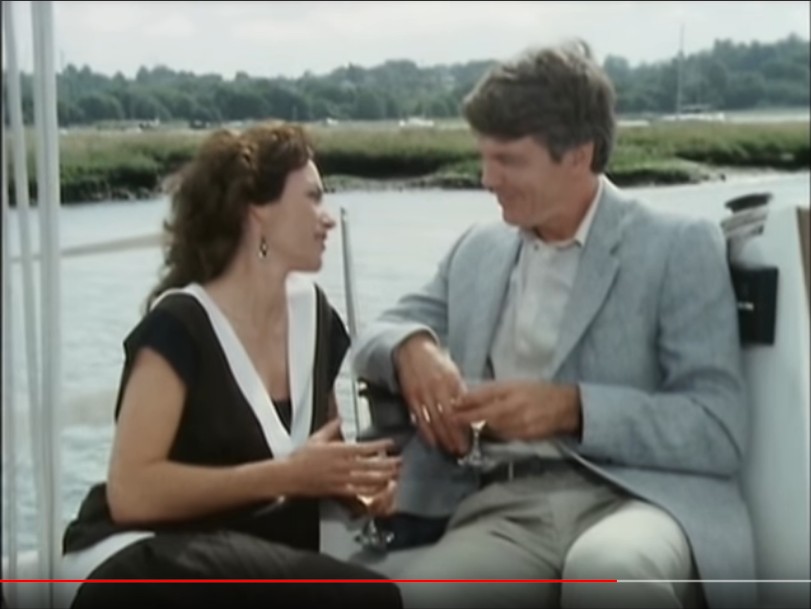
“Howards’ Way” is a quintessential British television drama that aired from 1985 to 1990 on BBC One. Created by Gerard Glaister and Allan Prior, the show is often described as the UK’s answer to American primetime soaps like “Dallas” and “Dynasty,” blending elements of family drama, corporate intrigue, and romantic entanglements set against the backdrop of the beautiful South Coast of England.
Set in the fictional town of Tarrant, which is located on the picturesque Hampshire coastline, “Howards’ Way” centers around the lives of two families: the Howards and the Urquharts. At the heart of the story is Tom Howard (played by Maurice Colbourne), a disillusioned aircraft designer who, after losing his job, decides to pursue his dream of building yachts. This decision not only sets the stage for the series but also reflects the show’s central theme: the pursuit of personal and professional fulfillment, often at great cost.
The yachting world serves as a unique and glamorous backdrop, with its competitive nature and inherent risks mirroring the personal and professional challenges faced by the characters. The Solent, a stretch of water between the Isle of Wight and the mainland, becomes a symbol of both freedom and danger, much like the lives of the characters who navigate its waters.
The ensemble cast of “Howards’ Way” is one of its greatest strengths. Maurice Colbourne delivers a nuanced performance as Tom Howard, a man struggling to find his place in the world after a mid-life career crisis. His journey from corporate employee to independent yacht designer is compelling, and Colbourne’s portrayal of a man torn between his ambitions and family responsibilities is both sympathetic and relatable.
Jan Howard (played by Jan Harvey), Tom’s wife, also undergoes significant development throughout the series. Initially portrayed as a supportive but somewhat passive spouse, Jan evolves into a successful businesswoman, establishing her own fashion boutique. Jan Harvey brings a strong, determined presence to the role, making Jan’s transformation believable and inspiring.
The Urquhart family, led by the ruthless Charles Frere (Tony Anholt) and his conniving sister, Abby (Cindy Shelley), provides the show with its much-needed dose of corporate scheming and interpersonal drama. Charles Frere, in particular, is a classic soap opera antagonist—charismatic, manipulative, and always several steps ahead of his rivals. Tony Anholt’s performance is delightfully sinister, making Charles a character viewers love to hate.
Supporting characters like Ken Masters (Stephen Yardley), a shady businessman with dubious morals, and Leo Howard (Edward Highmore), Tom and Jan’s idealistic son, add depth and variety to the ensemble. The interactions between these characters—whether romantic, professional, or adversarial—create a web of relationships that drive the show’s many plotlines.
“Howards’ Way” explores a range of themes, from the pursuit of personal dreams to the complexities of family dynamics and the corrupting influence of power and wealth. The series delves into the tension between tradition and modernity, particularly through Tom Howard’s decision to leave the stability of his corporate job to pursue his passion for yacht design. This storyline reflects the broader societal changes taking place in 1980s Britain, as the country grappled with economic shifts and evolving social norms.
The show also examines the role of women in a changing world. Jan Howard’s journey from housewife to successful entrepreneur is a significant narrative thread, highlighting the challenges and opportunities faced by women seeking independence and fulfillment in a male-dominated society. Similarly, the character of Abby Urquhart represents a younger generation’s desire to break free from the constraints of family expectations and forge their own paths.
Romantic entanglements are a staple of the show, with love triangles, affairs, and unrequited love adding drama and tension to the narrative. These relationships are often complicated by the characters’ ambitions and desires, leading to conflicts that drive the story forward. The interplay between personal and professional lives is a recurring theme, illustrating how the two are often inextricably linked.
“Howards’ Way” is notable for its high production values, particularly in its depiction of the yachting world. The show’s creators paid meticulous attention to detail, ensuring that the sailing scenes were both realistic and visually stunning. The use of real locations along the South Coast adds authenticity to the series, and the beautiful scenery serves as a striking contrast to the often tumultuous lives of the characters.
The show’s iconic theme music, composed by Simon May, is another standout feature. The stirring, orchestral piece perfectly captures the spirit of the series, evoking a sense of adventure and the emotional stakes involved in the characters’ lives.
“Howards’ Way” enjoyed significant popularity during its original run, attracting a large and loyal audience. Its blend of glamour, drama, and relatable characters resonated with viewers, making it a cultural touchstone of 1980s British television. The show’s influence can be seen in subsequent British dramas, which have drawn inspiration from its successful formula.
“Howards’ Way” not only captivated audiences during its initial broadcast but also left a lasting imprint on British pop culture. The show’s portrayal of the affluent lifestyle, coupled with its focus on high-stakes business maneuvers, yacht racing, and personal drama, offered a glamorous escape that resonated with viewers in the 1980s. This was a period marked by significant economic and social changes in the UK, and the show tapped into the aspirations and anxieties of the time.
The series’ emphasis on the luxury and prestige associated with the yachting world reflected the era’s fascination with wealth and success. This was also the period of Margaret Thatcher’s Britain, where the rise of entrepreneurial spirit and the celebration of financial success were dominant themes. “Howards’ Way” mirrored these societal values while also critiquing the darker side of ambition and the sacrifices it often demanded.
The influence of “Howards’ Way” extended beyond television. The show’s fashion became iconic, particularly Jan Howard’s business wardrobe, which inspired many women to adopt a more polished, power-dressing look in their professional lives. The character’s transformation into a successful businesswoman resonated with viewers, reflecting broader changes in gender roles and expectations during the 1980s.
Moreover, the show’s depiction of Tarrant—a fictional town that felt real and lived-in—added to its charm. Tarrant became a character in its own right, with its marinas, pubs, and local businesses forming the backdrop to the drama. Fans of the show could easily imagine themselves visiting or even living in such a place, contributing to the show’s lasting appeal.
At the time of its airing, “Howards’ Way” received a mixed response from critics. While some praised its production values, engaging storylines, and strong performances, others criticized it for being melodramatic and formulaic. However, this didn’t diminish its popularity with audiences, who were drawn to its compelling mix of glamour, intrigue, and personal drama.
Over the years, “Howards’ Way” has enjoyed a resurgence of interest, particularly among viewers nostalgic for 1980s television. The show is often regarded as a classic of British drama, with its mix of soap opera elements and serious storytelling still holding up today. Reruns, DVD releases, and streaming platforms have allowed new generations to discover and appreciate the series, ensuring its legacy continues.
In particular, the show’s complex characters and their evolving relationships are still relevant. The dilemmas faced by Tom and Jan Howard, as well as the scheming of characters like Charles Frere and Ken Masters, resonate with audiences who appreciate well-drawn, morally ambiguous characters. The show’s exploration of themes like the tension between personal desires and professional responsibilities, the impact of societal change, and the challenges of navigating complex relationships ensures its continued relevance.
“Howards’ Way” faced its share of challenges during production, particularly in its later years. The untimely death of Maurice Colbourne in 1989, who played the central character Tom Howard, was a significant blow to the show. Colbourne’s portrayal of Tom had been a linchpin of the series, and his death necessitated a reworking of the show’s direction. The writers and producers managed to navigate this difficult period by focusing on the other characters and introducing new plotlines, but the loss was felt by both the cast and the audience.
The show’s production also required significant logistical efforts, particularly for the yachting scenes. Filming on the water presented numerous technical challenges, but the results were visually stunning and added an authentic sense of excitement and danger to the show. The commitment to realism in these scenes set “Howards’ Way” apart from other contemporary dramas, showcasing the production team’s dedication to quality.
“Howards’ Way” remains a beloved classic, cherished for its compelling characters, engaging storylines, and evocative setting. While it may be a product of its time, the themes it explores—ambition, love, family, and the pursuit of dreams—are timeless. For fans of drama and soap operas, “Howards’ Way” offers a richly entertaining experience that stands the test of time. Its legacy as one of Britain’s most iconic television dramas is well-deserved, and it continues to be celebrated by those who fondly remember its original run as well as new audiences discovering it for the first time.
Featuring: Victor Argo, Giancarlo Esposito, Michael J. Fox, Mel Gorham, Jim Jarmusch, Harvey Keitel, Lou Reed,Roseanne, Mira Sorvino, Lily Tomlin and Malik Yoba
Man with Strange Glasses:“I’m scared 24 hours a day, but not necessarily in New York. I actually feel pretty comfortable in New York. I get scared like in Sweden. You know, it’s kind of empty. They’re all drunk. Everything works. If you, you know… If you stop at a stop light and don’t turn your engine off… people come over and talk to you about it. You open the medicine cabinet and there’ll be a poster saying… “In case of suicide, call…””
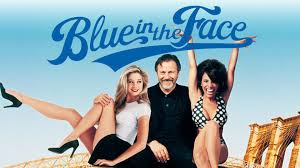
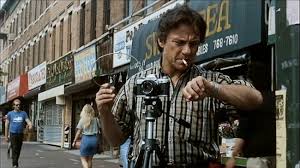
“Blue in the Face,” directed by Wayne Wang and Paul Auster, is a film that defies traditional categorization. Released in 1995, it’s a quasi-sequel to the critically acclaimed “Smoke,” but rather than continuing in the same narrative vein, “Blue in the Face” takes a radically different approach. This film is a cinematic experiment, an improvisational mosaic of ideas, conversations, and musings centered around a Brooklyn cigar shop. The result is a quirky, freewheeling piece of art that is as much about the neighborhood of Brooklyn as it is about the characters that inhabit it.
“Blue in the Face” was conceived and shot in just a few days, a testament to the spontaneity that defines the entire film. After finishing “Smoke,” Wang and Auster decided to keep the cameras rolling, inviting friends, actors, musicians, and locals to come by and contribute their thoughts, stories, and performances. The film feels like a lively neighborhood gathering, where everyone has something to say, and the conversation meanders in unexpected directions.
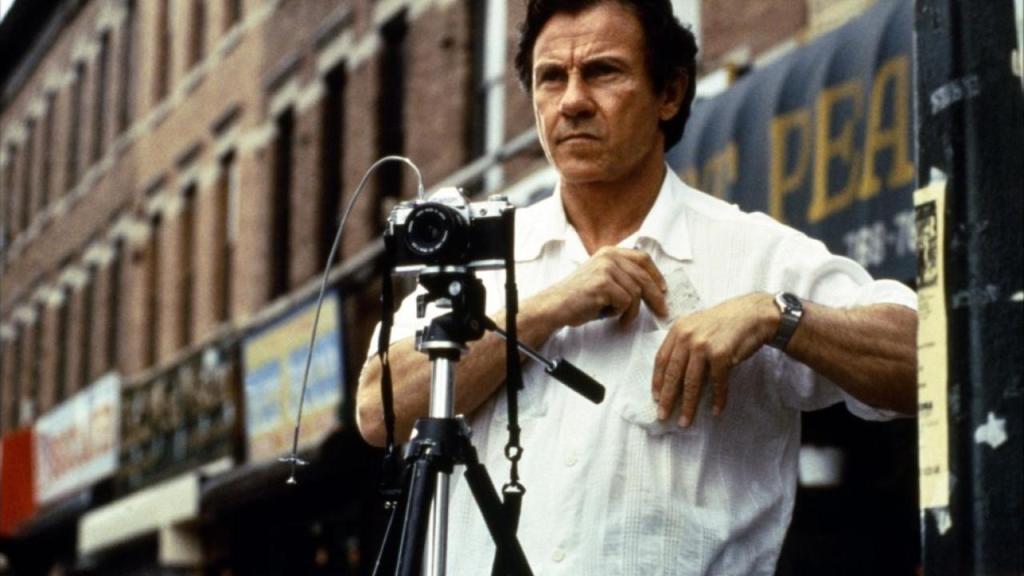
Unlike traditional films with a structured narrative, “Blue in the Face” is more of a collection of vignettes, loosely tied together by the setting of Auggie Wren’s (Harvey Keitel) cigar shop. The shop itself becomes a microcosm of Brooklyn, a place where people from all walks of life intersect, exchange stories, and share a laugh or a smoke. The film’s episodic nature means there’s no single storyline to follow, but rather a series of interconnected moments that together create a portrait of the neighborhood.
Harvey Keitel reprises his role as Auggie Wren, the affable, world-weary owner of the cigar shop. Keitel’s performance is understated yet compelling, grounding the film in a sense of continuity with “Smoke.” Auggie is the film’s anchor, providing a sense of stability amidst the chaotic swirl of characters and conversations. His interactions with the various customers and passersby reveal the richness of life in Brooklyn, a place where everyone has a story to tell.
The supporting cast is a mix of well-known actors and local personalities, each bringing their own flavor to the film. Lou Reed, the legendary musician, makes a memorable appearance, delivering a monologue about the changing face of New York City with his trademark deadpan delivery. Madonna, in a brief but hilarious cameo, plays a singing telegram girl, adding a touch of absurdity to the proceedings. Michael J. Fox, Lily Tomlin, and Jim Jarmusch are among the other recognizable faces that pop up throughout the film, each adding to the film’s eclectic, anything-goes atmosphere.
But it’s not just the celebrities that make “Blue in the Face” special. The film also features real Brooklynites, who bring authenticity and a sense of place to the film. Their stories, whether humorous, poignant, or bizarre, reflect the diversity and vitality of the neighborhood. It’s this mix of the famous and the ordinary, the scripted and the improvised, that gives the film its unique charm.
While the characters are central to “Blue in the Face,” the true star of the film is Brooklyn itself. The film is a love letter to the borough, celebrating its quirks, its history, and its ever-evolving identity. The film captures the spirit of Brooklyn in the mid-90s, a time when the neighborhood was undergoing significant changes. Gentrification, the rise of chain stores, and the fading of old-world traditions are recurring themes throughout the film.
The film’s title itself refers to the expression “blue in the face,” suggesting something done to the point of exhaustion or futility. In the context of the film, it reflects the sense of urgency and passion with which the characters—and the filmmakers—approach their lives and their art. Brooklyn is portrayed as a place where people are constantly striving, arguing, and debating, but always with a sense of love and pride for their neighborhood.
Visually, the film captures the vibrant energy of Brooklyn. The cinematography is unpolished and raw, reflecting the film’s improvised nature. The camera often lingers on the streets, the storefronts, and the people, creating a collage of images that together form a portrait of the neighborhood. The use of real locations and natural lighting adds to the film’s authenticity, making the viewer feel as if they are right there, walking the streets of Brooklyn.
“Blue in the Face” is a film that explores a wide range of themes, from the mundane to the profound. One of the most prominent themes is the idea of change, both personal and communal. The film grapples with the tension between the old and the new, the past and the future. Characters lament the loss of the “real” Brooklyn, with its mom-and-pop shops and close-knit communities, while also acknowledging the inevitability of change.
There’s also a strong sense of nostalgia that permeates the film. Many of the characters reflect on their past, whether it’s Auggie recalling his younger days or Lou Reed reminiscing about the New York of his youth. This nostalgia is tinged with a sense of loss, but also with a recognition of the beauty in the present moment. The film suggests that while things may change, the essence of a place—and its people—remains.
Another theme that runs through the film is the idea of community. “Blue in the Face” is a celebration of the connections that people form in their everyday lives. The cigar shop serves as a hub for these connections, a place where people come together, share their stories, and find comfort in each other’s company. The film highlights the importance of these small, everyday interactions in creating a sense of belonging and identity.
One of the most fascinating aspects of “Blue in the Face” is its improvisational nature. The film was made without a script, with the actors and filmmakers creating the scenes on the spot. This gives the film a sense of spontaneity and unpredictability that is rarely seen in mainstream cinema. The improvisation allows for moments of genuine humor, surprise, and emotion, as the actors react in real-time to each other and their surroundings.
This approach to filmmaking is risky, but it pays off in “Blue in the Face.” The film’s loose structure and freeform style create a sense of intimacy and immediacy, as if the viewer is eavesdropping on real conversations. The lack of a traditional narrative allows the film to explore a wide range of ideas and emotions, without being confined by the demands of plot or character arcs.
The improvisational style also reflects the themes of the film. Just as the characters are navigating the changes in their neighborhood, the filmmakers are navigating the challenges of making a film without a script. There’s a sense of playfulness and experimentation in the film, as if the filmmakers are testing the boundaries of what cinema can be. This makes “Blue in the Face” a unique and refreshing experience, even if it may not appeal to everyone.
“Blue in the Face” is not a film for everyone. Its lack of a traditional plot, its episodic structure, and its reliance on improvisation may be off-putting to some viewers. However, for those willing to embrace its quirks and idiosyncrasies, the film offers a rich and rewarding experience. It’s a film that celebrates the diversity, the energy, and the spirit of Brooklyn, capturing a moment in time with honesty and affection.
The film’s greatest strength is its ability to capture the essence of a place and its people. “Blue in the Face” is a film that is deeply rooted in its setting, and it’s this sense of place that gives the film its power. Whether it’s the conversations in the cigar shop, the monologues on the street, or the glimpses of everyday life, the film paints a vivid picture of Brooklyn in all its complexity.
In the end, “Blue in the Face” is a celebration of life in all its messy, unpredictable, and beautiful glory. It’s a film that invites the viewer to sit back, relax, and enjoy the ride, much like a leisurely walk through the streets of Brooklyn. It’s not a film that tells a story in the traditional sense, but rather a film that captures the spirit of a place and a moment in time. For that reason, it remains a unique and memorable piece of cinema.
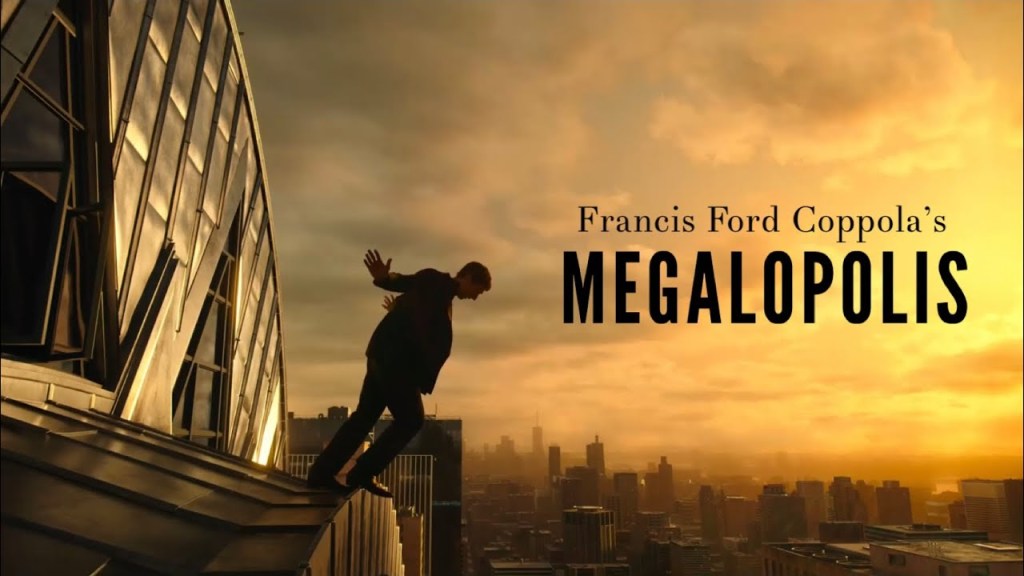
A second trailer is out for filmmaker Francis Ford Coppola’s epic “Megalopolis” ahead of the film’s release in U.S. cinemas via Lionsgate on September 27th.
The film is a Roman Epic set in an imagined Modern America. The City of New Rome must change, causing conflict between Cesar Catilina (Adam Driver), a genius artist who seeks to leap into a utopian, idealistic future, and his opposition, Mayor Franklyn Cicero (Giancarlo Esposito), who remains committed to a regressive status quo, perpetuating greed, special interests, and partisan warfare.
Torn between them is socialite Julia Cicero (Nathalie Emmanuel), the mayor’s daughter, whose love for Cesar has divided her loyalties, forcing her to discover what she truly believes humanity deserves.
The supporting cast includes Aubrey Plaza, Shia LaBeouf, Kathryn Hunter, Dustin Hoffman, Jason Schwartzman, Jon Voight, Laurence Fishburne, Chloe Fineman and James Remar.
Featuring: William Hurt, Harvey Keitel, Stockard Channing, Harold Perrineau Jr., Giancarlo Esposito, Ashley Judd and Forest Whitaker
Tommy:“Look, I’m telling you, there’s gonna be another war. I mean, those slobs in the Pentagon are gonna be out of job unless they find a new enemy. They got this Saddam character now, and they’re going to hit him with all they’ve got. Mark my words.”
Smoke is a 1995 independent drama directed by Wayne Wang and written by Paul Auster. The film weaves together a series of interconnected stories set around a Brooklyn tobacco shop, where the lives of the shop’s owner and his customers intersect in poignant and unexpected ways.
The film’s narrative is centered around Auggie Wren, played by Harvey Keitel, who runs a small, old-fashioned cigar shop in Brooklyn. His daily routine of photographing the same street corner every morning becomes a metaphor for the passage of time and the unnoticed beauty in everyday life. The ensemble cast includes William Hurt as Paul Benjamin, a writer grieving the loss of his wife; Forest Whitaker as Cyrus Cole, a man searching for his son; and Harold Perrineau as Thomas Cole, a young man trying to find his way in the world. Each character’s story is deeply human and relatable, reflecting the complexities of life in a way that feels both intimate and universal.
Wayne Wang’s direction is understated, allowing the characters and their stories to take center stage. The film moves at a deliberate pace, which may seem slow to some viewers, but this tempo is essential for the development of the characters and the building of the film’s atmosphere. Paul Auster’s screenplay is filled with rich dialogue and subtle humor, capturing the essence of Brooklyn life and the interconnectedness of its inhabitants. The stories unfold in a seemingly disjointed manner but gradually reveal their connections, much like the smoke from a cigar curling and dispersing into the air.
Smoke explores themes of loss, connection, and the passage of time. The smoke itself is a recurring symbol, representing the ephemeral nature of life and the fleeting moments that make it meaningful. The film also delves into the idea of storytelling, with each character’s narrative contributing to the larger tapestry of the film. Auggie’s daily photographs serve as a visual metaphor for capturing moments in time, suggesting that even the most mundane aspects of life have value and significance.
The performances in Smoke are exceptional across the board. Harvey Keitel delivers a nuanced portrayal of Auggie, balancing a gruff exterior with moments of deep tenderness. William Hurt brings a quiet intensity to the role of Paul, conveying a sense of profound loss and introspection. The supporting cast, including Forest Whitaker and Harold Perrineau, also shine, each bringing their characters to life with authenticity and emotional depth.
The film’s cinematography, by Adam Holender, is simple yet effective, capturing the urban landscape of Brooklyn in a way that feels both gritty and warm. The use of natural light and the focus on everyday scenes contribute to the film’s realistic and grounded tone. The soundtrack, featuring jazz and blues, complements the film’s mood, adding to the sense of nostalgia and reflection.
One of the most remarkable aspects of Smoke is its unconventional structure. The film is more a collection of vignettes than a traditional linear narrative. These vignettes are loosely connected through the central location of Auggie’s tobacco shop, which acts as a hub for the various characters and their intersecting lives. This fragmented storytelling allows the film to explore different aspects of human experience without the need for a single, overarching plot. It’s a mosaic of life, where each piece contributes to a larger, more profound picture.
The characters in Smoke are multi-dimensional, each with their own histories, struggles, and desires. What makes these characters particularly engaging is how their interactions with each other reveal different facets of their personalities. For instance, Auggie’s tough exterior gradually peels away as we see his passion for photography and his deep, if understated, compassion for others. Similarly, Paul Benjamin’s interactions with the young Thomas Cole highlight his own need for connection and purpose after the loss of his wife.
The film doesn’t rush to reveal these character traits; instead, it lets them unfold naturally through conversations, small gestures, and the quiet moments in between. This approach creates a sense of authenticity and makes the characters feel like real people rather than scripted roles.
Paul Auster’s screenplay is another standout element of Smoke. The dialogue is sharp, witty, and often profound, but never feels forced or artificial. Auster has a gift for capturing the way people actually speak, with all the nuances, pauses, and imperfections that make conversations feel genuine. The characters discuss everything from the mundane to the philosophical, often blending humor with deeper insights about life.
One of the film’s most memorable scenes involves Auggie telling Paul a story about how he came to possess a camera. This monologue, known as “Auggie Wren’s Christmas Story,” is a beautifully crafted piece of storytelling within the story, encapsulating the film’s themes of generosity, deception, and the gray areas of morality. It’s a perfect example of how Smoke uses storytelling as a way to explore larger existential questions.
The themes in Smoke are layered and open to interpretation, which gives the film a timeless quality. On one level, the film is about ordinary lives and the small moments that make them extraordinary. On another level, it’s a meditation on memory and the ways in which we document, remember, and reconstruct our past. Auggie’s daily photographs are more than just a hobby; they are his way of preserving time, of finding meaning in the routine, and of creating a narrative out of the chaos of everyday life.
The film also touches on themes of grief and healing. Paul’s journey, in particular, reflects the slow, often painful process of coming to terms with loss. His interactions with the other characters, especially Thomas, offer him a path toward emotional recovery, though the film wisely avoids any easy or pat resolutions. Instead, it acknowledges the ongoing nature of grief and the fact that healing is often a matter of finding new connections and new stories to tell.
Visually, Smoke embraces a minimalist style that complements its narrative and thematic focus. The camera often lingers on seemingly insignificant details—an ashtray full of cigarette butts, the play of light on a brick wall, the expressions of characters lost in thought. This attention to detail reinforces the film’s message that there is beauty and significance in the ordinary, if only we take the time to notice it.
The choice to set the film in Brooklyn also adds a distinct flavor to the story. Brooklyn’s diverse, vibrant community serves as a microcosm of the world, with its mix of cultures, histories, and personal stories. The film’s setting is both specific and universal, grounding the characters in a real place while also allowing their stories to resonate on a broader scale.
Smoke received critical acclaim upon its release and has since become a cult classic in the world of independent cinema. Its influence can be seen in other films that adopt a similarly episodic structure or focus on character-driven storytelling. The film’s success also led to a sequel, Blue in the Face (1995), which took a more comedic and improvisational approach while revisiting some of the characters and themes from Smoke.
Smoke is a film that rewards patience and reflection. It’s a film that asks viewers to slow down, to pay attention, and to find meaning in the small, quiet moments that make up our lives. Whether you’re drawn to it for its performances, its writing, or its thematic richness, Smoke offers a cinematic experience that lingers long after the screen fades to black.
Smoke is a beautifully crafted film that offers a contemplative look at life, relationships, and the stories that connect us all. It may not be a film for everyone, particularly those looking for fast-paced action or a straightforward narrative, but for viewers who appreciate character-driven stories and subtle storytelling, Smoke is a rewarding and thought-provoking experience. The film’s quiet moments and attention to detail make it a memorable piece of cinema that lingers in the mind long after the credits roll.
“Abbott And Costello: The Complete Universal Pictures Collection” (1940-1955)
Comedy
The Abbott and Costello Universal Pictures Collection DVD set is a delightful treasure trove for fans of classic comedy. This comprehensive collection brings together the legendary duo’s most beloved films, offering a nostalgic trip back to the golden age of Hollywood comedy.
The set includes a wide array of Abbott and Costello’s iconic films, such as “Buck Privates,” “Hold That Ghost,” “In the Navy,” and “Abbott and Costello Meet Frankenstein.” Each film is presented with care, capturing the timeless humor and slapstick routines that made the duo famous. The transfer quality is commendable, with the black-and-white films looking sharp and clean, preserving the charm of the original prints.
One of the highlights of this collection is the wealth of bonus features. Fans can enjoy behind-the-scenes documentaries, interviews, and commentary tracks that provide insightful context about the making of these classic films. The bonus content enriches the viewing experience, offering a deeper appreciation for Abbott and Costello’s contributions to comedy and cinema.
The packaging is both sturdy and visually appealing, featuring classic artwork that evokes the era in which these films were made. The DVDs are organized neatly within the set, making it easy to navigate and select your favorite films.
Abbott and Costello’s chemistry and comedic timing are as delightful today as they were decades ago. Their routines, filled with witty wordplay and physical comedy, remain fresh and entertaining. This collection serves as a testament to their enduring legacy, showcasing why they are still regarded as one of the greatest comedy duos in film history.
For fans of classic comedy, the Abbott and Costello Universal Pictures Collection is an essential addition to their DVD library. It offers hours of laughter and entertainment, making it a valuable investment for both longtime fans and newcomers alike.
This collection will appeal not only to die-hard fans of Abbott and Costello but also to those who enjoy classic films and the history of cinema. It’s a perfect introduction for younger audiences who may not be familiar with the duo’s work, allowing them to experience the comedic genius that paved the way for future generations of comedians.
Beyond entertainment, the Abbott and Costello Universal Pictures Collection holds significant educational value. Film students and historians will find this set a valuable resource for studying the evolution of comedy in film. The included documentaries and commentary tracks provide context and background that are indispensable for understanding the impact of Abbott and Costello on the comedy genre.
For those who grew up watching these films, this collection offers a wonderful trip down memory lane. The familiar routines, such as the “Who’s on First?” sketch, evoke a sense of nostalgia that is both comforting and joyous. Watching these films again is like reconnecting with old friends, bringing back fond memories of simpler times.
The restoration and remastering efforts for this collection are evident in the high-quality visuals and audio. The black-and-white films have been carefully cleaned up to remove most of the wear and tear from the original prints, resulting in a viewing experience that is both clear and authentic. The soundtracks have also been improved, ensuring that the duo’s quick wit and humorous exchanges are heard with clarity.
The Abbott and Costello Universal Pictures Collection is a lovingly curated set that celebrates the timeless appeal of one of Hollywood’s most beloved comedy duos. Whether you’re a longtime fan or new to their work, this collection offers an immersive and enjoyable experience that highlights the best of Abbott and Costello’s filmography.
The impact of Abbott and Costello’s work on modern comedy cannot be overstated. Their innovative routines and impeccable timing have influenced countless comedians and filmmakers. This collection offers viewers a chance to see the roots of many comedic techniques that are still in use today. For aspiring comedians, studying these films provides valuable lessons in timing, delivery, and physical comedy.
While Abbott and Costello are primarily known for their slapstick and verbal comedy, this collection showcases their versatility across various genres. From military comedies like “Buck Privates” to horror-comedy crossovers such as “Abbott and Costello Meet Frankenstein,” the duo’s ability to adapt their humor to different contexts is a testament to their talent. This variety keeps the collection engaging and ensures that there is something for every mood and preference.
Abbott and Costello’s films are more than just entertainment; they are cultural artifacts that reflect the social and political climate of their time. Watching these films provides insight into the 1940s and 1950s America, including its values, humor, and the escapism that cinema provided during challenging times like World War II. The collection serves as a time capsule, preserving the cultural essence of an era.
One of the standout features of Abbott and Costello’s comedy is its universal appeal. The humor is clean and family-friendly, making this collection an excellent choice for family movie nights. Parents can introduce their children to classic comedy, and everyone can enjoy the laughs together. The duo’s humor transcends age, ensuring that audiences of all generations can appreciate their comedic genius.
For collectors, the Abbott and Costello Universal Pictures Collection is a prized addition. The set’s comprehensive nature, combined with its high-quality presentation and bonus features, makes it a valuable piece for any DVD collection. Collectors will appreciate the attention to detail in the packaging and the care taken in restoring these classic films.
The Abbott and Costello Universal Pictures Collection DVD set is a masterful compilation that pays homage to one of the greatest comedy duos in history. It offers a perfect blend of entertainment, education, and nostalgia, making it a must-have for fans of classic cinema and comedy enthusiasts alike. With its extensive content, high-quality presentation, and insightful bonus features, this collection stands as a testament to the enduring legacy of Abbott and Costello. The Abbott and Costello Universal Pictures Collection is a must-have for anyone who appreciates classic comedy. It beautifully preserves the duo’s best work, complemented by insightful bonus features and quality presentation. This DVD set is a fitting tribute to the timeless humor and charm of Abbott and Costello
Includes: One Night In The Tropics (1940), Buck Privates (1941), In The Navy (1941), Hold That Ghost (1941), Keep ‘Em Flying (1941), Ride ‘Em Cowboy (1942), Pardon My Sarong (1942), Who Done It? (1942), It Ain’t Hay (1943), Hit The Ice (1943), In Society (1944), Here Come The Co-Eds (1945), The Naughty Nineties (1944), Little Giant (1946), The Time Of Their Lives (1946), Buck Privates Come Home (1947), The Wistful Widow Of Wagon Gap (1947), Abbott And Costello Meet Frankenstein (1948), Mexican Hayride (1948), Abbott And Costello Meet The Killer, Boris Karloff (1949), Abbott And Costello In The Foreign Legion (1950), Abbott And Costello Meet The Invisible Man (1951), Comin’ Round The Mountain (1951), Lost In Alaska (1952), Abbott And Costello Go To Mars (1953), Abbott And Costello Meet Dr. Jekyll And Mr. Hyde (1953), Abbott And Costello Meet The Keystone Kops (1955), and Abbott And Costello Meet The Mummy (1955)
When “The Saint” plays with fire…other people get burned!
“The Saint” is a British television series that aired from 1962 to 1969, featuring Roger Moore in the iconic role of Simon Templar. The series is based on the literary character created by Leslie Charteris, a suave and sophisticated thief with a strong moral code. Known as “The Saint” due to his initials, Simon Templar travels the world, righting wrongs and bringing justice to those who deserve it.
Roger Moore’s portrayal of Simon Templar is both charming and charismatic, embodying the perfect mix of elegance and roguish charm. The character operates on the fringes of the law, often engaging in morally ambiguous activities for a greater good. Throughout the series, Templar finds himself embroiled in various international adventures, involving espionage, crime-solving, and outsmarting villains.
The series is episodic, with each episode presenting a new adventure or mystery. The recurring theme is Templar’s fight against corruption, crime, and injustice, often with a flair for outwitting both the villains and the authorities. The show features a rotating cast of guest stars, including some notable names of the time, which keeps each episode fresh and engaging.
“The Saint” is notable for its sleek production values and stylish presentation. The series captures the essence of the 1960s with its glamorous locations, sophisticated fashion, and a jazzy, memorable theme tune composed by Edwin Astley. The show’s visual style, characterized by its use of exotic locales and elaborate set designs, contributes to its enduring appeal.
One of the series’ hallmarks is the iconic stick figure logo, a simple yet instantly recognizable representation of Templar with a halo above his head. This logo appears at the beginning of each episode, setting the tone for the adventures to follow.
Roger Moore’s performance as Simon Templar is widely regarded as one of the defining roles of his career. His portrayal is a perfect blend of sophistication, wit, and action-hero prowess. Moore’s ability to convey both the light-hearted and serious aspects of Templar’s character makes him a relatable and likable protagonist.
Moore’s charm and on-screen presence helped cement “The Saint” as a cultural icon and paved the way for his later success as James Bond. His effortless transition between moments of humor and tension showcases his versatility as an actor, making Simon Templar a memorable and enduring character in the spy genre.
“The Saint” left a lasting impact on popular culture, influencing subsequent spy and adventure series. It was among the early shows that depicted a sophisticated, globe-trotting hero, setting a template for future television and film protagonists. The show’s success also contributed to the popularity of spy fiction during the 1960s, a decade that saw the rise of other iconic series like “The Avengers” and “Mission: Impossible.”
“The Saint” weaves a tapestry of varied storylines, making each episode a unique and standalone adventure. The episodic format allows for a broad range of scenarios, from solving complex mysteries and thwarting international criminals to engaging in high-stakes espionage and rescuing damsels in distress. This variety keeps the series fresh and engaging, appealing to a wide audience with its mix of action, suspense, and occasional comedy.
Simon Templar’s methods often blur the lines between legality and morality. He employs his skills in disguise, deception, and combat to outwit adversaries, recover stolen goods, and expose corruption. Despite his criminal past, Templar’s actions are driven by a strong sense of justice, making him a complex and compelling character who operates according to his own code of ethics.
One of the standout features of “The Saint” is its impressive roster of guest stars. The series attracted many prominent actors of the time, including future stars and established performers. This rotating cast of characters added depth and variety to the show, with each episode introducing new faces and challenges for Templar to tackle.
Notable guest stars included Honor Blackman, Donald Sutherland, and Julie Christie, among others. Their performances added an extra layer of intrigue and excitement, enhancing the overall quality of the show. The interactions between Simon Templar and the various guest characters often provided some of the series’ most memorable moments.
Visually, “The Saint” stands out for its sleek and stylish production. The show made extensive use of on-location filming, which added an authentic and glamorous feel to Templar’s globe-trotting adventures. Whether in the bustling streets of London, the sun-drenched Riviera, or exotic locales in the Middle East, the series’ settings were always vibrant and visually appealing.
The fashion in “The Saint” is another highlight, with Simon Templar’s wardrobe reflecting his sophisticated and debonair persona. From tailored suits to casual chic attire, Templar’s style became iconic, influencing fashion trends of the era. The series’ attention to detail in costume and set design contributed to its overall aesthetic appeal.
The music of “The Saint” played a crucial role in establishing its mood and tone. Edwin Astley’s iconic theme tune, with its jazzy and upbeat rhythm, became synonymous with the series. The theme’s catchy melody and dynamic arrangement perfectly captured the adventurous spirit of Simon Templar. The background scores and musical cues throughout the episodes were equally effective in enhancing the suspense and excitement of the narrative.
“The Saint” has left an indelible mark on the spy and adventure genre, both on television and in film. Its influence can be seen in the development of later spy franchises, including the James Bond series, where Roger Moore would eventually take on the role of 007. The character of Simon Templar, with his charm, wit, and resourcefulness, set a standard for future action heroes.
The series also inspired several adaptations, including films and a 1997 TV movie starring Val Kilmer. Despite these attempts to revive the franchise, the original series remains the definitive portrayal of Simon Templar, largely due to Roger Moore’s charismatic performance.
In addition to its entertainment value, “The Saint” also reflected and contributed to the cultural zeitgeist of the 1960s. The series embodied the era’s fascination with espionage, international intrigue, and the glamorous lifestyles of the rich and adventurous. It captured the spirit of a time when the world was rapidly changing, and the allure of exotic travel and sophisticated heroes was at its peak.
“The Saint” is a classic television series that continues to be celebrated for its stylish presentation, engaging plots, and Roger Moore’s charismatic performance. Its blend of action, intrigue, and humor, set against the backdrop of 1960s glamour, makes it a timeless piece of entertainment. For fans of spy adventures and classic television, “The Saint” is a must-watch series that showcases the best of what the genre has to offer.
John Drake: [Opening titles narration] “Every government has its Secret Service branch: America, CIA; France, Deuxieme Bureau; England, MI5. NATO also has its own. A messy job? Well that’s when they usually call on me, or someone like me. Oh yes: my name is Drake. John Drake.”
“Danger Man,” known in the United States as “Secret Agent,” is a British television series that originally aired between 1960 and 1968. Created by Ralph Smart and produced by ITC Entertainment, the series stars Patrick McGoohan as John Drake, an agent for a covert British intelligence unit. With its gripping storylines, sharp dialogue, and charismatic lead, “Danger Man” remains a quintessential spy thriller that continues to captivate audiences decades after its initial run.
“Danger Man” is structured as an anthology series, with each episode presenting a self-contained story involving John Drake’s various espionage missions. The episodes are typically 25 minutes long in the first season, but later expand to 50 minutes, allowing for more intricate plots and character development.
The series covers a broad range of espionage activities, from investigating political corruption and thwarting assassination plots to uncovering criminal syndicates and recovering stolen secrets. Each mission is a standalone narrative, making it easy for viewers to jump into the series at any point. However, the consistent quality of storytelling and the compelling character of John Drake make it rewarding to watch the series in its entirety.
Patrick McGoohan’s portrayal of John Drake is the cornerstone of “Danger Man.” Unlike many other spies of the era, Drake is characterized by his moral integrity, resourcefulness, and aversion to violence. McGoohan’s performance is marked by a calm, steely demeanor and a sharp intellect, making Drake a uniquely appealing hero in the spy genre.
Drake’s methods are often cerebral, relying on cunning, disguise, and psychological manipulation rather than brute force. This approach sets him apart from the more flamboyant and action-oriented spies, such as James Bond, and contributes to the show’s distinctive tone. McGoohan’s commitment to portraying a more ethical and principled spy adds depth to the character, making Drake both relatable and admirable.
While “Danger Man” primarily focuses on John Drake, the series features a variety of recurring and guest characters who add richness to the narrative. These characters, ranging from allies within the intelligence community to adversaries and informants, are well-drawn and contribute to the complexity of the plots.
The series also benefits from a roster of talented guest stars, including many who would go on to achieve fame in their own right. Their performances enhance the drama and tension of each episode, adding to the overall quality of the series.
One of the defining themes of “Danger Man” is the ethical dilemmas faced by John Drake. Unlike many spy heroes who operate in a morally grey world, Drake consistently upholds a strong moral code. He often questions the motives and methods of his own organization, highlighting the tension between duty and personal integrity. This thematic focus on ethics and morality sets “Danger Man” apart from other spy series and adds a layer of intellectual engagement for viewers.
“Danger Man” is renowned for its emphasis on realism and plausibility. The series avoids the outlandish gadgets and over-the-top action sequences that characterize many other spy dramas. Instead, it presents espionage as a nuanced and often dangerous profession, requiring intelligence, patience, and subtlety. This commitment to realism enhances the credibility of the stories and allows for more sophisticated and mature narratives.
The series features stylish cinematography and production design that capture the cosmopolitan and often shadowy world of espionage. From the bustling streets of international cities to the secluded hideouts of enemy agents, the visual aesthetics of “Danger Man” contribute to its immersive atmosphere. The use of real locations and carefully crafted sets adds to the authenticity of the series, making it visually engaging and evocative.
The iconic theme music of “Danger Man,” composed by Edwin Astley, is an integral part of the show’s identity. The catchy and memorable tune, along with the dynamic and suspenseful score, enhances the mood and tension of the episodes. The music complements the action and drama, adding an auditory layer to the storytelling that resonates with viewers.
“Danger Man” has left an enduring legacy in the realm of spy fiction. Its realistic portrayal of espionage and its morally complex protagonist have influenced subsequent spy dramas and films. Patrick McGoohan’s portrayal of John Drake remains a benchmark for actors in the genre, and the series’ emphasis on ethical considerations continues to resonate with audiences.
The show’s success also paved the way for McGoohan’s next iconic role in “The Prisoner,” a series that further explored themes of individuality, freedom, and surveillance. “Danger Man” can be seen as a precursor to “The Prisoner,” with both series sharing a commitment to thought-provoking and intellectually engaging storytelling.
“Danger Man” emerged during a time when the Cold War was at its peak, and espionage was a hot topic in popular culture. The series reflects the anxieties and complexities of this era, offering viewers a lens through which to explore the shadowy world of international politics and covert operations. Unlike many contemporaneous spy series and films that glorified the glamorous aspects of espionage, “Danger Man” provided a more grounded and realistic portrayal.
The show also tapped into the growing appetite for sophisticated and intelligent television. During the 1960s, television was transitioning from simple, formulaic entertainment to more complex and nuanced storytelling. “Danger Man” was at the forefront of this shift, proving that TV could offer high-quality drama that rivaled cinema.
“Danger Man” achieved significant popularity not only in the United Kingdom but also internationally, particularly in the United States where it was known as “Secret Agent.” The show’s universal themes of justice, morality, and human ingenuity resonated with audiences worldwide. Its success abroad was also a testament to the timeless appeal of its protagonist, John Drake, and the quality of its production values.
The international appeal of “Danger Man” was bolstered by its global settings and diverse cast of characters. Each episode often took Drake to different parts of the world, reflecting the global nature of espionage and adding an exotic flair to the series. This globe-trotting element not only made the show visually interesting but also highlighted the interconnectedness of international politics during the Cold War.
Patrick McGoohan’s influence on “Danger Man” cannot be overstated. Beyond his role as the lead actor, McGoohan also contributed to the series’ direction and writing. His insistence on portraying a morally upright and non-violent spy was a defining characteristic of the series. McGoohan famously turned down the role of James Bond, preferring to create a character who relied on brains over brawn and maintained a strict ethical code.
This decision had a profound impact on the show and its legacy. John Drake’s refusal to use guns and his preference for outsmarting his adversaries with intelligence and cunning made him a unique and memorable character. McGoohan’s vision for a different kind of spy hero helped shape the series into a distinctive and influential piece of television history.
When comparing “Danger Man” to other spy series of its time, such as “The Man from U.N.C.L.E.” and “I Spy,” it becomes clear that “Danger Man” occupies a unique niche. While other series often embraced a lighter, more fantastical approach to espionage, “Danger Man” remained firmly rooted in realism. Its focus on the moral and ethical dimensions of espionage set it apart, offering viewers a more thought-provoking and serious take on the genre.
The series also stands out for its lack of reliance on romantic subplots. While many spy series and films include a romantic element as a central theme, “Danger Man” chose to focus primarily on the mission at hand. This choice reinforced the professional and dedicated nature of John Drake’s character, emphasizing his commitment to his work above all else.
“Danger Man” continues to enjoy a dedicated fanbase and has been praised by critics and viewers alike for its intelligent storytelling and compelling lead performance. The series has been released on various home video formats, allowing new generations to discover and appreciate its unique take on the spy genre.
Its influence can be seen in many modern spy dramas that emphasize realism, character depth, and moral ambiguity. Shows like “Homeland,” “The Americans,” and “Tinker Tailor Soldier Spy” owe a debt to “Danger Man” for paving the way for more sophisticated and nuanced portrayals of espionage on television.
“Danger Man” is a classic spy thriller that stands the test of time. With its compelling protagonist, intricate plots, and ethical depth, the series offers a sophisticated and engaging portrayal of espionage. Patrick McGoohan’s performance as John Drake, combined with the show’s emphasis on realism and morality, makes “Danger Man” a must-watch for fans of the genre. Its enduring appeal is a testament to its quality and the timeless relevance of its themes.
Featuring: Caroline Catz, Lisa Faulkner and Jeremy Sheffield
Ash:“Bet that’s not the first time you made a Headmaster cry.”
“Murder in Suburbia” is a British television series that aired between 2004 and 2005. Created by Nick Collins and starring Caroline Catz as Detective Inspector Kate Ashurst and Lisa Faulkner as Detective Sergeant Emma Scribbins, the series offers a blend of crime-solving and witty banter that makes for an entertaining watch.
Set in the fictional suburban town of Middleford, the show follows the professional and personal lives of Ashurst and Scribbins as they solve various murder cases. The picturesque, seemingly peaceful suburb contrasts with the dark crimes the detectives investigate, adding a layer of intrigue and irony to the series.
The heart of “Murder in Suburbia” lies in the chemistry between the two main characters. DI Kate Ashurst, often referred to as “Ash,” is the more serious and methodical of the pair, while DS Emma Scribbins, or “Scribbs,” is more spontaneous and intuitive. Their contrasting personalities create a dynamic partnership that is both effective and entertaining. The witty dialogue and the occasional light-hearted moments between Ash and Scribbs provide a refreshing balance to the darker aspects of the murder investigations.
The writing in “Murder in Suburbia” is sharp and engaging, with each episode presenting a new murder case to solve. The cases are well-constructed, often featuring twists and red herrings that keep viewers guessing until the end. The show’s episodic format allows for a variety of storylines and settings, keeping the series fresh and interesting.
The production values of “Murder in Suburbia” are solid, with the suburban setting effectively captured through scenic shots and well-designed sets. The direction is competent, ensuring that the pacing remains steady and that the tension builds appropriately during the investigation scenes. The use of humor, while sometimes bordering on the campy, generally enhances the viewing experience without undermining the gravity of the crimes being investigated.
“Murder in Suburbia” explores themes of friendship, loyalty, and the complexities of human nature. The series’ appeal lies in its ability to combine the procedural aspects of a crime drama with the relatable, down-to-earth interactions between its protagonists. It strikes a balance between the cerebral satisfaction of solving a mystery and the emotional engagement of character-driven storytelling.
One of the strengths of “Murder in Suburbia” is its supporting cast and guest stars. The recurring characters, such as the overbearing boss, DCI Sullivan, add depth and humor to the series. The show also features a variety of guest stars in each episode, portraying the suspects, victims, and witnesses in the murder cases. These guest performances are often standout, adding a layer of authenticity and diversity to the suburban landscape of Middleford.
While “Murder in Suburbia” tackles serious crimes, it does so with a light touch, ensuring that the show never becomes too grim. The humor often arises from the interactions between Ash and Scribbs, their differing approaches to life and work, and the quirky personalities they encounter in their investigations. This blend of humor and mystery makes the show accessible and enjoyable for a wide audience, including those who may not typically gravitate towards darker crime dramas.
Another notable aspect of “Murder in Suburbia” is its representation of female detectives in leading roles. Ash and Scribbs are portrayed as competent, professional, and multidimensional characters, which was relatively rare at the time of the series’ release. Their friendship and partnership are central to the show, providing a refreshing departure from the often male-dominated crime drama genre. This representation is significant in highlighting the capabilities and complexities of female detectives in a field traditionally dominated by men.
While “Murder in Suburbia” has many strengths, it is not without its criticisms. Some viewers may find the episodic format repetitive, as each episode follows a similar structure. Additionally, the light-hearted tone might not appeal to those looking for a more intense or gritty crime drama. The series also occasionally relies on clichés and predictable plot twists, which can detract from the overall suspense.
Despite its relatively short run, “Murder in Suburbia” has left a lasting impression on its fans and has contributed to the broader landscape of British crime dramas. The show’s blend of mystery, humor, and strong female leads paved the way for similar series in the genre. It remains a beloved show for many, appreciated for its charm, wit, and engaging storytelling.
While “Murder in Suburbia” may not revolutionize the crime drama genre, it offers a charming and enjoyable experience for fans of the genre. The strong performances by Caroline Catz and Lisa Faulkner, along with the clever writing and engaging plotlines, make it a series worth watching. Whether you’re in the mood for a compelling mystery or just some light-hearted banter between two likable detectives, “Murder in Suburbia” delivers on both fronts.
Written by: Patrick McGoohan, David Tomblin, Anthony Skene, Terence Feely, Vincent Tilsley, George Markstein
Directed by: Patrick McGoohan, Pat Jackson, Don Chaffey, David Tomblin
Featuring: Patrick McGoohan
Number 6: “I will not make any deals with you. I’ve resigned. I will not be pushed, filed, stamped, indexed, briefed, debriefed or numbered. My life is my own. I resign.”
Arriving once again on DVD this month is the British television series “The Prisoner” (1967-1968) which was a 17-episode series first broadcast in the United Kingdom in September 1967. It stars and was co-created by Patrick McGoohan, combining spy fiction with elements of science fiction, social and political metaphors with a psychological twist that reflected some of the concerns of its time as well as being prescient to the times that would follow over the coming decades from the time of its production.
The series followed a British former secret agent who is abducted and imprisoned in a mysterious coastal village resort, where his captors try to find out why he abruptly resigned from his job. Although the show was sold as a thriller in the mould of the previous series starring McGoohan, Danger Man (1960–68; retitled as Secret Agent in the US), its combination of 1960s counter cultural themes and surrealistic setting had a far-reaching influence on science fiction and fantasy TV programming, and on narrative popular culture in general.
The series follows an unnamed man (played by Patrick McGoohan) who, after abruptly and angrily resigning from his job, apparently prepares to make a hurried departure from the country. While packing his luggage, he is rendered unconscious by knockout gaspiped into his London flat. When he wakes, he finds himself in a re-creation of his apartment, located in a mysterious seaside “village” within which he is held captive, isolated from the mainland by mountains and sea. The Village is further secured by numerous monitoring systems and security forces including a militarised, balloon-based device called Rover that recaptures or destroys those who attempt escape. The man encounters the Village’s population: hundreds of people from all walks of life and cultures, all seeming to be peacefully living out their lives. They do not use names, but have been assigned numbers, which give no clue as to any person’s status within the Village, whether as inmate or guard. Potential escapees therefore have no idea whom they can and cannot trust. The protagonist is assigned Number Six, but he repeatedly refuses the pretence of his new identity.
“The Prisoner” over the past six decades has been one of the most analyzed shows ever created, it has at times been unavailable after its broadcast then when the the VCR became popular shows like this were reintroduced to a new market, the same thing with DVDs especially with the relative low cost which meant that these types of series that ere cultish. became the property of a mass market, so once again were asking to be analyzed. Probably the most cultist and analysed show in television history. Of course it helps the longevity of the series that the themes are linked to society that has changed so much through social, political and technological upheaval that audiences today can glean as much today as people were able to in the 1960s.
The series was seen by many as a direct follow on from McGoohan’s previous series in which he played secret agent John Drake, and although McGoohan himself insisted that it wasn’t the same character, it has been suggested that this claim may have been made to avoid having to pay a hefty royalty to Danger Man creator Ralph Smart. There has always been dispute over who originally came up with the idea for The Prisoner, both McGoohan and script editor George Markstein laying claim. From the formers point of view, an isolation camp for British Agents who knew too much had figured in the Danger Man episode ‘Colony Three’, and it was whilst on location for this series that McGoohan discovered Portmeirion in South Wales, which featured as ‘The Village’. However, whilst serving with Army Intelligence during the second World War, Markstein had supposedly discovered the existence of a remote Scottish castle which acted very much as an isolation centre for military personnel, whose knowledge of classified material made it impossible to allow them their freedom during such a sensitively dangerous period. (Many years after, Markstein would cite this as his prime inspiration for The Prisoner’s core concept).
The Prisoner was a stylish production with the star as executive producer and very much in control of the direction the series took, indeed it was McGoohan himself who penned the final episode, “Fall Out” which promised to give all the answers -but ended up asking more questions. We never actually discovered who Number One was although at the beginning of each show when McGoohan asked the question, ‘Who is Number One?’ he received the reply, ‘You, are Number Six’. Or could it have been “You are, Number Six!”?, for certainly in the final episode Number 6 actually removes a mask from the face of the supposed Number One -only to reveal himself underneath it.
This of course is a prime example of the ambiguity that has kept fans of the series debating for years hence, even after (many years later) Patrick McGoohan claimed that his intention was for The Prisoner to be an allegory in which the people, places and happenings hide a message, the message here being that we are all prisoners of ourselves. By turns infuriating, complex, oblique and thought provoking, The Prisoner stands, even today, as a perfect example of original and entertaining television storytelling, as well as the almost overpowering need of one complexly gifted man to challenge the limits of a too often ephemeral and trivial medium.
The fundamental political, social and technological conflict in the world today is, as it has been for a much of the past hundred or so years is individualism versus collectivism. Does the individual’s life belong to him—or does it belong to the group, the community, society, or the state?
Individualism is the idea that the individual’s life belongs to him and that he has an inalienable right to live it as he sees fit, to act on his own judgment, to keep and use the product of his effort, and to pursue the values of his choosing. It’s the idea that the individual is sovereign, an end in himself, and the fundamental unit of moral concern.
Collectivism is the idea that the individual’s life belongs not to him but to the group or society of which he is merely a part, that he has no rights, and that he must sacrifice his values and goals for the group’s “greater good.” According to collectivism, the group or society is the basic unit of moral concern, and the individual is of value only insofar as he serves the group.
When we look out at the world and see people, we see separate, distinct individuals. The individuals may be in groups (say, on a soccer team or in a business venture), but the indivisible beings we see are individual people. Each has his own body, his own mind, his own life. Groups, insofar as they exist, are nothing more than individuals who have come together to interact for some purpose. This is an observable fact about the way the world is. It is not a matter of personal opinion or social convention, and it is not rationally debatable.
These ideas are at the very heart of “The Prisoner” which is one of the reasons why after decades it is still a fascinating watch that never gets old, in fact it is probably one of the most important as well as one of the greatest shows ever created.
Episodes:
“Arrival” – After waking up in the Village and discovering his captivity there, Number Six encounters a friend from the outside who may have a possible escape.
“The Chimes of Big Ben”– A new prisoner, Nadia, may have information about the Village that makes an escape attempt possible.
“A, B and C” – A desperate Number Two tampers with Number Six’s dreams to discover where his loyalties lie.
“Free for All” – Presented with the opportunity, Number Six runs for election to the post of Number Two.
“The Schizoid Man” – Number Two replaces Number Six with a duplicate to weaken the real Six’s sense of identity.
“The General” – An important prisoner’s new speed-teaching machine poses perhaps the greatest threat to Number Six’s independence.
“Many Happy Returns” – After waking to find the Village deserted, Number Six returns to England but does not know whom he can trust there.
“Dance of the Dead” – Number Six tries to save an old friend who is headed for destruction at the hands of the Village.
“Checkmate” -Number Six thinks he has a means to tell the prisoners from the wardens.
“Hammer into Anvil” – Number Six takes revenge on a sadistic Number Two for the death of another prisoner.
“Its your Funeral” – To save the prisoner who is being set up to take the fall, Number Six must intervene in a Village power struggle and prevent the assassination of a Number Two.
“A Change of Mind” – Number Two stirs the Village to ostracize Number Six, and then takes even more drastic measures to cure Six’s “unmutuality”.
“Do not forsake me oh my darling” – Deprived of his memory and placed in another man’s body, Number Six travels back to England to seek a missing scientist. Nigel Stock portrays Six for most of this episode.
“Living in harmony”- In an Old West setting, a lawman who resigned is trapped in a town called Harmony where the Judge wants him to be the new sheriff — by hook or by crook.
“The girl who was death” – Number Six avoids the assassination attempts of a beautiful woman while foiling the plots of her megalomaniac father.
“Once upon a time” – Number Two subjects Number Six to a desperate, last-ditch effort to subdue him, Degree Absolute — an ordeal that will not end until it breaks one of them.
“Fall out” – Number Six encounters the forces behind the Village, but can he finally escape?
Featuring: Andrew Garfield, Adam Driver, Liam Neeson, Tadanobu Asano and Ciarán Hinds
Ferreira: “I do because you are just like me. You see Jesus in Gethsemane and believe your trial is the same as His. Those five in the pit are suffering too, just like Jesus, but they don’t have your pride. They would never compare themselves to Jesus. Do you have the right to make them suffer? I heard the cries of suffering in this same cell. And I acted.”
Martin Scorsese’s “Silence” (2016) stands as one of the director’s most profound and meditative works, diverging from his usual themes of crime and excess to explore the intricacies of faith, suffering, and spiritual resilience. Adapted from Shūsaku Endō’s 1966 novel of the same name, “Silence” tells the harrowing tale of two Portuguese Jesuit priests who travel to Japan in the 17th century to find their mentor and propagate Christianity, amidst intense persecution.
At its core, “Silence” grapples with the clash between devout faith and oppressive tyranny. The story follows Fathers Sebastião Rodrigues (Andrew Garfield) and Francisco Garupe (Adam Driver) as they embark on a perilous journey to Japan to find their mentor, Father Ferreira (Liam Neeson), who is rumored to have apostatized. The film opens with a haunting prologue, showcasing the brutal treatment of Japanese Christians under the Tokugawa shogunate, setting the tone for the visceral and emotional journey ahead.
The themes of the film are multifaceted. It explores the complexities of faith, the silence of God in times of suffering, and the personal cost of spiritual integrity. Scorsese meticulously delves into the psyche of his characters, particularly Rodrigues, who is tormented by the seeming silence of God amidst the unrelenting persecution of Christians. This theme of divine silence is a recurring motif, echoing the doubts and struggles faced by believers when their faith is tested to its limits.
Andrew Garfield delivers a career-defining performance as Rodrigues, capturing the character’s inner turmoil, steadfast faith, and ultimate surrender to a path fraught with moral ambiguity. Garfield’s portrayal is deeply moving, embodying the priest’s vulnerability and unwavering devotion. Adam Driver, as Garupe, provides a strong counterpoint to Rodrigues, showcasing a different facet of faith and dedication. Liam Neeson, in his limited but crucial role, exudes a quiet, resigned power as Father Ferreira, a man who has faced the ultimate test of faith and emerged fundamentally changed.
Scorsese’s direction is masterful, marked by a deliberate pacing that allows the viewer to fully immerse in the narrative’s spiritual and emotional depths. The film’s contemplative nature is accentuated by Rodrigo Prieto’s stunning cinematography. The visual storytelling is both breathtaking and harrowing, capturing the stark beauty of the Japanese landscape juxtaposed with the grim realities of persecution. The use of natural light and shadow plays a significant role in creating an atmosphere of introspection and reverence.
The film’s sound design is another standout aspect. The minimal use of a musical score enhances the theme of silence, with the natural sounds of the environment amplifying the tension and the inner conflicts of the characters. This aural restraint places the audience in the same realm of perceived divine silence that the protagonists experience, making the viewing experience profoundly immersive.
“Silence” provides a window into a lesser-known chapter of history, shedding light on the brutal suppression of Christianity in 17th century Japan. The film does not shy away from depicting the severe methods employed by the Japanese authorities to root out Christianity, including torture and forced apostasy. Scorsese’s attention to historical accuracy and cultural sensitivity is evident throughout the film, offering a nuanced portrayal of both the persecutors and the persecuted.
Upon its release, “Silence” received critical acclaim for its ambitious storytelling, powerful performances, and Scorsese’s uncompromising vision. However, it polarized audiences due to its slow pacing and somber tone. Some viewers found the film’s introspective nature and length challenging, while others lauded it as a profound exploration of faith and human endurance.
Despite its polarizing reception, “Silence” has carved out a niche as a modern spiritual epic, earning a place alongside other great films that tackle religious and philosophical themes. It stands as a testament to Scorsese’s versatility as a filmmaker and his willingness to tackle complex, deeply personal subjects with unwavering honesty and artistic integrity.
The characters in “Silence” are richly drawn and complex, offering a deep dive into the human condition and the struggle for faith.
Father Sebastião Rodrigues emerges as the film’s central figure, embodying the quintessential crisis of faith. As portrayed by Andrew Garfield, Rodrigues’ journey is one of spiritual and existential torment. His initial zeal and conviction are palpable, but as he witnesses the horrific persecution of Japanese Christians, his faith begins to waver. Garfield’s nuanced performance captures this descent into doubt and despair, reflecting the inner conflict of a man who feels abandoned by God.
Rodrigues’ relationship with Kichijiro (Yosuke Kubozuka), a Japanese Christian who repeatedly betrays and seeks forgiveness, adds another layer to his character arc. Kichijiro serves as a living embodiment of weakness and sin, challenging Rodrigues to practice the very Christian mercy he preaches. Kichijiro’s character also highlights the cyclical nature of sin and redemption, mirroring Rodrigues’ own spiritual journey.
Father Francisco Garupe (Adam Driver), on the other hand, represents a more steadfast form of faith. His character provides a counterbalance to Rodrigues, showcasing a different response to the same spiritual and physical trials. Garupe’s unwavering dedication contrasts with Rodrigues’ growing doubts, offering a poignant commentary on the diverse ways individuals cope with faith under persecution.
Father Ferreira (Liam Neeson) is the embodiment of apostasy and the consequences of broken faith. His transformation from a devout priest to a broken man who has renounced his faith under duress serves as a dire warning to Rodrigues. Neeson’s portrayal is restrained yet powerful, conveying a man who has been irrevocably changed by his experiences.
“Silence” is rich with symbolism and religious imagery that reinforce its themes. The recurring motif of silence is perhaps the most significant, representing both the perceived absence of God and the internal silence that comes with doubt and despair. This silence is juxtaposed with the cacophony of suffering, creating a stark contrast that underscores the film’s central conflict.
The image of the fumie, a likeness of Christ or the Virgin Mary that suspected Christians were forced to trample upon, serves as a potent symbol of faith under duress. The act of trampling the fumie represents a public renunciation of faith, a physical manifestation of spiritual betrayal. The repeated use of this imagery throughout the film emphasizes the excruciating choices faced by the characters.
Water, often depicted as a symbol of purification and baptism in Christian theology, takes on a dual role in “Silence.” While it occasionally signifies hope and renewal, it more often appears in the context of suffering and death, as seen in the scenes of martyrdom by drowning. This inversion of symbolism reflects the film’s exploration of the darker aspects of faith and redemption.
Scorsese employs various cinematic techniques to enhance the storytelling and immerse the audience in the film’s emotional and spiritual journey. The use of long takes and wide shots allows viewers to absorb the stark beauty and harsh realities of the Japanese landscape, emphasizing the isolation and vulnerability of the missionaries and converts.
The film’s color palette is subdued, dominated by earthy tones and muted colors that reflect the somber mood and themes. This visual restraint mirrors the austerity of the characters’ spiritual lives and the oppressive environment in which they struggle.
Scorsese’s decision to eschew a traditional musical score in favor of natural sounds and silence amplifies the film’s meditative quality. The absence of music in critical scenes forces the audience to confront the raw emotions and harsh realities depicted on screen without the buffer of a score to guide their responses.
“Silence” raises profound ethical and philosophical questions about the nature of faith, the morality of missionary work, and the cost of religious conviction. It challenges viewers to consider the ethics of imposing one’s beliefs on another culture, particularly when such imposition leads to suffering and death.
The film also delves into the concept of apostasy and the value of outward expressions of faith versus inner conviction. Rodrigues’ eventual act of apostasy is portrayed not as a simple renunciation but as a complex, deeply personal decision driven by compassion for the suffering of others. This act forces viewers to question the nature of true faith and whether silent, inward belief can hold as much weight as public, outward displays of piety.
“Silence” is not merely a film; it is an experience that demands patience, reflection, and empathy. Martin Scorsese has crafted a cinematic journey that challenges viewers to confront their own beliefs, question the nature of faith, and empathize with those who suffer for their convictions. It is a film that resonates long after the credits roll, inviting continuous contemplation and discussion. In the pantheon of Scorsese’s work, “Silence” is a monumental achievement, a deeply spiritual and profoundly human exploration of faith under fire.
Featuring: Willem Dafoe, Harvey Keitel, Barbara Hershey, Harry Dean Stanton and David Bowie
Jesus:“You think God belongs only to you? He doesn’t. God is an immortal spirit who belongs to everybody, to the whole world. You think you’re special? God is not an Israelite!”
“The Last Temptation of Christ,” directed by Martin Scorsese and released in 1988, is a film that has courted controversy and acclaim in equal measure. Based on the 1955 novel by Nikos Kazantzakis, the movie offers a unique and humanistic portrayal of Jesus Christ, exploring his internal struggles and the nature of his divinity. With a screenplay by Paul Schrader and a standout performance by Willem Dafoe as Jesus, the film delves deeply into the psychological and spiritual conflicts of its central character.
The film follows Jesus of Nazareth (Willem Dafoe) from his early days as a carpenter, tormented by visions and divine messages, to his ultimate crucifixion. Unlike traditional biblical epics, “The Last Temptation of Christ” focuses on the humanity of Jesus, portraying him as a man burdened by doubt and fear. He wrestles with his mission and the weight of being the Messiah, ultimately facing the titular “last temptation”—a vision of an ordinary life where he marries Mary Magdalene (Barbara Hershey), has children, and lives as a mortal.
Jesus (Willem Dafoe): Dafoe’s portrayal of Jesus is one of the most compelling aspects of the film. He imbues the character with a palpable sense of vulnerability and inner conflict. This Jesus is not the serene, all-knowing figure often depicted in religious art but a man who questions his path and grapples with his identity. Dafoe’s performance is raw and intense, capturing the torment and eventual acceptance of his divine role.
Mary Magdalene (Barbara Hershey): Hershey brings depth to Mary Magdalene, presenting her as a complex character who loves Jesus and suffers deeply. Her relationship with Jesus is portrayed with sensitivity, highlighting her humanity and the societal judgments she faces. Her role in the “last temptation” vision is particularly poignant, showcasing an alternative reality that underscores the sacrifices Jesus makes.
Judas Iscariot (Harvey Keitel): Keitel’s Judas is another departure from traditional portrayals. Here, Judas is a passionate and loyal follower of Jesus, who ultimately betrays him out of a sense of duty rather than malice. This interpretation adds a layer of complexity to the character, suggesting that his actions are part of a larger, divinely orchestrated plan.
Scorsese’s direction, coupled with Michael Ballhaus’s cinematography, creates a visually arresting film. The use of natural landscapes and the stark, almost surreal depiction of the crucifixion scenes lend the film a timeless, mythic quality. The visual style complements the narrative’s exploration of spiritual and existential themes, creating an immersive and thought-provoking experience.
The film’s score, composed by Peter Gabriel, is a standout element. Gabriel’s use of traditional Middle Eastern instruments and motifs, blended with modern sounds, creates an evocative and atmospheric backdrop that enhances the film’s emotional and spiritual depth. The music underscores key moments, from the haunting opening scenes to the climactic crucifixion, adding a powerful auditory layer to the storytelling.
“The Last Temptation of Christ” delves into several profound themes, including the nature of faith, the duality of Jesus as both human and divine, and the concept of sacrifice. The film’s portrayal of Jesus’s temptations and doubts humanizes him, making his ultimate sacrifice all the more impactful. The “last temptation” vision serves as a potent symbol of what Jesus gives up to fulfill his divine mission, highlighting the personal cost of his sacrifice.
Upon its release, the film sparked significant controversy, particularly among religious groups who viewed it as blasphemous. Protests and boycotts ensued, with some theaters refusing to screen the film. Despite—or perhaps because of—the controversy, the film has garnered critical acclaim over the years. It is praised for its bold and unorthodox approach to a well-known story, as well as its deep exploration of complex theological and philosophical questions.
Over the years, “The Last Temptation of Christ” has cemented its place as a significant and influential work in cinema. Its impact extends beyond the realm of religious and spiritual films, influencing filmmakers and storytellers who seek to explore complex, nuanced narratives. Scorsese’s approach to depicting Jesus as a multifaceted, deeply human figure has inspired a broader trend in cinema that embraces the complexity of historical and religious characters.
In the decades following its release, “The Last Temptation of Christ” has undergone critical reappraisal. Initially met with polarized responses, many critics have since recognized the film’s artistic and philosophical merits. Its willingness to engage with difficult questions and present a non-traditional narrative has been praised for its courage and depth. Today, the film is often cited in discussions of Scorsese’s most important works and stands as a testament to his versatility and vision as a director.
The film’s exploration of Jesus’s humanity and divinity offers a reflection on broader cultural and societal themes. It raises questions about the nature of faith, the struggles inherent in accepting one’s destiny, and the sacrifices required to fulfill a higher purpose. These themes resonate with audiences from diverse backgrounds, encouraging viewers to reflect on their own beliefs and values. The film’s depiction of Jesus’s internal struggles mirrors the universal human experience of doubt and the search for meaning.
Apart from Willem Dafoe’s compelling performance, the supporting cast also delivers noteworthy performances that add layers to the narrative:
David Bowie (Pontius Pilate): Bowie’s portrayal of Pontius Pilate is brief but impactful. He brings a sense of weariness and pragmatism to the role, embodying the political pressures and moral ambiguities faced by the Roman governor.
Harry Dean Stanton (Saul/Paul): Stanton’s interpretation of Saul/Paul is memorable, highlighting the transformative journey of a man who shifts from persecuting Christians to becoming one of their most fervent apostles. His character serves as a counterpoint to Jesus’s journey, illustrating the diverse ways in which faith can manifest.
Andre Gregory (John the Baptist): Gregory’s intense and prophetic portrayal of John the Baptist adds to the film’s spiritual atmosphere. His scenes with Jesus underscore the sense of anticipation and urgency that pervades the narrative.
Scorsese employs a range of cinematic techniques to enhance the film’s emotional and psychological impact. His use of close-ups and handheld camera work creates an intimate connection between the audience and the characters, drawing viewers into Jesus’s internal world. The film’s pacing, which alternates between moments of intense contemplation and dramatic action, mirrors the oscillation between Jesus’s inner turmoil and his public mission.
Philosophical and Theological Insights
“The Last Temptation of Christ” serves as a rich text for philosophical and theological inquiry. It prompts discussions about the nature of temptation and the human condition, offering a unique perspective on the interplay between free will and divine destiny. The film’s depiction of Jesus’s final temptation—imagining a life of ordinary human joys and sorrows—invites viewers to consider the profound implications of his choice to embrace his divine mission.
Given its depth and complexity, “The Last Temptation of Christ” has significant educational value. It can be used in academic settings to explore themes in theology, philosophy, and film studies. Discussions around the film can lead to a deeper understanding of the ways in which religious narratives can be reinterpreted and the impact of such reinterpretations on contemporary culture and thought.
“The Last Temptation of Christ” is a powerful and provocative film that challenges viewers to reconsider their understanding of Jesus and his story. Through its nuanced performances, striking visuals, and evocative score, it offers a rich and multifaceted portrayal of one of history’s most revered figures. Martin Scorsese’s daring vision and Willem Dafoe’s unforgettable performance combine to create a film that is as thought-provoking as it is visually stunning. Whether viewed as a religious exploration or a humanistic drama, “The Last Temptation of Christ” remains a significant and influential work in the cinematic portrayal of Jesus Christ.