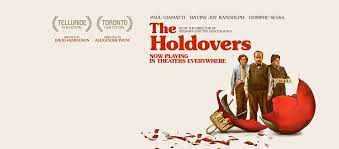
“The Holdovers” (2023)
Drama

Running Time: 125 minutes
Written by: David Hemingson
Directed by: Alexander Payne
Featuring: Paul Giamatti, Da’Vine Joy Randolph and Dominic Sessa
Paul Hunham: “I find the world a bitter and complicated place. And it seems to feel the same way about me. You and I have that in common, I think.”
Released in the latter half of 2023, “The Holdovers” quietly slipped onto streaming platforms, gathering a dedicated following and sparking thoughtful discussions about grief, aging, and the power of human connection. Written and directed by Alexander Payne, the film weaves a poignant and humorous narrative about two high school teachers forced to stay at school for the summer to supervise detention.
Paul Hunham (Paul Giamatti), a history teacher on the cusp of retirement, and Emily Rathburn (Mary Elizabeth Winstead), a recently divorced English teacher, find themselves thrust together in an empty school building, their lives at crossroads. Paul grapples with the impending loss of his career and the looming shadow of his late wife, while Emily navigates the emotional wreckage of her failed marriage and the uncertainty of her future.
Payne paints a masterful portrait of loneliness and isolation, contrasting the vibrant chaos of a bustling school with the cavernous silence of its empty halls. The film’s pacing is deliberate, allowing the audience to fully inhabit the characters’ inner worlds and witness the subtle shifts in their dynamic as they navigate their forced proximity.
Giamatti delivers a phenomenal performance, capturing Paul’s weary cynicism, quiet grief, and unexpected tenderness with remarkable nuance. Winstead, equally compelling, portrays Emily’s vulnerability, resilience, and dry wit with a depth that resonates long after the film’s credits roll.
The film’s script is a masterclass in character development, crafting individuals who are flawed, complex, and deeply relatable. Payne avoids stereotypical portrayals of middle-aged characters, instead offering a refreshingly honest and nuanced exploration of the challenges and joys that come with aging.
“The Holdovers” is not without its humour. Despite the film’s melancholic undertones, Payne infuses the narrative with moments of wit and absurdity that offer welcome relief and highlight the characters’ endearing quirks. His use of humor is never flippant, always serving to further explore the characters’ emotional complexities and vulnerabilities.
One of the film’s most compelling aspects is its exploration of grief. Paul and Emily, though in different stages of their lives, are both grappling with significant loss. Payne depicts their journeys with sensitivity and honesty, avoiding sentimental clichés and instead focusing on the raw emotions and messy realities of coping with loss.
The film’s setting plays a crucial role in its narrative. The empty school building becomes a metaphor for the characters’ sense of isolation and the void left by their losses. As they spend time together, the school transforms into a space of shared understanding and connection, offering them a temporary reprieve from their individual struggles.
“The Holdovers” is a film that lingers long after the viewing experience. Its characters, their journeys, and the poignant exploration of human connection leave a lasting impression. It is a film that celebrates the power of human connection, even in the face of loss, and reminds us that it is never too late to forge new bonds and find solace in shared experiences.
Beyond its core narrative, “The Holdovers” raises important questions about the educational system and the treatment of teachers. The film subtly critiques the bureaucratic constraints and societal pressures that often burden educators, leaving them feeling undervalued and unsupported. It also highlights the dedication and passion of teachers who, despite the challenges, remain committed to their students and their profession.
While the film’s slow pace and introspective nature may not appeal to all viewers, those who appreciate nuanced character studies and emotional depth will find much to admire in “The Holdovers.” It is a film that rewards patience and offers a moving exploration of human connection, loss, and the resilience of the human spirit.
Since its release, “The Holdovers” has received positive reviews from critics and audiences alike, garnering praise for its nuanced storytelling, exceptional performances, and poignant exploration of universal themes. The film’s critical acclaim has been reflected in various awards and nominations, including recognition at the AFI Awards and the New York Film Critics Circle.
Critics have lauded the film’s ability to seamlessly interweave humour and pathos, creating a uniquely affecting viewing experience. They have praised Payne’s masterful direction, highlighting his ability to elicit powerful performances from his cast and create a visually stunning and emotionally resonant film. Particular praise has been directed towards Giamatti and Winstead’s performances, with critics acknowledging the depth and complexity they bring to their respective characters.
The film has also resonated with audiences, particularly those who appreciate character-driven stories and films that explore the complexities of human relationships. Viewers have connected with the characters’ struggles and triumphs, finding solace in their shared experiences and the film’s message of hope and resilience. The film has sparked meaningful discussions about aging, loss, and the importance of human connection, further solidifying its cultural impact.
Beyond its critical and audience reception, “The Holdovers” has generated conversations about the representation of middle-aged characters in film. The portrayal of Paul and Emily, as individuals grappling with loss and change, challenges stereotypical representations of older characters and offers a more nuanced and authentic perspective. This has been seen as a positive development in the film industry, encouraging more diverse and realistic representations of aging on screen.
Furthermore, the film’s subtle critique of the educational system has ignited discussions about the challenges faced by teachers and the need for reform. This has resonated with educators and parents alike, prompting calls for a more supportive and nurturing environment for both teachers and students.
It is still early to assess the full impact of “The Holdovers,” but it is clear that the film has made a significant mark on the cultural landscape. Its critical acclaim, audience reception, and ability to spark important conversations have cemented its place as a thought-provoking and emotionally resonant cinematic experience. As time passes, it is likely that “The Holdovers” will continue to resonate with audiences and be recognized as a valuable contribution to contemporary cinema.
The film’s central message revolves around the transformative power of human connection. Though Paul and Emily come from different backgrounds and face distinct challenges, their shared experience in the empty school allows them to forge a bond that transcends their differences. They find solace in each other’s company, providing support and understanding during their respective journeys through grief and uncertainty. This theme resonates with the universal human need for connection and belonging, highlighting the importance of finding solace and support in shared experiences, particularly during challenging times.
“The Holdovers” subtly subverts traditional societal expectations regarding age and loss. Paul, on the cusp of retirement, grapples with the perceived loss of his identity and purpose. Emily, navigating a recent divorce, confronts societal pressures surrounding marriage and family. The film challenges these expectations by portraying both characters as individuals with complex inner lives and a capacity for growth and change. It highlights the fact that aging does not diminish one’s value or potential, and that loss, while painful, can become a catalyst for self-discovery and personal transformation.
Through its portrayal of the teachers and the empty school environment, “The Holdovers” subtly critiques the current state of the education system. The film highlights the bureaucratic constraints and lack of resources that often burden educators, leaving them feeling undervalued and unsupported. Additionally, it raises questions about the pressure placed on students, particularly in high-achieving academic environments. While the film does not offer easy answers, it prompts viewers to critically evaluate the educational system and consider its impact on both teachers and students.
The film includes several scenes where Emily and Paul engage in artistic pursuits, such as playing music and writing poetry. These moments emphasize the importance of creative expression as a tool for navigating difficult emotions and finding meaning in life. By showcasing the transformative power of art, the film encourages viewers to explore their own creative potential and utilize it as a source of strength and resilience.”The Holdovers” is a film that stays with you long after the credits roll. Its poignant exploration of universal themes, coupled with its nuanced characters and masterful performances, leaves a lasting impression on viewers. The film encourages introspection and invites reflection on personal experiences with loss, change, and the pursuit of meaning in life. It serves as a reminder to cherish human connection, embrace life’s uncertainties, and find solace and strength in the face of adversity.
Overall, “The Holdovers” is a remarkable film that deserves to be seen and discussed. It is a testament to the power of storytelling to illuminate the human experience and to offer solace and understanding in the face of adversity. With its outstanding performances, insightful script, and poignant exploration of universal themes, “The Holdovers” stands as a memorable and thought-provoking addition to the cinematic landscape.





Leave a Reply