“Allelujah” (2022)
Drama

Running Time: 99 minutes
Written by: Heidi Thomas and Alan Bennett
Featuring: Jennifer Saunders, Bally Gill, Russell Tovey, David Bradley, Derek Jacobi and Judi Dench
Sister Gilpin: “I mean, all these managers, all they think about is movement isn’t it? Like the hospital system is just some giant bowel that has to keep pumping out shit.”
“Allelujah,” the 2022 TV movie penned by the legendary Alan Bennett, is a deceptively layered work. Advertised as a heartwarming tale of a community rallying to save their local hospital, it takes a sharp turn, morphing into a poignant exploration of mortality, ethics, and the ever-strained National Health Service (NHS).
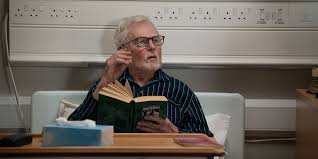
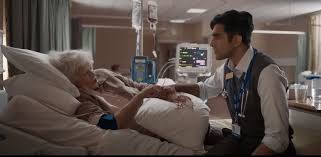
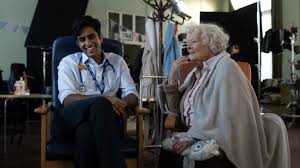
The story unfolds in a geriatric ward of a small Yorkshire hospital, fondly nicknamed “The Beth.” Facing closure due to budget cuts, the patients and staff band together. We meet a colorful cast of characters: the formidable ward sister Dorothy (a brilliantly steely Jennifer Saunders), the charming yet troubled Dr. Valentine (Bally Gill), and a gaggle of elderly patients with their own quirks and grievances, led by the ever-optimistic Mr. Parker (David Bradley).
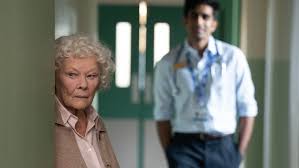
The initial tone is lighthearted, with laugh-out-loud moments as the residents prepare for a concert honoring the beloved nurse Sister Monica (Judi Dench, underused but delightful). However, beneath the surface lurks a darker truth. The threat of closure hangs heavy, and whispers of euthanasia practiced by Dr. Valentine cast a long shadow.
Bennett’s signature wit is present, laced with a touch of cynicism. The humor often stems from the absurdities of bureaucracy and the patients’ frank observations on aging. Yet, the film doesn’t shy away from difficult themes. The ethical implications of euthanasia are explored with nuance, sparking internal debates in the audience.
The narrative takes a significant turn that some viewers might find jarring. What appears to be a classic underdog story against an uncaring system takes a more complex route. This “rug-pull” moment, as some critics have called it, has divided audiences. While some find it disrupts the initial flow, others see it as a reflection of the film’s deeper message: the fight for the NHS is far from black and white.
“Allelujah” shines in its performances. The veteran cast delivers stellar work. Saunders embodies the no-nonsense nurse with a heart of gold, while Bradley brings warmth and vulnerability to Mr. Parker. Special mention goes to Derek Jacobi as the conflicted consultant, Colin, forced to choose between efficiency and compassion.
The film’s greatest strength lies in its ability to evoke a range of emotions. It’s humorous, heartbreaking, and thought-provoking all at once. It doesn’t offer easy answers, instead prompting viewers to ponder the value of life, the challenges faced by the healthcare system, and the enduring spirit of community.
The final act, set against the backdrop of the COVID-19 pandemic, adds another layer of poignancy. The overwhelmed Dr. Valentine, delivering a heartfelt plea for the NHS, becomes a powerful symbol of the immense pressure healthcare workers endured during that time.
Strengths:
Nuance and Complexity: “Allelujah” avoids simplistic portrayals. The characters, from the well-meaning Dr.Valentine to the conflicted Colin, grapple with moral dilemmas. There are no easy villains, just a system under strain and individuals navigating impossible situations.
Social Commentary: The film doesn’t shy away from criticizing government cuts to the NHS. It highlights the human cost of austerity measures, showcasing the dedication of overworked staff and the vulnerability of patients in underfunded wards.
Dark Humor: Bennett’s signature wit cuts through the heavy themes. The gallows humor of the elderly patients provides moments of levity and underscores the absurdity of the situation.
Timely Resonance: The film’s themes of aging, the pressure on healthcare systems, and the value of community care feel particularly relevant in a post-pandemic world.
Weaknesses:
Tonal Shift: The shift from lighthearted comedy to a darker exploration of euthanasia might alienate some viewers expecting a more traditional crowd-pleaser.
Underdeveloped Characters: While the central cast delivers strong performances, some characters, like Judi Dench’s Sister Monica, feel underused. More depth could have been explored in their backstories and motivations.
Open Ending: The film concludes without a clear resolution, leaving some viewers wanting more closure.
“Allelujah” is likely to spark discussions long after the credits roll. It compels viewers to confront difficult questions about healthcare, resource allocation, and the ethics of end-of-life decisions.
The film also serves as a powerful testament to the enduring spirit of the NHS. Despite facing immense challenges, the dedication of its staff and the unwavering support of communities highlight the vital role it plays in British society.
Ultimately, “Allelujah” is not a film with easy answers. It’s a complex and thought-provoking work that deserves to be considered within the broader conversation about the future of healthcare and the importance of valuing human life at every stage.
“Allelujah” might not be the feel-good film the trailers promised. It’s a complex and challenging watch, but one that rewards patient viewers. With its sharp writing, stellar performances, and willingness to tackle difficult questions, it serves as a thought-provoking tribute to the NHS and a reminder of the importance of fighting for what we believe in.




Leave a Reply