Blu-ray review: “Detroit 9000” (1973)

“Detroit 9000” (1973) Action Running Time: 106 minutes Written by: Orville H. Hampton Directed by: Arthur Marks Featuring: Alex Rocco, Hari Rhodes, Vonetta McGee, Herbert Jefferson Jr. and Ella Edwards TAGLINE: “Only cops with fast fists and fiery 45's answer "POLICE-CALL 9000!"” "Detroit 9000" (1973), directed by Arthur Marks, is a fascinating and often gritty entry into the blaxploitation canon that transcends some …

Continue reading Blu-ray review: “Detroit 9000” (1973)

Blu-ray review: “Super Fly T.N.T.” (1973)

“Super Fly T.N.T.” (1973) Action Running Time: 86 minutes Written by: Alex Haley Directed by: Ron O'Neal Featuring: Ron O'Neal, Roscoe Lee Browne, Sheila Frazier, Robert Guillaume, Jacques Sernas and William Berger Tagline: “That Superfly Dude is Back!” "Super Fly T.N.T." (1973) is a curious and often-maligned sequel to the groundbreaking blaxploitation hit "Super Fly" (1972). While the original is celebrated for its gritty …

Continue reading Blu-ray review: “Super Fly T.N.T.” (1973)

Blu-ray review: “Spy × Family: Season Two” (2019 – present)

“Spy × Family: Season Two” (2019 - present) Anime Twelve Episodes Written by: Ichirō Ōkouchi Featuring: Atsumi Tanezaki, Saori Hayami and Takuya Eguchi Manga: “As soon as you understand, go home.” Spy x Family: Season Two dives deeper into the endearing, chaotic, and surprisingly heartfelt lives of the Forger family, solidifying its place as a standout in the anime landscape. While the …

Continue reading Blu-ray review: “Spy × Family: Season Two” (2019 – present)

Blu-ray review: “A Returner’s Magic Should Be Special: Season One” (2023-present) 

“A Returner's Magic Should Be Special: Season One” (2023-present)  Television Series / Anime Twelve Episodes Created by: Takamitsu Kōno A Returner's Magic Should Be Special arrived on the anime scene with a hefty reputation, adapting a popular webtoon beloved for its intricate magic system, time-travel premise, and compelling character development. Season One, produced by Arvo Animation, takes …

Continue reading Blu-ray review: “A Returner’s Magic Should Be Special: Season One” (2023-present) 

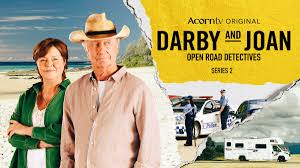
DVD review: “Darby and Joan: Series Two” (2022-present) 

“Darby and Joan: Series Two” (2022-present)  Television Series Seven Episodes Created by: Phillip Gwynne and Glenys Rowe Featuring: Bryan Brown and Greta Scacchi Detective Inspector Liz Darby: “You also have Joan, and that makes you vulnerable.” Jack Darby: “No. That makes me tougher.” "Darby and Joan" returned for its second series, bringing back the unlikely duo of retired detective Jack Darby (Bryan …

Continue reading DVD review: “Darby and Joan: Series Two” (2022-present) 

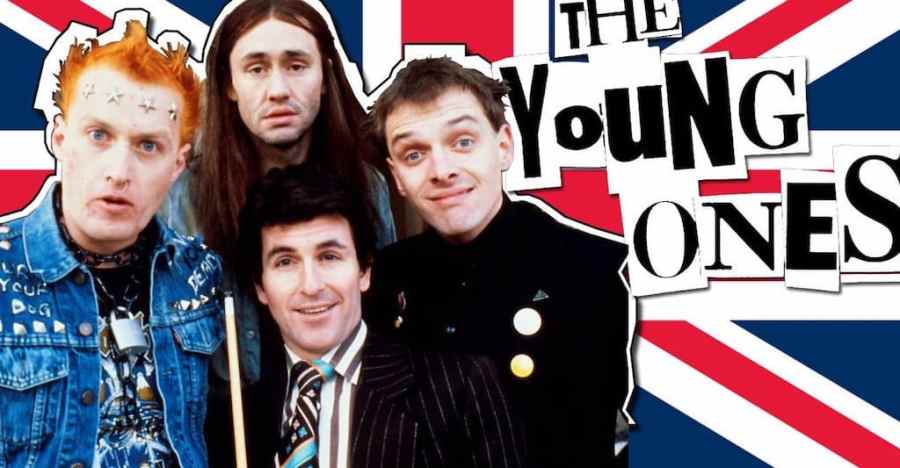
Blu-ray review: “The Young Ones” (1982-1984) 

“The Young Ones” (1982-1984)  Television Series Twelve Episodes Created by: Ben Elton, Rik Mayall and Lise Mayer Featuring: Adrian Edmondson, Rik Mayall, Nigel Planer, Christopher Ryan and Alexei Sayle Rick: “I suppose you think it's pretty weird, don't you Mike? Well, you'd be right. 'Cause THAT'S the kind of guy I am, right? WEIRD. Which is why I go over people's heads. A bit like an …

Continue reading Blu-ray review: “The Young Ones” (1982-1984) 

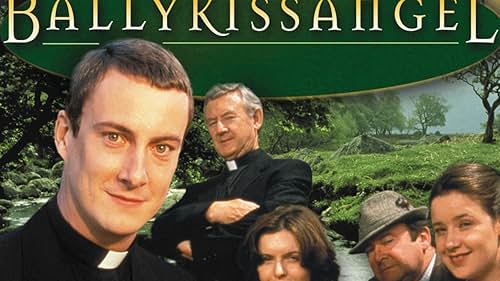
DVD Review: “Ballykissangel Series One – Six” (1996-2001) 

“Ballykissangel Series One - Six” (1996-2001)  Television Series Fifty-eight Episodes Created by: Kieran Prendiville  Featuring: Dervla Kirwan, Stephen Tompkinson, Tony Doyle and Tina Kellegher Father Peter Clifford: "Assumpta, I'm a Catholic priest."  Ballykissangel is one of those rare television dramas that manages to be both quaint and quietly profound. First broadcast on BBC One in 1996, the series ran for six seasons and …

Continue reading DVD Review: “Ballykissangel Series One – Six” (1996-2001) 

Blu-ray review: “Shattered Glass” (2003)

“Shattered Glass” (2003) Drama Running Time: 94 minutes Written and directed by: Billy Ray Featuring: Hayden Christensen, Peter Sarsgaard, Chloë Sevigny, Rosario Dawson, Melanie Lynskey, Hank Azaria and Steve Zahn Stephen Glass: “I didn't do anything wrong, Chuck.” Chuck Lane: “I really wish you'd stop saying that.” In a time when journalistic integrity is under constant scrutiny, Shattered Glass emerges as both a haunting reminder and a gripping cautionary tale. Based on the true story of Stephen Glass, a young and rising star at The New Republic who was revealed to have fabricated the majority of his articles, this 2003 drama is a chilling exploration of ambition, fraud, and the fragile line between perception and truth. The film is set in the late 1990s, a time when The New Republic was considered the "in-flight magazine of Air Force One"—a publication with enormous cultural and political influence. Stephen Glass, portrayed with calculated vulnerability by Hayden Christensen, is a charismatic young journalist who wins over his peers with self-deprecation, humor, and apparent talent. However, as cracks begin to form in one of his high-profile stories, an editor at Forbes Digital Tool (played by Steve Zahn) begins to investigate its veracity, triggering a domino effect that ultimately exposes a vast web of deceit. The screenplay, written by director Billy Ray, is based on the 1998 Vanity Fair article by Buzz Bissinger. It sticks closely to the real events and benefits enormously from its grounded, methodical pacing. Ray doesn’t sensationalize the scandal but rather allows the horror to build slowly through understated moments and mounting tension. Hayden Christensen’s portrayal of Glass is arguably the best performance of his career. While known to many as Anakin Skywalker in the Star Wars prequels, Christensen demonstrates a far more nuanced range here. He plays Glass not as a clear-cut villain, but as a deeply insecure and manipulative individual who is desperate to be liked, to be seen, and most of all, to matter. His charm is disarming, and that’s precisely what makes his deception so believable—and so dangerous. Opposite him, Peter Sarsgaard delivers a quietly commanding performance as Charles Lane, the new editor of The New Republic who must confront the possibility that his star writer is a fraud. Sarsgaard’s subtle transformation—from a cautious, slightly unsure editor trying to win over his staff, to a moral anchor determined to uphold journalistic standards—is the film’s beating heart. His restraint provides a powerful counterpoint to Christensen’s increasingly desperate Glass. Billy Ray directs with a quiet intelligence. He avoids flashy techniques, instead choosing a clean, almost clinical aesthetic that mirrors the film’s thematic concerns. The camera often lingers on Glass’s face as he lies, catching the flickers of guilt and calculation. These moments are where the film is most powerful, inviting the viewer into the mindset of a fabricator who is not psychopathic, but profoundly weak. What’s especially disturbing—and compelling—is how long Glass got away with it. His colleagues, editors, and even readers were enamored with his voice, his persona, and his narrative flair. The film makes clear that Glass’s success wasn’t only a personal failing; it was also an institutional one. In hindsight, Shattered Glass feels prophetic. Released before the rise of social media, before the “fake news” crisis, and before the era of widespread digital misinformation, the film captures an earlier but no less relevant moment of moral panic in journalism. It raises enduring questions: What happens when storytelling becomes more important than facts? How do editors balance trust and skepticism? And what kind of damage can a single individual do when no one’s looking too closely? There is a moment late in the film where Charles Lane, confronting the magnitude of Glass’s deception, says to his staff: "He handed us fiction after fiction, and we printed them all as fact. Just because we found him entertaining. It’s indefensible. Don’t you see that?" That line encapsulates the tragedy—not just of Glass’s fall, but of a collective failure to safeguard truth. The visual style of Shattered Glass is deliberately restrained. Cinematographer Mandy Walker (later known for Hidden Figures and Mulan) gives the film a sleek, almost antiseptic look—crisp office lighting, neutral color palettes, and a general sense of order that contrasts sharply with the chaos Glass is sowing behind the scenes. The clean, quiet newsroom becomes an ironic setting: a place meant for uncovering truth that is, in reality, sheltering deceit. There’s an eerie stillness to much of the film. Ray and Walker make frequent use of static shots and long takes, especially in scenes where Glass is spinning elaborate lies. These choices create a slow burn of tension, encouraging the viewer to scrutinize every word, every hesitation. Even Glass’s voiceovers—excerpts from his own fabricated stories—are delivered with a glossy, dreamlike quality, reinforcing the illusion he so carefully crafts for others and perhaps even for himself. The music by Mychael Danna is similarly understated, providing a subtle emotional undercurrent without ever drawing attention to itself. It’s not there to tell you how to feel, but to gently emphasize the quiet dread of discovery, the sadness of betrayal. What makes Shattered Glass so compelling is that it avoids pathologizing Stephen Glass. He is not presented as a sociopath or a malicious con man, but as a fundamentally insecure person whose need for approval becomes pathological. There’s something heartbreaking about his compulsions. He seems to genuinely believe that if he just tells people what they want to hear—and does it with enough charm—they’ll never stop liking him. …

Continue reading Blu-ray review: “Shattered Glass” (2003)
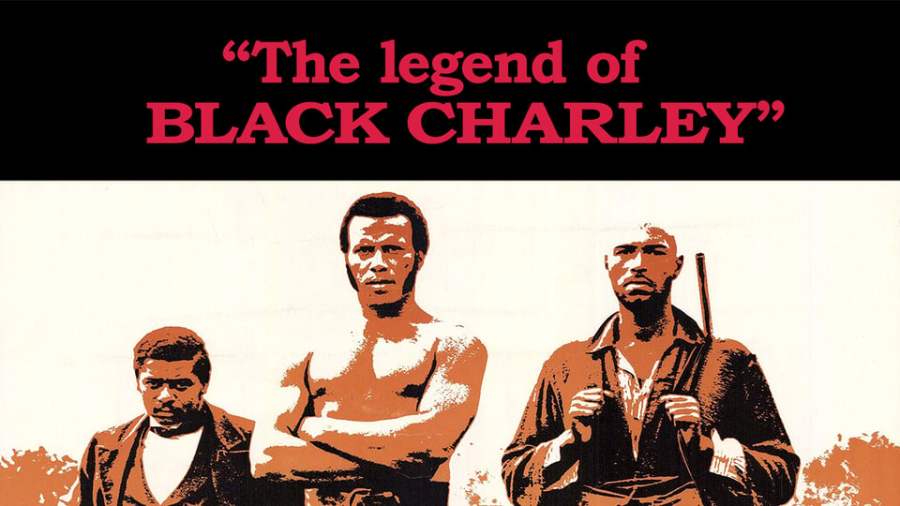
Blu-ray review: “The Legend of Black Charley” (1972)

“The Legend of Black Charley” (1972) Action Running Time: 98 minutes Written by: Martin Goldman and Larry G. Spangler Directed by: Martin Goldman Featuring: Fred Williamson, D'Urville Martin and Don Pedro Colley Tagline: “Somebody warn the West. Nigger Charley ain't running no more.” The Legend of Black Charley, directed by Martin Goldman and released in 1972, is a fascinating and underdiscussed entry in the genre of Blaxploitation Westerns. Starring Fred Williamson in the title role, the film mixes the classic Western template with themes of racial justice and Black empowerment in post-Civil War America. Though it may not be as polished or widely remembered as some of its contemporaries, The Legend of Black Charley deserves credit for breaking ground in both its genre and its social commentary. At its core, The Legend of Black Charley is a Western adventure that follows Charley, a former slave turned gunfighter, who takes control of his destiny and seeks to carve out a place of dignity and freedom in a violent and hostile America. When the film begins, Charley is owned by a cruel plantation master who has no intention of freeing his slaves, even after the Emancipation Proclamation. Charley’s refusal to remain in bondage leads to a daring and violent escape, after which he embarks on a journey across the lawless West, encountering both racist white pursuers and fellow Black men also looking for justice and autonomy. This setup flips the script on the traditional Western hero. Instead of the white cowboy figure we often see in films of this era, Charley is a Black man fighting for freedom—not only his own, but symbolically for his entire race. His transformation from an enslaved man to a self-determined hero is both cathartic and radical, especially considering the time in which the film was made. It’s a bold reclamation of the American mythos through a Black lens. Fred Williamson, already a rising star in the Blaxploitation wave of the early '70s, delivers a charismatic and commanding performance as Black Charley. His screen presence is undeniable—he embodies quiet strength, righteous anger, and a simmering confidence that makes him compelling to watch even when the script wavers. Williamson doesn’t just play Charley as a vengeance-seeking archetype; there’s nuance to the way he handles the character’s trauma, loyalty to his friends, and desire to build a new life rather than just destroy the old one. His performance elevates the material and gives the film an emotional center it might have otherwise lacked. The film’s production values are modest. Shot on a low budget, The Legend of Black Charley often looks and feels rough around the edges, with uneven editing, amateurish sound design, and uninspired cinematography. However, these limitations also lend the movie a raw, unvarnished quality that suits its themes. This isn’t a sanitized, studio Western; it’s a gritty, desperate struggle for survival and justice in a world built to crush men like Charley. That said, the pacing can drag at times, and some of the supporting performances feel flat or wooden. The screenplay, credited to Goldberg and others, tends to lean on blunt exposition and occasionally stilted dialogue. But these flaws don’t obscure the film’s ambitions—they just remind us that this was an early, audacious effort rather than a fully realized masterpiece. What makes The Legend of Black Charley truly important is its political and cultural stance. Made during the height of the civil rights and Black Power movements, the film doesn’t shy away from the racial violence and systemic injustice of American history. In fact, it places them front and center, using the Western framework to tell a story of rebellion and self-liberation. Charley is not just fighting for his life; he’s fighting against the very idea that Black men and women are destined to be subjugated. The villains of the film—the slave owners, the bounty hunters, the corrupt lawmen—are unrepentant symbols of white supremacy. The film never tries to redeem them or offer a false middle ground. Instead, it offers resistance. This defiant tone set The Legend of Black Charley apart from many of its peers. It’s not an exploitation film in the shallow sense—it’s a declaration of identity and a rewriting of who gets to be a hero in American stories. The film did well enough to warrant a sequel, The Soul of Nigger Charley (1973), and a third installment, Boss Nigger(1975), which Williamson also directed. These films pushed the concept even further, and together they form an unofficial trilogy of radical Black Westerns. Though The Legend of Black Charley is rarely included in the canon of great Westerns, its influence can be felt in later efforts to diversify and deconstruct the genre. From Mario Van Peebles’ Posse (1993) to more recent films like The Harder They Fall (2021), the lineage is clear. The Legend of Black Charley may not be a perfect film, but it’s a vital one. With Fred Williamson’s magnetic performance, a strong anti-racist message, and the sheer novelty of a Black-led Western in the early 1970s, it earns its place in cinema history. For viewers interested in genre-bending, politically charged storytelling—or anyone looking to understand the roots of Black representation in film—this is a ride worth taking. 1.90.3-SEC3AAV4ORLOE2VSZJ7AQY5MSQ.0.1-3

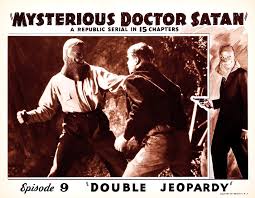
Blu-ray review: “Mysterious Doctor Satan” (1952)

“Mysterious Doctor Satan” (1952) Science Fiction Running Time: 100 minutes Written by: Franklin Adreon, Ronald Davidson, Norman S. Hall, Joseph F. Poland and Sol Shor Directed by: William Witney and John English Featuring: Edward Ciannelli, Robert Wilcox, William Newell, C. Montague Shaw, Ella Neal and Dorothy Herbert Bob Wayne: “Then some of the rumors about this mysterious Dr. Satan are true!” Gov. Bronson: “All of them are probably true! Dr. …

Continue reading Blu-ray review: “Mysterious Doctor Satan” (1952)

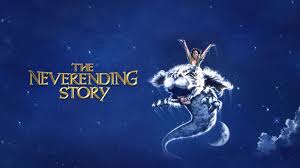
“The NeverEnding Story – 40th Anniversary Limited Edition 4K UHD”(1984)

“The NeverEnding Story – 40th Anniversary Limited Edition 4K UHD + Blu-ray Exclusive Replica Storybook Packaging – Imprint Collection #365” (1984) Fantasy Running Time: 94 minutes Written by: Wolfgang Petersen and Herman Weigel Directed by: Wolfgang Petersen Featuring: Noah Hathaway, Barret Oliver, Tami Stronach, Patricia Hayes, Sydney Bromley, Gerald McRaney and Moses Gunn Rock Biter: “They look like big, good, strong hands, don't they? I …

Continue reading “The NeverEnding Story – 40th Anniversary Limited Edition 4K UHD”(1984)

Blu-ray review: “Zombies of the Stratosphere” (1952)

“Zombies of the Stratosphere” (1952) Science Fiction Running Time: 70 minutes Written by: Ronald Davidson Directed by: Fred C. Brannon Featuring: Judd Holdren, Aline Towne, Wilson Wood, Lane Bradford, Stanley Waxman, John Crawford, Craig Kelly, Ray Boyle and Leonard Nimoy Zombies of the Stratosphere is one of those wonderfully pulpy, endearingly earnest science-fiction serials that could only have come from the early 1950s. Directed by Fred …

Continue reading Blu-ray review: “Zombies of the Stratosphere” (1952)

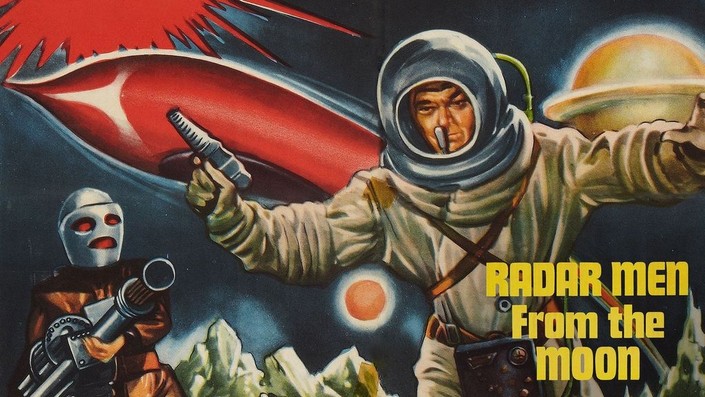
Blu-ray review: “Radar Men from the Moon” (1952)

“Radar Men from the Moon” (1952) Science Fiction Running Time: 100 minutes Written by: Ronald Davidson Directed by: Fred C. Brannon Featuring: George Wallace, Aline Towne and Roy Barcroft Graber: “How 'bout a ride to town, mister?” Motorist: “Sure. Hop in.” Graber: “There's a man in a flying suit chasing us. Step on it.” Motorist: “Huh?” "Radar Men from the Moon" is a fascinating piece of …

Continue reading Blu-ray review: “Radar Men from the Moon” (1952)

Blu-ray review: “Agatha Christie’s Marple: Series One to Three” (2004-2013)

“Agatha Christie's Marple: Series One to Three” (2004-2013) Television Twenty three Episodes Created by: Agatha Christie Featuring: Geraldine McEwan and Julia McKenzie  Miss Jane Marple: “When gentlemen of a certain age fall in love, they get the disease very badly.” Agatha Christie's Miss Marple series, known for its charming and astute elderly detective, has been a beloved staple in …

Continue reading Blu-ray review: “Agatha Christie’s Marple: Series One to Three” (2004-2013)

DVD Review: “Seaway” (1965-1966) 

“Seaway” (1965-1966)  Television Series Thirty Episodes Created by: Abraham Polonsky Featuring: Stephen Young, Austin Willis and Cec Linder "Seaway" is a Canadian drama series that aired during the 1965–1966 television season. Set against the backdrop of the newly constructed Saint Lawrence Seaway, the series offers a compelling blend of adventure, drama, and crime-solving narratives. Despite its brief run of 30 episodes, "Seaway" …

Continue reading DVD Review: “Seaway” (1965-1966) 

Blu-ray review: “Gator” (1976)

“Gator” (1976) Action Running Time: 115 minutes Written by: William W. Norton Directed by: Burt Reynolds Featuring: Burt Reynolds, Jack Weston, Lauren Hutton and Jerry Reed Bama McCall: “Don't you ever knock on the door or nothin'? I mean, you could've caught a fella with his britches down.” Burt Reynolds’ Gator (1976) is an intriguing mix of action, comedy, and backwoods crime drama, serving …

Continue reading Blu-ray review: “Gator” (1976)

Blu-ray review: “Hustle” (1975)

“Hustle” (1975) Action Running Time: 120 minutes Written by: Steve Shagan Directed by: Robert Aldrich Featuring: Burt Reynolds, Catherine Deneuve, Ben Johnson, Paul Winfield, Eileen Brennan, Eddie Albert, Ernest Borgnine and Jack Carter Lt. Phil Gaines: "Don't you know where you live, Marty? Can't you smell the bananas? You know what country you live in? You live in …

Continue reading Blu-ray review: “Hustle” (1975)

Blu-ray review: “White Lightning” (1973)

“White Lightning” (1973) Action Running Time: 101 minutes Written by: William W. Norton Directed by: Joseph Sargent Featuring: Burt Reynolds, Jennifer Billingsley, Ned Beatty, Bo Hopkins and Matt Clark Vinnie Carruthers: “What happened to you?” Gator McKlusky: “I was tryin' to save these two buddies of mine from getting knocked up by a homosexual.” Vinnie Carruthers: “Oh, praise God!” White Lightning, directed by Joseph Sargent and …

Continue reading Blu-ray review: “White Lightning” (1973)

Blu-ray review: “Listen to Me Marlon” (2015)

“Listen to Me Marlon” (2015) Documentary Running Time: 95 minutes Written by: Stevan Riley and Peter Ettedgui Directed by: Stevan Riley  Marlon Brando, Himself: “Everything that you do - make it real as you can. Make it alive. Make it tangible. Find the truth of that moment.” Marlon Brando, Himself: “Lying for a living. That's what acting …

Continue reading Blu-ray review: “Listen to Me Marlon” (2015)

Blu-ray review: “A Dry White Season” (1989)

“A Dry White Season” (1989) Drama Running Time: 107 minutes Written by: Colin Welland and Euzhan Palcy Directed by: Euzhan Palcy Featuring: Donald Sutherland, Janet Suzman, Jürgen Prochnow, Zakes Mokae, Susan Sarandon and Marlon Brando Ian McKenzie: “Justice and law, Mr. Du Toit, are often just... well they're, I suppose they can be described as distant cousins. And here in South Africa, well, they're simply not …

Continue reading Blu-ray review: “A Dry White Season” (1989)