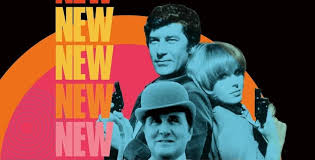
“The New Avengers” (1976 – 1977)
TV Thriller

Twenty Six Episodes
Created by: Brian Clemens and Albert Fennell
Featuring: Patrick Macnee, Gareth Hunt and Joanna Lumley
John Steed: “I want Purdey.”
Mike Gambit: “Who doesn’t?”
When The New Avengers premiered in 1976, it had the unenviable task of following one of the most stylish and beloved British television series of the 1960s, The Avengers. What emerged instead of a simple continuation was something more curious: a glossier, more international, and occasionally more uneven reinvention that nonetheless retains a distinctive charm and cultural value of its own.
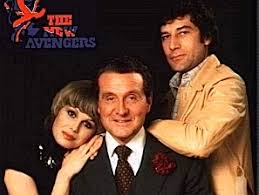
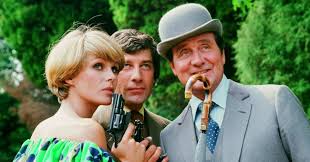
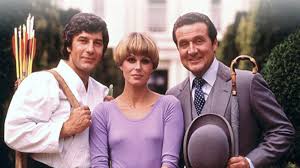
At the centre of the series is the return of John Steed, once again played with effortless elegance by Patrick Macnee. Steed is older now, but no less enigmatic—still clad in bowler hat and umbrella, still delivering wry one-liners with impeccable timing. However, the dynamic around him has shifted. Gone is the flirtatious, electric chemistry he shared with Emma Peel in the original run, replaced instead by a more ensemble-driven structure. His new partners—Mike Gambit (Gareth Hunt) and Purdey (Joanna Lumley)—bring a different energy, one that reflects the tonal shifts of 1970s television.
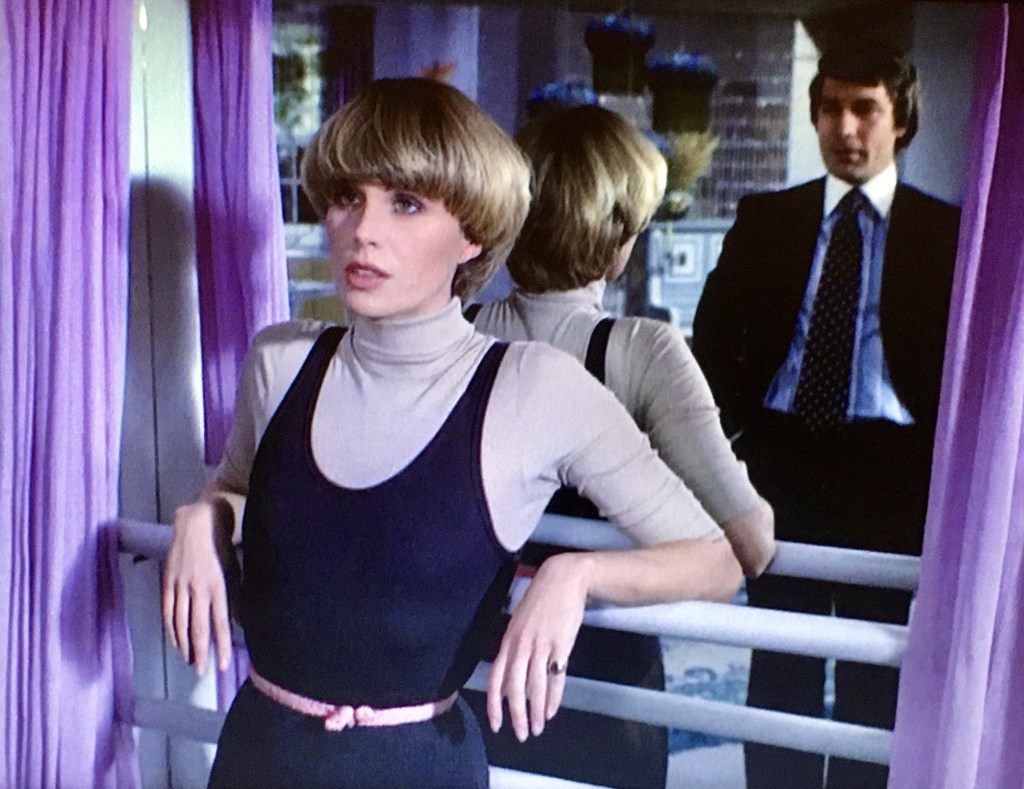
Gambit is a rugged, working-class counterpoint to Steed’s upper-crust eccentricity, a more physical and grounded operative whose streetwise instincts contrast with Steed’s gentlemanly detachment. Purdey, meanwhile, is arguably the show’s standout addition: sharp, athletic, and radiating confidence, Lumley’s performance gives the series much of its spark. While she inevitably invites comparisons to Emma Peel (Diana Rigg), Purdey is her own creation—less mysterious perhaps, but more overtly modern and assertive.
The most striking difference between The New Avengers and its predecessor lies in its production style. Co-produced with international partners, the show was clearly designed with global markets in mind, and this is evident in its higher budgets, more expansive location shooting, and a slightly diluted sense of British eccentricity. Where the original series thrived on surrealism, whimsy, and often borderline absurd plots, The New Avengers leans more heavily into straightforward espionage and action-adventure storytelling. Episodes frequently involve Cold War tensions, rogue agents, or quasi-scientific threats, but they are generally played more straight than the often dreamlike scenarios of the 1960s series.
That’s not to say the show lacks imagination. Episodes like “The Eagle’s Nest” and “Gnaws” flirt with the bizarre, and there are moments where the old Avengers spirit flickers into life—odd villains, quirky concepts, and a touch of the fantastical. However, these moments are less consistent, and the tone can sometimes feel caught between eras: not quite as daringly stylised as its predecessor, yet not fully committed to the grittier realism that would define later spy dramas.
Visually, the series benefits from its increased budget. Filmed partly on location in France and Canada, it has a more cinematic feel than the studio-bound original. The action sequences are more ambitious, with car chases, shootouts, and stunt work playing a larger role. However, this emphasis on action can occasionally come at the expense of the sharp, witty dialogue and playful character interplay that once defined the franchise.
One of the more debated aspects of The New Avengers is its pacing and episode structure. With longer runtimes (often around 50 minutes), the stories have more room to breathe, but they can also feel padded compared to the brisk, stylish punch of the original’s shorter episodes. Some plots unfold with a deliberate, almost languid rhythm, which can either enhance the atmosphere or test the viewer’s patience, depending on the episode.
Despite these inconsistencies, the chemistry between the three leads remains a strong anchor. Macnee, Hunt, and Lumley form a likable trio, and their camaraderie grows more convincing as the series progresses. There’s a relaxed, almost familial quality to their interactions that compensates for the lack of the original’s iconic pairings. Steed, in particular, becomes more of a mentor figure—still capable, but now guiding a new generation of agents.
In a broader television context, The New Avengers occupies an interesting transitional space. It reflects the changing tastes of the 1970s, where audiences were gravitating toward more grounded and internationally appealing narratives, yet it still carries echoes of the playful experimentation of the 1960s. This dual identity is both its strength and its weakness: it makes the series accessible but sometimes robs it of the singular personality that made the original so groundbreaking.
Ultimately, The New Avengers is best appreciated not as a direct continuation, but as a reinterpretation. It may lack the consistent brilliance and stylistic daring of The Avengers, but it offers its own pleasures: charismatic performances, polished production values, and a fascinating snapshot of how a cult classic was adapted for a new decade.
For fans of British television history, it’s an essential watch—if only to see how John Steed navigates a changing world, still impeccably dressed, still faintly amused, and still, in his own understated way, one of the most enduring figures in the spy genre.
 spryfilm.com