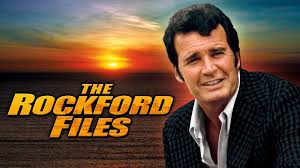
“The Rockford Files: Series 1 – 6” (1974-1980)
TV Drama

One Hundred and Twenty Three Episodes
Created by: Roy Huggins and Stephen J. Cannell
Featuring: James Garner, Noah Beery Jr., Joe Santos, Gretchen Corbett and Stuart Margolin
Jim Rockford: [to the hood who has just kidnapped him] “Does your mother know what you do for a living?”
Few television series manage to feel both effortlessly entertaining and quietly revolutionary, but The Rockford Files is one of those rare shows that rewrote the rules of a genre while making it look easy. First broadcast in the mid-1970s, the series took the well-worn private detective format and sanded off its hard-boiled macho edges, replacing them with wit, warmth, and a deep understanding of human frailty. Decades later, it remains not only watchable but strikingly modern in tone, characterisation, and storytelling.
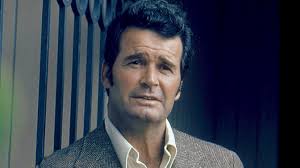
At the centre of the show is Jim Rockford, played with immense charm and understatement by James Garner. Rockford is not your traditional TV gumshoe. He doesn’t swagger through cases with supreme confidence, nor does he relish violence. Instead, he’s a former convict turned private investigator who’d rather avoid trouble altogether. He dislikes guns, complains constantly, and would much prefer to be paid on time than prove his moral superiority.
This inversion of the genre’s usual tropes is the show’s greatest strength. Rockford isn’t cynical in the classic noir sense; he’s tired, pragmatic, and acutely aware that the world is stacked against people like him. Garner’s performance is crucial here. His relaxed, conversational acting style gives Rockford a humanity that makes him instantly relatable. You believe this man lives in his trailer, struggles to pay his bills, and takes cases not because he’s heroic, but because he has few better options.
One of the most impressive aspects of The Rockford Files is its writing. The series balances mystery plotting with character-driven humour in a way that feels effortless but is actually finely calibrated. Many episodes unfold less like traditional whodunits and more like small, morally ambiguous dramas. The solutions to cases are often messy, compromised, and incomplete—just like real life.
The dialogue crackles with dry humour and intelligence. Rockford’s phone answering machine messages alone are miniature works of comic timing, often establishing tone, character, and plot in under a minute. The show assumes its audience is paying attention, trusting viewers to follow complex motivations and layered storytelling without excessive exposition.
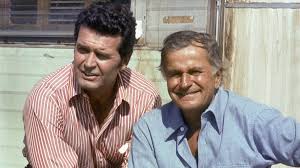
Rockford’s world feels richly populated thanks to a superb supporting cast. His relationship with his father, Rocky Rockford, is one of the most quietly touching elements of the series. Rocky is gruff, meddlesome, and perpetually convinced he knows better than his son, but beneath the bickering lies genuine affection and loyalty. Their dynamic adds emotional texture and grounding to what could otherwise be a purely episodic crime show.
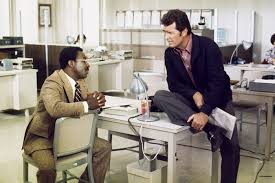
Equally important is Rockford’s ongoing antagonistic friendship with police lieutenant Dennis Becker. Becker represents institutional authority—something Rockford both needs and resents. Their interactions are often hilarious, but they also underline one of the show’s core themes: the tension between individual morality and bureaucratic justice.
Recurring guest characters, from eccentric criminals to vulnerable clients, are sketched with care rather than caricature. Even antagonists are rarely purely evil; instead, they’re driven by greed, fear, or desperation, reinforcing the show’s humanistic worldview.
While The Rockford Files is dialogue-driven, it’s far from static. The series features some of the best car chases ever staged for television, many of them performed by Garner himself. These sequences feel thrilling not because they’re flashy, but because they’re grounded and dangerous. You sense that Rockford is improvising, barely staying one step ahead of disaster.
The Southern California setting is another unsung asset. The beaches, freeways, industrial backlots, and sun-bleached suburbs give the show a distinct visual identity. Unlike the glossy fantasy versions of California seen in later television, this is a working, imperfect landscape that mirrors Rockford’s own precarious existence.
What truly elevates The Rockford Files is its thematic depth. Beneath the humour and mystery plots lies a consistent critique of power, wealth, and authority. Corporations, wealthy families, and institutions often emerge as the real villains, while Rockford is left navigating the fallout suffered by ordinary people.
The show also explores masculinity in a refreshingly honest way. Rockford is capable, intelligent, and brave, but he’s also vulnerable, self-doubting, and emotionally open—qualities rarely celebrated in male TV heroes of the era. This makes the series feel surprisingly progressive, even by today’s standards.
It’s difficult to overstate the influence of The Rockford Files. Its DNA can be found in countless later detective and dramedy series, from character-driven procedurals to modern antihero narratives. The idea that a lead character could be fallible, funny, and fundamentally decent without being sanctimonious owes a great deal to Jim Rockford.
James Garner’s performance, in particular, set a new benchmark for television acting. His naturalism paved the way for a more relaxed, character-first style that many later actors would emulate.
The Rockford Files endures because it understands people. It recognises that life is complicated, justice is imperfect, and survival often requires compromise. Wrapped in sharp writing, memorable characters, and one of television’s great lead performances, the series transcends its genre to become something richer and more humane.
Whether you’re revisiting it or discovering it for the first time, The Rockford Files remains a masterclass in intelligent, character-driven television—proof that you don’t need invincible heroes or grandiose plots to create something truly timeless.


Absolutely superb breakdown of a stellar show! I fell in love with the show as a kid & recently received the box set as a gift. Your assessment of the timelessness of the show is spot on – my husband and Son, neither if which had ever watched an episode were instantly hooked! I’ve managed to bring them both (ages 51 & 30) into the show , which speaks to the genuine nature of Rockford, because both these men are coal mining, hunting, racing country boys with little interest into sitting still for the TV!
LikeLiked by 1 person