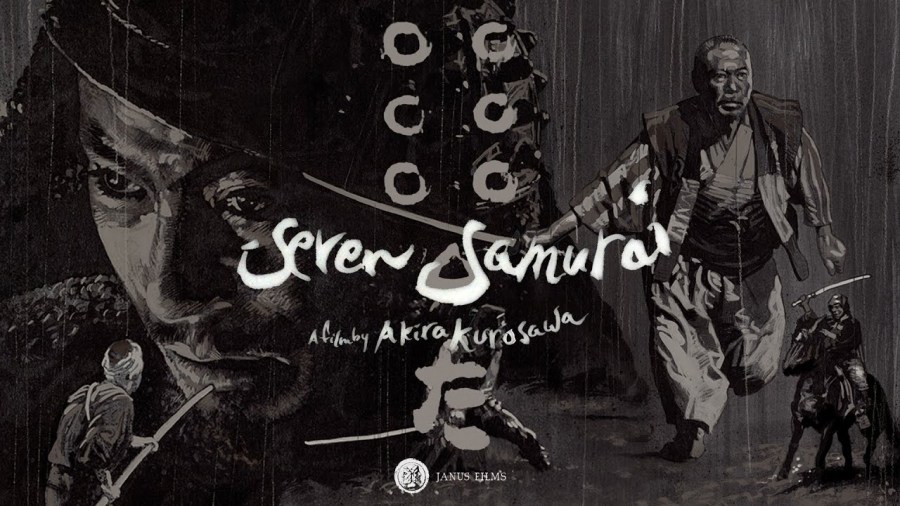
“Seven Samurai” (1954)
Drama / Action

Running Time: 207 minutes
Written by: Akira Kurosawa, Shinobu Hashimoto and Hideo Oguni
Directed by: Akira Kurosawa
Featuring: Toshiro Mifune, Takashi Shimura, Keiko Tsushima, Isao Kimura, Daisuke Katō, Seiji Miyaguchi, Yoshio Inaba, Minoru Chiaki, Kamatari Fujiwara, Kokuten Kōdō, Yoshio Tsuchiya, Eijiro Tono, Jun Tatara, Atsushi Watanabe, Yoshio Kosugi, Bokuzen Hidari and Yukiko Shimazaki
Kambei Shimada: “This is the nature of war: By protecting others, you save yourselves. If you only think of yourself, you’ll only destroy yourself.”
Akira Kurosawa’s Seven Samurai (1954) is widely regarded as one of the greatest films ever made, and the 2024 remastered version brings a fresh clarity and brilliance to this epic tale of honor, sacrifice, and survival. This remaster does more than just clean up the picture and audio—it brings Kurosawa’s masterwork into sharper focus, allowing modern audiences to experience the visual and narrative intricacies with a new appreciation.
The 2024 remaster enhances the film’s already stunning cinematography. Each frame, meticulously crafted by Kurosawa, feels revitalized. The black-and-white imagery is crisp, with deeper contrasts that highlight the film’s iconic compositions: from sweeping landscapes to intimate character close-ups. The battle scenes, particularly the climactic final showdown in the rain, feel more visceral and dynamic than ever. With improved film grain and sharper resolution, details like the wind in the grass or the glistening of rainwater pop with new life.
The sound design has also benefited immensely from the remastering process. Fumio Hayasaka’s score, with its minimalist and evocative rhythms, emerges more powerfully, reinforcing the film’s emotional stakes. The dialogue, though often sparse, is now clearer, allowing for the subtleties of the actors’ performances—particularly those of Takashi Shimura (Kambei) and Toshiro Mifune (Kikuchiyo)—to resonate more deeply. The ambient sounds of nature, swords clashing, and the tumult of battle feel more immersive, pulling viewers into the chaos of feudal Japan.
The remastered Seven Samurai not only enhances the technical aspects of the film but also reinforces the timelessness of its story. The themes of communal solidarity, self-sacrifice, and the struggle against oppression remain as potent today as they were 70 years ago. Kurosawa’s deep humanism, the complexity of his characters, and the philosophical undertones resonate even more clearly through this pristine restoration.
What sets Seven Samurai apart, beyond its technical brilliance, is Kurosawa’s mastery of storytelling. The 2024 remaster allows viewers to engage more fully with the film’s intricate pacing and character development. Each of the seven samurai, initially defined by their unique personalities and skills, gradually reveals deeper layers of humanity. Kambei, the wise and weary leader, becomes even more compelling as the improved clarity allows us to notice the subtle shifts in his expressions—his stoic leadership juxtaposed with the burden of the many battles he has fought.
The chaotic and comical Kikuchiyo, played by the magnetic Toshiro Mifune, benefits particularly from the restoration. His dynamic physicality is given new life through the sharper image, making his exaggerated movements more fluid and expressive. This highlights his status as both an outsider and a heart-wrenching, tragic figure, seeking acceptance and purpose among the samurai elite.
In addition to individual character depth, the remaster sharpens the film’s exploration of class and social dynamics. The tension between the samurai, peasants, and bandits feels more palpable, enhanced by the detailed restoration of their faces, costumes, and surroundings. The remaster allows viewers to pick up on small, previously unnoticed moments that reveal much about the social order of the time, and Kurosawa’s layered critique of heroism and sacrifice.
Though Seven Samurai runs nearly three and a half hours, its pacing is masterful, and the remastered version somehow feels even more immersive and engaging. Kurosawa’s gradual buildup of tension, as the villagers and samurai prepare for the bandit attack, feels more immediate. The restored version emphasizes the rhythm of the film, from moments of quiet planning and strategy to bursts of intense action.
The battle sequences, already some of the most thrilling ever filmed, gain new energy in this remaster. The improved contrast and definition make it easier to follow the fluid choreography of the samurai’s combat. Kurosawa’s innovative use of slow motion, especially in the climactic rain-soaked duel, feels fresh and modern, adding an epic grandeur to the fight scenes. The tension between life and death is more pronounced, pulling audiences into the high stakes of each skirmish.
One of the most remarkable aspects of the remastered Seven Samurai is how much more emotionally powerful the film feels. The small but crucial details in the actors’ faces, the weariness of their bodies, and their quiet moments of reflection now have a heightened sense of gravity. The villagers’ fear, desperation, and eventual courage are rendered with vivid realism, making their story even more relatable.
The ending—both triumphant and melancholic—strikes with greater force. Kurosawa’s conclusion, where the surviving samurai look over the graves of their fallen comrades, hits harder in the restored version. The weight of the losses, contrasted with the villagers’ relief, reminds viewers of the cost of war, even in defense of justice.
Kurosawa’s influence on global cinema is undeniable, and this remaster only reinforces his stature. The meticulous framing, the deep-focus shots, and the use of weather as an emotional backdrop are techniques that directors from Sergio Leone to George Lucas have drawn upon. In the remastered version, Kurosawa’s visionary use of these elements feels more immediate, almost as if the film was made for today’s audiences rather than seven decades ago.
Additionally, Seven Samurai remains a testament to the idea of the ensemble cast. The group dynamics, both among the samurai and between the samurai and villagers, form the emotional core of the film, and the restoration enhances this communal energy. Whether it’s the quiet camaraderie around the fire or the strategizing in the midst of battle, the remaster emphasizes the humanity that bonds these characters together, even in the face of overwhelming odds.
For long-time fans, the 2024 remaster of Seven Samurai is an opportunity to see the film in its finest form, preserving the integrity of Kurosawa’s original vision while polishing it for modern screens. For newcomers, it’s a perfect way to experience this cinematic milestone with all its grandeur intact. Whether watching for the first time or the hundredth, this remastered version is a testament to the enduring power of Seven Samurai as one of cinema’s crowning achievements.


 spryfilm.com