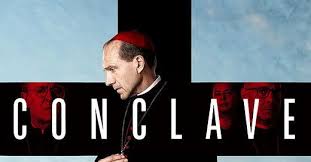
“Conclave” (2024)
Drama

Running Time: 120 minutes
Written by: Peter Straughan
Directed by: Edward Berger
Featuring: Ralph Fiennes, Stanley Tucci, John Lithgow, Sergio Castellitto and Isabella Rossellini
Lawrence: “Our faith is a living thing precisely because it walks hand-in-hand with doubt. If there was only certainty and no doubt, there would be no mystery. And therefore no need for faith. Let us pray that God will grant us a Pope who doubts. And let him grant us a Pope who sins and asks for forgiveness and who carries on.”
“Conclave,” directed by Edward Berger and released in October 2024, is a compelling drama that delves into the clandestine world of the Vatican’s papal election process. Adapted from Robert Harris’s 2016 novel, the film offers a meticulous portrayal of the political machinations and personal ambitions that surface following the unexpected death of the Pope.
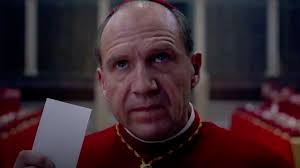
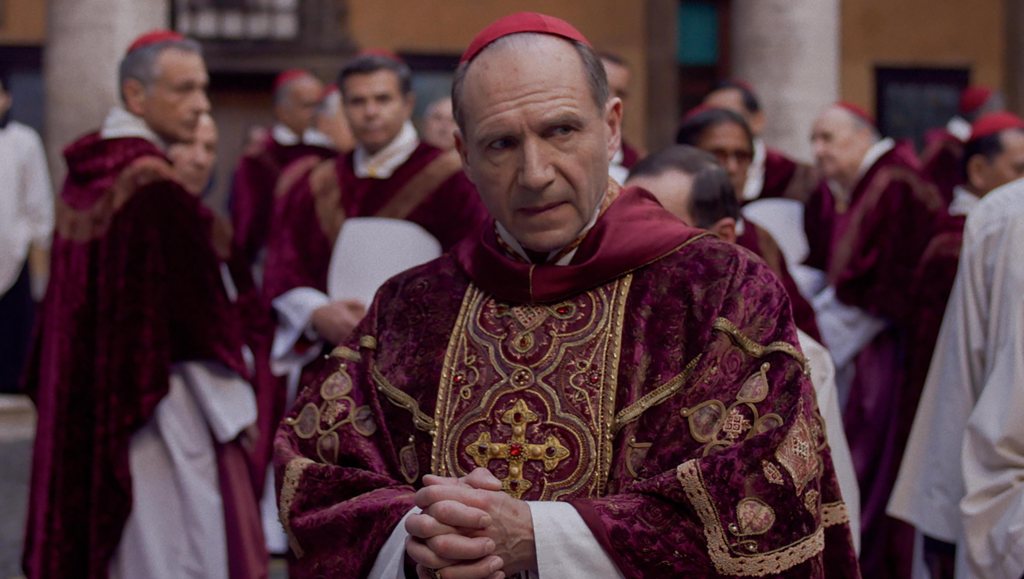
At the heart of the narrative is Cardinal Thomas Lawrence, portrayed by Ralph Fiennes, who is tasked with overseeing the conclave as the Dean of the College of Cardinals. Fiennes delivers a performance of remarkable depth, capturing Lawrence’s internal struggles and the weight of his responsibilities with subtlety and nuance. Critics have lauded Fiennes’s portrayal, with The Guardian describing it as “phenomenal” and among the finest pieces of acting in recent years.
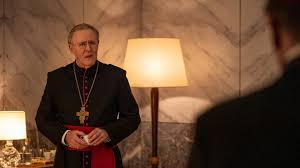
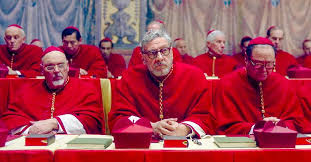
The supporting cast enhances the film’s dynamic portrayal of Vatican intrigue. Stanley Tucci embodies Cardinal Bellini, bringing a blend of charm and cunning to the role. John Lithgow’s Cardinal Tremblay adds depth with his portrayal of a seasoned church leader navigating the complex political landscape. Isabella Rossellini’s Sister Agnes stands out with a performance that balances grace and assertiveness, contributing to the film’s tension and drama.
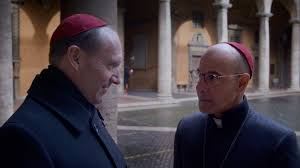
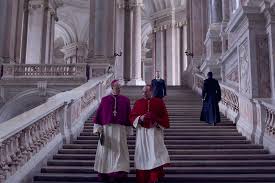
Berger’s direction is marked by a keen attention to detail, effectively capturing the opulence and austerity of the Vatican setting. The film’s cinematography employs symmetry and composition to reflect the rigid formality of the conclave, while overhead shots and close-ups convey the isolation and introspection of the characters. The use of sound, amplifying subtle noises like footsteps and breaths, further immerses the audience into the secluded world of the cardinals.
The screenplay, adapted by Peter Straughan, balances suspense and introspection, exploring themes of faith, doubt, and the intersection of the spiritual and the administrative within the Church. The dialogue is sharp and reflective, revealing the complexities of the characters’ motivations and the high stakes of the election process.
If there’s a standout feature of Conclave, it’s its ability to transform a dialogue-heavy narrative into gripping entertainment. Edward Berger’s direction keeps the tension simmering throughout the film, even during sequences that primarily involve the characters in conversation. The meticulous pacing ensures that the weight of every decision and exchange is felt, making the movie resonate with intensity.
The mystery surrounding the characters’ motivations and hidden agendas propels the plot forward. As the audience is slowly let in on secrets and personal dilemmas, the film subtly questions morality, authority, and ambition. Cardinal Lawrence, for instance, is written and portrayed as a man deeply conflicted by his faith and his worldly responsibilities. It’s in moments of introspection that Ralph Fiennes’s skill as an actor truly shines.
What truly elevates the narrative is its exploration of the dynamics within the conclave, which feels both deeply rooted in tradition and surprisingly contemporary in its political overtones. Straughan’s adaptation of Harris’s novel pays close attention to character development, ensuring that every interaction feels charged with layers of intent.
The production design deserves special mention. The intricately constructed sets convincingly recreate the grandeur of the Sistine Chapel and the Vatican, immersing viewers in the world of cardinals deliberating behind closed doors. The subdued lighting lends a sense of foreboding, while the music by Volker Bertelmann (of All Quiet on the Western Front) adds a quiet but insistent tension to the proceedings.
More than just a suspenseful drama, Conclave is a meditation on leadership and what it means to guide a spiritual community in an ever-changing world. This theme is especially potent in the film’s climax, which is both surprising and thought-provoking. Without spoiling the details, the resolution encourages viewers to reflect on the nature of power and whether it’s possible to wield it without compromise.
What sets Conclave apart is its universal appeal. While it is deeply rooted in the specifics of Catholic tradition and the unique rituals of the papal election process, its themes transcend religious boundaries. At its core, the film explores power, human fallibility, and the pursuit of justice—concepts that resonate universally. Whether you are devout, agnostic, or secular, the moral quandaries faced by the characters feel relevant and relatable.
The interplay of personal beliefs versus institutional demands is particularly poignant. As the cardinals grapple with their inner conflicts and external pressures, audiences are invited to question how individuals navigate systems of immense authority while maintaining personal integrity. These elements give the film a philosophical depth that elevates it beyond the scope of a typical political drama.
With awards season approaching, there’s considerable buzz around Conclave. Ralph Fiennes’s magnetic performance, in particular, positions him as a strong contender for Best Actor at the Academy Awards. Additionally, the film’s expert direction, sharp screenplay, and outstanding supporting cast make it a likely candidate for nominations in categories such as Best Adapted Screenplay, Best Director, and perhaps even Best Picture.
Edward Berger, fresh off his critical and commercial success with All Quiet on the Western Front, has once again demonstrated his ability to tackle complex narratives with sensitivity and insight. His work in Conclave is a reminder that even stories with modest settings and restrained action can be deeply cinematic and impactful.
While the film has been almost universally acclaimed, a few minor criticisms have emerged. Some viewers have noted that the dialogue-heavy structure may feel overly cerebral at times, potentially alienating those seeking more dynamic or action-oriented drama. Additionally, the film’s heavy reliance on the intricacies of Catholic procedure might leave some feeling slightly removed if they are unfamiliar with the traditions.
That said, these concerns are minor compared to the sheer quality and gravitas of the production. The film succeeds in maintaining a tight balance, ensuring that even the most procedural moments are imbued with tension and significance.
As the credits roll, one can’t help but feel the weight of the questions posed by Conclave. Who decides what is righteous? Is power inherently corruptive, or can it be wielded with purity and purpose? Can faith withstand the compromises required by leadership? These are questions that will leave audiences deep in thought, sparking conversations that extend far beyond the theater.
Ultimately, Conclave is more than just a cinematic achievement; it is a thought-provoking piece of art that challenges and engages its audience on multiple levels. For those who appreciate storytelling with depth, sophistication, and emotional resonance, Conclave is a film not to be missed.
It’s rare to see such an intricately crafted drama that manages to keep audiences on the edge of their seats while probing deeply into moral and philosophical issues. In doing so, Conclave carves out a special place for itself, both in the realm of cinema and in the hearts of its viewers.
“Conclave” is a meticulously crafted film that offers a riveting glimpse into one of the world’s most secretive institutions. With outstanding performances, particularly from Ralph Fiennes, and assured direction by Edward Berger, it stands as a significant cinematic achievement that engages both the mind and the senses.
 spryfilm.com