
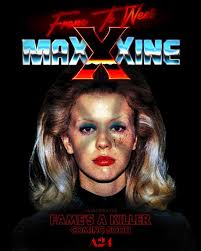
“MaXXXine” (2024)
Horror

Running Time: 104 minutes
Written and directed by: Ti West
Featuring: Mia Goth, Elizabeth Debicki, Moses Sumney, Michelle Monaghan, Bobby Cannavale, Halsey, Lily Collins,Giancarlo Esposito and Kevin Bacon
Maxine Minx: “You’re a fucking movie star.”
“MaXXXine” is the concluding chapter of Ti West’s audacious and atmospheric trilogy, following “X” and “Pearl.” This trilogy has pushed the boundaries of horror, blending retro aesthetics with deeply psychological storytelling. “MaXXXine” continues this tradition, delivering a thrilling, unsettling experience that stays with you long after the credits roll.
Set in the late 1980s, “MaXXXine” picks up the story of Maxine Minx (Mia Goth) after the tragic events of “X.” Having survived the horrors on the farm, Maxine is now determined to escape her past and make a name for herself in the burgeoning world of VHS-era adult entertainment in Los Angeles. As she navigates the seedy underbelly of Hollywood, she encounters both allies and adversaries, including a sleazy producer (Kevin Bacon), a supportive but troubled co-star (Jenna Ortega), and a mysterious cult leader (Giancarlo Esposito) who has sinister plans for her.
Ti West’s direction in “MaXXXine” is both a love letter to the 80s and a critique of its excesses. The film is drenched in neon lights and synth-heavy music, capturing the era’s distinct visual and auditory style. West’s meticulous attention to detail creates an immersive atmosphere, whether it’s the grimy streets of Los Angeles or the lavish, albeit decaying, interiors of adult film sets. The use of practical effects over CGI adds a layer of authenticity, making the horror elements more visceral and immediate.
Mia Goth delivers a powerhouse performance as Maxine. She embodies both vulnerability and strength, making her a compelling protagonist. Her journey from a victim of circumstance to a determined survivor is portrayed with nuance and intensity. Jenna Ortega, as Maxine’s co-star and confidante, adds depth to the narrative, her character serving as both a mirror and foil to Maxine’s own struggles. Giancarlo Esposito is chilling as the cult leader, exuding a charismatic menace that keeps the audience on edge.
“MaXXXine” explores themes of identity, survival, and the cost of fame. The film critiques the exploitation inherent in the entertainment industry, especially the adult film sector, while also delving into the psychological toll it takes on those involved. Maxine’s struggle to maintain her sense of self amidst external pressures and internal demons is central to the narrative. The film also touches on the commodification of trauma and the thin line between reality and performance.
The horror in “MaXXXine” is both psychological and physical. West masterfully builds tension through slow-burn suspense, punctuated by moments of shocking violence. The film’s unsettling atmosphere is heightened by its eerie score and sound design, which play with silence and sudden, jarring noises to keep viewers on edge. The horror is not just in the blood and gore but in the pervasive sense of dread and the haunting character arcs.
Maxine Minx’s character arc is the heart of “MaXXXine.” Throughout the trilogy, we’ve seen her evolve from an ambitious but naive young woman in “X” to a scarred but resilient survivor in “MaXXXine.” Mia Goth’s portrayal is raw and honest, capturing the complexity of a character who refuses to be defined by her past traumas. Maxine’s journey is one of reclaiming power, and her struggle to navigate an industry rife with exploitation and danger resonates deeply. Her determination to carve out a space for herself in a world that constantly tries to tear her down is both inspiring and heartbreaking.
Jenna Ortega’s character, on the other hand, serves as a contrast to Maxine. While Maxine is hardened by her experiences, Ortega’s character embodies a more hopeful, albeit tragic, perspective. Her role adds emotional weight to the story, and her interactions with Maxine provide some of the film’s most poignant moments.
Giancarlo Esposito’s cult leader is another standout. His performance is both magnetic and terrifying, creating a character that feels larger-than-life yet disturbingly real. The way he manipulates those around him, including Maxine, adds a layer of psychological horror that complements the film’s more visceral scares.
“MaXXXine” doesn’t shy away from critiquing the adult entertainment industry of the 1980s. The film highlights the era’s rampant sexism, exploitation, and the commodification of performers. It delves into the darker side of the “Golden Age of Porn,” where dreams of stardom often turned into nightmares of abuse and degradation.
Ti West uses this backdrop to explore broader themes of identity and self-worth. Maxine’s struggle is emblematic of many who found themselves trapped in an industry that promised fame but often delivered exploitation. The film questions what it means to be seen and valued, both by others and oneself, and the lengths one might go to in order to achieve recognition and respect.
The aesthetic of “MaXXXine” is a rich tapestry of 80s nostalgia and horror. The neon-soaked visuals, combined with a grainy film texture, transport the audience back to the VHS era. This stylistic choice not only sets the mood but also reinforces the film’s themes of illusion and reality.
The use of practical effects and detailed set designs adds a layer of authenticity that enhances the horror elements. Whether it’s the dingy, claustrophobic apartments or the opulent but decaying film sets, every location feels meticulously crafted to serve the story.
West’s direction is confident and precise, using long takes and slow zooms to build tension. The pacing is deliberate, allowing the horror to unfold gradually and giving the audience time to connect with the characters. When the scares come, they are all the more impactful because of this careful buildup.
The film’s sound design is another crucial element in creating its haunting atmosphere. The score, composed by Tyler Bates, blends synth-heavy tracks with eerie, minimalist compositions. The music is both a nod to the 80s and a tool to amplify the film’s suspense.
Silence is used effectively to heighten tension, often making the audience hold their breath in anticipation. Sudden, jarring sounds punctuate the silence, creating moments of pure, unadulterated terror. The sound design doesn’t just complement the visuals; it enhances the entire viewing experience, making the horror more immersive and intense.
At its core, “MaXXXine” is about survival and self-discovery. It examines the masks we wear and the personas we adopt to protect ourselves or to fit into certain molds. Maxine’s journey is one of shedding these masks and confronting her true self.
The film also touches on themes of control and autonomy. In a world that constantly tries to dictate who she should be, Maxine fights to take control of her own narrative. This struggle for autonomy is a powerful commentary on the broader societal pressures that many face, especially women in industries that objectify and exploit them.
Final Verdict:
“MaXXXine” is a fitting conclusion to Ti West’s trilogy, tying together themes and narratives from “X” and “Pearl” while standing firmly on its own merits. It’s a bold, unflinching look at the darker side of the 80s entertainment industry, elevated by strong performances, meticulous direction, and a hauntingly atmospheric style. For fans of the trilogy and horror enthusiasts alike, “MaXXXine” offers a satisfying, thought-provoking, and genuinely chilling experience.
Ti West has crafted a trilogy that redefines modern horror, blending retro influences with contemporary sensibilities. “MaXXXine” stands out not just as a horror film but as a complex character study and a critique of an era. It’s a testament to West’s vision and the remarkable performances of his cast, particularly Mia Goth, whose portrayal of Maxine is unforgettable. “MaXXXine” is a must-watch for those who appreciate horror that goes beyond the surface, delving into the psychological and societal layers beneath.





 spryfilm.com