
“The Bikeriders” (2024)
Drama

Running Time: 116 minutes
Written and directed by: Jeff Nichols
Featuring: Jodie Comer, Austin Butler, Tom Hardy, Michael Shannon, Mike Faist and Norman Reedus
Johnny: “I’ve been thinking, I can run this club forever. I’ve built this from nothing. This is our family. You and me kid.”
“The Bikeriders” is a gripping drama set in the 1960s that immerses viewers in the gritty and rebellious world of motorcycle gangs. Inspired by the book of the same name by Danny Lyon, the film explores the lives, brotherhood, and tumultuous journeys of members of the Vandals motorcycle club.
The narrative follows Kathy (Jodie Comer), the wife of a devoted biker named Benny (Austin Butler). The story is primarily told from Kathy’s perspective, providing an intimate look into the lives of the bikers and their loved ones. The movie delves into the complexities of their relationships, their sense of loyalty, and the consequences of their lifestyle choices.
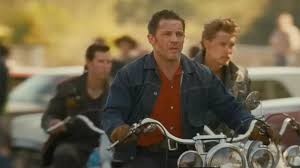
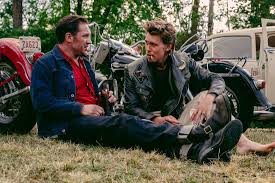
Benny’s dedication to the club is unwavering, often putting him at odds with Kathy, who struggles to balance her love for him with her fears for their future. Tom Hardy plays Johnny, the charismatic and enigmatic leader of the Vandals, whose presence and decisions shape the course of the gang and its members.
As the film progresses, the bikers face internal conflicts, external threats from rival gangs, and increasing pressure from law enforcement. The tension escalates, leading to dramatic confrontations that test their loyalty, morality, and survival instincts.
The performances in “The Bikeriders” are a highlight, with Tom Hardy, Austin Butler, and Jodie Comer delivering compelling portrayals of their complex characters. Hardy’s portrayal of Johnny is magnetic, capturing the character’s charisma, authority, and underlying vulnerability. He brings depth to the role, making Johnny both a formidable leader and a deeply flawed individual.
Austin Butler shines as Benny, a young man torn between his loyalty to the club and his love for Kathy. Butler’s nuanced performance conveys Benny’s internal struggle and his journey from an enthusiastic biker to a conflicted individual grappling with the consequences of his choices.
Jodie Comer delivers a standout performance as Kathy, providing the emotional core of the film. Her portrayal of a woman caught between love and fear is both powerful and relatable. Comer effectively conveys Kathy’s resilience, making her a compelling character who anchors the narrative.
Jeff Nichols, known for his work on films like “Mud” and “Loving,” directs “The Bikeriders” with a keen eye for detail and authenticity. Nichols captures the essence of the 1960s biker culture, immersing the audience in a world of roaring engines, leather jackets, and smoky bars. The film’s atmosphere is palpable, thanks in part to the meticulous production design and period-accurate costumes.
The cinematography by Adam Stone is visually striking, with sweeping shots of open roads and intimate close-ups that emphasize the characters’ emotions. The use of natural light and muted color tones adds to the film’s gritty realism, enhancing the storytelling.
“The Bikeriders” explores themes of loyalty, identity, freedom, and the consequences of one’s choices. It delves into the allure of the biker lifestyle, highlighting the sense of brotherhood and rebellion that draws individuals to such a life. At the same time, the film doesn’t shy away from depicting the darker aspects, including violence, addiction, and the toll it takes on relationships.
The film also examines the notion of family, both biological and chosen. The Vandals are portrayed as a tight-knit group that operates as an extended family, bound by a code of loyalty and honor. This sense of family is juxtaposed with the personal sacrifices and moral dilemmas faced by the characters, particularly Benny and Kathy.
One of the film’s greatest strengths is its focus on character development and dynamics. The relationships between the characters are richly layered, adding depth to the narrative and making the audience care about their fates.
Benny and Kathy’s relationship serves as the emotional heartbeat of the film. Their love story is portrayed with authenticity, showing both the passion that draws them together and the conflicts that threaten to tear them apart. Kathy’s journey from a supportive but anxious partner to a woman who must make difficult decisions for her well-being is compelling. Her character arc is one of strength and resilience, capturing the struggle many faced in similar situations during the era.
Johnny’s role as the leader of the Vandals is central to the film’s exploration of power and influence within the gang. His leadership is charismatic yet flawed, as he grapples with the responsibilities and moral ambiguities of leading a group that thrives on rebellion. Hardy’s portrayal makes Johnny both intimidating and sympathetic, revealing the loneliness and burdens that come with his position.
The Vandals themselves are not just a backdrop but a collection of distinct personalities, each contributing to the club’s dynamic. The film takes time to develop secondary characters, making the Vandals feel like a real community. Their interactions, loyalty tests, and conflicts add layers to the story, showcasing the complexity of their brotherhood.
Adam Stone’s cinematography captures the essence of the 1960s with a combination of gritty realism and poetic beauty. The vast, open landscapes reflect the freedom and allure of the biker lifestyle, while the tight, intimate shots convey the personal struggles and intense emotions of the characters. The use of natural light and a muted color palette enhances the period feel, immersing viewers in the time and place.
The soundtrack of “The Bikeriders” is another standout element, featuring a mix of classic rock and original compositions that perfectly complement the film’s tone. The music underscores key moments, heightening the emotional impact and drawing the audience further into the world of the Vandals. The roar of motorcycle engines, the ambient sounds of bars and gatherings, and the carefully selected tracks all work together to create an immersive auditory experience.
The film’s pacing is deliberate, allowing the story to unfold organically. Jeff Nichols balances moments of high tension and action with quieter, character-driven scenes, maintaining a rhythm that keeps the audience engaged. The structure, which interweaves Kathy’s reflections with present-day events, adds a layer of introspection and depth to the narrative.
The decision to frame the story through Kathy’s perspective provides a unique and poignant lens, highlighting the often-overlooked experiences of those on the periphery of the biker world. This narrative choice enriches the film, offering a fresh take on a genre typically dominated by male perspectives.
“The Bikeriders” also serves as a reflection on broader societal and cultural issues. The film subtly addresses themes of gender roles, authority, and counterculture movements of the 1960s. Kathy’s struggle for agency within a male-dominated environment resonates with broader feminist themes, while the gang’s clashes with law enforcement and rival groups echo the larger societal tensions of the era.
The movie portrays the bikers not just as outlaws but as complex individuals seeking belonging and purpose in a rapidly changing world. This nuanced depiction challenges stereotypes and invites the audience to empathize with characters who exist on society’s fringes.
“The Bikeriders” is a compelling and thought-provoking drama that offers a raw and authentic look into the world of 1960s motorcycle gangs. With stellar performances, meticulous direction, and evocative cinematography, the film captivates from start to finish. Jeff Nichols has crafted a nuanced and emotionally resonant story that explores the complexities of loyalty, love, and the search for freedom.
Fans of character-driven dramas and period pieces will find “The Bikeriders” to be a memorable and impactful cinematic experience. It is a film that not only entertains but also prompts reflection on the choices we make and the paths we choose to follow.



 spryfilm.com