
“The Color Purple” (2023)
Drama / Musical

Running Time: 141 minutes
Written by: Marcus Gardley
Directed by: Blitz Bazawule
Featuring: Taraji P. Henson, Danielle Brooks, Colman Domingo, Corey Hawkins, H.E.R., Halle Bailey, Phylicia Pearl Mpasi and Fantasia Barrino
Shug Avery: “How come you don’t laugh none? Ain’t you got something to make you just smile?”
Alice Walker’s poignant novel, “The Color Purple,” has blossomed into a powerful musical, recently gracing the silver screen with vibrant life. While some may be familiar with the 1985 film adaptation, this new iteration, directed by Blitz Bazawule, transcends nostalgia, bringing fresh nuances and a contemporary lens to the enduring story.
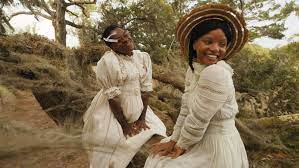
Fantasia Barrino embodies Celie, a woman robbed of her voice and agency, tossed between abusive husbands and suffocating societal expectations. Barrino’s soulful presence is both deeply vulnerable and resilient, her voice soaring in moments of despair and defiance. Danielle Brooks, a whirlwind of fire and humor, shines as Shug Avery, a sassy blues singer who awakens Celie to her own sensuality and power. Oprah Winfrey, reprising her role as Sophia, Celie’s rebellious sister, imbues the character with a fierce resilience and a mischievous edge.
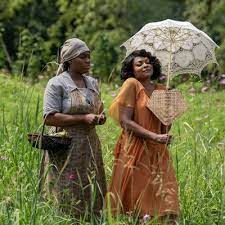
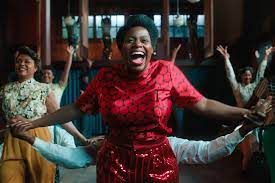
Bazawule’s vibrant direction weaves music and movement into the narrative tapestry. He utilizes diverse musical styles, from gospel hymns to bluesy ballads, each reflecting the characters’ emotional landscapes. The production numbers are dazzling, pulsating with energy and color, yet never overshadowing the story’s poignant core. The visual palette is as rich as the music, with lush landscapes contrasting with the bleakness of Celie’s early life.
The musical navigates sensitive themes of racism, sexism, and domestic abuse with unflinching honesty. However, it balances these darker moments with powerful messages of female solidarity, self-discovery, and resilience. Sisterhood becomes Celie’s lifeline, as she finds solace and strength in the bonds she forges with Shug, Sophia, and Nettie, her long-lost sister.
While the film’s performances are universally stellar, some may find the pacing uneven and the tonal shifts too abrupt. The narrative occasionally leans towards sentimentality, softening some of the novel’s raw edges. However, these imperfections are outweighed by the film’s emotional power and its unwavering commitment to its core message of empowerment.
The film walks a tightrope between acknowledging Celie’s pain and celebrating her resilience. It achieves this, in part, through its nuanced portrayal of her journey. Early scenes, steeped in bluesy tones and sparse melodies, capture the suffocating darkness of her life with Mr. and the stifling societal expectations.
However, the film never dwells solely on darkness. Moments of light peek through, like fireflies in the night. Shug’s arrival bursts onto the screen with flamboyant costumes and a vibrant musical number, “Push Da Button,” symbolizing the awakening of Celie’s sensuality and newfound voice. As the narrative progresses, the music shifts, incorporating gospel elements and triumphant harmonies, mirroring Celie’s growing self-confidence and the strengthening bonds of sisterhood.
While some may argue that the film softens some of the novel’s brutal reality, it balances that by never shying away from depicting the emotional and physical abuse Celie endures. The key lies in not dwelling on that darkness but showing how Celie transcends it, finding light and joy even in the midst of hardship.
The film takes interesting liberties with some characters, offering fresh perspectives. Shug, in particular, is less overtly manipulative and more vulnerable than in the novel, making her relationship with Celie feel more complex and tender. Sofia, meanwhile, retains her fierceness but gains a layer of vulnerability through her struggle with Harpo.
Nettie’s portrayal deviates significantly, emphasizing her intellectual and spiritual growth through epistolary exchanges, adding a layer of depth to their long-distance bond with Celie. These reinterpretations don’t alter the story’s core message but enrich it by offering new facets to these pivotal characters.
The film’s performances are undeniably its crowning achievement. Barrino’s embodiment of Celie is heart-wrenching and empowering, her voice soaring from fragile whispers to defiant belts as Celie evolves. Brooks as Shug exudes raw charisma and infectious joy, while Winfrey’s nuanced Sofia carries both her fiery spirit and hidden wounds with masterful grace.
Each actor brings their own unique energy and depth to their roles, creating an ensemble that feels like a living tapestry. Particularly noteworthy are scenes like Celie’s defiant “Sister” with Shug and Sofia, a powerful display of female solidarity, and Nettie’s letters, imbued with quiet strength and yearning.
“The Color Purple” remains relevant because it tackles themes that continue to resonate in today’s world: racism, sexism, domestic abuse, and the human capacity for resilience. The film’s portrayal of Celie’s journey encourages conversations about these issues, inspiring empathy and empowering marginalized voices.
Furthermore, the film emphasizes the importance of sisterhood, reminding us that collective strength can overcome individual struggles. Its message of self-discovery and self-love holds powerful meaning for everyone, regardless of their background or experiences.
5The film’s impact extends beyond entertainment. It has the potential to spark conversations about social justice, trigger personal growth journeys, and encourage activism. Educational screenings and community discussions can amplify its message and inspire tangible change.
“The Color Purple” is not just a film; it’s a catalyst for conversation, reflection, and action. By engaging with its characters, its themes, and its performances, we can continue to learn, grow, and strive for a world where Celie’s story feels not just relatable, but obsolete.
Ultimately, “The Color Purple” is a testament to the human spirit’s ability to persevere even in the face of unimaginable hardship. It is a celebration of womanhood in all its complexities, a call to embrace self-love and sisterhood. Barrino’s Celie blossoms from a silent sufferer into a woman bursting with life and joy, her journey resonating deeply with anyone who has ever felt powerless or unheard.
Whether you’re a first-time witness or a returning believer, “The Color Purple” is a journey worth taking. It is a film that leaves you moved, empowered, and humming its melodies long after the credits roll. It is a story that reminds us that even in the darkest corners, love can bloom, and hope can take flight on the wings of resilience.



 spryfilm.com