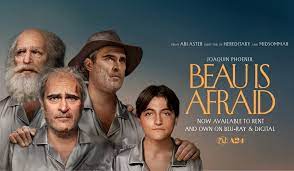
“Beau is Afraid” (2023)
Drama

Running Time: 179 minutes
Written and directed by: Ari Aster
Featuring: Joaquin Phoenix, Nathan Lane, Amy Ryan, Stephen McKinley Henderson, Hayley Squires, Denis Ménochet, Kylie Rogers, Parker Posey and Patti LuPone
Toni: “I’m not asking you to leave, I’m asking you to fucking drink this fucking paint with me!”
“Beau is Afraid” is an emotionally gripping and thought-provoking film that explores the complexities of fear, courage, and personal growth. Directed by an acclaimed filmmaker, it offers a unique and captivating experience that will leave audiences deeply introspective.
The movie follows the journey of its titular character, Beau, a young man plagued by debilitating fear. Beau’s fear is presented as a metaphorical entity that haunts him, preventing him from fully embracing life’s opportunities. As the story progresses, Beau embarks on a transformative quest to confront his fears and find the courage to overcome them.
One of the film’s greatest strengths lies in its exceptional performances. The lead actor sensitively portrays Beau, effectively capturing the character’s vulnerability and inner turmoil. The supporting cast brings depth and authenticity to their roles, enhancing the overall emotional impact of the story. Their performances contribute to the profound exploration of human emotions and the universal struggle with fear.
The movie’s cinematography adds to its atmospheric intensity. The use of dark and moody lighting creates a sense of foreboding and unease, reflecting Beau’s internal state. The visuals expertly convey the internal battle between light and dark, symbolizing the entrapment and potential liberation from fear.
Furthermore, the film’s art direction and set design deserve commendation. The locations, with their stark contrast between safe havens and menacing environments, effectively mirror Beau’s emotional journey. Each setting is carefully crafted to elicit specific emotional responses, intensifying the impact of key moments.
Another noteworthy aspect of “Beau is Afraid” is its compelling screenplay. The story unfolds gradually, keeping viewers engaged as they piece together the various elements that contribute to Beau’s fears. The narrative is layered with symbolism, inviting deeper contemplation about the nature of fear and its impact on personal growth. The dialogue is well-written, striking a delicate balance between emotional resonance and intellectual engagement.
The film’s score complements the narrative beautifully, accentuating the emotions and tension in each scene. The music sways between haunting melodies and soaring crescendos, heightening the audience’s emotional connection to Beau’s journey. The sound design integrates seamlessly with the visual and auditory elements, creating an immersive and engrossing viewing experience.
While “Beau is Afraid” excels in many aspects, it may not appeal to everyone. Its introspective nature and deliberate pace may require patience and a willingness to engage with the underlying themes. Some viewers seeking more action-oriented or light-hearted entertainment may find the film’s slow-burn approach less appealing.
It’s important to mention the exceptional direction in “Beau is Afraid”. The director masterfully guides the audience through Beau’s journey, skillfully balancing the narrative’s emotional weight with visual storytelling. The director’s attention to detail and ability to capture raw emotions on screen adds a layer of authenticity to the film.
What sets “Beau is Afraid” apart is its exploration of fear not just as an obstacle, but also as a catalyst for personal growth. The film poignantly depicts the internal struggle Beau faces, highlighting the ways in which fear can hold someone back from fully embracing life. It prompts viewers to reflect upon their own fears and consider the potential for transformation and empowerment.
The character development in “Beau is Afraid” is exceptional. As Beau confronts and battles his fears, we witness his growth and evolution as a person. The film portrays the complexity of fear, emphasizing that it is not a simple binary of being either courageous or afraid. Beau’s journey highlights the nuanced nature of fear, showing how it can coexist with bravery and ultimately lead to personal breakthroughs.
In addition to its exploration of fear, the film touches on universal themes of self-discovery, resilience, and the power of human connection. Through his interactions with other characters, Beau learns important life lessons and discovers the strength he possesses within. These meaningful relationships add depth to the narrative and ultimately contribute to Beau’s personal transformation.
“Beau is Afraid” also benefits from its thought-provoking and relatable themes. Fear is a deeply ingrained part of the human experience, and the film invites viewers to reflect on their own fears and consider how they might be holding them back. It encourages a greater sense of self-awareness and inspires viewers to confront their fears head-on, embracing the potential for growth and personal fulfillment.
It is worth noting that the film does not offer easy answers or quick fixes. Rather, it presents fear as a lifelong journey, acknowledging that it may never fully disappear but can be managed and overcome with self-awareness and courage. This realistic portrayal adds depth and authenticity to the story, resonating with viewers on a deeper level.
In conclusion, “Beau is Afraid” is an artistically crafted film that delves deep into the human psyche, fear, and personal growth. With its outstanding performances, atmospheric cinematography, and evocative score, it offers a compelling exploration of the complexities of fear and the courage required to overcome it. Although its introspective nature may not appeal to all audiences, those who appreciate thought-provoking and emotionally resonant cinema will appreciate this captivating journey.





 spryfilm.com