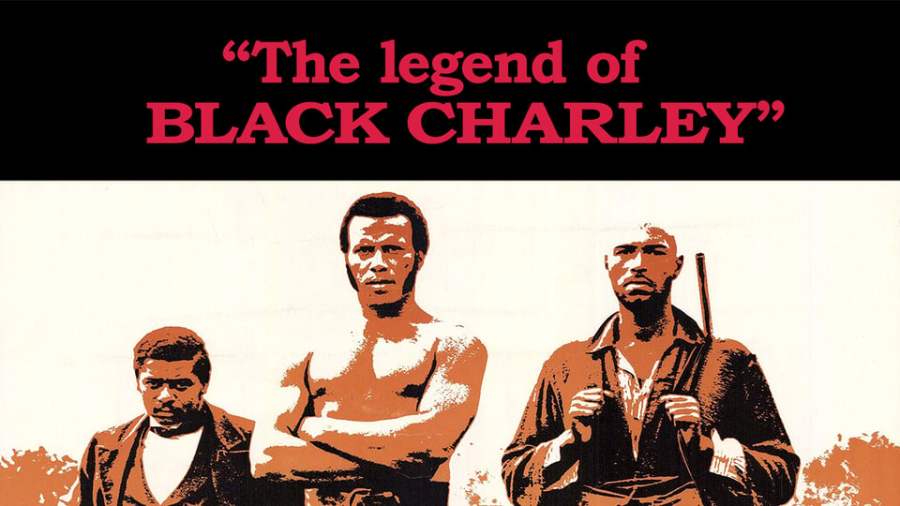
“The Legend of Black Charley” (1972) Action Running Time: 98 minutes Written by: Martin Goldman and Larry G. Spangler Directed by: Martin Goldman Featuring: Fred Williamson, D'Urville Martin and Don Pedro Colley Tagline: “Somebody warn the West. Nigger Charley ain't running no more.” The Legend of Black Charley, directed by Martin Goldman and released in 1972, is a fascinating and underdiscussed entry in the genre of Blaxploitation Westerns. Starring Fred Williamson in the title role, the film mixes the classic Western template with themes of racial justice and Black empowerment in post-Civil War America. Though it may not be as polished or widely remembered as some of its contemporaries, The Legend of Black Charley deserves credit for breaking ground in both its genre and its social commentary. At its core, The Legend of Black Charley is a Western adventure that follows Charley, a former slave turned gunfighter, who takes control of his destiny and seeks to carve out a place of dignity and freedom in a violent and hostile America. When the film begins, Charley is owned by a cruel plantation master who has no intention of freeing his slaves, even after the Emancipation Proclamation. Charley’s refusal to remain in bondage leads to a daring and violent escape, after which he embarks on a journey across the lawless West, encountering both racist white pursuers and fellow Black men also looking for justice and autonomy. This setup flips the script on the traditional Western hero. Instead of the white cowboy figure we often see in films of this era, Charley is a Black man fighting for freedom—not only his own, but symbolically for his entire race. His transformation from an enslaved man to a self-determined hero is both cathartic and radical, especially considering the time in which the film was made. It’s a bold reclamation of the American mythos through a Black lens. Fred Williamson, already a rising star in the Blaxploitation wave of the early '70s, delivers a charismatic and commanding performance as Black Charley. His screen presence is undeniable—he embodies quiet strength, righteous anger, and a simmering confidence that makes him compelling to watch even when the script wavers. Williamson doesn’t just play Charley as a vengeance-seeking archetype; there’s nuance to the way he handles the character’s trauma, loyalty to his friends, and desire to build a new life rather than just destroy the old one. His performance elevates the material and gives the film an emotional center it might have otherwise lacked. The film’s production values are modest. Shot on a low budget, The Legend of Black Charley often looks and feels rough around the edges, with uneven editing, amateurish sound design, and uninspired cinematography. However, these limitations also lend the movie a raw, unvarnished quality that suits its themes. This isn’t a sanitized, studio Western; it’s a gritty, desperate struggle for survival and justice in a world built to crush men like Charley. That said, the pacing can drag at times, and some of the supporting performances feel flat or wooden. The screenplay, credited to Goldberg and others, tends to lean on blunt exposition and occasionally stilted dialogue. But these flaws don’t obscure the film’s ambitions—they just remind us that this was an early, audacious effort rather than a fully realized masterpiece. What makes The Legend of Black Charley truly important is its political and cultural stance. Made during the height of the civil rights and Black Power movements, the film doesn’t shy away from the racial violence and systemic injustice of American history. In fact, it places them front and center, using the Western framework to tell a story of rebellion and self-liberation. Charley is not just fighting for his life; he’s fighting against the very idea that Black men and women are destined to be subjugated. The villains of the film—the slave owners, the bounty hunters, the corrupt lawmen—are unrepentant symbols of white supremacy. The film never tries to redeem them or offer a false middle ground. Instead, it offers resistance. This defiant tone set The Legend of Black Charley apart from many of its peers. It’s not an exploitation film in the shallow sense—it’s a declaration of identity and a rewriting of who gets to be a hero in American stories. The film did well enough to warrant a sequel, The Soul of Nigger Charley (1973), and a third installment, Boss Nigger(1975), which Williamson also directed. These films pushed the concept even further, and together they form an unofficial trilogy of radical Black Westerns. Though The Legend of Black Charley is rarely included in the canon of great Westerns, its influence can be felt in later efforts to diversify and deconstruct the genre. From Mario Van Peebles’ Posse (1993) to more recent films like The Harder They Fall (2021), the lineage is clear. The Legend of Black Charley may not be a perfect film, but it’s a vital one. With Fred Williamson’s magnetic performance, a strong anti-racist message, and the sheer novelty of a Black-led Western in the early 1970s, it earns its place in cinema history. For viewers interested in genre-bending, politically charged storytelling—or anyone looking to understand the roots of Black representation in film—this is a ride worth taking. 1.90.3-SEC3AAV4ORLOE2VSZJ7AQY5MSQ.0.1-3
 spryfilm.com