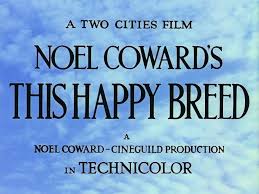
“This Happy Breed” (1944)
Drama

Running Time: 115 minutes
Written by: David Lean, Ronald Neame and Anthony Havelock-Allan
Directed by: David Lean
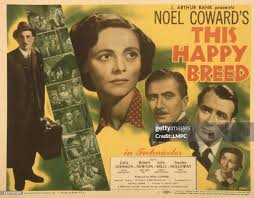
Starring: Robert Newton, Celia Johnson, Stanley Holloway and John Mills
Frank Gibbons: “She didn’t pass on, pass over, or pass out! She died!”
David Lean’s This Happy Breed may not have the sweeping romantic grandeur of Brief Encounter or the mythic ambition of Lawrence of Arabia, but it remains one of the most deeply humane and quietly affecting films in his canon. Adapted from Noël Coward’s play, this 1944 feature—Lean’s second collaboration with Coward following In Which We Serve—presents an intimate portrait of a lower-middle-class London family navigating two decades of social upheaval. This new Blu-ray release gives the film its most respectful home-video presentation yet, offering both technical restoration and a deeper appreciation for Lean’s early mastery of cinematic storytelling.
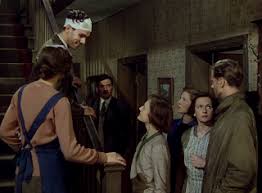
Set between the end of the First World War and the dawn of the Second, This Happy Breed traces the lives of the Gibbons family, who move into a modest Clapham house in 1919. Frank (Robert Newton), his wife Ethel (Celia Johnson), and their three children—Reg (John Blythe), Queenie (Kay Walsh), and Vi (Eileen Erskine)—experience the highs and lows of two turbulent decades: economic depression, political change, personal loss, and ultimately the ominous approach of another war.
Lean and Coward use the domestic canvas to reflect the resilience and endurance of the British people. While the story is filled with small triumphs and tragedies—weddings, deaths, quarrels, reconciliations—the cumulative effect is quietly epic. Through the Gibbons family, we see the shifting tides of British life, from class attitudes and generational divides to the evolution of technology and leisure.
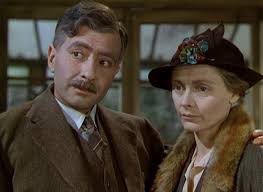
Robert Newton gives one of his finest, most restrained performances as Frank, portraying a working man whose stoic demeanor conceals emotional depth and moral steadfastness. Celia Johnson, as ever, is luminous; her Ethel is both pragmatic and tender, the emotional core of the family. Kay Walsh (Lean’s wife at the time) brings volatility and yearning to Queenie, whose romantic choices mark some of the film’s most poignant turns.
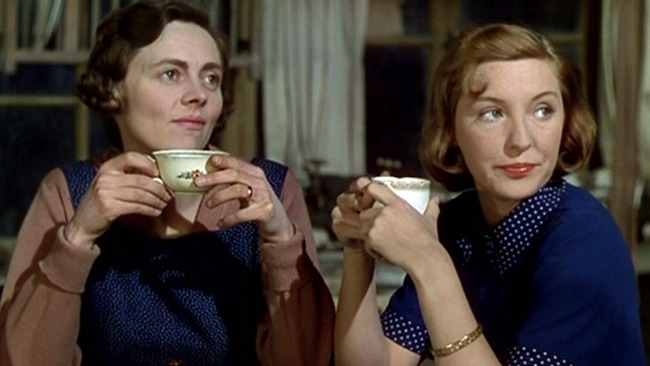
While Lean’s later films are often defined by their visual grandeur, This Happy Breed demonstrates his command of space, rhythm, and domestic intimacy. The camera frequently moves through the family home in long, graceful takes, creating a sense of continuity and lived-in warmth. Ronald Neame’s Technicolor cinematography—rare for a British drama of this era—is both rich and restrained, lending the film an almost painterly quality. The muted palette of brick reds and warm browns evokes a nostalgia that never feels artificial.
For decades, This Happy Breed suffered from faded prints and soft, muddy transfers that obscured its delicate Technicolor work. The new Blu-ray, sourced from a meticulous restoration (using the original three-strip negatives where possible), represents a dramatic improvement.
Colors are now vibrant but natural, retaining the subtle warmth Lean and Neame intended. Flesh tones are lifelike, fabrics and furnishings reveal their texture, and the film’s play of light—particularly in the domestic interiors—is beautifully rendered. Black levels are strong, and the image retains a fine, cinematic grain that reminds viewers of the film’s photochemical origins.
Some minor color fringing and faint reel change marks remain in isolated shots, but these are rare and never distracting. The restoration team has wisely avoided over-processing the image; detail is crisp without any signs of digital noise reduction. The result is a faithful and organic presentation that finally allows the film’s craftsmanship to shine.
The LPCM mono track is clean and full-bodied, preserving the natural ambience of dialogue and the orchestral score by Noël Coward and Clifton Parker. There’s little distortion, and the mix captures the intimacy of domestic scenes while giving full presence to the larger moments—particularly the crowd scenes and musical interludes
Subtitles are clear and well-timed, and while a stereo remix might have been tempting, the decision to retain the original mono preserves the film’s period authenticity.
The Blu-ray’s supplements do justice to both the film and its legacy. Depending on the edition (notably the UK release from the BFI and some international editions), extras include:
- Audio Commentary by film historians, exploring Lean’s early direction, Coward’s collaboration, and the film’s wartime context. The discussion highlights Lean’s transition from editor to director and his emerging visual sensibility.
- Interview with Ronald Neame (archival): The cinematographer and later director offers invaluable insight into the Technicolor process and Lean’s meticulous approach to composition.
- Documentary Featurette – “This Happy Breed: Britain at Home”: A thoughtful look at how the film reflected postwar national identity, examining its reception among 1940s audiences.
- Restoration Comparison: Demonstrates the remarkable color and detail recovery achieved through the restoration process.
- Trailer and Image Gallery, rounding out a solid package.
While not as feature-heavy as Criterion-style releases, the supplements provide meaningful context and are assembled with care.
This Happy Breed is often overshadowed by Lean’s grander later works, yet it remains one of his most emotionally direct and politically resonant films. Released in wartime Britain, it offered reassurance and recognition to audiences who had endured hardship. Its patriotism is gentle rather than triumphalist, rooted in the strength of ordinary people.
Seen today, it also reveals the seeds of Lean’s later obsessions: the passage of time, the tension between duty and desire, and the cinematic translation of theatrical material into visual experience. The domestic drama, the subtle rhythms of editing, and the recurring motif of trains and departures all anticipate Brief Encounter.
The Blu-ray allows modern audiences to rediscover the film as both a vital piece of British social history and an early masterwork of cinematic craftsmanship.
This new Blu-ray of This Happy Breed is a quiet triumph. The restoration honors the film’s historical importance and emotional subtlety, presenting Lean’s and Coward’s collaboration in its best-ever form.
For admirers of British cinema, of Lean’s evolving artistry, or of mid-century Technicolor domestic drama, this disc is essential. It’s not only a restoration of a film but a restoration of memory—the humble, resilient spirit of the “happy breed” it celebrates.estoration triumph but as a rediscovery of a film that glimmers with wit, irony, and supernatural elegance.


 spryfilm.com