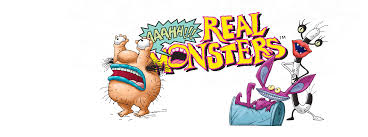
“Aaahh!!! Real Monsters” (1994-1997)
Animated / Television

Fifty-two Episodes
Created by: Gábor Csupó, Peter Gaffney and Igor Kovalyov
Featuring: Charlie Adler, Christine Cavanaugh, David Eccles, Gregg Berger, Jim Belushi and Tim Curry
Ickis: “Hey, Krumm, I think you’re having a bad hair day.”
When Nickelodeon’s Aaahh!!! Real Monsters first premiered in 1994, it felt like nothing else on children’s television. At a time when cartoons often leaned into slapstick comedy or sunny, family-friendly wholesomeness, this series was dark, gross, and gleefully weird. Created by Gábor Csupó and Peter Gaffney, the show was produced by Klasky Csupo—the same studio behind Rugrats and later The Wild Thornberrys—and it carried that unmistakable visual style: angular designs, surreal colors, and characters who often looked more monstrous than cute. Over its four-season run (1994–1997), Aaahh!!! Real Monsters carved out a unique niche as both a comedy about monsters-in-training and a sly satire of childhood fears.
The show is set in a monster world that exists beneath the human city, specifically in a sewer-based academy where young monsters are taught how to scare humans properly. The premise cleverly flips the dynamic of horror: humans, rather than monsters, are the targets of fright, and the creatures we normally think of as terrifying are themselves students with homework, insecurities, and authority figures.
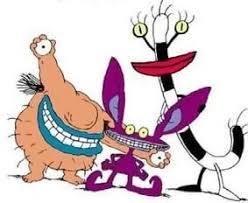
The three main characters—Ickis, Oblina, and Krumm—form the core trio. Each one is visually bizarre in their own way. Ickis resembles a red rabbit-like creature with oversized ears and a nervous disposition, always worried about proving himself as a “real” monster. Oblina, perhaps the most iconic of the three, looks like a black-and-white striped candy cane with big red lips, a design both grotesque and elegant, befitting her role as the brainy, perfectionist overachiever. Krumm, in contrast, is squat, lumpy, and famously carries his eyeballs in his hands—an unsettling but memorable design that embodies the show’s offbeat sense of humor.
Overseeing them is The Gromble, the monster school’s stern, eccentric teacher. With his high-heeled boots and booming voice, The Gromble is both a parody of the tyrannical schoolmaster and a genuine figure of intimidation. He represents the pressure to live up to monstrous expectations while also being a source of comic exaggeration.
What set Aaahh!!! Real Monsters apart was its willingness to embrace the grotesque. The humor was often based on bodily functions—Krumm’s stench, Ickis’s failed scares, slimy settings—but it wasn’t just crass; it was inventive. The monster designs were deliberately strange, combining elements of surrealism, Expressionism, and children’s doodles. Many backgrounds used tilted angles, dripping textures, and muted, grimy colors, making the sewer world feel both alive and claustrophobic.
The show balanced this grim aesthetic with witty writing. Episodes often mirrored real-world childhood anxieties—fitting in at school, handling authority figures, confronting fears of failure—but reframed through the lens of monsters. An episode about stage fright or cheating in class became stranger and funnier when the punishment involved monster humiliation rituals. It was, in many ways, a satire of the pressures children feel, but hidden under layers of slime and shadows
The trio dynamic worked because of their contrasts. Ickis’s constant self-doubt and impulsive nature often got them into trouble. Oblina, with her British accent and uptight demeanor, tried to keep them in line while occasionally revealing her own vulnerabilities. Krumm, though often played for laughs as the “gross one,” was surprisingly good-natured and pragmatic, serving as the glue between the other two.
Their friendship felt authentic because they often bickered, doubted each other, or made mistakes, but ultimately stuck together. Unlike many cartoons where characters stay one-dimensional, the Aaahh!!! Real Monsters trio had evolving dynamics. Some episodes spotlighted Ickis’s ambition to be seen as a great scarer, others explored Oblina’s desire for recognition, while Krumm occasionally had moments of surprising wisdom.
The supporting cast was also colorful: The Gromble as the authoritarian mentor; the Snorch and Zimbo as the comedic disciplinarians; and various strange monsters populating the academy. The human world was usually seen only briefly, but when it was, it highlighted the absurd contrast between normal society and the bizarre monster underworld lurking just out of sight.
Beneath the gross-out humor, Aaahh!!! Real Monsters carried strong themes of identity and belonging. Ickis’s constant worry about not measuring up mirrored many children’s anxieties about school, friends, and expectations. Oblina’s perfectionism reflected the pressures of being the “model student.” Krumm, mocked for his odor, embodied self-acceptance of physical differences.
The series also commented on society’s fear of the unknown. Humans in the show were rarely individualized; they existed mainly as targets of scares, but the metaphor was clear: what we fear is often misunderstood. Conversely, the monsters’ world, though ugly and disgusting, had its own rules, culture, and sense of normalcy. It was a clever inversion of perspective, teaching kids empathy through grotesque humor.
Reception and Legacy
While it was never as popular as Rugrats or Doug, Aaahh!!! Real Monsters developed a cult following. Its merchandise—video games, toys, even a crossover appearance in a Rugrats episode—cemented its place in Nickelodeon’s 1990s identity. Critics often praised its creativity and visual daring, though some parents found it too grotesque or unsettling for children.
In retrospect, the series feels ahead of its time. Modern children’s animation has embraced weirdness (Adventure Time, The Grim Adventures of Billy & Mandy), but Aaahh!!! Real Monsters laid early groundwork by proving that kids could handle darker, stranger humor if presented with wit. Its blend of gross-out comedy, surreal visuals, and relatable themes gave it a distinctive voice in Nickelodeon’s “golden age.”
Aaahh!!! Real Monsters remains a fascinating relic of 1990s animation. Its sewer-dwelling heroes may not have reached the fame of Tommy Pickles or SpongeBob SquarePants, but they embodied a unique artistic vision. Equal parts funny, disgusting, and oddly heartfelt, the show turned monstrosity into metaphor, helping kids laugh at their fears while celebrating the weird and unusual.
If Rugrats represented the innocent wonder of childhood, then Aaahh!!! Real Monsters was its darkly comic shadow—a reminder that growing up also means confronting anxieties, insecurities, and the strange, slimy unknown.




 spryfilm.com