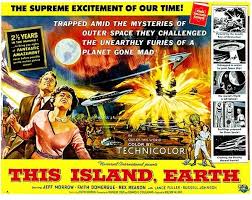
“This Island Earth” (1955)
Science Fiction

Running Time: 86 minutes
Written by: Franklin Coen and Edward G. O’Callaghan
Directed by: Joseph Newman
Starring: Jeff Morrow, Faith Domergue and Rex Reason
Dr. Ruth Adams: [the cat appears] “It’s only Neutron. We call him that because he’s so positive.”
“This Island Earth,” released in 1955 by Universal-International, stands as a quintessential artifact of 1950s science fiction cinema. Directed by Joseph M. Newman (with uncredited contributions from genre stalwart Jack Arnold), and based on the novel by Raymond F. Jones, the film is a vibrant Technicolor journey into outer space, filled with ambitious visual effects, intriguing themes, and a surprisingly nuanced approach to alien encounters for its era.
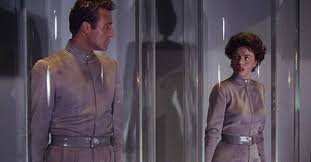
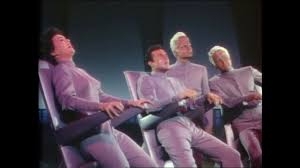
The plot begins with Dr. Cal Meacham (Rex Reason), a brilliant atomic scientist, who receives mysterious components that, when assembled, form an “interocitor” – a sophisticated communication device. This seemingly innocuous technological puzzle is an elaborate recruitment tool for Exeter (Jeff Morrow), an alien from the dying planet Metaluna. Exeter, with his unusually high forehead and calm, intellectual demeanor, is gathering Earth’s top scientific minds to aid his planet in a desperate war against the Zagon, who are relentlessly bombarding Metaluna with meteors. Dr. Meacham, along with fellow scientist Dr. Ruth Adams (Faith Domergue), soon finds himself whisked away to Metaluna, becoming embroiled in an interstellar conflict that challenges their understanding of humanity’s place in the universe.
What immediately sets “This Island Earth” apart from many of its B-movie contemporaries is its striking visual presentation. Shot in glorious Technicolor, the film boasts a rich, vibrant palette that brings its futuristic designs and alien landscapes to life. The special effects, while understandably dated by modern standards, were groundbreaking for their time. The iconic flying saucer, with its sleek, chrome design, is a marvel of mid-century futurism. The depiction of Metaluna, with its subterranean cities and ravaged, war-torn surface, showcases imaginative production design, often achieved through impressive matte paintings and miniatures.
Perhaps the most enduring visual element is the “Metaluna Mutant,” a creature that has become a touchstone of sci-fi iconography. With its bulbous, exposed brain, large insectoid eyes, and formidable claws, the mutant is a terrifying yet pitiable figure. While its appearances are relatively brief and somewhat constrained by the limitations of a full-body suit (famously, the legs had to be obscured due to design issues), its impact is undeniable, influencing later alien designs in films like “Mars Attacks!” and “Alien.”
Beyond the visual spectacle, “This Island Earth” delves into themes that elevate it above simple pulp. Unlike many 1950s alien invasion narratives, the Metalunans are not presented as purely hostile invaders. Exeter is a complex, sympathetic character who genuinely seeks Earth’s help for his dying world. Jeff Morrow delivers a standout performance, imbuing Exeter with a sense of quiet desperation and a moral struggle as he grapples with the harsh realities of his planet’s plight and the methods his leaders employ. This portrayal of essentially benign, albeit manipulative, aliens who seek assistance rather than conquest was a refreshing departure from the era’s prevalent fear-mongering.
The film also subtly touches on Cold War anxieties, particularly the dangers of nuclear proliferation and unchecked scientific advancement. Metaluna’s reliance on atomic energy for its protective shield, and its eventual destruction due to relentless bombardment, can be seen as a cautionary tale for humanity’s own atomic age. The title itself, “This Island Earth,” hints at a larger existential theme – the fragility and isolation of our planet in a vast, potentially dangerous cosmos.
While “This Island Earth” is widely celebrated, it’s not without its minor shortcomings. The pacing in the first half, while building intrigue, can feel a bit slow for modern audiences, with a heavy emphasis on exposition. Faith Domergue, while a progressive casting choice as a female scientist for the time, sometimes defaults to the “damsel in distress” archetype. And as mentioned, the full potential of the Metaluna Mutant is somewhat limited by its brief screen time and practical effects challenges.
Despite these minor quibbles, “This Island Earth” more than earns its status as a cherished classic. Its ambitious scope, groundbreaking visual effects, nuanced alien portrayal, and thoughtful thematic undertones make it a landmark film in the history of science fiction. It’s a bold and imaginative space opera that, even after decades, continues to capture the wonder and anxieties of a bygone era, leaving a lasting impression on the genre and proving that even a “B-movie” can achieve greatness through its vision and execution.
Special Features & Technical Specs:
- 1080p High-definition presentation on Blu-ray
- Audio Commentary by Heath Holland from Cereal At Midnight
- Trailers from Hell: Joe Dante on ‘This Island Earth’
- Audio LPCM 2.0 Mono
- Aspect Ratio 1.85:1
- Optional English HOH Subtitles



 spryfilm.com