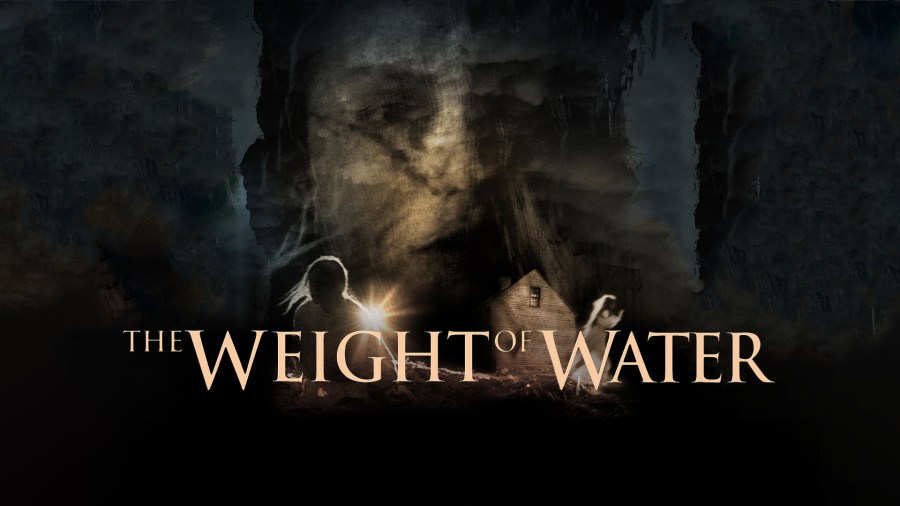
“The Weight of Water” (2000)
Drama

Running Time: 114 minutes
Written by: Alice Arlen and Christopher Kyle based on the novel by by Anita Shreve
Directed by: Kathryn Bigelow
Featuring: Elizabeth Hurley, Catherine McCormack, Sean Penn and Sarah Polley
Jean Janes: “When a women kills, it’s usually her spouse.”
Kathryn Bigelow’s “The Weight of Water” is a film that demands a certain patience and willingness to engage with its dual narratives, often proving a divisive cinematic experience. Based on Anita Shreve’s novel, it attempts to intertwine a modern-day relationship drama with a historical murder mystery, set against the stark, isolated backdrop of the Isles of Shoals off the New Hampshire coast. While ambitious in its scope and often stunning in its execution, its ultimate success is debatable, leading to a film that is both intriguing and, at times, frustrating.
The film operates on two distinct timelines. In the present day, we follow Jean (Catherine McCormack), a photographer researching a notorious 1873 double axe murder on Smuttynose Island. She embarks on a sailing trip to the island with her estranged poet husband, Thomas (Sean Penn), his brother Rich (Josh Lucas), and Rich’s alluring girlfriend, Adaline (Elizabeth Hurley). This contemporary story quickly becomes a simmering pot of marital discord, unspoken jealousies, and sexual tension, mirroring the historical events Jean is so intently studying.
The historical narrative delves into the lives of the Norwegian immigrant women involved in the 1873 murders. Central to this is Maren Hontvedt (a captivating Sarah Polley), the sole survivor and key witness whose testimony led to the conviction of a man named Louis Wagner. As Jean uncovers details of the past, we see flashbacks to Maren’s lonely, arduous life on the island, her loveless marriage, and the arrival of her brother Evan and his new wife, Anethe. This past story, fraught with repressed emotions, forbidden desires, and the harsh realities of immigrant life, is arguably the more compelling and emotionally resonant of the two. Sarah Polley’s performance is consistently singled out as a standout, conveying the deep despondency and inner turmoil of a woman trapped by circumstance and convention.
Bigelow, known for her strong directorial hand in action and thrillers (“Strange Days,” “The Hurt Locker”), brings a visceral and often unsettling atmosphere to “The Weight of Water.” The isolated island, the turbulent sea, and the claustrophobic confines of the yacht all contribute to a sense of impending doom and psychological pressure. The cinematography is beautiful, capturing the harsh beauty of the coastal landscape and the grimness of 19th-century existence.
However, the film’s structural choice to constantly intercut between the two timelines is where many critics and viewers have found it falter. While the intention is clearly to draw parallels between the two stories – themes of hidden passion, sibling jealousy, the potential for violence, and the burden of secrets – the connections often feel tenuous or overly symbolic. Instead of enriching each other, the frequent jumps can distract, pulling the viewer out of one narrative just as it gains momentum. The contemporary story, particularly the strained dynamics between Jean, Thomas, and Adaline, often feels underdeveloped and less engaging than Maren’s historical plight. Sean Penn delivers a typically brooding performance as the self-absorbed poet, but his character, and indeed the entire modern quartet, lacks the depth and urgency of their 19th-century counterparts. Elizabeth Hurley’s role, while visually striking, has been criticized for being one-note and somewhat gratuitous.
Despite these narrative challenges, “The Weight of Water” offers moments of potent drama and psychological insight. The exploration of the “female condition” across centuries, the sacrifices made, and the emotional suppression endured by women in both eras, is a pervasive undercurrent. The film also delves into the ambiguity of truth and perception, particularly in the historical murder case where Maren’s testimony, and thus the entire official narrative, is called into question.
Ultimately, “The Weight of Water” is a film of considerable ambition and visual artistry, showcasing Kathryn Bigelow’s talent for creating atmospheric tension. It’s a testament to her willingness to explore different genres and themes. While the film may not always succeed in seamlessly weaving its two narratives into a fully cohesive whole, the strength of its historical segment, particularly Sarah Polley’s haunting performance, and Bigelow’s distinctive directorial vision make it a film worth experiencing for those who appreciate a moody, thought-provoking drama that dares to tackle complex emotional landscapes. It may leave some viewers feeling unsatisfied by its structural choices, but others will find themselves drawn into its somber, watery depths.





 spryfilm.com