
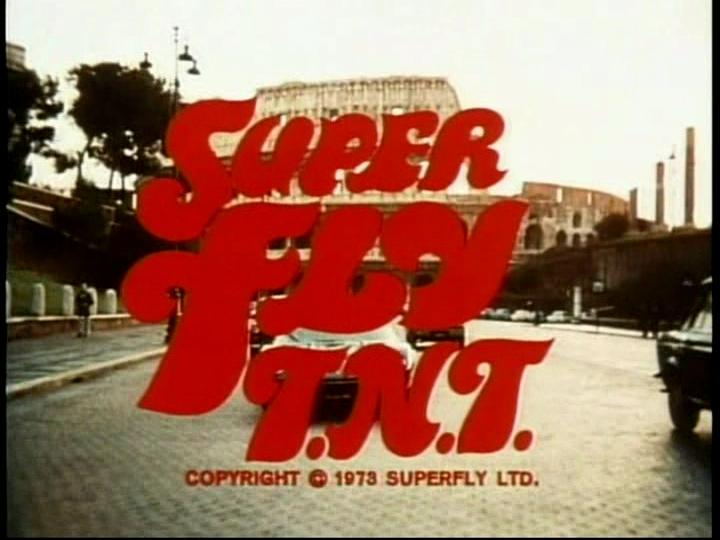
“Super Fly T.N.T.” (1973)
Action

Running Time: 86 minutes
Written by: Alex Haley
Directed by: Ron O’Neal
Featuring: Ron O’Neal, Roscoe Lee Browne, Sheila Frazier, Robert Guillaume, Jacques Sernas and William Berger
Tagline: “That Superfly Dude is Back!”
“Super Fly T.N.T.” (1973) is a curious and often-maligned sequel to the groundbreaking blaxploitation hit “Super Fly” (1972). While the original is celebrated for its gritty portrayal of inner-city life, Ron O’Neal’s iconic portrayal of Youngblood Priest, and a legendary Curtis Mayfield soundtrack, “Super Fly T.N.T.” takes a drastic geographical and thematic detour, resulting in a film that often feels disconnected from its predecessor, yet still offers some intriguing, albeit flawed, elements.
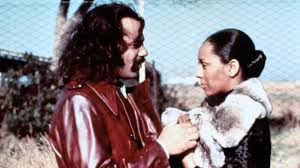
The film picks up with Priest (Ron O’Neal, who also takes over directorial duties) and his girlfriend Georgia having ostensibly left the drug game behind. They’ve relocated to Rome, seemingly enjoying a life of luxury, complete with a Lamborghini and a swanky apartment. However, Priest, bored with his newfound tranquility, finds himself drawn into a new scheme when he’s approached by Dr. Lamine Sonko (Roscoe Lee Browne), an African revolutionary in need of arms to overthrow a tyrannical regime in his home country. What begins as a quiet retirement quickly escalates into a transcontinental adventure involving gun-running and political intrigue.
One of the most striking departures from the original is the absence of Curtis Mayfield’s iconic soundtrack. Instead, “Super Fly T.N.T.” features music by the British-Ghanaian-Caribbean band Osibisa. While Osibisa’s Afro-rock sounds are undeniably energetic and interesting in their own right, they lack the raw, soulful, and deeply embedded narrative quality that Mayfield brought to the first film. The change in musical tone reflects the film’s shift in setting and ambition, but it’s a hard act to follow, and for many fans, this is where “T.N.T.” first stumbles.
The plot itself, with its jump from Harlem drug dealing to international arms dealing and African revolution, is ambitious, perhaps to a fault. On one hand, it attempts to elevate the character of Priest beyond the confines of the ghetto, giving him a more globally conscious purpose. This could be seen as a progressive move for the blaxploitation genre, which often focused solely on domestic urban struggles. On the other hand, the execution often feels sluggish and under-resourced. The “dirt-cheap production values” are apparent, particularly in the Roman and African sequences, which sometimes lack the visual flair and authentic feel of the original’s Harlem backdrop.
Ron O’Neal’s performance as Priest remains charismatic, though perhaps a little less world-weary and more outwardly bored than in the first film. His decision to direct also offers an interesting insight into his vision for the character and the franchise. He attempts to infuse the film with more thoughtful dialogue, reportedly with the help of writer Alex Haley. However, the narrative pacing is a significant issue. The first half, set in Rome, can be quite dull, with long stretches of aimless scenes. The action picks up somewhat in the latter half when the setting shifts to Africa, but even then, it struggles to maintain consistent momentum.
Despite its flaws, “Super Fly T.N.T.” does have some memorable moments. Robert Guillaume, later known for his role in “Benson,” delivers a surprising full-length rendition of the operatic aria “O Sole Mio” in a Roman café, a truly unexpected and delightful highlight. The underlying theme of Priest’s struggle to find purpose beyond his life of crime, and his eventual pivot towards a cause he deems worthy, is a compelling concept, even if the film doesn’t fully explore its depths.
Ultimately, “Super Fly T.N.T.” stands as a curious footnote in the blaxploitation canon. It’s an attempt to expand the scope of a successful formula, but it largely fails to recapture the raw energy and cultural resonance of its predecessor. It serves as a testament to how crucial a strong sense of place, a compelling narrative, and an unparalleled soundtrack were to the original “Super Fly.” While it might appeal to completists and those interested in the more experimental edges of blaxploitation, it remains a critical and commercial misfire, more notable for what it isn’t than for what it is.


 spryfilm.com