“Anora” (2024)
Drama

Running Time: 139 minutes
Written and directed by: Sean Baker
Featuring: Mikey Madison, Mark Eydelshteyn, Yura Borisov, Karren Karagulian, Vache Tovmasyan and Aleksei Serebryakov
Ani: “When you give me health insurance, workers’ comp and a 401K, then you can tell me when I work.”
“Anora,” directed by Sean Baker, is a 2024 American comedy-drama that delves into the whirlwind life of Ani, a Brooklyn-based exotic dancer portrayed by Mikey Madison. The film masterfully intertwines elements of screwball comedy with poignant social commentary, offering a narrative that is both entertaining and thought-provoking.
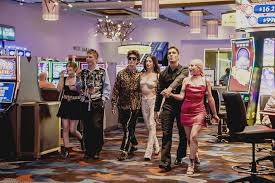
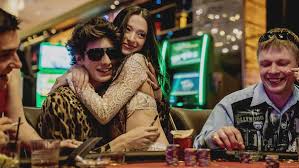
Ani, known for her quick wit and vibrant personality, works at a strip club in Brighton Beach. Her life takes an unexpected turn when she meets Vanya Zakharov (Mark Eydelshteyn), the exuberant son of a Russian oligarch. What begins as a transactional relationship swiftly evolves into a lavish adventure, culminating in a spontaneous marriage in Las Vegas. However, the intrusion of Vanya’s powerful family forces Ani into a tumultuous journey, challenging her perceptions of love, autonomy, and societal structures.
Sean Baker, renowned for his authentic portrayals of marginalized communities, continues this tradition in “Anora.” His direction captures the raw energy of Brooklyn’s nightlife and the opulence of Vanya’s world, creating a vivid contrast that underscores the film’s central themes. Baker’s script is sharp and insightful, blending humor with moments of introspection. The dialogue is both natural and engaging, reflecting the complexities of the characters’ lives and relationships.
Mikey Madison delivers a standout performance as Ani, infusing the character with a blend of resilience, vulnerability, and charisma. Her portrayal has been widely acclaimed, with critics noting her ability to navigate the film’s tonal shifts seamlessly. Mark Eydelshteyn’s depiction of Vanya adds depth to the narrative, presenting a character who is both privileged and naive, yet endearing. The supporting cast, including Yura Borisov and Aleksei Serebryakov, contribute significantly to the film’s dynamic ensemble, each bringing authenticity to their roles.
Drew Daniels’ cinematography captures the contrasting worlds of Ani and Vanya with a keen eye for detail. The vibrant streets of Brooklyn and the extravagant settings of their escapades are depicted with equal care, enhancing the film’s immersive quality. Baker’s editing ensures a cohesive narrative flow, maintaining a balance between the film’s comedic and dramatic elements.
The film’s score, composed by Matthew Hearon-Smith, complements its narrative arc, blending contemporary tracks with original compositions. The music enhances the emotional depth of key scenes, reflecting Ani’s internal journey and the external chaos that surrounds her.
“Anora” explores themes of exploitation, socioeconomic mobility, and the transactional nature of relationships. It challenges traditional narratives by presenting a protagonist who is both empowered and constrained by her circumstances. The film also critiques the excesses of the super-rich, highlighting the disparities between different social strata.
“Anora” premiered at the 77th Cannes Film Festival, where it received the prestigious Palme d’Or. Critics have lauded the film for its energetic storytelling and compelling performances. Richard Lawson of Vanity Fair described it as “a wild, profane blast,” while Justin Chang of The New Yorker noted that it “plays like a wild dream—first joyous, then catastrophic, and always fiercely unpredictable.” The film has been nominated for multiple awards, including five Golden Globe nominations, reflecting its critical acclaim and industry recognition.
At its core, Anora uses Ani’s experiences to hold a mirror to societal dynamics, particularly the exploitation that persists in various relationships—both personal and systemic. Ani’s job as a dancer embodies the fine line between empowerment and objectification, where financial independence often comes with an emotional price. Through her interactions with Vanya and his world of excess, the film critiques the hollow promises of wealth and privilege. The stark juxtaposition of Ani’s grounded world with Vanya’s extravagant lifestyle exposes the absurdities of extreme affluence and the deep inequalities it perpetuates.
Sean Baker skillfully layers the commentary without ever being didactic, allowing the audience to reflect on the complexities of choice, freedom, and societal expectations. The film’s refusal to portray Ani as a victim or Vanya as merely a villain reinforces this nuanced approach. Instead, it presents each character as a product of their environment, influenced by circumstances but capable of growth and change.
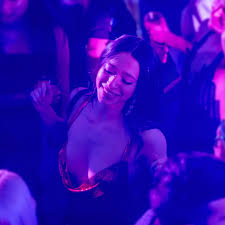
The visual storytelling in Anora deserves particular praise. Baker employs a kinetic style that captures the energy of Ani’s life, oscillating between the gritty vibrancy of Brooklyn and the gaudy, almost surreal opulence of her escapades with Vanya. Handheld camera work and neon-lit scenes convey the chaos and allure of the strip club where Ani works, while sweeping wide shots of extravagant mansions and private jets underscore the absurdity and isolation of wealth.
Production designer Stephonik Youth and costume designer Kathryn Gallagher worked wonders in crafting Ani’s world. Her wardrobe evolves subtly over the course of the film, mirroring her inner journey—from bold, defiant pieces in Brooklyn to uncomfortable, ostentatious gowns in her attempts to navigate Vanya’s world, and finally to a more understated style that reflects her newfound clarity and agency.
One of Anora‘s greatest strengths is its complex characters. Ani is not a one-dimensional archetype of a woman trying to “escape” her circumstances. She is a deeply layered individual, proud of her work yet unafraid to critique its downsides. Mikey Madison imbues Ani with a raw authenticity, giving her humor and pathos that resonate deeply.
Vanya Zakharov, played with a perfect blend of charisma and vulnerability by Mark Eydelshteyn, is not reduced to a caricature of wealth. His genuine affection for Ani is clear, but his immaturity and inability to escape his family’s control complicate their dynamic. Supporting characters, including Ani’s loyal best friend Veronica (played by Zazie Beetz) and Vanya’s cunning father (a chilling Aleksei Serebryakov), add richness to the narrative, serving as foils that push Ani toward self-realization.
Beyond its captivating plot and performances, Anora taps into larger cultural conversations about class, gender, and power dynamics. It asks the audience to question the cost of aspiration in a world increasingly defined by transactional relationships—whether between romantic partners, family members, or institutions. The film subtly critiques late-stage capitalism through its portrayal of Vanya’s family empire, contrasting it with Ani’s scrappy resilience and resourcefulness.
The humor in the film—often quick and biting—keeps these heavy themes from feeling overbearing. There’s an inherent absurdity in the situations Ani finds herself in, from flying to an impromptu wedding on a private jet to dancing on the deck of a mega-yacht during a family feud. Yet, Baker ensures these moments serve the story rather than merely acting as spectacle.
Without spoiling too much, the film’s conclusion is as bold as Ani herself. Baker resists tying everything up in a neat bow, opting instead for an ending that feels earned yet open-ended. Ani finds herself at a crossroads, but the decision she makes speaks volumes about her growth throughout the narrative. It’s a triumphant moment, though not without its lingering uncertainties—a reflection of life’s messy, unpredictable nature.
In many ways, Anora feels like a culmination of Baker’s career to date. It captures his penchant for portraying marginalized communities with dignity and humanity while venturing into a larger, more flamboyant narrative space. The film resonates with audiences not just for its entertainment value but for its emotional and intellectual depth.
Critics have hailed it as a “modern-day fairytale with bite,” and audiences have embraced it for its relatability amidst the extravagance. The film’s multiple accolades and impressive box office performance ensure its place as one of the defining films of this era.
For viewers who enjoy character-driven stories laced with social commentary and humor, Anora is not to be missed. It’s a wild, unforgettable ride—much like its titular character.
As of January 12, 2025, “Anora” has grossed $32.5 million worldwide against a $6 million budget, marking it as Baker’s highest-grossing film to date. Its strong per-screen averages during the opening weekends indicate a positive reception from audiences, further solidifying its success.
“Anora” stands as a testament to Sean Baker’s ability to craft narratives that are both entertaining and socially relevant. Through its dynamic performances, sharp writing, and thematic depth, the film offers a nuanced portrayal of a woman’s journey through love, autonomy, and societal expectations. It is a compelling addition to contemporary cinema, resonating with audiences and critics alike.


 spryfilm.com