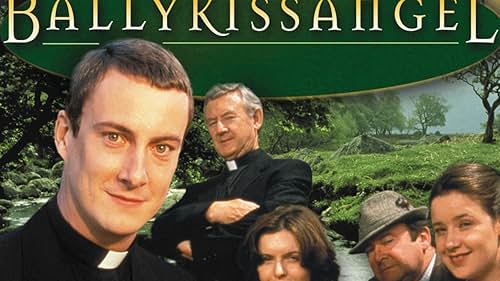
“Ballykissangel Series One – Six” (1996-2001)
Television Series

Fifty-eight Episodes
Created by: Kieran Prendiville
Featuring: Dervla Kirwan, Stephen Tompkinson, Tony Doyle and Tina Kellegher
Father Peter Clifford: “Assumpta, I’m a Catholic priest.”
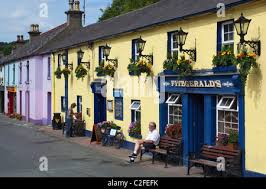
Ballykissangel is one of those rare television dramas that manages to be both quaint and quietly profound. First broadcast on BBC One in 1996, the series ran for six seasons and a Christmas special before ending in 2001. Created by Kieran Prendiville, Ballykissangel was produced by World Productions and filmed on location in the picturesque village of Avoca in County Wicklow, Ireland. It presents itself on the surface as a charming slice-of-life story about a small Irish village—but underneath the bucolic exterior lies a surprisingly layered drama filled with romance, community tension, culture clash, and spiritual questioning.
While Ballykissangel never reached the prestige TV heights of some of its BBC contemporaries, it held a unique place in the television landscape of the late 1990s and early 2000s. It combined the gentleness of Heartbeat or All Creatures Great and Small with subtle doses of political commentary, emotional depth, and ecclesiastical introspection. At its best, it was funny, warm, and heartbreaking in equal measure.
The story begins with the arrival of Father Peter Clifford (Stephen Tompkinson), a young English Catholic priest who is assigned to the small Irish parish of Ballykissangel. From the outset, Peter is both an outsider and an observer, his modern views often clashing with the traditional values of his new parishioners. Much of the early drama revolves around Peter’s adjustment to this new world and the town’s suspicion of the “English priest.”
But what makes Ballykissangel more than just a culture-clash comedy is how deftly it weaves personal stories and relationships into its narrative. The show is interested not just in Peter’s fish-out-of-water journey, but in the entire tapestry of the village—its farmers, teachers, shopkeepers, and rogues. It paints a portrait of a close-knit, sometimes claustrophobic community with genuine affection and insight.
Faith is a recurring theme, but never in a didactic or moralizing way. The series often explores the limits of institutional religion, the humanity of clergy, and the grey areas of personal belief. Father Clifford is a man of faith, but he’s also plagued by doubt, desires, and a strong sense of social justice. This duality is never treated as contradictory—instead, it’s what makes him compelling.
At the center of the show’s emotional heart, particularly in its first three seasons, is the relationship between Peter Clifford and Assumpta Fitzgerald (played by the magnetic Dervla Kirwan). Assumpta is the strong-willed, cynical owner of the village pub, and her chemistry with Peter is palpable from their first scene together. The series walks a delicate line between exploring their unspoken attraction and maintaining the tension of Peter’s vows as a priest.
This will-they-won’t-they dynamic is among the most compelling elements of Ballykissangel, made all the more poignant by the fact that it cannot end in the usual romantic comedy fashion. When their relationship finally does evolve into something tangible, it comes at great emotional and narrative cost—and the fallout is both controversial and devastating for longtime fans.
While Peter and Assumpta may be the show’s emotional anchor in the early years, the strength of Ballykissangel lies in its ensemble. Characters like Brian Quigley (Tony Doyle), the entrepreneurial wheeler-dealer who serves as both antagonist and comic relief, add flavor to the village. Quigley is a shrewd businessman with a dubious moral compass, but his charisma makes him a perennial favorite.
Niamh Quigley (Tina Kellegher), Brian’s daughter, represents another facet of the show’s character-driven appeal. Her marriage to Garda Ambrose Egan (Peter Hanly), and the domestic drama that unfolds therein, offers a more grounded, everyday depiction of love and compromise.
Other memorable figures include Father MacAnally (Niall Toibin), the stern, old-guard cleric who disapproves of Peter’s modern methods; Kathleen Hendley (Aine Ni Mhuiri), the ever-watchful shopkeeper; and Eamon Byrne (Liam Heffernan), the shy, awkward farmer with a heart of gold.
The community of Ballykissangel itself becomes a character. Festivals, funerals, pub nights, local scandals, and hurling matches provide the fabric of rural Irish life, portrayed with affection but never sentimentality.
After the departure of both Stephen Tompkinson and Dervla Kirwan at the end of Season 3, the show underwent a significant tonal shift. While the production retained its signature pastoral charm and continued to explore community life, many viewers felt the loss of its original emotional center. The subsequent seasons brought in new characters, including Father Aidan O’Connell (Don Wycherley) and Frankie Sullivan (Victoria Smurfit), who tried admirably to recapture the magic—but with mixed results.
There were still strong storylines in later seasons—particularly around Niamh’s struggles with widowhood, and the exploration of new romantic entanglements—but the show never quite regained the spark of its early years. The balance of drama, comedy, and character introspection sometimes veered into melodrama or sitcom-like contrivance.
The series ended rather abruptly with a Christmas special in 2001, which left many narrative threads unresolved. While not necessarily a satisfying conclusion, the ending did feel somewhat appropriate for a show that was never about grand arcs but rather the ebb and flow of life in a small town.
Kieran Prendiville’s writing is filled with warmth and sharp observation. The scripts, especially in the early seasons, are laced with humor that is organic rather than forced, and pathos that arises naturally from character. While the show rarely veers into high drama, it has moments of emotional gravity that land with unexpected weight.
The direction and cinematography take full advantage of the lush Irish landscape, with rolling hills, misty valleys, and stone walls providing a backdrop that is almost therapeutic in its beauty. The use of traditional Irish music in the score further enhances the immersive experience.
Though Ballykissangel never achieved the international fame of Downton Abbey or the cultural currency of Father Ted, it developed a devoted fanbase and left a lasting impression on those who followed it. It offered a rare and respectful depiction of rural Irish life, without resorting to caricature or condescension.
In an age of fast-paced television and high-concept dramas, Ballykissangel stands as a reminder of the power of slow storytelling. It doesn’t rely on plot twists or spectacle. Instead, it invests in people—their flaws, kindnesses, conflicts, and contradictions.
The deaths of actors Tony Doyle and Birdy Sweeney during the show’s run were felt deeply by fans, not just because of their roles, but because Ballykissangel had succeeded in making its fictional world feel personal.
Ballykissangel is not a perfect show. It’s uneven at times, and its final seasons meander more than they soar. But when it was good, it was transcendent in its quiet way. It’s a story about belonging, about faith and doubt, and about the power of community in an increasingly disconnected world.
For those willing to invest in its rhythms, Ballykissangel offers not just entertainment but solace. It’s the kind of show that invites you in, hands you a pint, and lets you sit by the fire as stories unfold—slowly, organically, and always with heart.




 spryfilm.com