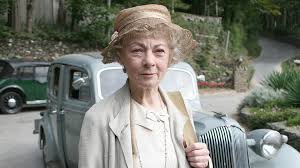
“Agatha Christie’s Marple: Series One to Three” (2004-2013)
Television

Twenty three Episodes
Created by: Agatha Christie
Featuring: Geraldine McEwan and Julia McKenzie
Miss Jane Marple: “When gentlemen of a certain age fall in love, they get the disease very badly.”
Agatha Christie’s Miss Marple series, known for its charming and astute elderly detective, has been a beloved staple in the mystery genre for decades. The TV adaptation, simply titled “Marple,” has taken this timeless character and her intriguing cases from the pages of classic literature to the small screen with a grace and style that has captivated audiences.
“Marple” revolves around the character of Miss Jane Marple, a seemingly innocuous elderly lady living in the quaint village of St. Mary Mead. However, beneath her benign exterior lies a sharp mind and a keen understanding of human nature. Each episode presents a standalone mystery, often involving murder, deceit, and complex human relationships. Miss Marple’s strength lies in her ability to see through the facades people put up and deduce the truth with her unparalleled intuition and logic.
The series does a commendable job of staying true to the essence of Christie’s original stories while also adding a fresh perspective. The writers have taken some liberties, occasionally merging different elements from various stories or adding new subplots, but these changes generally serve to enhance the narrative and keep it engaging for both newcomers and long-time fans of the books.
The portrayal of Miss Marple has seen different actresses bringing their unique touches to the character. Geraldine McEwan and Julia McKenzie, who have played the iconic role in the series, each bring their own charm and nuances to Miss Marple. McEwan’s portrayal is marked by a twinkle of mischief and a gentle, almost whimsical demeanor, while McKenzie brings a more grounded and earnest interpretation, with a quiet but steely resolve.
The supporting cast in each episode is often composed of well-known British actors, adding a layer of quality and familiarity. The guest stars deliver strong performances, making each mystery feel substantial and the suspects well-rounded. The casting directors have done an excellent job of selecting actors who can bring depth and believability to their roles, whether they are portraying victims, suspects, or accomplices.
The production design of “Marple” is a visual treat, perfectly capturing the period setting with meticulous attention to detail. The quaint villages, grand manors, and lush countryside settings are all beautifully rendered, creating an immersive experience for the viewer. The costume design is equally impressive, with outfits that are both period-accurate and visually appealing.
Cinematography plays a crucial role in establishing the tone of the series. The use of light and shadow, along with careful framing, adds to the suspense and drama of the mysteries. The series often employs close-ups to capture the subtle expressions of the characters, allowing the audience to glean insights into their thoughts and motivations, much like Miss Marple herself.
One of the enduring themes of “Marple” is the exploration of the darker side of human nature. The series delves into the complexities of love, jealousy, greed, and revenge, all of which are common motives for the crimes Miss Marple investigates. Through her observations and interactions, the series offers a commentary on the capacity for both good and evil within people, regardless of their outward appearances.
Miss Marple herself is a fascinating character study. Her age and gender often lead others to underestimate her, but she uses these assumptions to her advantage, often playing the role of a harmless old lady while she carefully unravels the truth. Her sharp intellect, combined with her deep empathy and understanding of human nature, makes her an exemplary detective. The series also touches on her personal life, including her friendships and the experiences that have shaped her worldview, adding layers to her character beyond her role as a sleuth.
The TV series “Marple” has left a significant mark on the landscape of British television and the broader mystery genre. It has introduced Agatha Christie’s timeless detective to a new generation of viewers, ensuring that Miss Marple remains a relevant and beloved figure in popular culture. The show’s success has helped to revive interest in Christie’s work, leading many viewers to discover or revisit her original novels and other adaptations.
The series also stands as a testament to the enduring appeal of the classic whodunit format. In an era where crime dramas and thrillers often rely on high-tech gadgets, complex forensics, and gritty realism, “Marple” proves that there is still a place for more traditional, character-driven mysteries. The show’s focus on clever deduction, intricate plotting, and rich character development offers a refreshing alternative to more contemporary approaches to the genre.
“Marple” inevitably invites comparisons to other adaptations of Christie’s work, most notably the long-running “Poirot” series starring David Suchet. While both series share a commitment to faithfully bringing Christie’s stories to life, they differ in tone and style. “Poirot” often has a more formal and polished aesthetic, befitting its Belgian detective’s meticulous nature, whereas “Marple” embraces a cozier, more intimate atmosphere that aligns with its village settings and the character’s unassuming persona.
Other Miss Marple adaptations, such as the films starring Margaret Rutherford and the BBC series featuring Joan Hickson, have also left their mark. Each actress brings a distinct interpretation to the role, and “Marple” stands out for its balance between honoring these past portrayals and carving out its own unique identity. The show’s willingness to innovate while remaining true to the spirit of the source material sets it apart in the crowded field of Christie adaptations.
“Marple” has generally been well-received by audiences and critics alike. Viewers appreciate the series’ faithful yet fresh take on Christie’s stories, the high production values, and the strong performances, particularly by McEwan and McKenzie. The show’s ability to maintain suspense and intrigue across multiple seasons has been a key factor in its popularity.
However, some purists have taken issue with the liberties the series occasionally takes with the source material. These changes, such as merging characters or altering plot points, are seen by some as unnecessary deviations. Despite this, the overall reception remains positive, with many acknowledging that such adaptations are often necessary to keep the stories engaging for modern audiences.
“Marple” is a masterful adaptation that honors Agatha Christie’s beloved character while also bringing a fresh and engaging perspective to her stories. With strong performances, beautiful production design, and well-crafted mysteries, the series offers a delightful and intellectually stimulating viewing experience. It captures the charm and complexity of Miss Marple and her world, making it a must-watch for fans of classic mysteries and quality television alike.




 spryfilm.com