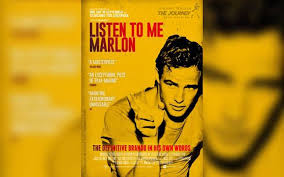
“Listen to Me Marlon” (2015)
Documentary

Running Time: 95 minutes
Written by: Stevan Riley and Peter Ettedgui
Marlon Brando, Himself: “Everything that you do – make it real as you can. Make it alive. Make it tangible. Find the truth of that moment.”
Marlon Brando, Himself: “Lying for a living. That’s what acting is. All I’ve done is just learned how to be aware of the process.”
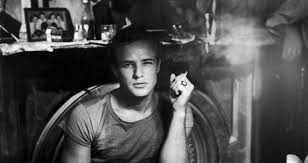
Stevan Riley’s Listen to Me Marlon is an extraordinary documentary that delves deep into the psyche of Marlon Brando, one of the most enigmatic and influential actors in cinema history. Rather than relying on conventional interviews or talking-head testimonials, the film constructs its narrative almost entirely from Brando’s own words, using a vast archive of personal audio recordings he made over several decades. The result is an intimate, poetic, and deeply introspective portrait of a man who reshaped the art of acting while struggling with profound personal demons.
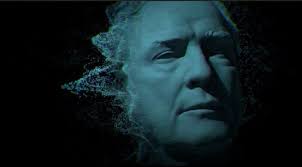
What sets Listen to Me Marlon apart from other documentaries is its innovative storytelling technique. Brando’s self-recorded reflections serve as both the film’s narrator and its emotional core. These recordings are combined with archival footage, film clips, home movies, and eerie digital recreations of Brando’s face, creating an almost ghostly presence that hovers over the film. The effect is haunting and deeply personal, allowing viewers to hear Brando’s unfiltered thoughts on fame, acting, love, and loss.
Rather than presenting a linear biography, the documentary flows like a stream of consciousness, moving seamlessly between different periods of Brando’s life. His musings on his craft, his troubled childhood, and his disillusionment with Hollywood are interwoven with moments of profound vulnerability. The film allows Brando to tell his own story in a way that feels raw and unmediated, making it one of the most intimate portrayals of a celebrity ever put to screen.
For cinephiles and aspiring actors, Listen to Me Marlon is a masterclass in acting theory. Brando speaks at length about his approach to performance, from his formative experiences studying under Stella Adler to his groundbreaking work in A Streetcar Named Desire and On the Waterfront. His reflections on method acting reveal a deep understanding of human behavior and emotion, and his frustrations with the art form’s commercialization resonate strongly.
Brando was both a genius and a rebel, a man who revolutionized acting but grew increasingly disenchanted with the industry. He laments how Hollywood reduces actors to commodities and how fame became an unbearable burden. His insights into the craft are fascinating, particularly when he discusses his ability to manipulate emotions and use personal experiences to enhance his performances.
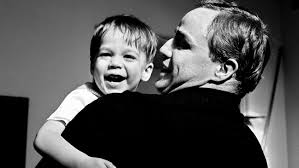
Beyond his artistic brilliance, the film does not shy away from the tragedies and controversies that shaped Brando’s life. His troubled childhood, marked by an abusive father and an alcoholic mother, left deep scars that influenced his relationships and career choices. His personal life was riddled with turmoil, from tumultuous romances to the heartbreaking tragedies involving his children.
One of the most poignant moments in the film is Brando’s reflection on the 1990 shooting of his daughter Cheyenne’s boyfriend by his son Christian. The incident devastated him, and his sorrow is palpable in the recordings. The film presents Brando not just as an icon but as a deeply flawed, wounded man who struggled with guilt, isolation, and regret.
Visually, Listen to Me Marlon is stunning. Riley and editor Roderick Jaynes craft a dreamlike tapestry of imagery that enhances the film’s meditative quality. The use of archival footage is particularly effective, blending seamlessly with Brando’s voice to create a hypnotic experience. The eerie CGI rendering of Brando’s face, based on a 3D scan he commissioned before his death, adds an unsettling yet fittingly ethereal presence to the film.
The score, composed by Stefan Wesolowski, further amplifies the film’s haunting atmosphere. It’s a melancholic, meditative soundtrack that underscores Brando’s introspective monologues, making the entire experience feel like a séance with the past.
Listen to Me Marlon is a profoundly moving and deeply original documentary that transcends the traditional biographical format. It offers an unparalleled look into the mind of one of cinema’s greatest actors, allowing Brando to narrate his own story in his own words. The film is both a celebration of his genius and a lament for his troubled life, capturing the contradictions that made him such a fascinating figure.
For those who admire Brando, this documentary is essential viewing. It strips away the myths and tabloid sensationalism to reveal a man of immense talent, intelligence, and complexity. Even for those unfamiliar with his work, Listen to Me Marlon stands as a powerful meditation on fame, artistry, and the human condition. It is an unforgettable cinematic experience that lingers long after the credits roll.
 spryfilm.com