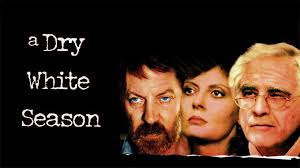
“A Dry White Season” (1989)
Drama

Running Time: 107 minutes
Written by: Colin Welland and Euzhan Palcy
Featuring: Donald Sutherland, Janet Suzman, Jürgen Prochnow, Zakes Mokae, Susan Sarandon and Marlon Brando
Ian McKenzie: “Justice and law, Mr. Du Toit, are often just… well they’re, I suppose they can be described as distant cousins. And here in South Africa, well, they’re simply not on speaking terms at all.”
Few films capture the horror of institutionalized injustice with the clarity and urgency of A Dry White Season. Based on André Brink’s novel of the same name, the film is a powerful indictment of apartheid in South Africa, a system that thrived on oppression and racial segregation. Directed by Euzhan Palcy—who became the first Black woman to direct a Hollywood studio film—this 1989 drama is a harrowing, deeply affecting film that remains as relevant today as it was upon its release.
With a cast led by Donald Sutherland, Susan Sarandon, Marlon Brando, and Zakes Mokae, A Dry White Season is not just a searing critique of apartheid but also an exploration of the personal cost of awakening to injustice. The film forces its audience to confront the consequences of standing up to a system built on cruelty, indifference, and corruption.
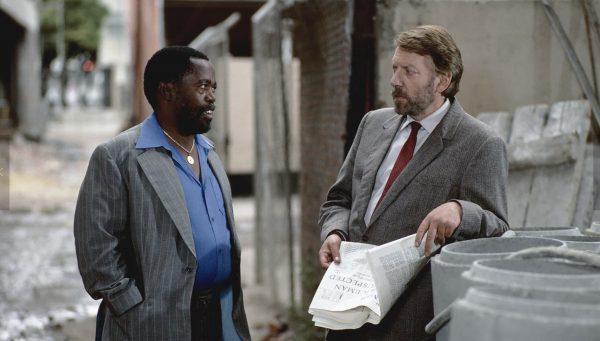
At its core, A Dry White Season is the story of Ben du Toit (Donald Sutherland), a white South African schoolteacher who initially lives in blissful ignorance of the brutal reality faced by Black South Africans under apartheid. Ben is a man of privilege, sheltered from the horrors that unfold daily in his own country. His world begins to crumble when his Black gardener, Gordon Ngubene (Winston Ntshona), seeks his help after his son is brutally beaten by the police during a student protest.
Ben, believing in the fairness of the law, tries to intervene but is met with bureaucratic stonewalling. When Gordon himself is arrested, tortured, and killed in police custody, Ben is forced to confront the system he once trusted. His efforts to seek justice for Gordon lead him down a dangerous path, putting his own family and life at risk. As he becomes more entangled in the struggle against apartheid, he enlists the help of human rights lawyer Ian McKenzie (Marlon Brando in a brief but powerful role) and journalist Melanie Bruwer (Susan Sarandon).
What follows is a descent into the terrifying reality of a system that will go to any lengths to protect itself. Ben’s naïve belief that truth and justice will prevail is shattered as he is targeted, ostracized, and ultimately destroyed by the same system he once upheld.
One of the film’s most compelling aspects is its exploration of moral awakening. Ben du Toit is not a traditional hero—he is a man who begins as part of the problem, oblivious to the suffering of the Black population. His transformation from a passive bystander to an active resistor is the film’s emotional core.
White Complicity in Apartheid: Ben’s initial apathy mirrors that of many white South Africans at the time. He enjoys the privileges of apartheid without question, until the violence directly affects someone he knows. His journey highlights how systems of oppression rely not just on active perpetrators but also on the passive compliance of the privileged.
The Power and Limits of the Law: Ian McKenzie, played by Marlon Brando in an Oscar-nominated performance, is the cynical lawyer who understands that the legal system is merely an instrument of oppression. His famous courtroom speech, in which he exposes the state’s brutality while knowing his arguments will make no difference, is one of the film’s most poignant moments.
The Price of Defiance: As Ben becomes more involved in fighting injustice, his life unravels. His family turns against him, his career is destroyed, and he is branded a traitor. This mirrors the real-life consequences faced by white anti-apartheid activists who were often ostracized, imprisoned, or assassinated.
Donald Sutherland as Ben du Toit delivers one of his finest performances, capturing the gradual unraveling of a man who once believed in his country’s institutions. His transformation from a quiet, respectable teacher to a man haunted by his own complicity is subtle but deeply moving.
Marlon Brando as Ian McKenzie steals the show despite only appearing in a few scenes. His performance, weary yet defiant, serves as the film’s moral compass. His speech in the courtroom remains one of Brando’s most underrated moments.
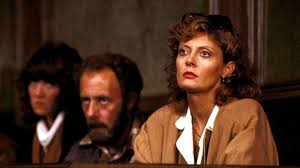
Susan Sarandon as Melanie Bruwer provides the film with another perspective—the role of the journalist determined to expose the truth. While her role is relatively small, she brings a quiet determination that complements Sutherland’s performance.
Zakes Mokae as Captain Stolz embodies the cold, bureaucratic cruelty of the apartheid regime. As the police officer responsible for Gordon’s death, he represents the faceless evil of institutionalized oppression.
Euzhan Palcy’s direction is unflinching and deeply humanistic. She does not sensationalize the violence but presents it in stark, matter-of-fact brutality. The scenes of torture and oppression are harrowing but never gratuitous.
The cinematography by Pierre-William Glenn emphasizes contrast—between the lush, privileged world of white South Africans and the bleak, poverty-stricken reality of Black South Africans. The use of light and shadow enhances the film’s themes, with Ben’s increasing isolation reflected in the darkening tones of his surroundings.
Unlike many Hollywood films that simplify historical injustices, A Dry White Season does not offer easy resolutions. The apartheid system is not defeated in the film, nor does Ben emerge victorious. His fate is a chilling reminder of how difficult it is to fight an entrenched system of power.
The film also benefits from its authenticity—shot partially on location, it captures the tension and paranoia of South Africa in the 1970s and 1980s. The violence feels real, and the fear is palpable.
While critically acclaimed, A Dry White Season was not without controversy. The South African government condemned the film, and it was banned in some countries. Some critics argued that the film, despite its strong message, still centered on a white protagonist rather than the Black activists leading the anti-apartheid struggle. While this is a valid critique, the film serves as an important entry point for audiences unfamiliar with the complexities of apartheid.
Over three decades later, A Dry White Season remains a powerful historical drama. Its themes of racial injustice, state-sponsored violence, and moral awakening are still relevant in today’s world. The film is a reminder that systemic oppression does not disappear overnight and that confronting injustice often comes at a great personal cost.
Euzhan Palcy’s work paved the way for future filmmakers tackling stories of racial injustice. The film’s release during the final years of apartheid helped bring international attention to the atrocities of the regime.
What makes A Dry White Season stand out among other films dealing with racism and systemic oppression is its unflinching honesty. Unlike Hollywood’s tendency to sanitize historical struggles, this film refuses to shy away from the raw brutality of the apartheid regime. It presents a world in which justice is an illusion, truth is silenced, and those who dare to challenge the status quo risk losing everything.
This is not an easy film to watch, but it is an essential one. It is a film that remains profoundly relevant, even decades after its release, as the themes it explores—systemic racism, state violence, and moral awakening—continue to resonate globally.
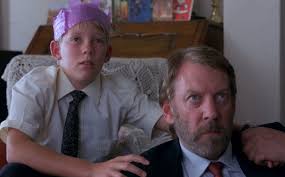
Ben du Toit (Donald Sutherland) is a seemingly decent, well-meaning schoolteacher who lives a comfortable life in Johannesburg. He is not overtly racist, nor does he see himself as complicit in apartheid; rather, he, like many white South Africans of the time, simply accepts the system as the natural order of things. His life changes when his Black gardener, Gordon Ngubene (Winston Ntshona), approaches him for help after his son is beaten by the police for participating in a student protest.
Initially, Ben assumes the situation is a misunderstanding. He believes in South Africa’s institutions and assumes that if he simply appeals to the right authorities, justice will be served. However, as he digs deeper, he is confronted with the terrifying truth: the government is not simply indifferent to the suffering of Black South Africans—it is actively engaged in their oppression.
When Gordon himself is arrested, tortured, and killed in police custody, Ben is forced to confront the limits of his privilege. His comfortable life begins to unravel as he seeks justice. His wife (Janet Suzman) and daughter turn against him, preferring to maintain their social standing rather than support his quest for truth. His employer distances itself from him, and his former friends abandon him. As he becomes more entangled in the fight against apartheid, he is subjected to increasing surveillance, harassment, and threats.
Ultimately, his pursuit of justice leads him to a tragic fate. The system he once trusted is revealed to be an unbreakable machine of oppression, where truth is irrelevant, and power is maintained through violence and fear.
At its heart, A Dry White Season is a story about the personal cost of moral awakening. Ben’s transformation from passive observer to active resistor is not framed as an act of heroism but as a tragic journey with devastating consequences.
1. White Privilege and Complicity
One of the film’s most powerful themes is its critique of white privilege. Ben is a good man by conventional standards, but his goodness is passive. He does not actively oppress Black South Africans, but he also does nothing to help them until he is personally confronted with the brutality of apartheid. The film makes it clear that systems of oppression do not only survive because of active perpetrators but because of the passive compliance of those who benefit from them.
His initial belief in the system—his assumption that appealing to the authorities will lead to justice—is a reflection of his privilege. For most of his life, the system has worked in his favor, so he assumes it must be fundamentally just. It is only when he is personally affected that he realizes the truth.
2. The Futility of Legal Justice in an Unjust System
One of the film’s most chilling messages is that the legal system under apartheid is not merely ineffective—it is actively complicit in oppression. This is most clearly illustrated in the character of Ian McKenzie (Marlon Brando), the weary human rights lawyer who understands that the law is a tool of those in power.
McKenzie’s courtroom scene is one of the film’s highlights. He delivers a powerful indictment of the apartheid regime, exposing its brutality and hypocrisy. Yet, as he delivers his impassioned speech, there is no triumph—only futility. The outcome of the case is predetermined. The system does not care about truth, and those in power do not need to justify their actions.
Brando’s brief but unforgettable performance adds an extra layer of weight to the film’s message. His presence, even in a supporting role, underscores the gravity of the story being told.
3. The Personal Cost of Resistance
Ben’s journey is not one of heroism but of tragic inevitability. Unlike many Hollywood films that feature white protagonists in stories about racial injustice, A Dry White Season does not offer redemption. Ben does not save the day. His resistance does not dismantle the system. Instead, he is crushed by it.
His fate is a grim reminder that standing up to injustice often comes at a steep price. It is not a comfortable narrative, but it is an honest one. The film refuses to provide easy answers or false hope. Instead, it forces the audience to confront the reality that systemic oppression is deeply entrenched and that those who resist often pay the ultimate price.
Euzhan Palcy’s direction is a key reason why A Dry White Season remains so impactful. She does not sensationalize the violence or dramatize the story for emotional manipulation. Instead, she presents the horror of apartheid with an unflinching gaze.
Palcy’s choice to shoot many scenes with a stark, almost documentary-like realism enhances the film’s authenticity. The violence, while not overly graphic, feels disturbingly real. The film does not rely on shock tactics but rather presents oppression as a constant, inescapable force.
The cinematography by Pierre-William Glenn uses stark contrasts to emphasize the divide between white and Black South Africans. The bright, idyllic world of white suburban life is juxtaposed against the dark, oppressive conditions of Black townships and prisons. This visual contrast reinforces the theme of willful ignorance—white South Africans live in comfort while atrocities occur just outside their doorsteps.
The sound design also plays a crucial role in the film’s emotional impact. The use of silence in key moments, particularly during scenes of violence and oppression, creates an unsettling atmosphere. The absence of a swelling musical score in these moments forces the audience to sit with the horror of what is happening.
Upon its release, A Dry White Season received widespread critical acclaim. It was praised for its unflinching portrayal of apartheid, its strong performances, and its powerful message. Marlon Brando’s performance earned him an Academy Award nomination for Best Supporting Actor, marking his final Oscar nomination.
However, the film also faced controversy. It was banned in South Africa upon release, and its political message made it a target of censorship in certain regions. Despite this, it remains one of the most important films about apartheid.
Although apartheid officially ended in the early 1990s, the themes explored in A Dry White Season remain relevant. The film’s portrayal of systemic racism, state violence, and the complicity of privilege continues to resonate in contemporary discussions about social justice.
In a time when police brutality, institutionalized racism, and political corruption remain pressing issues, A Dry White Season serves as a reminder that confronting injustice is never easy—but silence is not an option.
A Dry White Season is a gripping, emotionally devastating film that does not shy away from the harsh realities of its subject matter. Bolstered by exceptional performances, masterful direction, and a powerful message, it is one of the most important political films of the 20th century. For those who appreciate films with historical and political weight, A Dry White Season is essential viewing. It is a testament to the courage of those who fought against apartheid—and a sobering reminder of the cost of standing up to injustice.


 spryfilm.com