
“Last Tango in Paris” (1972)
Drama

Running Time: 93 minutes
Written by: Bernardo Bertolucci, Franco Arcalli French dialogue: Agnès Varda
Directed by: Bernardo Bertolucci
Featuring: Marlon Brando, Maria Schneider, Maria Michi, Giovanna Galletti, Jean-Pierre Léaud and Massimo Girotti
Paul: “No, you’re alone. You’re all alone. And you won’t be able to be free of that feeling of being alone until you look death right in the face. I mean that sounds like bullshit. Some romantic crap. Until you go right up into the ass of death. Right up in his ass. ‘Til you find the womb of fear.”
Few films have sparked as much controversy, admiration, and debate as Last Tango in Paris, directed by Bernardo Bertolucci and starring Marlon Brando and Maria Schneider. A film that exists at the intersection of raw emotional expression and cinematic provocation, Last Tango in Paris is an experience that continues to polarize audiences and critics alike. It is both a study of grief and alienation and a film notorious for its disturbing behind-the-scenes revelations. Regardless of one’s stance on its ethics, the film remains a landmark of 1970s cinema, blending improvisational acting with a bleak, existential outlook on love, sex, and human connection.
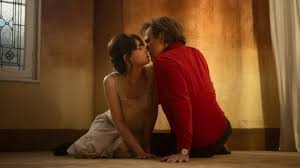
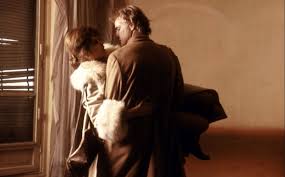
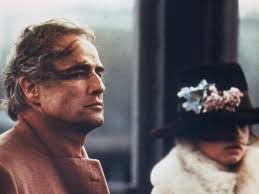
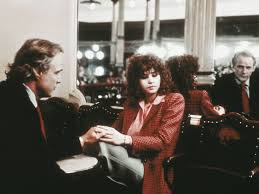
The film revolves around Paul (Marlon Brando), an American expatriate in Paris, who, in the wake of his wife’s suicide, enters a purely sexual relationship with Jeanne (Maria Schneider), a young Parisian woman engaged to a filmmaker. Their encounters take place in an empty apartment, where Paul imposes strict rules—no names, no personal histories, no attachments beyond the physical. The film charts their dynamic as Paul battles his own despair and Jeanne attempts to navigate both her independence and her attraction to the enigmatic, self-destructive stranger.
At its core, Last Tango in Paris is about isolation, grief, and the desperate attempt to find solace in another human being without the burdens of emotional entanglement. Paul, broken and hollow, uses sex as both an escape and a form of self-punishment, while Jeanne, initially complicit in the arrangement, gradually finds herself repelled by Paul’s cruelty and unraveling psyche. Bertolucci crafts a bleak meditation on the futility of love and the pain of human relationships, using the central affair as an allegory for emotional detachment and existential despair.
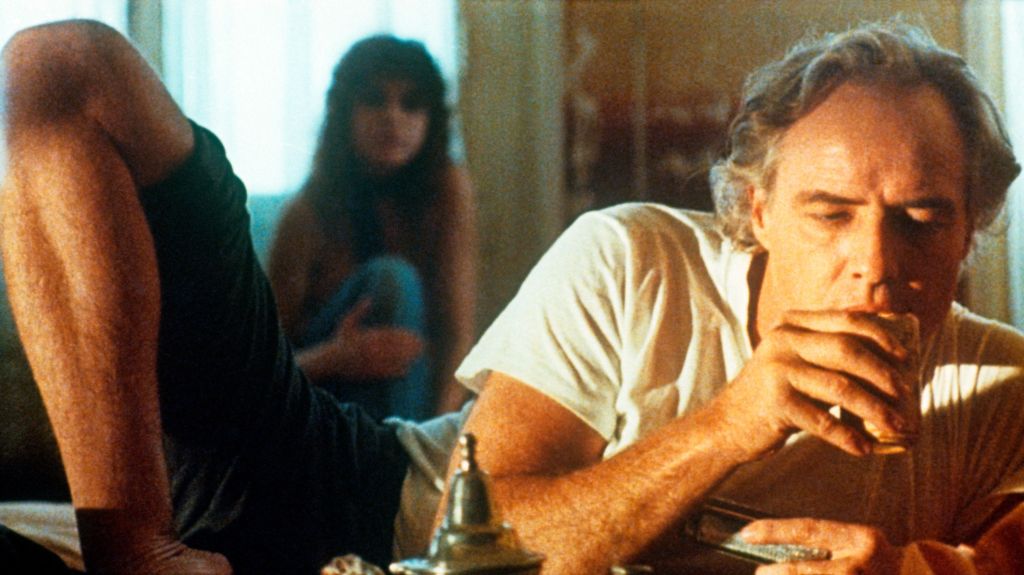
Marlon Brando delivers one of his most iconic and challenging performances, embodying Paul with an almost unbearable sense of rawness. His monologues—some of which were improvised—expose a man unraveling, burdened by his past and disgusted by his own desires. Brando’s performance is deeply personal, often blurring the line between character and actor, particularly in scenes where he channels his own experiences of grief and regret.
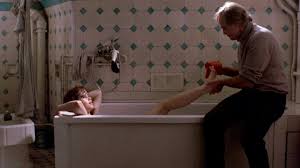
Maria Schneider, in contrast, brings vulnerability and youthful impulsiveness to Jeanne. However, her performance is forever overshadowed by the disturbing production methods used by Bertolucci and Brando. Schneider later spoke about how she felt manipulated and violated during filming, particularly in the infamous “butter” scene, which she was not fully informed about beforehand. Her performance, though impressive, is inseparable from the troubling context of her real-life trauma, making it difficult to assess purely from an artistic standpoint.
Bertolucci’s direction is both intimate and voyeuristic, capturing the raw intensity of the characters’ interactions through long takes, extreme close-ups, and fluid camerawork. Cinematographer Vittorio Storaro bathes the film in warm, melancholic tones, contrasting the claustrophobic apartment with the cold, indifferent city of Paris outside. The film’s visual style adds to its themes of isolation and emotional volatility, making the audience complicit in the characters’ unraveling.
Last Tango in Paris was met with both acclaim and outrage upon its release. It was banned in multiple countries, censored in others, and sparked international debates on obscenity in cinema. While many hailed it as a bold exploration of human sexuality and psychological torment, others viewed it as exploitative and degrading—particularly in light of Maria Schneider’s later revelations about her mistreatment on set.
In retrospect, Last Tango in Paris exists in a complicated space. As a film, it is undeniably powerful, fueled by extraordinary performances and daring storytelling. But ethically, it raises serious questions about the limits of directorial control and the responsibility filmmakers have toward their actors. Bertolucci’s admission that he deliberately withheld information from Schneider in order to elicit a “real” reaction underscores a troubling dynamic of power and consent in filmmaking.
Last Tango in Paris remains a difficult film to engage with. As a piece of cinema, it is deeply evocative, capturing the pain of grief and the desperation for human connection with brutal honesty. As a cultural artifact, it stands as a cautionary tale about artistic obsession crossing ethical boundaries. Whether one sees it as a masterpiece or a deeply flawed relic of a different cinematic era, its impact is undeniable.
Ultimately, the film’s legacy is one of both artistic brilliance and moral reckoning. It forces us to confront not just the characters’ emotions on screen but also the real-world consequences of filmmaking choices. It is an unforgettable experience—one that provokes, disturbs, and lingers in the mind long after the credits roll.
 spryfilm.com