
“The Night of the Following Day” (1969)
Drama

Running Time: 93 minutes
Written by: Hubert Cornfield and Robert Phippeny
Featuring: Marlon Brando, Richard Boone, Rita Moreno and Pamela Franklin
Chauffeur: [to Leer] “I don’t want you to hurt the girl; I don’t want you to touch her. If I come back and I find out that she’s not all right, I’m gonna take that burp gun and I’m gonna jam it up your nose… and I’m gonna pull the trigger ’til it doesn’t work any more.”
The Night of the Following Day is a psychological crime thriller directed by Hubert Cornfield and released in 1969. The film, based on Lionel White’s novel The Snatchers, is a dark and atmospheric tale of a kidnapping that spirals into betrayal, violence, and psychological torment. Despite a mixed reception upon release, largely due to its unconventional narrative structure and bleak tone, the film has gained a certain cult status over the years, appreciated for its gritty realism and the complex performances of its cast, particularly Marlon Brando.
This review will delve into the plot intricacies, thematic undertones, performances, and the technical aspects that make The Night of the Following Day a fascinating, if flawed, entry in the crime thriller genre.
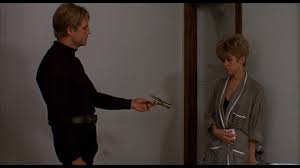
The film opens with a seemingly serene scene at an airport in France, where a young heiress (played by Pamela Franklin) arrives, unaware of the dark fate awaiting her. She is swiftly kidnapped by a group of criminals led by a brooding and enigmatic chauffeur, Bud (Marlon Brando). Accompanying him are Vi (Rita Moreno), his troubled lover, Leer (Richard Boone), a sadistic and unhinged accomplice, and a jittery partner named Wally (Jess Hahn). The group takes the girl to a remote beachfront house, intending to ransom her back to her wealthy father.
However, as the hours pass, the plan begins to unravel. Distrust and paranoia infest the group, exacerbated by Leer’s growing instability and Vi’s emotional collapse. Bud, who seems increasingly disillusioned by the criminal life, becomes a reluctant guardian to the captive, displaying a conflicted morality that stands in stark contrast to Leer’s violent tendencies. The film’s tension builds as the characters turn on each other, leading to a harrowing climax that questions the nature of guilt, betrayal, and the futility of violence.
At the heart of The Night of the Following Day is Marlon Brando’s performance as Bud. Brando, often known for his intense and raw portrayals, delivers a subdued yet powerful performance, conveying a man torn between apathy and a lingering conscience. His portrayal is notable for its restraint; Bud speaks little, but Brando’s eyes and body language reveal a storm of conflicting emotions.
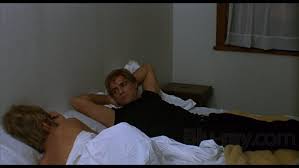
One of the film’s most memorable scenes is a silent exchange between Bud and the captive heiress, where Brando’s gaze shifts from indifference to a flicker of protective instinct. His ability to communicate so much without words elevates the film’s tension and deepens the moral ambiguity of his character.
Richard Boone’s performance as Leer is equally compelling, serving as a foil to Brando’s subdued menace. Boone infuses Leer with a frightening unpredictability, a man barely holding back his sadistic impulses. His interactions with Brando are electric, creating a palpable sense of danger within the group.
Rita Moreno’s portrayal of Vi, a drug-addicted accomplice drowning in guilt, adds an additional layer of tragedy to the story. Her scenes, particularly those depicting her struggle with addiction and guilt, are heart-wrenching and highlight the personal toll of the criminal life. Pamela Franklin, as the kidnapped heiress, effectively captures a mix of fear and resilience, making her plight genuinely affecting.
One of the most striking elements of The Night of the Following Day is its atmosphere. Cinematographer Willy Kurant captures the bleak beauty of the French coast with a muted color palette that mirrors the moral grayness of the characters. The beachfront house, isolated and surrounded by crashing waves, becomes a character in itself—both a prison and a purgatory for the captors and their victim.
The use of natural lighting and shadow is particularly effective in heightening the sense of claustrophobia and inevitability. Night scenes, lit only by dim lamps or flickering matches, create an eerie ambiance that lingers long after the credits roll.
Thematically, the film explores the corrosive effects of guilt and the moral decay that accompanies a life of crime. Each character embodies a different response to guilt—Bud’s silence, Vi’s addiction, and Leer’s escalating violence. The titular reference to “the night of the following day” can be interpreted as a metaphor for the consequences that inevitably follow immoral actions, no matter how carefully planned.
The ocean, ever-present in the background, serves as a symbol of the inescapable nature of guilt and fate. The characters are often framed against the crashing waves, emphasizing their isolation and the inevitability of their downfall.
Hubert Cornfield’s direction, though sometimes criticized for its uneven pacing, deserves recognition for its daring. The film’s structure is unconventional, with long, dialogue-free sequences that rely on visual storytelling. While this may frustrate viewers expecting a more straightforward thriller, it creates a meditative quality that sets the film apart from typical crime dramas of the era.
However, the pacing can occasionally falter, particularly in the second act, where the tension dips amidst scenes that linger a bit too long on the captors’ psychological unraveling. A tighter edit might have enhanced the film’s suspense without losing its reflective tone.
The film’s ending is perhaps its most polarizing aspect. In a twist that leaves audiences questioning the nature of reality within the story, the narrative shifts abruptly, suggesting that much of what transpired may have been a dream or hallucination. This ambiguity, while thematically resonant, risks alienating viewers who prefer a more concrete resolution.
Upon closer inspection, however, the ending can be seen as a commentary on the inescapable nature of guilt. The cyclical structure suggests that no matter how one tries to escape or justify their actions, they are doomed to relive the consequences in one form or another.
Upon its release in 1969, The Night of the Following Day received a mixed response from critics and audiences alike. Some appreciated its brooding atmosphere and psychological depth, while others were frustrated by its ambiguous storytelling and slow pacing. The film’s unconventional approach, particularly its controversial ending, was a significant point of contention. Many viewers were left puzzled or dissatisfied, expecting a more straightforward crime thriller.
However, in the decades that followed, the film has garnered a cult following, with contemporary critics reassessing its merits. Marlon Brando’s restrained yet powerful performance is now widely regarded as one of the film’s greatest strengths, showcasing his ability to convey inner conflict with minimal dialogue. Similarly, Richard Boone’s portrayal of the sadistic Leer has been re-evaluated as a chilling and effective counterpoint to Brando’s morally conflicted Bud.
Film scholars have also highlighted Hubert Cornfield’s direction as ahead of its time, with his use of naturalistic lighting and handheld camera work prefiguring the gritty realism that would come to define 1970s American cinema. The film’s exploration of guilt, identity, and the inescapable consequences of violence resonates more profoundly today, making it a fascinating time capsule of its era’s anxieties and moral ambiguities.
One of the most intriguing aspects of The Night of the Following Day is its clear influence from the film noir tradition. The stark moral dichotomies, doomed characters, and shadow-laden cinematography are all hallmarks of noir, reimagined here in the context of a 1960s European setting. The film’s portrayal of the kidnapping as a scheme destined to fail, primarily due to the characters’ flaws and mistrust, echoes the fatalistic tone of classic noirs like Double Indemnity and The Killing.
The character of Bud, in particular, can be seen as a noir antihero—world-weary, morally ambiguous, and ultimately doomed by his own attempts to reconcile his actions with a flickering sense of morality. His internal struggle, captured so vividly by Brando’s understated performance, elevates the film beyond a simple crime story into a meditation on guilt and redemption.
The score, composed by Stanley Myers, adds another layer of complexity to the film’s atmosphere. Alternating between tense, dissonant strings and eerily serene melodies, the music mirrors the psychological turmoil of the characters. The use of silence is equally effective; several key scenes unfold without any musical accompaniment, heightening the realism and allowing the natural sounds—the crash of waves, the whisper of wind—to enhance the sense of isolation and dread.
One particularly notable scene involves Vi (Rita Moreno) alone in the beach house, struggling with her guilt and addiction. The absence of music, combined with Moreno’s raw portrayal of despair, creates an almost unbearable tension. This minimalist approach to sound design emphasizes the film’s bleak tone and reinforces the sense of inescapable fate that hangs over the characters.
At its core, The Night of the Following Day is less concerned with the mechanics of the kidnapping plot and more with the moral disintegration of its characters. The film’s refusal to provide clear moral distinctions between the captors creates a sense of moral vertigo that keeps the audience off-balance. Each character’s motivations are shaded with ambiguity—Bud’s protective instincts toward the hostage seem genuine, yet his complicity in the crime makes him culpable; Vi’s remorse is palpable, but her addiction renders her unreliable; and even the hostage herself, though innocent, becomes a symbol of the moral corruption that has ensnared them all.
The film’s bleak outlook can be interpreted as an existential commentary on the human condition. The characters’ actions seem dictated by forces beyond their control—greed, guilt, desperation—trapping them in a cycle of violence and betrayal. The open-ended conclusion reinforces this existential despair, suggesting that even if the immediate crisis were resolved, the characters would remain prisoners of their own guilt and past actions.
The French coastal setting is not merely a backdrop but a vital part of the film’s thematic structure. The sea, vast and indifferent, reflects the characters’ sense of isolation and the futility of their actions. The beach house, with its shuttered windows and claustrophobic interiors, serves as a metaphorical prison—both for the captive heiress and for the captors themselves, who find their plans unraveling within its walls.
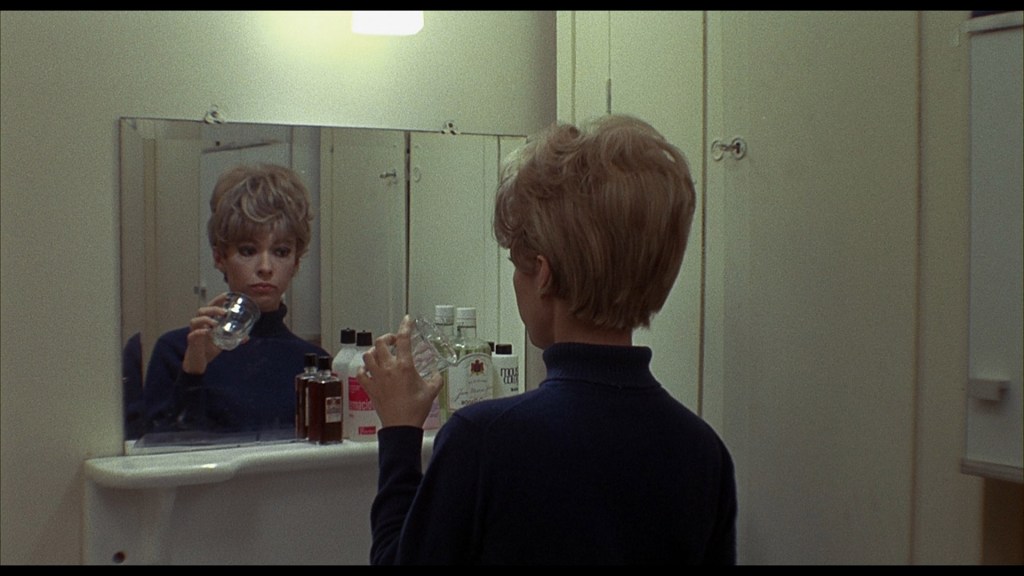
Cornfield’s direction makes extensive use of mirrors and reflections, subtly reinforcing the theme of duality and the fractured identities of the characters. One memorable shot features Bud gazing at his own reflection, the fractured image symbolizing his internal conflict and moral ambiguity. Such visual motifs deepen the film’s exploration of identity and self-deception, suggesting that the real prison is not the physical house but the guilt and disillusionment that haunt the characters.
Marlon Brando’s portrayal of Bud invites comparisons to some of his other iconic antiheroes, such as Terry Malloy in On the Waterfront and Colonel Kurtz in Apocalypse Now. Like Terry, Bud is a man burdened by guilt and torn between self-preservation and doing what he knows is right. However, where Terry ultimately finds a path to redemption, Bud seems trapped in a cycle of moral compromise and despair.
This portrayal can also be seen as a precursor to the morally ambiguous protagonists that would dominate 1970s cinema, embodying a shift away from clear-cut heroes and villains to more complex, psychologically tormented characters. Brando’s ability to imbue Bud with both menace and vulnerability adds a tragic dimension to the character, making him one of the more nuanced figures in Brando’s filmography.
The Night of the Following Day is a flawed yet fascinating thriller that lingers in the mind. Its exploration of guilt, betrayal, and moral ambiguity, combined with strong performances and a suffocating atmosphere, make it a unique entry in the crime genre. While not without its shortcomings—particularly its uneven pacing and ambiguous ending—the film’s strengths lie in its refusal to offer easy answers or neat resolutions.



 spryfilm.com