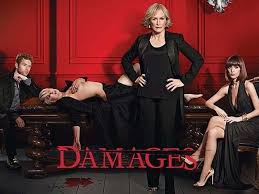
“Damages: The Complete Series” (2007-2012)
Television

Fifty Nine Episodes
Created by: Todd A. Kessler, Glenn Kessler and Daniel Zelman
Featuring: Glenn Close, Rose Byrne, Željko Ivanek, Noah Bean, Tate Donovan, Ted Danson, Anastasia Griffith, Marcia Gay Harden, Timothy Olyphant, William Hurt, Campbell Scott, Martin Short, Dylan Baker, John Goodman and Ryan Phillippe
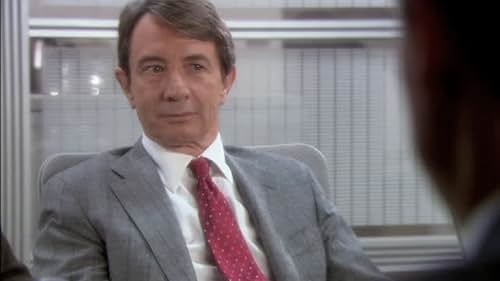
Martin Cutler: “If you were a man I’d kick the living dog-shit out of you.”
Patty Hewes: “If you were a man I’d be worried.”
Damages is a legal thriller that dives deep into the murky waters of morality, power, and ambition. Created by Todd A. Kessler, Glenn Kessler, and Daniel Zelman, the series aired for five seasons, exploring the twisted paths of law and justice through the eyes of its main characters: the ruthless high-stakes litigator Patty Hewes (Glenn Close) and her protégé-turned-adversary Ellen Parsons (Rose Byrne). The show is a masterclass in storytelling, blending legal drama with psychological thrills, and its unique structure—employing intricate flashbacks and non-linear timelines—keeps viewers perpetually on edge.
At its core, Damages revolves around the high-stakes world of corporate law, where morality is often sacrificed at the altar of victory. Each season presents a new case, but the overarching narrative is the evolving and volatile relationship between Patty and Ellen.
The series opens with a murder mystery: Ellen Parsons, covered in blood, stumbles through the streets of New York. From this shocking scene, the show jumps back six months earlier, unraveling how Ellen, a fresh law school graduate, became entangled in the web of Patty Hewes—a lawyer known for her willingness to win at any cost.
The first season’s main case involves Arthur Frobisher (Ted Danson), a billionaire accused of fraud and insider trading. As Patty and her team take on Frobisher, the lines between justice and vengeance blur. The flash-forward technique creates a puzzle-like narrative, revealing pieces slowly, making each episode a crucial part of the larger picture.
Glenn Close’s portrayal of Patty Hewes is nothing short of electrifying. Patty is manipulative, brilliant, and terrifyingly ruthless. She embodies a paradox—fighting for justice while employing morally ambiguous methods. Her complex motivations, stemming from a need to control and dominate, make her one of television’s most compelling antiheroes.
Patty’s relationship with her son, Michael, and her tumultuous past add layers to her character, revealing a woman who is as vulnerable as she is formidable. The series continually challenges viewers to decide whether Patty is a hero, a villain, or something in between.
Rose Byrne’s evolution as Ellen Parsons is equally impressive. Initially, Ellen appears as an idealistic and naive lawyer, eager to make a difference. However, under Patty’s tutelage—and through a series of betrayals and personal losses—Ellen transforms into a hardened, strategic player capable of outmaneuvering even Patty. Ellen’s quest for justice becomes increasingly personal, culminating in a power struggle that is as emotional as it is strategic.
The shifting dynamics between Ellen and Patty form the emotional core of the series, exploring themes of trust, betrayal, and the cost of ambition.
Damages excels not just in its lead characters but also in its supporting cast. Ted Danson’s Arthur Frobisher, a billionaire with a penchant for self-preservation, is both despicable and pitiable. Zeljko Ivanek’s portrayal of Ray Fiske, a tortured attorney grappling with loyalty and guilt, earned him a well-deserved Emmy. His tragic arc in the first season remains one of the most haunting elements of the series.
The show’s later seasons introduced equally compelling antagonists, such as John Goodman’s religiously motivated businessman and Ryan Phillippe’s mysterious whistleblower. Each character adds a unique flavor to the narrative, ensuring that no season feels repetitive or stale
Damages dissects the American legal system, exposing its vulnerabilities and the ease with which power can corrupt. It delves into themes of revenge, justice, and moral compromise, often posing difficult questions: Does the end justify the means? Can justice ever truly be served without a cost?
The series also explores the personal toll of ambition. Patty’s sacrifices—including her relationships and even her humanity—underscore the loneliness that accompanies her quest for power. Ellen’s journey, meanwhile, reflects the loss of innocence and the transformative impact of trauma and betrayal.
The writing in Damages is meticulously crafted, with each episode peeling back layers of the central mystery. The show’s signature use of flash-forwards is not merely a gimmick but a storytelling technique that enhances suspense. The audience, aware of the outcome but not the cause, is compelled to unravel the mystery alongside the characters.
However, the show’s complexity can occasionally be a double-edged sword. Some viewers may find the dense plotting and shifting timelines overwhelming, particularly in the later seasons. The fifth and final season, while providing closure, also polarizes audiences with its more introspective and subdued tone.
The visual style of Damages complements its dark themes. The muted color palette, combined with stark lighting, evokes a noir atmosphere that mirrors the moral ambiguity of its characters. The use of close-ups emphasizes the psychological tension, making even the quietest scenes feel fraught with danger.
The soundtrack, with its haunting melodies and minimalist score, heightens the suspense. The opening credits, featuring ominous music and abstract imagery, set the tone for the morally complex journey ahead.
While Damages has been lauded for its intricate plotting and strong performances, it has not been without criticism. Some argue that the series’ reliance on flash-forwards and convoluted plot twists can feel overly complex, demanding a level of attention that casual viewers may find taxing. Additionally, certain plotlines—especially in the middle seasons—occasionally veer into melodrama, risking a loss of the grounded realism that defines its best moments.
Despite these flaws, the show’s ambitious storytelling and willingness to embrace moral ambiguity set it apart from standard legal dramas.
Damages left an indelible mark on the legal thriller genre, paving the way for shows that blend procedural elements with serialized storytelling. Its influence can be seen in series like Suits and The Good Wife, which borrow elements of its moral complexity and character-driven narratives.
Glenn Close’s performance, earning two Emmy Awards, is arguably one of the greatest in television history, bringing a Shakespearean gravitas to Patty Hewes. Rose Byrne’s transformation throughout the series is equally commendable, proving that Damages was as much about the apprentice surpassing the master as it was about the law.
In the end, Damages is a searing examination of power, ethics, and the cost of winning. It challenges viewers to reflect on the nature of justice and the lengths to which people will go to secure it. With its complex characters, moral dilemmas, and a narrative that demands full attention, Damages is not just a legal thriller—it is a profound meditation on the darkness that resides in us all.
For those who appreciate morally ambiguous characters, intricate plotting, and a willingness to confront the darker sides of human nature, Damages is an essential watch.



 spryfilm.com