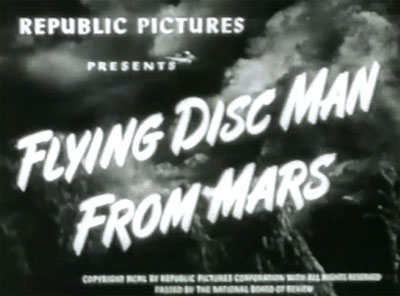
“Flying Disc Man from Mars” (1950)
Science Fiction

Running Time: 167 minutes
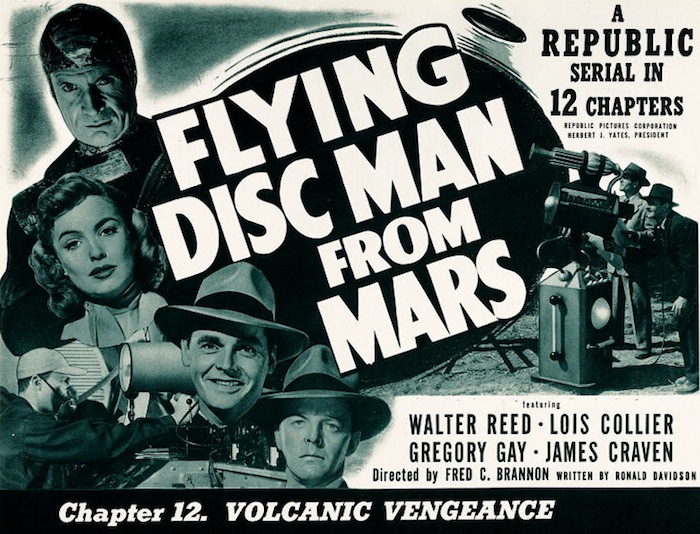
Written by: Ronald Davidson
Directed by: Fred C. Brannon
Featuring: Walter Reed, Lois Collier, Gregory Gaye, James Craven, Harry Lauter and Richard Irving
Trent: “You know, I’ve never flown one of these things before.”
Flying Disc Man from Mars is a fascinating relic from the 1950s, encapsulating an era when science fiction was deeply intertwined with Cold War anxieties and the newfound allure of space exploration. Directed by Fred C. Brannon, this 12-part Republic serial—first released in 1950—offered audiences of the time a thrilling, albeit sometimes campy, depiction of extraterrestrial menace and human ingenuity. For modern viewers, it serves as both a time capsule of mid-20th century storytelling and a testament to the boundless imagination that characterized early science fiction cinema.
The story kicks off with the arrival of Mota, the titular Flying Disc Man from Mars, on Earth. Mota, portrayed with theatrical flair by Gregory Gaye, is an alien agent aiming to subjugate humanity with the help of local collaborators. His diabolical plan involves using advanced Martian technology to create a global dictatorship—an overt metaphor for contemporary fears of communism and totalitarianism. In his quest for domination, Mota enlists Dr. Bryant, a disgruntled scientist with questionable morals, played by James Craven.
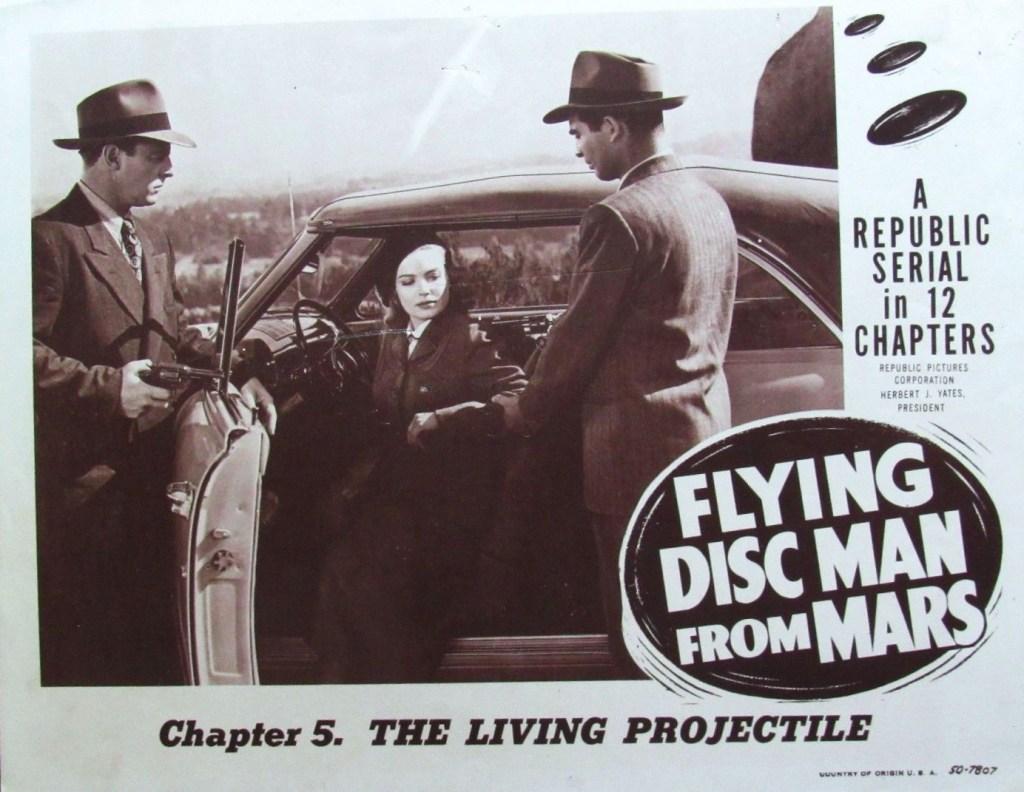
Enter Kent Fowler, the stalwart protagonist, played by Walter Reed. As a pilot and all-around action hero, Fowler is determined to thwart Mota’s plans and save humanity. Fowler’s team includes Helen Hall, his resourceful assistant, portrayed by Lois Collier, whose contributions to the story, while somewhat limited by the gender roles of the era, add a touch of dynamism to the serial.
“Flying Disc Man from Mars” unabashedly reflects the cultural zeitgeist of post-World War II America. The looming threat of the Cold War is evident in Mota’s intentions, casting him as a thinly veiled allegory for foreign adversaries. This Martian invader, with his advanced weaponry and plans for global domination, mirrored societal fears of Soviet technological superiority and infiltration. Meanwhile, Kent Fowler’s unyielding patriotism and bravery embody the American ideal of resistance and resilience.
This ideological backdrop elevates the serial beyond mere pulp entertainment. It serves as a cinematic artifact of America’s psychological state during a time of uncertainty and paranoia. The interplay between Mota’s alien origin and his very human political aspirations suggests that the dangers facing Earth might not be entirely “otherworldly” but instead a magnified reflection of the era’s terrestrial conflicts.
For a low-budget serial, “Flying Disc Man from Mars” is surprisingly ambitious in its visual scope. Republic Pictures, renowned for its serials, was a pioneer in special effects of the time. While the effects may appear rudimentary by today’s standards, they possess a charming ingenuity that continues to captivate.
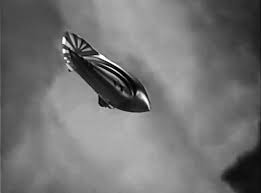
The flying saucer sequences are a highlight, achieved using models and wire rigs that, while unconvincing in high definition, were likely impressive to audiences in 1950. The alien technology, represented through blinking lights, knobs, and ray guns, carries a delightful retro-futuristic aesthetic. These elements, combined with stock footage and practical effects, create a visually cohesive, if not entirely believable, depiction of Martian menace.
Walter Reed’s portrayal of Kent Fowler is emblematic of the era’s serial heroes: stoic, courageous, and unwaveringly moral. While his character lacks depth or nuance, Reed’s earnest performance imbues Fowler with a likability that anchors the serial. Lois Collier’s Helen Hall, though constrained by 1950s gender tropes, provides moments of resourcefulness and determination that hint at a more progressive portrayal of women.
Gregory Gaye’s Mota is an archetypal villain, delivering his lines with an almost Shakespearean gravitas that borders on camp. His portrayal is theatrical yet engaging, making Mota a memorable antagonist despite his one-dimensional motivations. James Craven’s Dr. Bryant, on the other hand, represents a more grounded threat, serving as a cautionary tale about the perils of human greed and disillusionment.
As with many serials of the time, the episodic structure of “Flying Disc Man from Mars” alternates between moments of exposition and action-packed cliffhangers. Each chapter concludes with a nail-biting scenario—from plane crashes to shootouts—designed to entice viewers back for the next installment. While this format effectively sustains tension, it occasionally sacrifices narrative coherence in favor of sensationalism.
For modern audiences accustomed to sophisticated storytelling, the repetitive nature of the episodes and the formulaic resolutions can feel dated. However, these elements are intrinsic to the serial format and contribute to its nostalgic charm.
“Flying Disc Man from Mars”, while not a masterpiece, has left an indelible mark on the history of science fiction cinema. It is a precursor to the more complex and polished films that would define the genre in later decades. The serial’s themes, aesthetics, and narrative tropes influenced countless filmmakers and paved the way for the mainstream acceptance of science fiction as a legitimate cinematic genre.
Moreover, the serial is a valuable educational tool for understanding the intersection of art, culture, and politics in 1950s America. Its simplistic depiction of good versus evil, combined with its Cold War undertones, provides insight into the era’s collective psyche and the role of media in shaping public perception.
“Flying Disc Man from Mars” is a quintessential example of mid-century science fiction, offering thrills, camp, and a dash of cultural introspection. While its technical and narrative limitations may deter some viewers, it remains an enjoyable romp for fans of vintage cinema and an essential study for those interested in the evolution of the science fiction genre. To watch it today is to travel back in time, experiencing the hopes, fears, and fantasies of a world standing on the brink of the Space Age.



 spryfilm.com