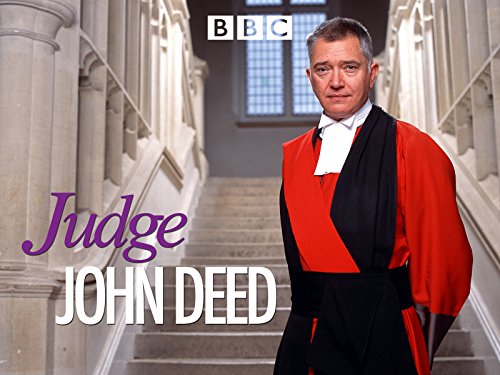
“Judge John Deed” (2001 – 2007)
Television Drama

Twenty Nine Episodes
Created by: G.F. Newman
Featuring: Martin Shaw, Jenny Seagrove, Barbara Thorn, Louisa Clein and Simon Ward
Judge John Deed: [sentencing the producer of a TV game show after a contestant has died] “Celebrity. The pursuit of the talentless, by the mindless. It’s become a disease of the twenty-first century. It pollutes our society, and it diminishes all who seek it, and all who worship it. And you must bear some of the responsibility for foisting this empty nonsense onto a gullible public.”
Judge John Deed, a captivating British legal drama, centers around the eponymous High Court judge, portrayed with unwavering conviction by Martin Shaw. Deed is a man of unwavering principles, a maverick who refuses to bend to the pressures of the establishment, even when it means jeopardizing his career.
The series delves into a wide array of complex legal cases, each episode exploring a different social or political issue. From corporate corruption and medical negligence to racial discrimination and environmental damage, Deed tackles them all with a passionate commitment to justice. His courtroom battles are often intense and dramatic, filled with sharp legal arguments and witty repartee.
Beyond the courtroom, Deed’s life is equally compelling. His personal relationships, particularly his tumultuous love life, add another layer of depth to his character. His romantic entanglements, often with women involved in the cases he presides over, provide a source of both humor and conflict.
The supporting cast is equally impressive, with standout performances from Jenny Seagrove as his ex-wife and colleague, and Oliver Ford Davies as his formidable nemesis, Sir Ian Rochester. The chemistry between the actors is palpable, creating a sense of realism and intimacy.
One of the show’s greatest strengths is its ability to entertain while also provoking thought. Each episode raises important questions about the law, morality, and the role of the judiciary in society. It challenges viewers to question their own assumptions and consider the complexities of justice.
At the heart of it all is Sir John Deed (played with charismatic rumpledness by Martin Shaw), a High Court judge who, let’s be honest, is more renegade than robed. Deed is a brilliant legal mind, fiercely independent, and deeply principled. He’s not afraid to challenge the status quo, question authority, and, most importantly, follow his conscience even when it means putting his career and personal life on the line. This isn’t a saintly man; he’s flawed and often impulsive, but his dedication to truth and justice is unwavering.
This unwavering dedication is both the show’s greatest strength and its occasional frustration. He often bends the rules, takes unorthodox methods, and, let’s face it, sometimes acts recklessly. This makes him compelling to watch, but also sometimes infuriating. You find yourself rooting for him despite (or perhaps because of) his chaotic approach. He’s the antithesis of the cold, detached judge; he’s emotionally invested in his cases, often blurring the lines between objectivity and activism.
While the courtroom scenes are undeniably compelling, “Judge John Deed” is more than just procedural drama. It’s a show deeply concerned with societal issues, often tackling controversial and topical subjects. From environmental protests to medical malpractice to political corruption, the series fearlessly dives into the grey areas of morality and power. It’s not afraid to challenge the audience’s assumptions and force us to confront the uncomfortable realities of our world.
The writing is sharp, often biting, and consistently thought-provoking. The dialogue is intelligent and nuanced, and the cases are rarely straightforward. They often feature multiple layers of deceit and conflicting perspectives, highlighting the complexity of the legal system and the human condition within it. The show doesn’t offer easy answers; instead, it invites us to grapple with the ambiguities and ethical dilemmas alongside Deed.
Beyond Deed, the show boasts a rich and complex ensemble of supporting characters. From his brilliant but often conflicted ex-wife, Jo Mills QC (played with captivating intensity by Jenny Seagrove), to the ambitious and politically savvy Sir Monty Everard (the ever-excellent Simon Chandler), the cast brings depth and nuance to their roles. Each character contributes to the show’s exploration of power, ambition, and morality, often acting as foils to Deed’s uncompromising idealism.
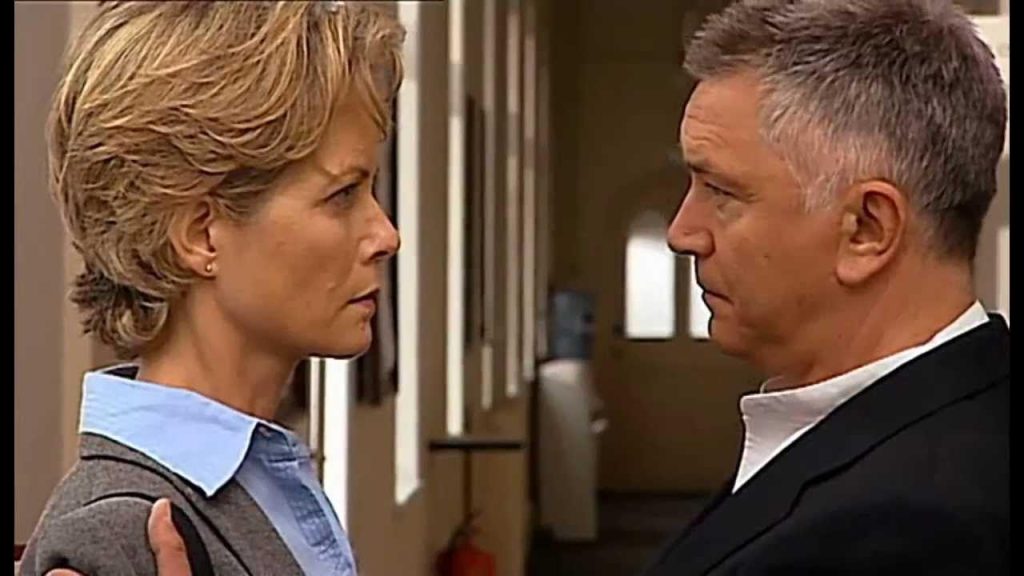
The relationships within the show are complex and messy, mirroring the chaotic nature of Deed’s life. His relationship with Jo, in particular, is a central thread throughout the series, a constant push and pull of love, respect, and professional rivalry. The chemistry between Shaw and Seagrove is undeniable, adding another layer of compelling drama to the mix.
“Judge John Deed” is not a show for the faint of heart. The pacing can be uneven, sometimes slow and deliberate, other times frantic and high-stakes. The tone can shift from intense courtroom battles to quiet, introspective moments, reflecting the internal conflicts that plague Deed. This unpredictable nature can be frustrating at times, but it also keeps the show engaging and avoids predictability.
It’s worth noting that the series does occasionally venture into territory that might feel a bit far-fetched or melodramatic. Some plotlines, particularly in the later seasons, can feel overly convoluted or reliant on coincidence. However, even in these moments, the show’s commitment to exploring complex themes and presenting compelling characters keeps it watchable.
Despite being a product of the early 2000s, “Judge John Deed” remains remarkably relevant today. Its exploration of corruption, power imbalances, and the struggle for justice continues to resonate in our current political and social climate. The show’s core message – that individuals have a moral responsibility to speak truth to power, even at great personal cost – is as pertinent now as it was when the series first aired.
“Judge John Deed” is not perfect. It’s messy, flawed, and often frustrating. But it’s also brilliant, thought-provoking, and utterly captivating. It’s a show that demands your attention and doesn’t shy away from challenging your perspectives. It’s a show that stays with you long after the credits roll, prompting reflection on the complexities of justice, morality, and the human condition. If you’re looking for a legal drama that goes beyond the standard tropes and aren’t afraid to grapple with difficult themes, then give “Judge John Deed” a chance. You might just find yourself as captivated by its chaotic brilliance as I am. Just be prepared for a rollercoaster ride. You’ve been warned.
However, the show is not without its flaws. Some viewers may find Deed’s unwavering idealism to be unrealistic or even naive. The romantic subplots, while adding intrigue, can sometimes feel contrived or overly dramatic. Additionally, the series’ later seasons may not have quite the same impact as the earlier ones.
Despite these minor shortcomings, Judge John Deed remains a compelling and thought-provoking drama. It is a show that celebrates the power of individual conscience and the importance of fighting for what is right, even in the face of overwhelming odds. With its strong performances, engaging storylines, and sharp social commentary, it is a series that continues to resonate with audiences today.





 spryfilm.com