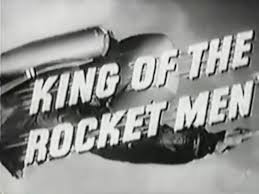
“King of the Rocket Men” (1942)
Sci-Fi

Running Time: 1657/ 65 minutes
Written by: Royal Cole, William Lively and Sol Shor
Directed by: Fred C. Brannon
Featuring: Tristram Coffin, Mae Clarke, Don Haggerty, House Peters, Jr., James Craven and I. Stanford Jolley
Glenda Thomas: “Am I glad you caught up with me again.”
Jeffrey King: “It’s getting to be a habit that I’d like to break.”
Glenda Thomas: “Well, I was only trying to help.”
Jeffrey King: “The best you can do is help yourself to a ride back to town. The highway is right over there.”
King of the Rocket Men is a charming piece of cinema history that embodies the thrilling spirit of post-WWII American adventure serials. Released in 1949, it offers an engaging mix of science fiction, action, and pulp-style heroics, making it a formative step in the legacy of superhero cinema.
The story centers on Jeff King (Tristram Coffin), a scientist working with a clandestine research group known as Science Associates. After discovering that one of their own has turned villain, King dons a rocket-powered flight suit to combat the evildoer known as Dr. Vulcan. The narrative unfolds across 12 chapters, each ending in a dramatic cliffhanger that epitomizes the serial format of the era.
Pioneering Special Effects: The flying sequences are remarkably effective for their time, showcasing the ingenuity of Republic Pictures’ special effects team. While the effects may appear rudimentary by modern standards, they carry a vintage charm that sparks admiration for the creativity of 1940s cinema.
Fast-Paced Storytelling: True to its serial roots, the plot races from one perilous situation to another, maintaining a gripping pace that rarely leaves room for dull moments.
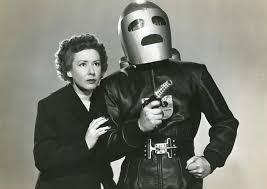
Iconic Hero Design: The sleek, minimalist rocket suit with its bullet-shaped helmet is undeniably iconic. Its design remains an inspiration for subsequent iterations of jetpack-powered heroes, most notably Disney’s The Rocketeer(1991).
Tristram Coffin’s Performance: Coffin brings a likable determination to Jeff King, anchoring the story with a straightforward but earnest heroism that fits the time period.
Simplistic Characters: As is typical for serials, character development takes a backseat to action. The villains, including the shadowy Dr. Vulcan, lack depth, and their motivations remain generic.
Formulaic Structure: Each episode largely adheres to the same pattern: setup, conflict, chase, and cliffhanger. While this is a hallmark of serials, modern audiences may find it repetitive.
Dated Effects and Production Values: The low budget occasionally shows, with noticeable use of stock footage and sparse sets. The “science” behind the rocket suit is delightfully implausible, adding to the era’s naive view of technology.
When viewed through the lens of cinematic history, King of the Rocket Men represents both an artifact of its time and a creative precursor to modern superhero and science fiction genres. It’s a classic Republic Pictures serial that revels in daring stunts, melodramatic intrigue, and the promise of scientific advancement—all hallmarks of a postwar optimism for the future.
The serial begins with a mystery: members of the prestigious Science Associates are being mysteriously murdered by Dr. Vulcan, a villain who aims to steal their advanced technologies for his own nefarious plans. After narrowly escaping an attempt on his life, Jeff King, the stoic protagonist, vows to stop Vulcan. Armed with the newly developed experimental rocket suit created by his colleague Dr. Millard, Jeff King becomes the titular “Rocket Man.”
The serialized chapters follow Jeff as he battles Vulcan’s henchmen, thwarts sabotage attempts, and uncovers a plot to unleash catastrophic destruction on New York City. Each chapter builds to a suspenseful cliffhanger, ranging from exploding planes to collapsing buildings, designed to bring audiences back week after week.
Direction and Cinematography
Fred C. Brannon, a veteran of Republic Pictures’ serials, helms King of the Rocket Men with efficiency, crafting kinetic action sequences despite a limited budget. The camerawork emphasizes movement and spectacle, while clever editing tricks keep the pacing brisk.
Action and Stunts
For an era when CGI was inconceivable, the filmmakers relied on stuntmen and innovative visual effects techniques. Acclaimed stuntman David Sharpe brought dynamic energy to the role, performing much of the action in costume during ground-bound sequences. The flying scenes used a mix of models, wirework, and rear-projection technology to convincingly simulate flight for its time.
Special Effects
Howard Lydecker, a pioneer in practical effects, created some of the era’s most memorable visuals for the serial. Miniature models of planes and buildings, often set ablaze or blown to pieces, deliver explosions and crashes with impressive scale for a B-movie production. The shots of the Rocket Man in mid-flight, using a life-size mannequin mounted on wires, remain both charming and inventive.
Notable Characters
Jeff King (Tristram Coffin)
While not the most nuanced hero, Jeff King serves as a stand-in for the dashing, all-American ideal of 1940s protagonists. His stoic resolve contrasts with his inventive reliance on technology rather than brute force, paving the way for more cerebral science-based heroes like Tony Stark/Iron Man in later years.
Glenda Thomas (Mae Clarke)
As the typical “intrepid reporter” love interest, Glenda adds a touch of wit to the serial. Though her role aligns with the gender norms of the time, her courage and tenacity make her more than a mere damsel in distress, providing occasional comic relief and investigative insights.
Dr. Vulcan
The shadowy antagonist epitomizes the scheming mastermind trope. Despite his lack of a physical presence until the final chapters, his calculating menace is palpable. Vulcan’s eventual unmasking may seem anticlimactic today but was likely a thrill for 1949 audiences.
Thematic Relevance
King of the Rocket Men reflects the cultural zeitgeist of the late 1940s: a mix of wariness toward unchecked scientific advancements and hope for a better future through innovation. The rocket suit, a marvel of fictional technology, symbolizes the aspirations for human flight and exploration—ideas that would gain serious momentum in the real-world space race of the following decades.
The serial also addresses themes of trust and betrayal in science, with its plot hinging on the dangerous misuse of technology. Dr. Vulcan’s sabotage speaks to Cold War-era fears of espionage and technological theft, mirroring contemporary anxieties in a digestible, action-packed format.
Cultural Impact and Legacy
Beyond its immediate success as a Saturday matinee crowd-pleaser, King of the Rocket Men cemented the rocket-powered hero as a staple of American science fiction. Its enduring influence can be seen in projects like:
The Rocketeer (1991): Dave Stevens’ graphic novel and subsequent film adaptation are a loving homage, drawing clear visual inspiration from the Rocket Man design.
Iron Man and Other Superheroes: Jeff King’s reliance on a powered suit was an early prototype for countless armored heroes in popular media.
Jetpack Imagery in Pop Culture: The concept of a flying human with a jetpack became an enduring visual motif, appearing in everything from James Bond films (Thunderball) to video games (Fallout and Jetpack Joyride).
Audience Appeal Today
While its episodic structure and dated production values might alienate some modern viewers, King of the Rocket Men is a treasure trove for fans of vintage cinema. It captures the joyful simplicity of a time when science fiction was driven by optimism and unbounded imagination. Its melodramatic cliffhangers, hokey dialogue, and rudimentary effects are part of its appeal, offering a charming contrast to today’s polished, CGI-laden blockbusters.
Recommended for viewers who appreciate old-school action, sci-fi historians, and collectors of cultural nostalgia. It’s a thrilling time capsule of an era where cinema dreamed as boldly as its heroes soared.
Despite its imperfections, King of the Rocket Men holds an important place in the evolution of science fiction and superhero media. The imagery of a man soaring through the sky with the aid of a jetpack captured imaginations in 1949 and continues to resonate today.
If you’re a fan of classic sci-fi or historical curiosities in film, King of the Rocket Men is a delightful viewing experience. It might not possess the narrative or technical sophistication of contemporary works, but its earnest spirit and historical significance make it a must-see for aficionados of early adventure filmmaking.
This serial is best enjoyed as a nostalgic trip to a bygone era when heroes were defined by their courage, and science fiction was bound only by the filmmakers’ imaginations.
Special Features and Technical Specs:
- 1080p high-definition presentation of all 12 chapters
- Audio Commentary on select chapters by Heath Holland from Cereal At Midnight podcast (2024)
- Lost Planet Airmen – 1080p high-definition presentation of the feature film version of the serial
- Across the Stratosphere – Video Essay by film historian Phillipa Berry (2024)
- 2hr 48min approx.
- Original Aspect Ratio 1.33:1
- Audio English LPCM 2.0 Mono


 spryfilm.com