
“The Ninth Gate” (1999)
Horror

Running Time: 133 minutes
Written by: John Brownjohn, Roman Polanski and Enrique Urbizu
Directed by: Roman Polanski
Featuring: Johnny Depp, Lena Olin, Frank Langella, James Russo, Jack Taylor and Emmanuelle Seigner
Boris Balkan: “There’s nothing more reliable than a man whose loyalty can be bought for hard cash.”
Roman Polanski’s The Ninth Gate stands as a dark, atmospheric blend of mystery and occultism, exploring themes of greed, power, and the seductive allure of forbidden knowledge. Adapted from Arturo Pérez-Reverte’s novel The Club Dumas, the film follows rare book dealer Dean Corso (Johnny Depp) on a journey to authenticate a diabolical text said to grant its reader access to the gates of hell. It is a slow-burning thriller that straddles the line between supernatural intrigue and existential dread, enveloped in Polanski’s signature tone of ambiguity and unease.
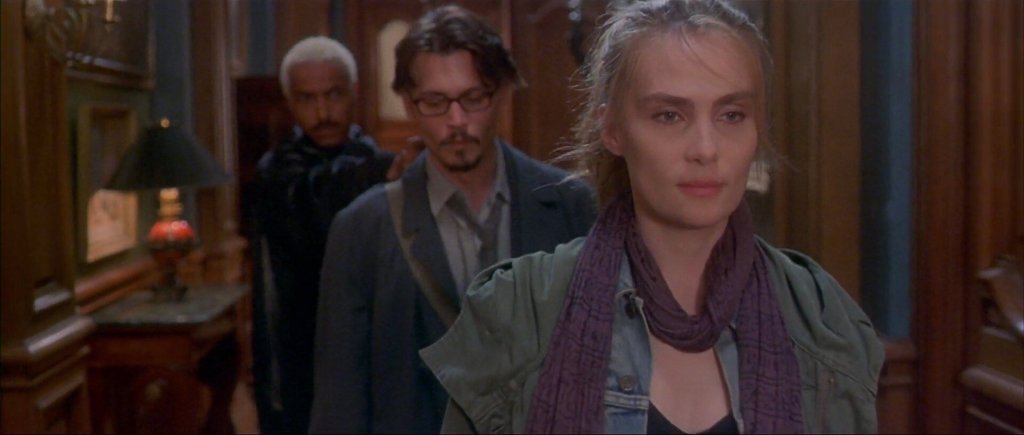
The film’s narrative is built around Corso’s commission by a wealthy collector, Boris Balkan (Frank Langella), to verify the authenticity of The Nine Gates of the Kingdom of Shadows. This rare 17th-century book is rumored to have been co-authored by Satan himself. Balkan owns one of the only three known copies and is obsessed with uncovering its secrets. Corso embarks on a globetrotting investigation, comparing Balkan’s copy to the other two, which are held by eccentric collectors in Portugal and France. Along the way, he encounters mysterious deaths, cryptic symbols, and a seductive, unnamed woman (Emmanuelle Seigner), whose supernatural nature becomes increasingly evident.
The film thrives on its slow pace, methodically unraveling layers of intrigue while immersing viewers in the arcane world of rare books and Satanic lore. The plot’s ambiguity is both its strength and its weakness. While it compels audiences to question what is real versus imagined, the lack of definitive answers may frustrate viewers seeking concrete resolutions.
Johnny Depp’s portrayal of Corso is a highlight. He eschews the heroic tropes often associated with lead characters, presenting Corso as a morally ambiguous, self-serving antihero. Depp’s understated performance captures Corso’s cynicism and gradual unraveling as he delves deeper into the book’s mysteries. Frank Langella is captivating as Balkan, exuding an imposing presence and megalomania that perfectly complements the film’s dark tone.
Emmanuelle Seigner’s enigmatic character remains one of the film’s most puzzling elements. Her otherworldly demeanor and cryptic role in Corso’s journey add to the film’s supernatural allure, though her character often feels underexplored. Lena Olin’s portrayal of Liana Telfer, the seductive widow with her own stake in the book’s secrets, is deliciously over-the-top, injecting moments of theatrical flair into the narrative.
Visually, The Ninth Gate excels in creating an oppressive, Gothic atmosphere. The cinematography by Darius Khondji bathes the film in muted tones, creating a sense of unease that permeates every frame. The European locales—crumbling libraries, dimly lit mansions, and foggy countryside—serve as perfect backdrops for the story’s occult underpinnings. Polanski’s meticulous attention to detail is evident in the design of the book itself, with its woodcut illustrations playing a pivotal role in the narrative.
Wojciech Kilar’s haunting score underscores the film’s unsettling mood. The music shifts seamlessly between subtle, eerie undertones and dramatic crescendos, enhancing the tension without overpowering the visuals.
The film explores themes of ambition, the corrupting nature of power, and humanity’s eternal fascination with the unknown. Corso’s journey is as much an exploration of his own moral boundaries as it is a quest for the book’s secrets. The titular gates symbolize the dual nature of human curiosity—both the pursuit of knowledge and the temptation to overreach.
The ambiguity surrounding the supernatural elements is a key aspect of the film’s thematic depth. While the narrative hints at demonic forces and divine interventions, it refrains from providing definitive proof, leaving the audience to ponder the true nature of Corso’s journey.
Despite its strengths, The Ninth Gate is not without flaws. The film’s deliberate pacing may feel sluggish, particularly for viewers expecting a more action-driven narrative. The climax, while visually striking, leaves many questions unanswered, which can feel unsatisfying after the intricate buildup. Additionally, some secondary characters lack depth, serving more as plot devices than fully realized individuals.
The film’s reliance on ambiguity is a double-edged sword. While it invites interpretation and discussion, it risks alienating viewers who prefer clarity in storytelling. For instance, the exact role of Seigner’s character and the true nature of Balkan’s fate are left frustratingly vague.
Expanding on The Ninth Gate, the film’s allure lies in how it integrates layers of storytelling, character development, and thematic exploration, challenging audiences to navigate a maze of intellectual and emotional engagement. Its enigmatic quality makes it a rewarding study for those willing to invest deeply in its subtext and aesthetic choices.
The central mystery of The Ninth Gate revolves around uncovering the authenticity and purpose of The Nine Gates of the Kingdom of Shadows. Unlike conventional thrillers that rely on overt supernatural manifestations or dramatic action sequences, the film’s power comes from its subtler elements: coded messages, symbolic illustrations, and nuanced character interactions. Each woodcut illustration in the book plays a pivotal role, not just as plot devices but as riddles within riddles that demand interpretation.
The narrative operates on dual levels: the surface plot of Corso’s quest and the underlying exploration of metaphysical themes like the price of knowledge and the boundaries of human ambition. The film intertwines these layers without spelling them out, giving viewers the sense that they, too, are participants in unraveling the mystery. This approach mirrors the works of Stanley Kubrick, where meaning is often implied rather than directly presented.
Corso as the Antihero: A Study in Moral Ambiguity
Dean Corso is a refreshingly atypical protagonist. In most films of this nature, the lead might be a heroic figure battling against forces of evil. Not so with Corso. He begins as a purely transactional character—a rare book dealer willing to exploit his expertise for profit without a moral compass. Depp’s portrayal makes Corso both relatable and repellent, grounding his character in a gritty realism that makes his transformation throughout the film more compelling.
Unlike Balkan, whose ambitions are grandiose and apocalyptic, Corso’s motivations are more self-serving. This contrast between the characters serves as a meditation on the degrees of human ambition. Corso’s journey, from cynicism to genuine curiosity and, finally, to obsession, mirrors the audience’s own shifting engagement with the narrative.
Polanski’s decision to leave much of the supernatural elements ambiguous is central to the film’s appeal. The audience is never fully sure if the events they’re witnessing are genuinely occult in nature or simply the result of human greed and manipulation. This deliberate vagueness invites multiple interpretations:
Is the woman (Emmanuelle Seigner) truly a supernatural entity? Her physical prowess, cryptic advice, and eerie calm suggest that she might be a demonic guide—or even Satan themselves. Yet the film provides no concrete evidence.
Does the book hold actual power? While Balkan’s climactic ritual appears to fail spectacularly, Corso’s final discovery and apparent ascension to the ninth gate imply that the book does contain otherworldly truths. This dichotomy raises questions about Balkan’s failure—was it due to human arrogance or a deeper truth about the nature of evil?
The ambiguity allows the film to transcend the confines of a typical horror-thriller and venture into philosophical territory. It reflects Polanski’s broader thematic concerns, seen in his other works like Rosemary’s Baby, where the line between the psychological and supernatural is intentionally blurred.
One of The Ninth Gate’s most compelling aspects is its atmosphere. The film leans heavily on its setting to create tension and immerse the viewer in its world. Each location, from dusty bookshops to opulent mansions, is richly textured and alive with subtle details. Polanski uses space to evoke both wonder and dread—libraries feel like temples to hidden knowledge, and shadowy corridors seem to stretch endlessly, hinting at the mysteries lurking within.
Lighting plays a crucial role in building this atmosphere. Scenes are often shrouded in dim light, with flickering candles and muted sunlight creating a chiaroscuro effect that evokes the works of Baroque painters. The interplay between light and shadow mirrors the film’s thematic concerns: the eternal struggle between knowledge and ignorance, good and evil.
As a director, Polanski brings a distinctive sensibility to The Ninth Gate. Known for his ability to blend psychological horror with visual elegance, he uses these talents to create a world that feels simultaneously grounded and otherworldly. Polanski’s pacing is deliberate, allowing the story to unfold organically and giving the audience time to absorb the film’s nuances.
His framing choices are particularly notable. Polanski often uses symmetrical compositions to evoke a sense of order and control, only to subvert them when chaos or violence intrudes. This visual technique mirrors the film’s thematic tension between humanity’s desire for order (represented by the quest for knowledge) and the inherent chaos of the unknown.
At its core, The Ninth Gate is a study of humanity’s insatiable desire for power and the lengths to which individuals will go to obtain it. Each character represents a different facet of this desire:
Boris Balkan: The archetypal megalomaniac, Balkan is willing to sacrifice everything—including his humanity—in his pursuit of ultimate knowledge. His failure is a cautionary tale about the dangers of hubris.
Liana Telfer: Liana’s obsession with reclaiming the book reflects a more personal form of ambition, rooted in lust and vanity. She serves as a foil to Balkan’s grandiose goals, illustrating the varied ways ambition manifests.
Dean Corso: Initially indifferent to the book’s supposed power, Corso’s growing fascination reveals how easily even the most cynical individuals can be drawn into the allure of the unknown.
These characters, combined with the film’s ambiguous ending, suggest that the pursuit of forbidden knowledge is not inherently evil but deeply human. It is the choices we make in that pursuit—and the motivations driving us—that determine our fate.
The Ninth Gate is not a film for everyone. Its leisurely pace, open-ended narrative, and cerebral approach to horror may alienate viewers seeking instant gratification or conventional scares. However, for those willing to engage with its layers of meaning and immerse themselves in its haunting atmosphere, it offers a richly rewarding experience.
Roman Polanski crafts a film that is both timeless and timely, a meditation on the eternal struggle between knowledge and ignorance, ambition and humility. It is a film that invites—and rewards—repeated viewings, each one uncovering new layers of meaning and symbolism. In the end, The Ninth Gate stands as a testament to the power of storytelling to probe the darkest corners of the human soul.
The Ninth Gate is a polarizing film, its appeal lying in its atmospheric storytelling, strong performances, and thematic richness. While its deliberate pacing and ambiguous narrative may not suit everyone’s taste, it remains a compelling exploration of the dark intersections of human ambition and the occult. Roman Polanski crafts a cinematic experience that lingers in the mind long after the credits roll—a testament to his ability to weave psychological intrigue with visual artistry.
For those who appreciate cerebral, slow-burn thrillers that challenge rather than coddle their audience, The Ninth Gate is a devilishly intriguing ride. For others, its cryptic nature may leave them stranded at the gates, yearning for answers that lie just out of reach.


 spryfilm.com