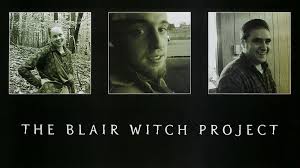
“The Blair Witch Project” (1999)
Horror

Running Time: 81 minutes
Written and directed by: Daniel Myrick and Eduardo Sánchez
Featuring: Heather Donahue, Michael Williams and Joshua Leonard
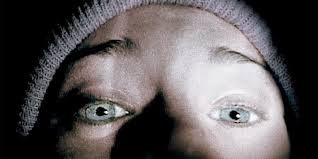
Heather Donahue: “I just want to apologize to Mike’s mom, Josh’s mom, and my mom. And I’m sorry to everyone. I was very naive. I am so so sorry for everything that has happened. Because in spite of what Mike says now, it is my fault. Because it was my project and I insisted. I insisted on everything. I insisted that we weren’t lost. I insisted that we keep going. I insisted that we walk south. Everything had to be my way. And this is where we’ve ended up and it’s all because of me that we’re here now – hungry, cold, and hunted. I love you mom, dad. I am so sorry. What is that? I’m scared to close my eyes, I’m scared to open them! We’re gonna die out here!”
Released in 1999, The Blair Witch Project is a cultural phenomenon that redefined the horror genre. Directed by Daniel Myrick and Eduardo Sánchez, this found-footage film utilized an innovative approach to storytelling that blurred the lines between fiction and reality, delivering an experience as terrifying as it is unique.
The Blair Witch Project centers on three student filmmakers—Heather (Heather Donahue), Josh (Joshua Leonard), and Mike (Michael C. Williams)—who venture into the woods of Burkittsville, Maryland, to document the local legend of the Blair Witch. The film is presented as the “recovered footage” of their ill-fated expedition, creating a sense of raw authenticity.
What makes the concept so effective is the minimalism of its execution. There are no traditional special effects, no elaborate sets, and no visible monster. Instead, the terror lies in what is unseen. The filmmakers cleverly use sound design, subtle environmental changes, and the increasingly frayed mental states of the characters to build tension. This approach capitalizes on the audience’s imagination, making the film’s horror deeply personal and subjective.
The cast, comprised of unknown actors at the time, delivers performances that feel startlingly real. Heather Donahue, in particular, gives a standout performance. Her now-iconic confessional scene, where she tearfully apologizes to her friends’ families, encapsulates the raw fear and desperation that defines the film. The actors improvised much of their dialogue, further enhancing the realism. Their escalating paranoia and conflicts feel organic, as if we are witnessing a genuine descent into madness.
A significant part of The Blair Witch Project‘s success lies in its marketing. The filmmakers launched a guerrilla-style campaign, creating a website with fabricated police reports, interviews, and folklore to convince audiences that the events depicted were real. The ambiguity surrounding the film’s authenticity generated buzz and contributed to its viral word-of-mouth appeal—a feat especially impressive in the pre-social media era.
This marketing strategy made the experience of watching the film feel like uncovering a dark, hidden truth. Many audience members entered theaters believing they were about to witness real events, amplifying the film’s impact.
One of the film’s greatest strengths is its ambiguity. It never explains what the Blair Witch is or if it even exists. Is the group being stalked by a supernatural entity, or are they succumbing to paranoia and their own frailties? The film refuses to provide clear answers, leaving viewers to interpret the events for themselves. This ambiguity ensures that the horror lingers long after the credits roll.
The Blair Witch Project sparked a revolution in the horror genre. Its success ($248 million gross on a $60,000 budget) inspired a wave of found-footage films, including Paranormal Activity and Cloverfield. While many imitators have emerged, few have captured the original’s authenticity and psychological depth.
Its influence extends beyond cinema, shaping how stories are told in other media, from video games to ARGs (alternate reality games). The film’s minimalist approach also demonstrated that a compelling story and innovative technique can outweigh big budgets and high-tech effects.
Despite its acclaim, the film is not without its detractors. Some viewers found the shaky camera work disorienting and the pacing slow. Others were frustrated by its lack of a traditional climax or resolution. However, these very elements are what endear the film to its fans, as they align with its commitment to realism and subversion of horror conventions.
The Blair Witch Project thrives on universal fears that transcend cultural and generational boundaries.
Fear of the Unknown: At its core, the film exploits humanity’s primal fear of the unknown. The Blair Witch herself is never seen, leaving her existence entirely to the viewer’s imagination. The film understands that what we don’t see or understand is often far scarier than what we do.
Isolation: The characters’ journey into the dense, sprawling woods symbolizes a descent into isolation. As they lose their bearings, both physically and emotionally, their detachment from the outside world amplifies their vulnerability. The woods become a labyrinth, a place where time and direction seem meaningless, reflecting their psychological unraveling.
Breakdown of Trust: A significant aspect of the film’s horror lies in the deteriorating relationships between Heather, Josh, and Mike. As their situation grows more dire, accusations, paranoia, and anger drive them apart. The tension among the trio mirrors the broader existential fear of being alone in our struggles.
Folklore and Urban Legends: The film brilliantly intertwines folklore with the narrative, grounding its supernatural premise in local legend. The filmmakers created an entirely fabricated mythology around the Blair Witch but presented it with such authenticity that it felt like a longstanding part of cultural lore. This use of storytelling echoes the way myths and legends have historically been used to explain the unexplainable.
Cinematic Techniques
The brilliance of The Blair Witch Project lies in its ability to craft terror through subtle yet masterful techniques:
Sound Design: The absence of a musical score allows the natural sounds of the environment to dominate. The crunch of leaves underfoot, distant whispers, and chilling nocturnal disturbances create an atmosphere of dread. The sound of children’s laughter in the dead of night, for instance, is terrifying because it is so out of place in the vast, empty woods.
Visual Minimalism: The film’s handheld camera work adds to its sense of authenticity but also serves as a metaphor for the characters’ disoriented state. The limited field of view creates a claustrophobic effect, even in the open forest. The use of darkness and shadows ensures the viewer is constantly scanning the frame for threats, even when nothing appears.
Improvised Storytelling: The directors intentionally withheld key details from the actors, letting them react naturally to the scenarios presented. This improvisational style led to genuine expressions of confusion and fear. For example, the cast did not know what to expect during the night scenes, leading to unfiltered, visceral reactions to the scripted disturbances.
Pacing and Restraint: Unlike traditional horror films, The Blair Witch Project does not rely on jump scares or fast-paced action. It is a slow burn, where tension builds incrementally. The monotony of the characters’ days, juxtaposed with the terror of their nights, mimics the exhausting rhythm of real-life survival situations.
Analyzing the Ending
The film’s ambiguous ending remains one of the most debated aspects of The Blair Witch Project. When Heather and Mike discover an abandoned house in the woods, their frantic search for Josh ends with a chilling image: Mike standing motionless in the corner, facing the wall, before the camera abruptly cuts to black.
This moment ties directly to the legend of Rustin Parr, a hermit supposedly influenced by the Blair Witch to murder children. According to the lore, Parr would make one child stand in the corner while he killed the other, as he couldn’t bear their eyes on him. This subtle callback gives the ending its eerie power.
However, the lack of resolution leaves viewers with more questions than answers. Was the Blair Witch real? Did the trio succumb to hysteria or a more mundane but equally grim fate, such as being targeted by a human predator? This refusal to spoon-feed conclusions is a hallmark of great horror, ensuring the story stays with the audience long after the film ends.
The Cultural Phenomenon
The release of The Blair Witch Project coincided with the rise of the internet, making it a pioneer in viral marketing. The film’s website, with its mockumentary-style content, blurred the line between fiction and reality, setting a new standard for immersive storytelling.
Even after the film’s release, discussions about its authenticity persisted. Fans dissected every frame for hidden clues, while skeptics analyzed its inconsistencies. This participatory aspect of the film’s narrative turned audiences into investigators, deepening their engagement.
Moreover, the movie’s success as an independent production inspired countless filmmakers, proving that a compelling concept and innovative execution can rival the biggest Hollywood blockbusters.
Revisiting The Blair Witch Project Today
In the years since its release, The Blair Witch Project has retained its place in the horror canon. Modern viewers accustomed to high-budget, effects-driven horror may initially find its lo-fi aesthetic jarring. However, those who embrace its atmosphere and psychological complexity will find it as unnerving as ever.
The film’s lasting influence is evident in the continued popularity of the found-footage genre. While some successors have expanded on the format with more elaborate effects, few have matched the authenticity and raw emotional impact of the original.
The Blair Witch Project is more than a movie; it is a masterclass in atmospheric horror and a cultural milestone. Its ability to tap into primal fears—of being lost, of the unknown, of our own minds turning against us—ensures its place as one of the most impactful films of its time. While it may not appeal to everyone, its ingenuity and legacy are undeniable.
For those willing to surrender to its immersive storytelling and embrace its unsettling ambiguity, The Blair Witch Projectoffers a uniquely haunting experience that continues to resonate in the annals of horror history.
Special Features and Technical Specs:
- 1080p high-definition presentation on Blu-ray
- NEW Audio Commentary by Matt Blazi, author of “8 Days in the Woods: The Making of The Blair Witch Project” (2024)
- Audio Commentary by writers/directors Daniel Myrick & Eduardo Sánchez and producers Rob Cowie, Greg Hale & Mike Manello (1999)
- Curse of the Blair Witch – documentary (1999)
- The Blair Witch Legacy – archival featurette
- Archival interview with writers–directors Daniel Myrick & Eduardo Sanchez
- Fear – interviews with psychological and supernatural experts
- Alternate Endings
- Discovered Footage
- Theatrical Trailer
- Teaser Trailer #1
- Teaser Trailer #2
- Audio English LPCM 2.0 Stereo
- Aspect Ratio 1.33:1
- Optional English HOH Subtitles



 spryfilm.com