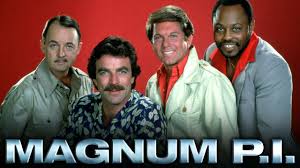
“Magnum, P.I.” (1980 – 1988)
Television Drama
One hundred and sixty two Episodes
Created by: Donald P. Bellisario and Glen A. Larson
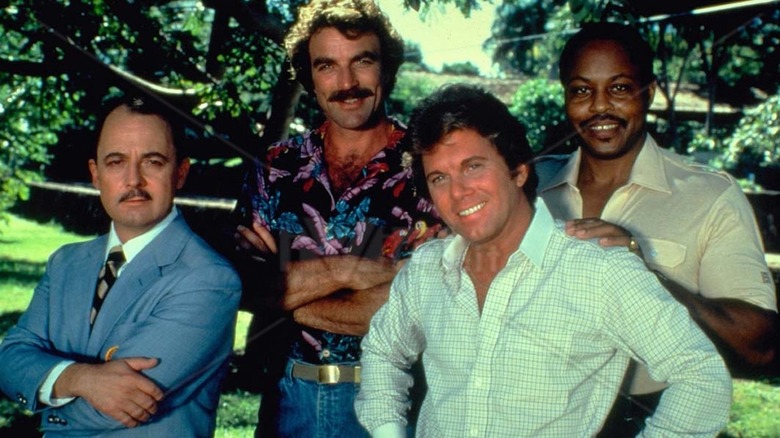
Featuring: Tom Selleck, John Hillerman, Roger E. Mosley and Larry Manetti
Thomas Sullivan Magnum III: “Now I know what you’re thinking.”
The 1980s television series Magnum, P.I. is an iconic entry in the pantheon of classic detective shows, blending action, humor, and mystery with the scenic beauty of Hawaii. Starring Tom Selleck as the charming and resourceful private investigator Thomas Magnum, the series ran for eight seasons from 1980 to 1988, captivating audiences with its blend of charisma and adventure. Let’s dive into a comprehensive review of this beloved series.
Magnum, P.I. is set in the lush, tropical paradise of Oahu, Hawaii, where Thomas Magnum serves as the head of security for the luxurious estate of reclusive, unseen novelist Robin Masters. The estate, referred to as “Robin’s Nest,” provides Magnum with a luxurious lifestyle, including access to a red Ferrari 308 GTS, in exchange for his services. Magnum balances his duties with his work as a private investigator, solving cases that range from murder mysteries to missing person searches.
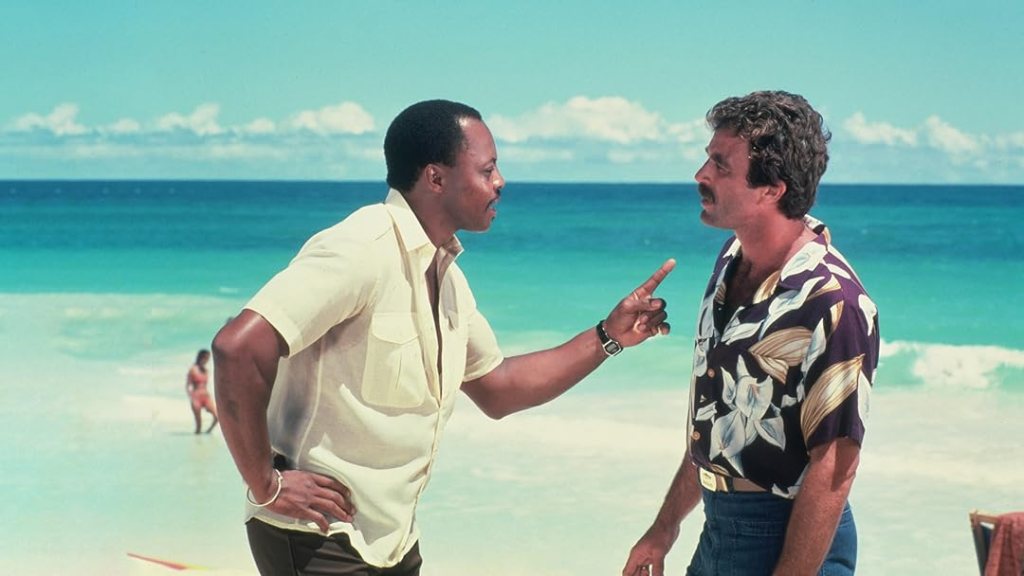
The show’s Hawaiian setting plays a pivotal role, offering a unique aesthetic that sets it apart from the grittier urban environments of its contemporaries. The idyllic beaches, vibrant landscapes, and cultural touches add a layer of escapism that became a key draw for viewers.
At the heart of the series is Tom Selleck’s portrayal of Magnum. Selleck’s performance is magnetic, combining roguish charm, wit, and a subtle vulnerability that makes the character deeply relatable. Magnum is not the stereotypical tough-guy detective; he’s a flawed, human protagonist who struggles with self-doubt, memories of his Vietnam War service, and an ongoing quest for personal fulfillment. His signature Hawaiian shirts and mustache became cultural touchstones of the 1980s.
The supporting cast is equally compelling. Jonathan Quayle Higgins III, played by John Hillerman, serves as Robin’s Nest’s uptight British caretaker. Higgins’ banter with Magnum—rooted in their differing personalities—is one of the series’ highlights. Their dynamic, marked by grudging respect and occasional comedic conflict, adds a layer of humor and depth to the show.
Magnum’s close friends, T.C. (Roger E. Mosley) and Rick (Larry Manetti), round out the core ensemble. T.C., a helicopter pilot, and Rick, a bar owner with connections to the island’s underworld, provide both comic relief and loyal support for Magnum. Their camaraderie feels genuine and anchors the show in a sense of family and friendship.
Though Magnum, P.I. often leans into lighthearted adventure, it’s not afraid to tackle darker, more poignant themes. Magnum’s past as a Navy SEAL and Vietnam veteran is a recurring thread, providing the show with emotional weight and giving Magnum depth beyond the carefree facade he often projects. Episodes dealing with PTSD, loss, and moral dilemmas stand out as some of the series’ most impactful.
The mysteries and cases themselves are a mix of compelling and formulaic, with the show’s best episodes often emphasizing character development over procedural twists. Magnum’s internal monologues, delivered through voiceover, add a noir-inspired touch and offer insight into his thoughts, fears, and motivations.
The production values of Magnum, P.I. were high for its time, with impressive stunts, action sequences, and location shooting. The use of actual Hawaiian settings gives the series a distinct authenticity. The iconic Ferrari and Magnum’s Hawaiian shirts became symbolic of the show’s laid-back, adventurous tone.
The music, particularly the unforgettable theme composed by Mike Post and Pete Carpenter, deserves special mention. Energetic and instantly recognizable, the theme perfectly captures the show’s mix of excitement and fun.
Magnum, P.I. left an indelible mark on pop culture. It cemented Tom Selleck’s status as a leading man and influenced countless detective and action shows that followed. Its balance of character-driven storytelling, humor, and drama remains a model for episodic television.
The series also handled its ending with rare finesse, delivering a satisfying conclusion that addressed lingering storylines and gave Magnum a fitting sendoff. The final episodes were emotionally charged, reflecting the show’s ability to evolve beyond its adventurous roots.
While Magnum, P.I. is a classic, it’s not without flaws. Some episodes fall into predictable patterns, with cases that feel repetitive or less compelling. The portrayal of women, though a product of its time, often leans into dated stereotypes, with female characters frequently serving as damsels in distress or romantic interests for Magnum.
Additionally, the depiction of Hawaiian culture sometimes feels superficial, with the series occasionally prioritizing its tourist-friendly aesthetic over a deeper exploration of the island’s history and people.
The loyal fan base of Magnum, P.I. has kept the show alive in the cultural consciousness. Fan conventions, online communities, and merchandise continue to celebrate the series decades after its final episode aired. Magnum’s Ferrari, often ranked among the most iconic vehicles in TV history, remains a coveted piece of nostalgia for automobile and television enthusiasts alike.
Moreover, Magnum, P.I. has been referenced and parodied in various forms of media, from cartoons like The Simpsons to other detective shows and comedies. These nods acknowledge its significance and showcase its broad influence. The show’s ability to balance humor with action inspired many later series that sought to replicate its winning formula, though few succeeded in capturing its unique blend of charm and depth.
Beyond the fun and action, Magnum, P.I. often delved into deeper themes, giving it an unexpected philosophical layer. Magnum’s internal monologues were more than just exposition; they frequently explored issues of morality, justice, and personal responsibility. His reflections on his choices and experiences, particularly as a Vietnam War veteran, gave the series an emotional resonance that elevated it above simple procedural drama.
Episodes like “Home from the Sea” (Season 4), in which Magnum survives a harrowing ordeal in the ocean, exemplify the show’s ability to merge suspenseful storytelling with introspective character development. Magnum’s struggle against the sea mirrors his internal battles, showcasing the series’ knack for weaving metaphor into its narratives.
As a product of the 1980s, Magnum, P.I. adhered to the episodic format common at the time. Each episode typically presented a self-contained mystery or adventure, with overarching character arcs woven subtly through the series. While this format may seem outdated compared to today’s serialized storytelling, it allowed viewers to tune in without needing to follow every episode in sequence.
This episodic structure also enabled the show to experiment with tone and genre, from lighthearted capers to darker, emotionally charged tales. The variety kept the series fresh and showcased its range, making it accessible to a wide audience.
In an era dominated by prestige dramas and complex serialized storytelling, Magnum, P.I. serves as a refreshing reminder of the joys of simpler, character-driven television. Its emphasis on relationships, humor, and moral dilemmas makes it timeless, even as certain aspects of its production and social attitudes reflect the era in which it was made.
Watching Magnum, P.I. today is not just an exercise in nostalgia; it’s an opportunity to experience a show that knew exactly what it wanted to be: entertaining, heartfelt, and occasionally profound. For modern viewers, it offers a window into a golden age of television, where charm and earnestness were enough to capture millions of hearts.
Magnum, P.I. is a quintessential 1980s series that strikes a balance between lighthearted escapism and meaningful storytelling. Its combination of a charismatic lead, a strong supporting cast, and a gorgeous setting ensures its place as a beloved classic. Despite its occasional missteps, the series’ charm, humor, and heart make it a timeless piece of television history. For fans of detective shows or 1980s nostalgia, Magnum, P.I. remains a must-watch.




 spryfilm.com