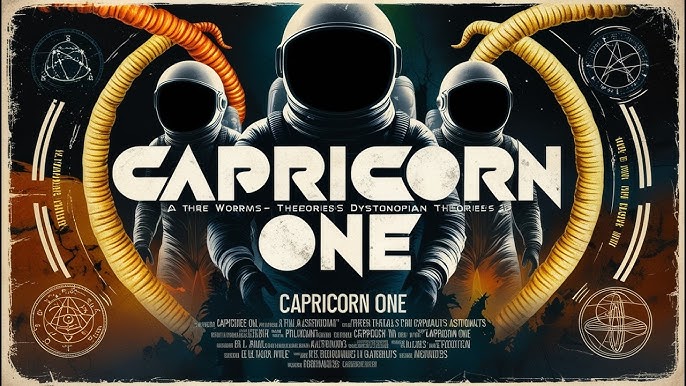
“Capricorn One” (1977)
Drama

Running Time: 123 minutes
Written and directed by: Peter Hyams
Featuring: Elliott Gould, James Brolin, Brenda Vaccaro, Sam Waterston, O. J. Simpson, Hal Holbrook, David Huddleston, David Doyle, Karen Black and Telly Savalas
Lt. Col Peter Willis: “Anybody hungry? Oh, the marvels of American science. Here we are millions of miles from earth, and we can still send out for pizza.”
Capricorn One, directed by Peter Hyams, is a gripping conspiracy thriller that skillfully blends suspense, science fiction, and political commentary. Released in the late 1970s, the film resonates with the post-Watergate era’s pervasive distrust of government institutions and the media, making it a fascinating product of its time.
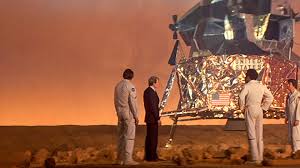
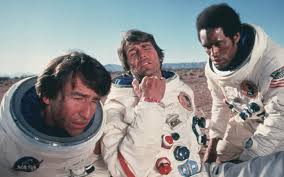
The film opens with the ambitious Capricorn One mission, the first manned flight to Mars, poised to make history. However, just before launch, NASA discovers a fatal flaw in the spacecraft’s life-support system. Faced with the humiliation of failure and the potential loss of funding, NASA official Dr. James Kelloway (Hal Holbrook) orchestrates an elaborate hoax. Astronauts Charles Brubaker (James Brolin), Peter Willis (Sam Waterston), and John Walker (O.J. Simpson) are removed from the spacecraft moments before liftoff and transported to a remote desert soundstage to fake the Mars landing.
The astronauts reluctantly go along with the charade, but their conscience begins to weigh heavily on them. When the empty spacecraft burns up upon re-entry due to a mechanical failure, the government decides that the astronauts must die to protect the secret. What follows is a tense game of cat-and-mouse as the astronauts attempt to escape their captors, while investigative journalist Robert Caulfield (Elliott Gould) uncovers clues to the conspiracy.
Engaging Premise: The central idea of faking a Mars landing taps into the enduring fascination with space exploration and conspiracy theories, particularly the popular notion that the Apollo moon landings were staged. Hyams uses this premise to craft a story that feels plausible and unnervingly relevant.
Taut Direction and Pacing: Hyams builds tension masterfully, alternating between the astronauts’ desperate escape and Caulfield’s dogged investigation. The desert sequences, in particular, are beautifully shot and evoke a sense of isolation and vulnerability.
Strong Performances: James Brolin anchors the film with a convincing portrayal of a reluctant hero, while Sam Waterston adds a touch of humor and humanity. Hal Holbrook is chilling as the morally compromised NASA official, delivering his monologues with a blend of conviction and weariness. Elliott Gould brings charm and tenacity to his role as the journalist, offering a touchstone for the audience.
Atmospheric Score: Jerry Goldsmith’s haunting score heightens the tension and complements the film’s mood. His use of eerie, minimalist motifs underscores the astronauts’ plight and the overarching sense of paranoia.
Cultural Commentary: The film’s exploration of governmental deception and media manipulation reflects the public’s growing skepticism in the wake of real-life scandals like Watergate and the Vietnam War. This subtext adds depth to the narrative, elevating Capricorn One beyond a simple thriller.
Character Development: While the performances are strong, the script doesn’t delve deeply into the astronauts’ internal conflicts. A more nuanced exploration of their moral struggles could have added emotional weight to the story.
Some Plot Contrivances: The journalist’s investigation occasionally relies on convenient coincidences, which might stretch credibility for some viewers. For instance, Caulfield’s discovery of key clues sometimes feels a bit too serendipitous.
Dated Elements: Certain aspects of the film, including the technology depicted and some of the dialogue, feel dated. Additionally, O.J. Simpson’s presence may overshadow the film for contemporary viewers, given his later notoriety.
Capricorn One remains a cult favorite and a significant entry in the conspiracy thriller genre. Its themes of institutional corruption and the manipulation of truth have only grown more relevant in the digital age, where misinformation spreads rapidly. The film has inspired countless parodies and discussions, particularly among fans of speculative fiction and conspiracy theories.
Even decades after its release, Capricorn One continues to captivate audiences due to its timeless themes and gripping narrative. The movie’s central conceit—the idea of a government faking a monumental event to preserve its reputation—remains a topic of speculation and debate in pop culture. This enduring relevance highlights Peter Hyams’ success in crafting a story that transcends its era.
The film also serves as a cautionary tale about the relationship between power and truth. It suggests that in an age of technological advancements and media spectacle, the line between reality and illusion can blur alarmingly. This message is particularly prescient in today’s world of deepfakes, artificial intelligence, and widespread skepticism toward authoritative institutions.
One of the most commendable aspects of Capricorn One is its visual storytelling. The vast, barren desert where the astronauts are stranded is a striking metaphor for their isolation—not just physical, but also moral. These landscapes underscore the stark contrast between the glory of a Mars landing and the grim reality of their predicament.
The action sequences are well-executed, particularly the thrilling climactic chase involving helicopters and a biplane. Hyams orchestrates these scenes with precision, creating a palpable sense of danger and urgency. This sequence alone demonstrates why Capricorn One is often regarded as a standout entry in 1970s cinema.
The film taps into a deep-seated cultural fascination with space exploration and its potential for both wonder and deception. At the time of its release, the U.S. space program was at a crossroads, with the excitement of the Apollo missions giving way to questions about the cost and purpose of further exploration. Capricorn One channels these anxieties, turning them into a narrative that questions the price of ambition.
Moreover, the movie engages with the broader distrust in institutions that defined the 1970s. It’s not just a story about NASA; it’s about the lengths to which powerful organizations will go to control narratives and protect their interests. This universal theme has kept the film relevant across generations.
Capricorn One is an intelligent and suspenseful film that expertly combines entertainment with social commentary. While not without its flaws, it stands as a thought-provoking exploration of trust, ethics, and the human desire for truth. Its enduring appeal lies in its ability to engage the audience both as a thrilling narrative and a reflection on the fragility of public trust.
Special Features and Technical Specs
Disc One – Theatrical Cut
- 1080p High-definition presentation on Blu-ray
- Audio Commentary by director Peter Hyams
- Flights of Fancy: The Politics and Paranoia of Capricorn One – vintage featurette
- What If?: The Making of Capricorn One – vintage featurette – vintage featurette
- On Set with Capricorn One – vintage location footage
- Theatrical Trailer
- Photo Gallery
- Audio English LPCM 2.0 Stereo
- Original Aspect Ratio 2.35:1
- Optional English HOH Subtitles
Disc Two – Extended Cut
- 1080p High-definition presentation on Blu-ray
- Audio Commentary by film historian/filmmaker Daniel Kremer and screenwriter Daniel Waters (2024)
- Conspiracy Busting – Interview with actor Elliott Gould (2024)
- Confessions of an Astronaut’s Wife – Interview with actress Brenda Vaccaro (2024)
- How the Capricorn Was Won: Getting the Greenlight – Interview with producer Paul Lazarus (2024)
- A Lady of Wondrous Abandon: Remembering the Incomparable Karen Black (2013 eulogy by Elliott Gould)
- Orchestrating a Conspiracy – movie music guru Daniel Schweiger on the Capricorn One score (2024)



 spryfilm.com