
“Howards’ Way” (1985-1990)
Television Drama

Seventy Eight Episodes
Created by: Gerard Glaister and Allan Prior
Featuring: Maurice Colbourne, Jan Harvey, Glyn Owen, Dulcie Gray, Stephen Yardley, Tony Anholt, Susan Gilmore,Tracey Childs, Edward Highmore, Cindy Shelley, Ivor Danvers, Patricia Shakesby, Sarah-Jane Varley, Nigel Davenport, Lana Morris, Sian Webber, Kate O’Mara and Jeff Harding
Jan Howard: “…”bought a copy of ‘The Good Sea-Wives Handbook!…””
“Howards’ Way” is a quintessential British television drama that aired from 1985 to 1990 on BBC One. Created by Gerard Glaister and Allan Prior, the show is often described as the UK’s answer to American primetime soaps like “Dallas” and “Dynasty,” blending elements of family drama, corporate intrigue, and romantic entanglements set against the backdrop of the beautiful South Coast of England.
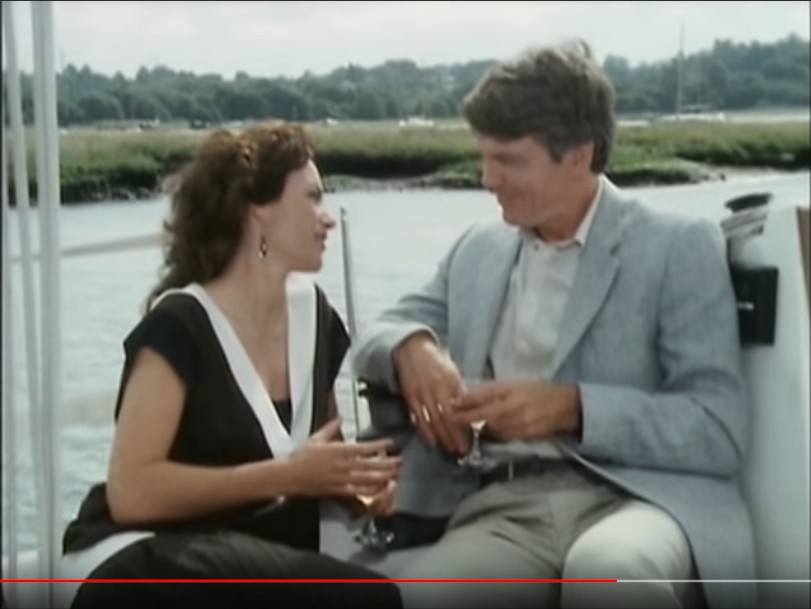
Set in the fictional town of Tarrant, which is located on the picturesque Hampshire coastline, “Howards’ Way” centers around the lives of two families: the Howards and the Urquharts. At the heart of the story is Tom Howard (played by Maurice Colbourne), a disillusioned aircraft designer who, after losing his job, decides to pursue his dream of building yachts. This decision not only sets the stage for the series but also reflects the show’s central theme: the pursuit of personal and professional fulfillment, often at great cost.
The yachting world serves as a unique and glamorous backdrop, with its competitive nature and inherent risks mirroring the personal and professional challenges faced by the characters. The Solent, a stretch of water between the Isle of Wight and the mainland, becomes a symbol of both freedom and danger, much like the lives of the characters who navigate its waters.
The ensemble cast of “Howards’ Way” is one of its greatest strengths. Maurice Colbourne delivers a nuanced performance as Tom Howard, a man struggling to find his place in the world after a mid-life career crisis. His journey from corporate employee to independent yacht designer is compelling, and Colbourne’s portrayal of a man torn between his ambitions and family responsibilities is both sympathetic and relatable.
Jan Howard (played by Jan Harvey), Tom’s wife, also undergoes significant development throughout the series. Initially portrayed as a supportive but somewhat passive spouse, Jan evolves into a successful businesswoman, establishing her own fashion boutique. Jan Harvey brings a strong, determined presence to the role, making Jan’s transformation believable and inspiring.
The Urquhart family, led by the ruthless Charles Frere (Tony Anholt) and his conniving sister, Abby (Cindy Shelley), provides the show with its much-needed dose of corporate scheming and interpersonal drama. Charles Frere, in particular, is a classic soap opera antagonist—charismatic, manipulative, and always several steps ahead of his rivals. Tony Anholt’s performance is delightfully sinister, making Charles a character viewers love to hate.
Supporting characters like Ken Masters (Stephen Yardley), a shady businessman with dubious morals, and Leo Howard (Edward Highmore), Tom and Jan’s idealistic son, add depth and variety to the ensemble. The interactions between these characters—whether romantic, professional, or adversarial—create a web of relationships that drive the show’s many plotlines.
“Howards’ Way” explores a range of themes, from the pursuit of personal dreams to the complexities of family dynamics and the corrupting influence of power and wealth. The series delves into the tension between tradition and modernity, particularly through Tom Howard’s decision to leave the stability of his corporate job to pursue his passion for yacht design. This storyline reflects the broader societal changes taking place in 1980s Britain, as the country grappled with economic shifts and evolving social norms.
The show also examines the role of women in a changing world. Jan Howard’s journey from housewife to successful entrepreneur is a significant narrative thread, highlighting the challenges and opportunities faced by women seeking independence and fulfillment in a male-dominated society. Similarly, the character of Abby Urquhart represents a younger generation’s desire to break free from the constraints of family expectations and forge their own paths.
Romantic entanglements are a staple of the show, with love triangles, affairs, and unrequited love adding drama and tension to the narrative. These relationships are often complicated by the characters’ ambitions and desires, leading to conflicts that drive the story forward. The interplay between personal and professional lives is a recurring theme, illustrating how the two are often inextricably linked.
“Howards’ Way” is notable for its high production values, particularly in its depiction of the yachting world. The show’s creators paid meticulous attention to detail, ensuring that the sailing scenes were both realistic and visually stunning. The use of real locations along the South Coast adds authenticity to the series, and the beautiful scenery serves as a striking contrast to the often tumultuous lives of the characters.
The show’s iconic theme music, composed by Simon May, is another standout feature. The stirring, orchestral piece perfectly captures the spirit of the series, evoking a sense of adventure and the emotional stakes involved in the characters’ lives.
“Howards’ Way” enjoyed significant popularity during its original run, attracting a large and loyal audience. Its blend of glamour, drama, and relatable characters resonated with viewers, making it a cultural touchstone of 1980s British television. The show’s influence can be seen in subsequent British dramas, which have drawn inspiration from its successful formula.
“Howards’ Way” not only captivated audiences during its initial broadcast but also left a lasting imprint on British pop culture. The show’s portrayal of the affluent lifestyle, coupled with its focus on high-stakes business maneuvers, yacht racing, and personal drama, offered a glamorous escape that resonated with viewers in the 1980s. This was a period marked by significant economic and social changes in the UK, and the show tapped into the aspirations and anxieties of the time.
The series’ emphasis on the luxury and prestige associated with the yachting world reflected the era’s fascination with wealth and success. This was also the period of Margaret Thatcher’s Britain, where the rise of entrepreneurial spirit and the celebration of financial success were dominant themes. “Howards’ Way” mirrored these societal values while also critiquing the darker side of ambition and the sacrifices it often demanded.
The influence of “Howards’ Way” extended beyond television. The show’s fashion became iconic, particularly Jan Howard’s business wardrobe, which inspired many women to adopt a more polished, power-dressing look in their professional lives. The character’s transformation into a successful businesswoman resonated with viewers, reflecting broader changes in gender roles and expectations during the 1980s.
Moreover, the show’s depiction of Tarrant—a fictional town that felt real and lived-in—added to its charm. Tarrant became a character in its own right, with its marinas, pubs, and local businesses forming the backdrop to the drama. Fans of the show could easily imagine themselves visiting or even living in such a place, contributing to the show’s lasting appeal.
At the time of its airing, “Howards’ Way” received a mixed response from critics. While some praised its production values, engaging storylines, and strong performances, others criticized it for being melodramatic and formulaic. However, this didn’t diminish its popularity with audiences, who were drawn to its compelling mix of glamour, intrigue, and personal drama.
Over the years, “Howards’ Way” has enjoyed a resurgence of interest, particularly among viewers nostalgic for 1980s television. The show is often regarded as a classic of British drama, with its mix of soap opera elements and serious storytelling still holding up today. Reruns, DVD releases, and streaming platforms have allowed new generations to discover and appreciate the series, ensuring its legacy continues.
In particular, the show’s complex characters and their evolving relationships are still relevant. The dilemmas faced by Tom and Jan Howard, as well as the scheming of characters like Charles Frere and Ken Masters, resonate with audiences who appreciate well-drawn, morally ambiguous characters. The show’s exploration of themes like the tension between personal desires and professional responsibilities, the impact of societal change, and the challenges of navigating complex relationships ensures its continued relevance.
“Howards’ Way” faced its share of challenges during production, particularly in its later years. The untimely death of Maurice Colbourne in 1989, who played the central character Tom Howard, was a significant blow to the show. Colbourne’s portrayal of Tom had been a linchpin of the series, and his death necessitated a reworking of the show’s direction. The writers and producers managed to navigate this difficult period by focusing on the other characters and introducing new plotlines, but the loss was felt by both the cast and the audience.
The show’s production also required significant logistical efforts, particularly for the yachting scenes. Filming on the water presented numerous technical challenges, but the results were visually stunning and added an authentic sense of excitement and danger to the show. The commitment to realism in these scenes set “Howards’ Way” apart from other contemporary dramas, showcasing the production team’s dedication to quality.
“Howards’ Way” remains a beloved classic, cherished for its compelling characters, engaging storylines, and evocative setting. While it may be a product of its time, the themes it explores—ambition, love, family, and the pursuit of dreams—are timeless. For fans of drama and soap operas, “Howards’ Way” offers a richly entertaining experience that stands the test of time. Its legacy as one of Britain’s most iconic television dramas is well-deserved, and it continues to be celebrated by those who fondly remember its original run as well as new audiences discovering it for the first time.



 spryfilm.com