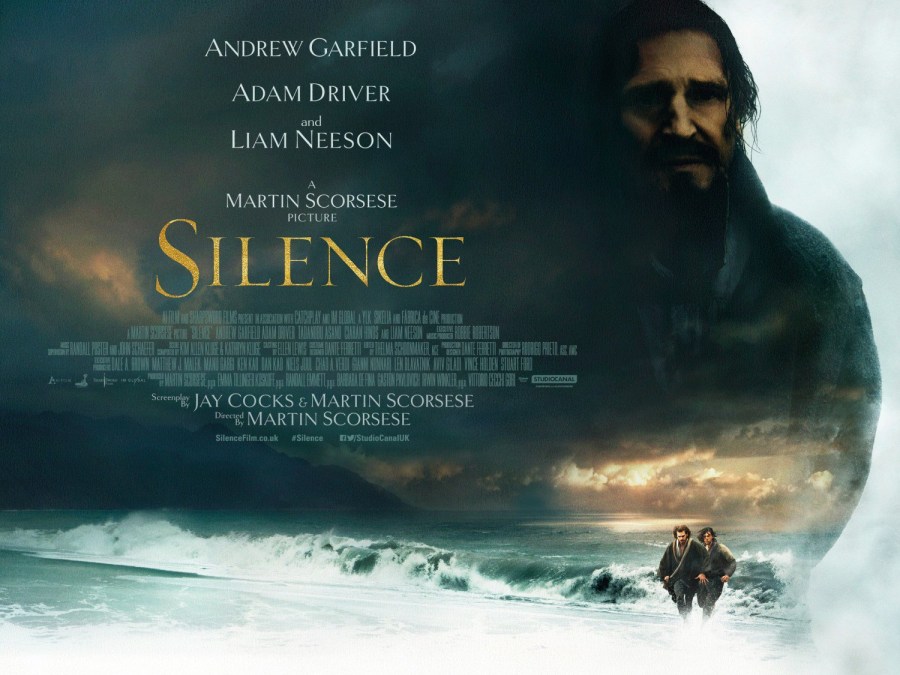
“Silence” (2016)
Historical Drama

Running Time: 161 minutes
Directed by: Martin Scorsese
Featuring: Andrew Garfield, Adam Driver, Liam Neeson, Tadanobu Asano and Ciarán Hinds
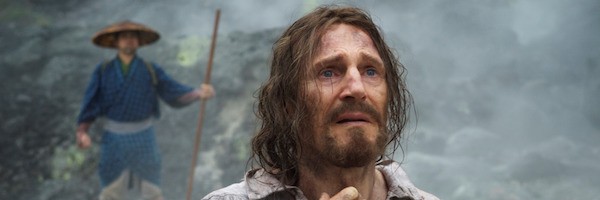
Ferreira: “I do because you are just like me. You see Jesus in Gethsemane and believe your trial is the same as His. Those five in the pit are suffering too, just like Jesus, but they don’t have your pride. They would never compare themselves to Jesus. Do you have the right to make them suffer? I heard the cries of suffering in this same cell. And I acted.”
Martin Scorsese’s “Silence” (2016) stands as one of the director’s most profound and meditative works, diverging from his usual themes of crime and excess to explore the intricacies of faith, suffering, and spiritual resilience. Adapted from Shūsaku Endō’s 1966 novel of the same name, “Silence” tells the harrowing tale of two Portuguese Jesuit priests who travel to Japan in the 17th century to find their mentor and propagate Christianity, amidst intense persecution.
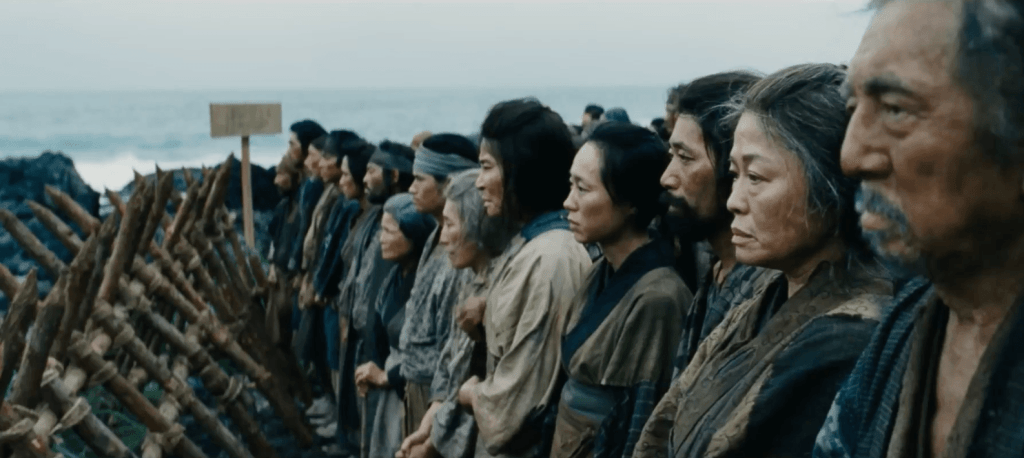
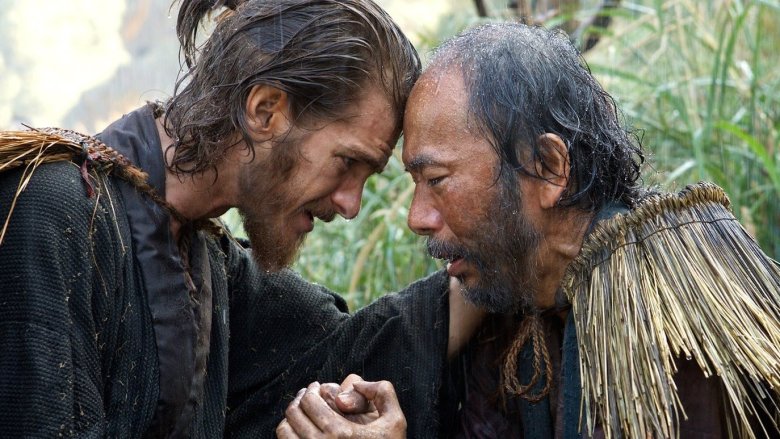
At its core, “Silence” grapples with the clash between devout faith and oppressive tyranny. The story follows Fathers Sebastião Rodrigues (Andrew Garfield) and Francisco Garupe (Adam Driver) as they embark on a perilous journey to Japan to find their mentor, Father Ferreira (Liam Neeson), who is rumored to have apostatized. The film opens with a haunting prologue, showcasing the brutal treatment of Japanese Christians under the Tokugawa shogunate, setting the tone for the visceral and emotional journey ahead.
The themes of the film are multifaceted. It explores the complexities of faith, the silence of God in times of suffering, and the personal cost of spiritual integrity. Scorsese meticulously delves into the psyche of his characters, particularly Rodrigues, who is tormented by the seeming silence of God amidst the unrelenting persecution of Christians. This theme of divine silence is a recurring motif, echoing the doubts and struggles faced by believers when their faith is tested to its limits.
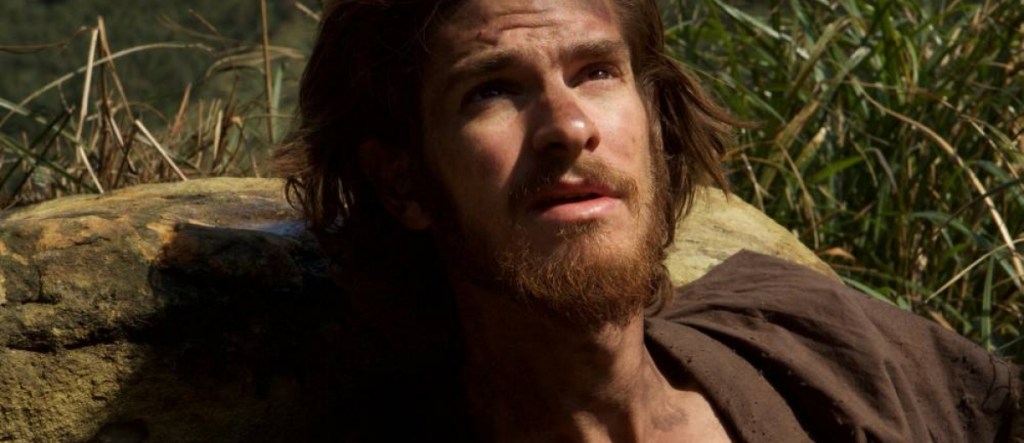
Andrew Garfield delivers a career-defining performance as Rodrigues, capturing the character’s inner turmoil, steadfast faith, and ultimate surrender to a path fraught with moral ambiguity. Garfield’s portrayal is deeply moving, embodying the priest’s vulnerability and unwavering devotion. Adam Driver, as Garupe, provides a strong counterpoint to Rodrigues, showcasing a different facet of faith and dedication. Liam Neeson, in his limited but crucial role, exudes a quiet, resigned power as Father Ferreira, a man who has faced the ultimate test of faith and emerged fundamentally changed.
Scorsese’s direction is masterful, marked by a deliberate pacing that allows the viewer to fully immerse in the narrative’s spiritual and emotional depths. The film’s contemplative nature is accentuated by Rodrigo Prieto’s stunning cinematography. The visual storytelling is both breathtaking and harrowing, capturing the stark beauty of the Japanese landscape juxtaposed with the grim realities of persecution. The use of natural light and shadow plays a significant role in creating an atmosphere of introspection and reverence.
The film’s sound design is another standout aspect. The minimal use of a musical score enhances the theme of silence, with the natural sounds of the environment amplifying the tension and the inner conflicts of the characters. This aural restraint places the audience in the same realm of perceived divine silence that the protagonists experience, making the viewing experience profoundly immersive.
“Silence” provides a window into a lesser-known chapter of history, shedding light on the brutal suppression of Christianity in 17th century Japan. The film does not shy away from depicting the severe methods employed by the Japanese authorities to root out Christianity, including torture and forced apostasy. Scorsese’s attention to historical accuracy and cultural sensitivity is evident throughout the film, offering a nuanced portrayal of both the persecutors and the persecuted.
Upon its release, “Silence” received critical acclaim for its ambitious storytelling, powerful performances, and Scorsese’s uncompromising vision. However, it polarized audiences due to its slow pacing and somber tone. Some viewers found the film’s introspective nature and length challenging, while others lauded it as a profound exploration of faith and human endurance.
Despite its polarizing reception, “Silence” has carved out a niche as a modern spiritual epic, earning a place alongside other great films that tackle religious and philosophical themes. It stands as a testament to Scorsese’s versatility as a filmmaker and his willingness to tackle complex, deeply personal subjects with unwavering honesty and artistic integrity.
The characters in “Silence” are richly drawn and complex, offering a deep dive into the human condition and the struggle for faith.
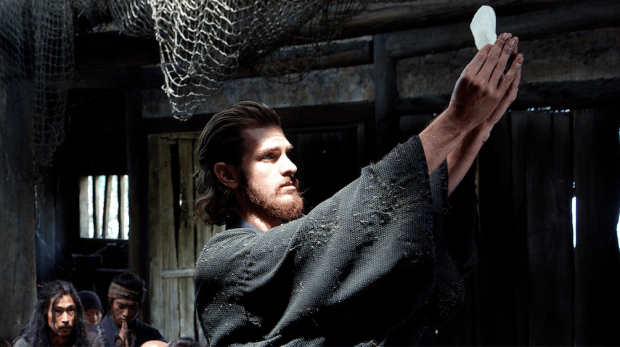
Father Sebastião Rodrigues emerges as the film’s central figure, embodying the quintessential crisis of faith. As portrayed by Andrew Garfield, Rodrigues’ journey is one of spiritual and existential torment. His initial zeal and conviction are palpable, but as he witnesses the horrific persecution of Japanese Christians, his faith begins to waver. Garfield’s nuanced performance captures this descent into doubt and despair, reflecting the inner conflict of a man who feels abandoned by God.
Rodrigues’ relationship with Kichijiro (Yosuke Kubozuka), a Japanese Christian who repeatedly betrays and seeks forgiveness, adds another layer to his character arc. Kichijiro serves as a living embodiment of weakness and sin, challenging Rodrigues to practice the very Christian mercy he preaches. Kichijiro’s character also highlights the cyclical nature of sin and redemption, mirroring Rodrigues’ own spiritual journey.
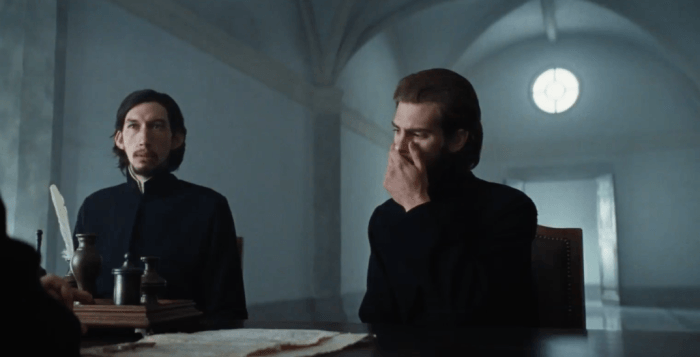
Father Francisco Garupe (Adam Driver), on the other hand, represents a more steadfast form of faith. His character provides a counterbalance to Rodrigues, showcasing a different response to the same spiritual and physical trials. Garupe’s unwavering dedication contrasts with Rodrigues’ growing doubts, offering a poignant commentary on the diverse ways individuals cope with faith under persecution.
Father Ferreira (Liam Neeson) is the embodiment of apostasy and the consequences of broken faith. His transformation from a devout priest to a broken man who has renounced his faith under duress serves as a dire warning to Rodrigues. Neeson’s portrayal is restrained yet powerful, conveying a man who has been irrevocably changed by his experiences.
“Silence” is rich with symbolism and religious imagery that reinforce its themes. The recurring motif of silence is perhaps the most significant, representing both the perceived absence of God and the internal silence that comes with doubt and despair. This silence is juxtaposed with the cacophony of suffering, creating a stark contrast that underscores the film’s central conflict.
The image of the fumie, a likeness of Christ or the Virgin Mary that suspected Christians were forced to trample upon, serves as a potent symbol of faith under duress. The act of trampling the fumie represents a public renunciation of faith, a physical manifestation of spiritual betrayal. The repeated use of this imagery throughout the film emphasizes the excruciating choices faced by the characters.
Water, often depicted as a symbol of purification and baptism in Christian theology, takes on a dual role in “Silence.” While it occasionally signifies hope and renewal, it more often appears in the context of suffering and death, as seen in the scenes of martyrdom by drowning. This inversion of symbolism reflects the film’s exploration of the darker aspects of faith and redemption.
Scorsese employs various cinematic techniques to enhance the storytelling and immerse the audience in the film’s emotional and spiritual journey. The use of long takes and wide shots allows viewers to absorb the stark beauty and harsh realities of the Japanese landscape, emphasizing the isolation and vulnerability of the missionaries and converts.
The film’s color palette is subdued, dominated by earthy tones and muted colors that reflect the somber mood and themes. This visual restraint mirrors the austerity of the characters’ spiritual lives and the oppressive environment in which they struggle.
Scorsese’s decision to eschew a traditional musical score in favor of natural sounds and silence amplifies the film’s meditative quality. The absence of music in critical scenes forces the audience to confront the raw emotions and harsh realities depicted on screen without the buffer of a score to guide their responses.
“Silence” raises profound ethical and philosophical questions about the nature of faith, the morality of missionary work, and the cost of religious conviction. It challenges viewers to consider the ethics of imposing one’s beliefs on another culture, particularly when such imposition leads to suffering and death.
The film also delves into the concept of apostasy and the value of outward expressions of faith versus inner conviction. Rodrigues’ eventual act of apostasy is portrayed not as a simple renunciation but as a complex, deeply personal decision driven by compassion for the suffering of others. This act forces viewers to question the nature of true faith and whether silent, inward belief can hold as much weight as public, outward displays of piety.
“Silence” is not merely a film; it is an experience that demands patience, reflection, and empathy. Martin Scorsese has crafted a cinematic journey that challenges viewers to confront their own beliefs, question the nature of faith, and empathize with those who suffer for their convictions. It is a film that resonates long after the credits roll, inviting continuous contemplation and discussion. In the pantheon of Scorsese’s work, “Silence” is a monumental achievement, a deeply spiritual and profoundly human exploration of faith under fire.


 spryfilm.com