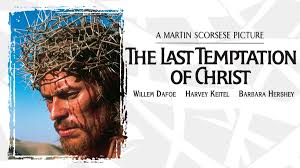
“The Last Temptation of Christ” (1988)
Drama

Running time: 163 minutes
Written by: Paul Schrader
Featuring: Willem Dafoe, Harvey Keitel, Barbara Hershey, Harry Dean Stanton and David Bowie
Jesus: “You think God belongs only to you? He doesn’t. God is an immortal spirit who belongs to everybody, to the whole world. You think you’re special? God is not an Israelite!”
“The Last Temptation of Christ,” directed by Martin Scorsese and released in 1988, is a film that has courted controversy and acclaim in equal measure. Based on the 1955 novel by Nikos Kazantzakis, the movie offers a unique and humanistic portrayal of Jesus Christ, exploring his internal struggles and the nature of his divinity. With a screenplay by Paul Schrader and a standout performance by Willem Dafoe as Jesus, the film delves deeply into the psychological and spiritual conflicts of its central character.
The film follows Jesus of Nazareth (Willem Dafoe) from his early days as a carpenter, tormented by visions and divine messages, to his ultimate crucifixion. Unlike traditional biblical epics, “The Last Temptation of Christ” focuses on the humanity of Jesus, portraying him as a man burdened by doubt and fear. He wrestles with his mission and the weight of being the Messiah, ultimately facing the titular “last temptation”—a vision of an ordinary life where he marries Mary Magdalene (Barbara Hershey), has children, and lives as a mortal.
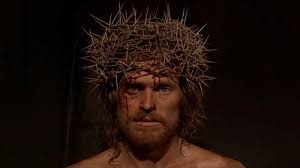
Jesus (Willem Dafoe): Dafoe’s portrayal of Jesus is one of the most compelling aspects of the film. He imbues the character with a palpable sense of vulnerability and inner conflict. This Jesus is not the serene, all-knowing figure often depicted in religious art but a man who questions his path and grapples with his identity. Dafoe’s performance is raw and intense, capturing the torment and eventual acceptance of his divine role.
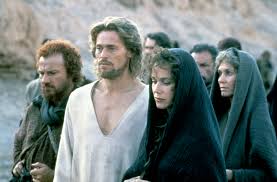
Mary Magdalene (Barbara Hershey): Hershey brings depth to Mary Magdalene, presenting her as a complex character who loves Jesus and suffers deeply. Her relationship with Jesus is portrayed with sensitivity, highlighting her humanity and the societal judgments she faces. Her role in the “last temptation” vision is particularly poignant, showcasing an alternative reality that underscores the sacrifices Jesus makes.
Judas Iscariot (Harvey Keitel): Keitel’s Judas is another departure from traditional portrayals. Here, Judas is a passionate and loyal follower of Jesus, who ultimately betrays him out of a sense of duty rather than malice. This interpretation adds a layer of complexity to the character, suggesting that his actions are part of a larger, divinely orchestrated plan.
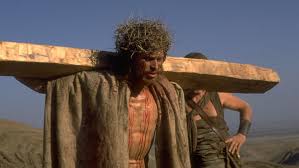
Scorsese’s direction, coupled with Michael Ballhaus’s cinematography, creates a visually arresting film. The use of natural landscapes and the stark, almost surreal depiction of the crucifixion scenes lend the film a timeless, mythic quality. The visual style complements the narrative’s exploration of spiritual and existential themes, creating an immersive and thought-provoking experience.
The film’s score, composed by Peter Gabriel, is a standout element. Gabriel’s use of traditional Middle Eastern instruments and motifs, blended with modern sounds, creates an evocative and atmospheric backdrop that enhances the film’s emotional and spiritual depth. The music underscores key moments, from the haunting opening scenes to the climactic crucifixion, adding a powerful auditory layer to the storytelling.
“The Last Temptation of Christ” delves into several profound themes, including the nature of faith, the duality of Jesus as both human and divine, and the concept of sacrifice. The film’s portrayal of Jesus’s temptations and doubts humanizes him, making his ultimate sacrifice all the more impactful. The “last temptation” vision serves as a potent symbol of what Jesus gives up to fulfill his divine mission, highlighting the personal cost of his sacrifice.
Upon its release, the film sparked significant controversy, particularly among religious groups who viewed it as blasphemous. Protests and boycotts ensued, with some theaters refusing to screen the film. Despite—or perhaps because of—the controversy, the film has garnered critical acclaim over the years. It is praised for its bold and unorthodox approach to a well-known story, as well as its deep exploration of complex theological and philosophical questions.
Over the years, “The Last Temptation of Christ” has cemented its place as a significant and influential work in cinema. Its impact extends beyond the realm of religious and spiritual films, influencing filmmakers and storytellers who seek to explore complex, nuanced narratives. Scorsese’s approach to depicting Jesus as a multifaceted, deeply human figure has inspired a broader trend in cinema that embraces the complexity of historical and religious characters.
In the decades following its release, “The Last Temptation of Christ” has undergone critical reappraisal. Initially met with polarized responses, many critics have since recognized the film’s artistic and philosophical merits. Its willingness to engage with difficult questions and present a non-traditional narrative has been praised for its courage and depth. Today, the film is often cited in discussions of Scorsese’s most important works and stands as a testament to his versatility and vision as a director.
The film’s exploration of Jesus’s humanity and divinity offers a reflection on broader cultural and societal themes. It raises questions about the nature of faith, the struggles inherent in accepting one’s destiny, and the sacrifices required to fulfill a higher purpose. These themes resonate with audiences from diverse backgrounds, encouraging viewers to reflect on their own beliefs and values. The film’s depiction of Jesus’s internal struggles mirrors the universal human experience of doubt and the search for meaning.
Apart from Willem Dafoe’s compelling performance, the supporting cast also delivers noteworthy performances that add layers to the narrative:
David Bowie (Pontius Pilate): Bowie’s portrayal of Pontius Pilate is brief but impactful. He brings a sense of weariness and pragmatism to the role, embodying the political pressures and moral ambiguities faced by the Roman governor.
Harry Dean Stanton (Saul/Paul): Stanton’s interpretation of Saul/Paul is memorable, highlighting the transformative journey of a man who shifts from persecuting Christians to becoming one of their most fervent apostles. His character serves as a counterpoint to Jesus’s journey, illustrating the diverse ways in which faith can manifest.
Andre Gregory (John the Baptist): Gregory’s intense and prophetic portrayal of John the Baptist adds to the film’s spiritual atmosphere. His scenes with Jesus underscore the sense of anticipation and urgency that pervades the narrative.
Scorsese employs a range of cinematic techniques to enhance the film’s emotional and psychological impact. His use of close-ups and handheld camera work creates an intimate connection between the audience and the characters, drawing viewers into Jesus’s internal world. The film’s pacing, which alternates between moments of intense contemplation and dramatic action, mirrors the oscillation between Jesus’s inner turmoil and his public mission.
Philosophical and Theological Insights
“The Last Temptation of Christ” serves as a rich text for philosophical and theological inquiry. It prompts discussions about the nature of temptation and the human condition, offering a unique perspective on the interplay between free will and divine destiny. The film’s depiction of Jesus’s final temptation—imagining a life of ordinary human joys and sorrows—invites viewers to consider the profound implications of his choice to embrace his divine mission.
Given its depth and complexity, “The Last Temptation of Christ” has significant educational value. It can be used in academic settings to explore themes in theology, philosophy, and film studies. Discussions around the film can lead to a deeper understanding of the ways in which religious narratives can be reinterpreted and the impact of such reinterpretations on contemporary culture and thought.
“The Last Temptation of Christ” is a powerful and provocative film that challenges viewers to reconsider their understanding of Jesus and his story. Through its nuanced performances, striking visuals, and evocative score, it offers a rich and multifaceted portrayal of one of history’s most revered figures. Martin Scorsese’s daring vision and Willem Dafoe’s unforgettable performance combine to create a film that is as thought-provoking as it is visually stunning. Whether viewed as a religious exploration or a humanistic drama, “The Last Temptation of Christ” remains a significant and influential work in the cinematic portrayal of Jesus Christ.



 spryfilm.com