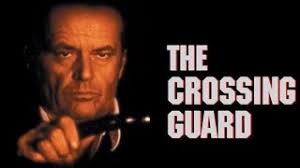
“The Crossing Guard” (1995)
Drama

Running time: 101 minutes
Written and directed: Sean Penn
Featuring: Jack Nicholson, David Morse, Robin Wright and Anjelica Huston
Joe: “So listen to this. I’m coming out of the bathroom, right, and these two Orientals, they’re arguin’, they’re hollerin’, they’re screaming at one another. And all in Japanese. So I told ’em, I said “Ay! You’re in America now, speak Spanish.””
Directed by Sean Penn and starring Jack Nicholson, Anjelica Huston, and David Morse, The Crossing Guard is a film that delves deep into the raw and often painful emotions surrounding grief, guilt, and the possibility of redemption. The film presents a compelling narrative that is as much about internal struggles as it is about external actions.
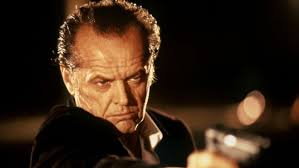
The story revolves around Freddy Gale (Jack Nicholson), a man consumed by grief and a desire for vengeance after his young daughter is killed by a drunk driver, John Booth (David Morse). Booth, having served his sentence, is now out of prison and trying to rebuild his life. Freddy, unable to move past his loss, vows to kill Booth within three days of his release.
Freddy’s ex-wife, Mary (Anjelica Huston), provides a counterpoint to his anguish. While she is also mourning their daughter, she has managed to find a semblance of peace and encourages Freddy to let go of his anger. The film’s tension builds as Freddy confronts Booth and grapples with his own demons.
Jack Nicholson delivers a powerhouse performance as Freddy Gale. Known for his ability to portray complex characters, Nicholson brings a palpable intensity to the role. His portrayal of a father drowning in sorrow and rage is both heartbreaking and compelling. Nicholson’s Freddy is not just a man seeking revenge; he is a man desperately trying to find meaning and closure in a life shattered by tragedy.
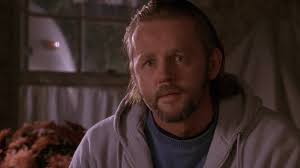
David Morse, as John Booth, provides a nuanced performance that evokes sympathy despite his character’s past actions. Morse captures Booth’s remorse and his struggle for redemption, making the audience see him as more than just a villain. His interactions with Nicholson are fraught with tension and emotion, adding depth to the film’s exploration of forgiveness and guilt.
Anjelica Huston, though her screen time is limited, shines as Mary. Her character embodies the possibility of moving forward and finding peace, serving as a stark contrast to Freddy’s relentless pursuit of vengeance. Huston’s performance is understated yet powerful, providing a necessary balance to the film’s darker themes.
Sean Penn, in one of his early directorial efforts, showcases his talent for creating intense, character-driven dramas. The Crossing Guard is a testament to Penn’s ability to elicit strong performances from his cast and to handle sensitive subject matter with care and insight. The film is deliberately paced, allowing the audience to fully immerse themselves in the characters’ emotional journeys.
Penn’s direction is complemented by Vilmos Zsigmond’s cinematography, which captures the bleakness of Freddy’s world. The use of shadows and muted colors reflects the protagonist’s internal despair. The visual storytelling enhances the film’s mood, making the audience feel the weight of Freddy’s grief.
The Crossing Guard delves into several profound themes, chief among them being the destructive nature of unresolved grief. Freddy’s inability to move past his daughter’s death has consumed his life, driving a wedge between him and those who care about him. His single-minded pursuit of revenge highlights the futility of holding onto anger and the damage it can cause.
The film also explores the theme of redemption. Booth’s journey to make amends for his past actions is portrayed with sensitivity, showing that redemption is not an easy path but one that requires facing the consequences of one’s actions and seeking forgiveness.
The interactions between Freddy and Booth serve as the film’s emotional core. Their confrontations are charged with tension, but also moments of vulnerability that reveal their shared humanity. The film suggests that forgiveness, while difficult, is necessary for healing.
Freddy Gale’s character arc is the driving force of the narrative. Initially, Freddy is portrayed as a man utterly consumed by his pain. His grief has led him down a path of self-destruction, alienating him from his ex-wife and others who care about him. His obsession with vengeance is not just about avenging his daughter’s death but also about finding a way to cope with his own feelings of helplessness and loss.
Jack Nicholson’s portrayal of Freddy captures the essence of a man trapped in his own sorrow. The nuances in his performance, from the barely contained rage to the moments of vulnerability, paint a vivid picture of a man on the brink of collapse. Freddy’s interactions with other characters, particularly Mary and Booth, reveal different facets of his personality and his struggle to find peace.
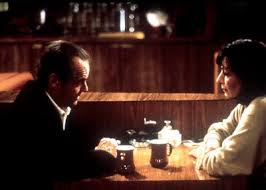
Mary, played by Anjelica Huston, serves as a beacon of resilience and acceptance. Her ability to move forward contrasts sharply with Freddy’s inability to let go of the past. The scenes between Mary and Freddy are some of the film’s most poignant, as they highlight the different ways people cope with tragedy. Huston’s performance brings a quiet strength to the character, making her a grounding force in the narrative.
David Morse’s portrayal of John Booth adds depth to the story. Booth is a man haunted by his past, seeking redemption but unsure if he deserves it. Morse captures the complexity of Booth’s character, making the audience sympathize with him despite his actions. Booth’s interactions with Freddy are charged with emotional intensity, as both men grapple with their roles in the tragedy that has bound them together.
Sean Penn’s directorial approach in The Crossing Guard is marked by a keen attention to detail and a focus on character-driven storytelling. The film’s visual style, courtesy of cinematographer Vilmos Zsigmond, uses light and shadow to mirror the internal struggles of the characters. The muted color palette and use of dim lighting create an atmosphere of melancholy, reflecting the somber themes of the film.
Penn employs several symbolic elements to enhance the narrative. The recurring motif of time, represented by clocks and watches, underscores the characters’ relationship with the past and their struggle to move forward. Freddy’s constant checking of his watch symbolizes his fixation on the deadline he has set for himself to confront Booth, highlighting his obsession with revenge.
The film also uses the urban landscape to reflect Freddy’s emotional state. The desolate streets and dimly lit bars he frequents symbolize his isolation and inner turmoil. In contrast, scenes featuring Mary often take place in brighter, more open settings, symbolizing her journey toward healing and acceptance.
The Crossing Guard is a film that demands an emotional investment from its audience. Its exploration of grief and the quest for redemption is portrayed with such raw honesty that it resonates deeply with viewers. The film does not offer easy answers or neat resolutions, instead presenting a realistic portrayal of the complexities of human emotion.
Freddy’s journey is both heartbreaking and compelling, making the audience empathize with his pain while also recognizing the destructiveness of his quest for revenge. The film’s resolution, which eschews a traditional Hollywood ending, reinforces its commitment to authenticity. It leaves the audience contemplating the nature of forgiveness and the possibility of finding peace in the aftermath of tragedy.
Upon its release, The Crossing Guard received mixed reviews from critics, with particular praise for the performances of Nicholson and Morse. Some critics lauded the film’s emotional depth and Penn’s direction, while others felt the pacing was too slow or the narrative too bleak. Despite the mixed reviews, the film has garnered a following over the years, appreciated for its unflinching portrayal of grief and the human condition.
The film’s legacy lies in its exploration of themes that are universally relatable. Its depiction of a father’s grief and a man’s search for redemption continues to resonate with audiences, making it a powerful piece of cinema that transcends its initial reception.
The Crossing Guard is a powerful exploration of grief, vengeance, and redemption. It is a film that does not shy away from the darker aspects of human emotion but also offers a glimmer of hope for those willing to seek it. Jack Nicholson’s intense performance, combined with David Morse’s sympathetic portrayal of a man seeking forgiveness, makes for a compelling viewing experience. Sean Penn’s direction ensures that the film remains a poignant and thought-provoking piece of cinema.
While it may not be an easy watch due to its heavy themes, The Crossing Guard is a film that stays with you, prompting reflection on the complexities of forgiveness and the human capacity for change. It stands as a testament to the power of cinema to explore the depths of the human soul and the possibility of redemption even in the face of profound loss.


 spryfilm.com