
“One Night in the Tropics” (1940)
Comedy

Running time: 82 minutes
Written by: Gertrude Purcell and Charles Grayson
Directed by: A. Edward Sutherland
Featuring: Allan Jones, Robert Cummings, Nancy Kelly, Bud Abbott, Lou Costello, William Frawley and Peggy Moran
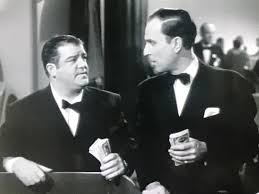
Abbott: “Put that out. There’s no smoking in here.”
Costello: “What makes you think I’m smokin’?”
Abbott: “You’ve got a cigar in your mouth!”
Costello: “I’ve got shoes on… don’t mean I’m walkin’.”
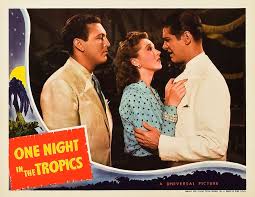
“One Night in the Tropics” is a 1940 romantic comedy film that marks the film debut of the legendary comedy duo Abbott and Costello. Directed by A. Edward Sutherland, the movie blends romance, comedy, and a dash of musical numbers, offering a delightful albeit somewhat uneven cinematic experience.
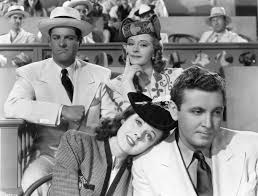
The film revolves around Jim “Lucky” Moore (Allan Jones), an insurance salesman who concocts an unusual insurance policy called the “love insurance” policy. His client, Steve Harper (Robert Cummings), purchases this policy to ensure his marriage to Cynthia Merrick (Nancy Kelly), promising to pay a large sum if the wedding doesn’t happen. As events unfold, the story takes viewers from New York City to the exotic locales of the Caribbean.
Allan Jones and Robert Cummings deliver solid performances as the romantic leads. Jones’s portrayal of Lucky is charismatic and engaging, fitting well into the role of a suave, fast-talking salesman. Cummings brings a likable earnestness to the character of Steve, whose romantic misadventures drive much of the plot.
Nancy Kelly, as Cynthia, brings charm and wit to her role, though her character sometimes feels underdeveloped compared to the male leads. The film also features a notable supporting cast, including William Frawley, who adds a touch of his signature gruff humor as Roscoe, Lucky’s boss.
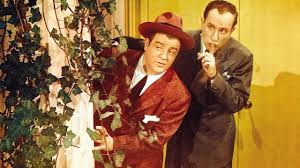
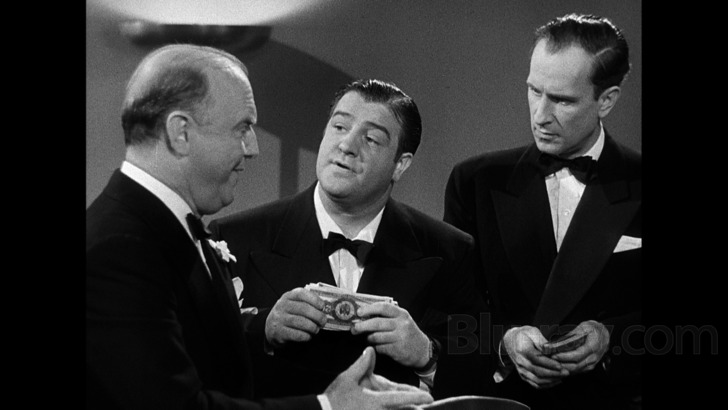
However, the real scene-stealers are Bud Abbott and Lou Costello. Although they are not the main characters, their presence adds an unforgettable comedic touch to the film. They play Abbott and Costello (appropriately named Abbott and Costello in the movie), a pair of bumbling friends who get entangled in the romantic hijinks. Their comedic timing and chemistry are impeccable, and they deliver some of the film’s funniest moments, particularly in their classic “Who’s on First?” routine, which, while not fully fleshed out here, gives a glimpse of their future greatness.
Edward Sutherland’s direction is competent, if not particularly innovative. The film’s pacing is brisk, keeping the audience engaged with a mix of comedy, romance, and musical interludes. The musical numbers, featuring songs like “It’s Only Love” and “You’re My Thrill,” are well-executed and add a pleasant variety to the film. Allan Jones’s singing is a highlight, showcasing his talents and providing some of the movie’s most memorable moments.
The cinematography, handled by Rudolph Maté, captures the tropical settings with a vibrant palette, making effective use of the Caribbean locales to enhance the film’s exotic appeal. The visual style, while typical of romantic comedies of the era, adds a layer of charm and escapism that complements the story.
The screenplay, written by Joseph A. Fields, Felix Jackson, and Charles Grayson, is a mixed bag. While it provides a solid framework for the romantic plot and sets up several humorous situations, it sometimes relies too heavily on clichés and predictable twists. The dialogue, however, shines in moments, particularly in the exchanges involving Abbott and Costello. Their witty banter and physical comedy elevate the film, injecting a level of energy and hilarity that keeps the audience entertained.
Upon its release, “One Night in the Tropics” received a lukewarm reception from critics, who appreciated the comedic elements but found the plot somewhat formulaic. However, the film holds a special place in cinematic history as the launching pad for Abbott and Costello’s illustrious film career. Their performance in this movie led to a string of successful films and solidified their status as one of the greatest comedy duos of all time.
The musical aspect of “One Night in the Tropics” deserves special attention. The film features several musical numbers that are woven seamlessly into the narrative, adding a layer of entertainment that complements the romantic and comedic elements. Allan Jones, known for his tenor voice, delivers performances that are both engaging and memorable. Songs like “It’s Only Love” and “You’re My Thrill” are highlights, showcasing Jones’s vocal prowess and adding an extra dimension to the film.
The choreography and staging of these musical numbers are well-executed, reflecting the lavish production values typical of Universal Pictures during this era. The songs not only provide a break from the comedic antics but also help to advance the romantic subplot, adding depth to the characters’ relationships.
In addition to the main characters, the supporting cast of “One Night in the Tropics” contributes significantly to the film’s charm. William Frawley, who later became famous for his role as Fred Mertz on “I Love Lucy,” brings his trademark gruffness and comedic timing to the role of Roscoe. His interactions with the other characters, particularly Abbott and Costello, provide some of the film’s funniest moments.
The film also features an array of colorful secondary characters who add to the comedic chaos. These include traditional comic relief roles and eccentric personalities that populate the tropical setting, enhancing the film’s lighthearted tone.
While “One Night in the Tropics” may not have been designed as a showcase for Abbott and Costello, their contribution is undeniably the film’s standout feature. Their unique brand of humor, characterized by rapid-fire wordplay and slapstick physical comedy, is on full display here. Although their roles are secondary, they manage to steal every scene they are in, providing a glimpse of the comic genius that would later make them household names.
Their famous routines, though in nascent form, exhibit the timing and chemistry that would define their partnership. The film served as a proving ground for their talents, demonstrating their ability to connect with audiences through humor that is both timeless and universal.
The film strikes a balance between romance and comedy, a common formula in the romantic comedies of the 1940s. The central love triangle between Lucky, Steve, and Cynthia is handled with a light touch, avoiding melodrama and instead focusing on the humorous complications that arise from the “love insurance” plot device.
The comedic elements, driven largely by Abbott and Costello, ensure that the film maintains a lively and entertaining pace. Their involvement in the storyline, from their bumbling attempts to help Steve to their misunderstandings and mishaps, provides a steady stream of laughs that keep the audience engaged.
“One Night in the Tropics” is a product of its time, reflecting the cultural and cinematic norms of the early 1940s. The film’s portrayal of romance, comedy, and exotic locales aligns with the escapist entertainment that was popular during this period, offering audiences a reprieve from the realities of the world on the brink of World War II.
In terms of legacy, the film is significant not only for introducing Abbott and Costello to the silver screen but also for its place within the broader context of Hollywood’s Golden Age. It exemplifies the era’s penchant for blending genres and leveraging the star power of its cast to create engaging, lighthearted entertainment.
From a technical standpoint, “One Night in the Tropics” showcases the polished production values typical of Universal Pictures. The cinematography by Rudolph Maté captures the lush, tropical settings with vibrant colors and dynamic compositions, enhancing the film’s visual appeal. The set design and costumes further contribute to the film’s exotic atmosphere, immersing viewers in a world of romantic adventure.
The editing and pacing are tight, ensuring that the film’s various elements—from musical numbers to comedic set pieces—flow seamlessly together. The film’s score, composed by Jerome Kern and others, complements the on-screen action, adding an additional layer of enjoyment.
“One Night in the Tropics” is an enjoyable romantic comedy that benefits immensely from the comedic talents of Abbott and Costello. While the plot may not be groundbreaking and some characters could have been more fleshed out, the film’s humor, musical numbers, and engaging performances make it a worthwhile watch. It offers a nostalgic glimpse into the early days of a comedy duo that would go on to become legends in their own right. For fans of classic Hollywood comedy and romance, “One Night in the Tropics” is a charming and entertaining film that showcases the beginnings of Abbott and Costello’s incredible journey in the world of cinema.
 spryfilm.com