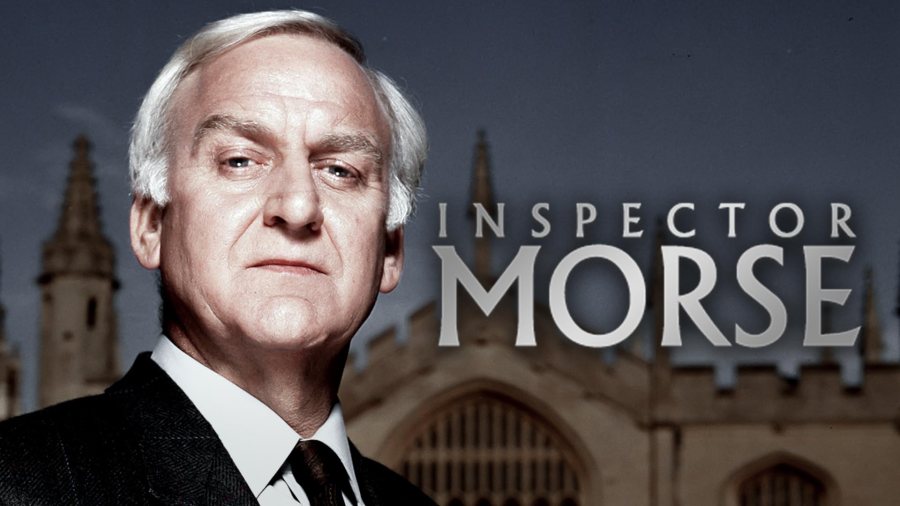
“Inspector Morse” (1987 – 2000)
Television Series

Thirty Three Episodes
Created by: Colin Dexter
Featuring: John Thaw, Kevin Whately and James Grout
Morse: “I always drink at lunchtime. It helps my imagination.”
“Inspector Morse” is a British television series that originally aired from 1987 to 2000. Based on the novels by Colin Dexter, the show stars John Thaw as the titular Inspector Endeavour Morse and Kevin Whately as his loyal Sergeant Robbie Lewis. Set in Oxford, the series combines intelligent, intricate plots with rich character development and a strong sense of place.
The show revolves around the complex and often melancholic Inspector Morse, a cultured and somewhat cantankerous detective with a penchant for classical music, real ale, and crossword puzzles. Each episode presents a standalone mystery, typically involving murder, with Morse and Lewis delving into the often dark and secretive world of Oxford’s academic and social circles. The plots are meticulously crafted, with plenty of red herrings and unexpected twists that keep viewers engaged and guessing until the final reveal.
John Thaw’s portrayal of Morse is nothing short of iconic. He brings depth and nuance to the character, capturing Morse’s intellect, vulnerabilities, and idiosyncrasies with remarkable skill. Kevin Whately provides an excellent counterbalance as the more down-to-earth Lewis, whose straightforward approach and loyalty complement Morse’s more enigmatic nature. The chemistry between Thaw and Whately is one of the series’ greatest strengths, adding a layer of warmth and humanity to the often grim subject matter.
The city of Oxford is almost a character in its own right. The series makes full use of its picturesque and historic locations, which provide a visually stunning backdrop for the stories. The university, with its ancient buildings and traditions, adds a unique atmosphere that enhances the overall mood of the show. The cinematography and production design are consistently high-quality, contributing to the immersive experience.
“Inspector Morse” stands out for its intellectual and mature approach to the crime genre. The show doesn’t rely on sensationalism or gratuitous violence; instead, it focuses on character-driven stories and moral complexities. Themes of guilt, redemption, and the human condition are explored thoughtfully. The tone is often somber and reflective, with moments of wit and dry humor that lighten the mood without undermining the seriousness of the narratives.
The music of “Inspector Morse,” composed by Barrington Pheloung, is another highlight. The hauntingly beautiful main theme and the carefully selected classical pieces enhance the emotional impact of the series. Music plays a significant role in Morse’s character development, reflecting his inner world and adding depth to the storytelling.
“Inspector Morse” has left a lasting legacy, spawning two successful spin-offs: “Lewis,” which follows Sergeant Lewis as he becomes an inspector, and “Endeavour,” a prequel series exploring the early career of a young Morse. Both spin-offs have been well-received, attesting to the enduring appeal of the original series.
“Inspector Morse” has had a significant cultural impact, not just in the UK but internationally. The series has been praised for elevating the detective genre by infusing it with literary and cultural references, sophisticated dialogue, and morally complex characters. It has influenced numerous other crime dramas that followed, both in terms of narrative style and character development. The show’s success has cemented its place as a classic of British television.
Strengths
Strong Lead Performances: John Thaw’s performance as Morse is often lauded as one of the greatest in television history. His ability to convey Morse’s internal struggles, intelligence, and occasional irascibility with subtlety and depth is remarkable.
Complex Characters: Beyond the leads, the show features a host of well-drawn supporting characters, each adding to the richness of the narrative. Guest stars often include notable actors, who bring additional gravitas to the episodes.
Intricate Plots: The mysteries in “Inspector Morse” are known for their complexity and attention to detail. They are well-crafted puzzles that reward careful viewing and intellectual engagement.
Atmospheric Setting: The use of Oxford as a setting provides a unique and atmospheric backdrop that is both beautiful and integral to the stories. The city’s architecture and academic environment add layers of intrigue and sophistication.
Thoughtful Themes: The series delves into themes such as justice, morality, human nature, and the consequences of actions. It doesn’t shy away from exploring the darker aspects of human experience, making it a thought-provoking watch.
Weaknesses
Pacing: Some viewers may find the pacing of the series slow, especially compared to modern, fast-paced crime dramas. “Inspector Morse” often takes its time to build atmosphere and develop characters, which might not appeal to everyone.
Melancholic Tone: The show’s often melancholic and introspective tone, while one of its strengths, might not suit all viewers. Those looking for lighter, more action-driven mysteries might find “Inspector Morse” too somber.
Complexity of Plots: While the intricate plots are a highlight for many, they can also be a challenge. Some episodes require close attention to keep track of the various clues, red herrings, and character relationships, which might be daunting for casual viewers.
Several episodes of “Inspector Morse” stand out for their exceptional storytelling and impact. Here are a few notable ones:
“The Dead of Jericho”: The series pilot introduces viewers to the complex world of Inspector Morse. The episode sets the tone for the series with a blend of academic intrigue, personal drama, and Morse’s characteristic melancholy.
“The Last Enemy”: This episode delves deep into the politics and rivalries within Oxford’s academic circles. It showcases Morse’s intellectual prowess and his ability to navigate complex social dynamics.
“Deceived by Flight”: Featuring a compelling plot involving a cricket match, this episode is notable for its blend of sport, murder, and Morse’s personal reflections, adding layers to his character.
“The Day of the Devil”: This episode deals with themes of satanism and psychological manipulation, providing a darker and more intense viewing experience. It highlights Morse’s determination and moral steadfastness.
“Death is Now My Neighbour”: This episode is crucial for revealing key aspects of Morse’s background and personal life. It includes significant character development and a poignant storyline.
Throughout its run, “Inspector Morse” offers significant development for its central characters. Morse, initially seen as a somewhat aloof and enigmatic figure, gradually reveals more of his personal history, vulnerabilities, and moral code. This evolution is expertly portrayed by John Thaw, whose nuanced performance ensures that Morse remains a compelling and multifaceted character.
Sergeant Lewis also undergoes considerable growth. Initially depicted as the more straightforward and unassuming partner, he develops a deeper understanding of Morse’s methods and motivations. By the end of the series, Lewis is more confident and assertive, setting the stage for his own leadership in the spin-off series “Lewis.”
One of the hallmarks of “Inspector Morse” is its frequent use of literary and cultural references. Morse’s love for classical music, literature, and crosswords often plays a role in the plots. These elements add a layer of intellectual depth and serve as a reflection of Morse’s inner life. For example, references to works by Shakespeare, T.S. Eliot, and other literary figures are woven into the narratives, enriching the viewing experience for those familiar with these texts.
“Inspector Morse” received widespread critical acclaim during its run. John Thaw’s portrayal of Morse earned him multiple awards, including BAFTA TV Awards for Best Actor. The series itself won numerous accolades for its writing, direction, and production quality. Its impact on the crime drama genre is evidenced by its enduring popularity and the successful spin-offs it inspired.
For viewers, “Inspector Morse” offers a rich and immersive experience. The combination of intriguing mysteries, strong character development, and the picturesque Oxford setting makes for compelling viewing. The series’ ability to balance intellectual challenges with emotional depth ensures that it resonates on multiple levels.
“Inspector Morse” has significantly influenced the crime drama genre, particularly in how it balances complex characters with intricate plots. Its success paved the way for more sophisticated and character-driven narratives in crime series. Shows like “Broadchurch,” “Sherlock,” and even American series like “True Detective” owe a debt to the path forged by “Inspector Morse.”
“Inspector Morse” is a masterful blend of mystery, character study, and atmospheric storytelling. Its intelligent plots, outstanding performances, and evocative setting make it a standout in the crime drama genre. Whether you’re a fan of classic whodunits or simply appreciate well-crafted television, “Inspector Morse” is a series that is well worth watching.





 spryfilm.com