“Dune” (1984)
Science Fiction

Running Time: 137 minutes
Written and Directed by: David Lynch
Featuring: Francesca Annis, Leonardo Cimino, Brad Dourif, José Ferrer, Linda Hunt, Freddie Jones, Richard Jordan, Kyle MacLachlan, Virginia Madsen, Silvana Mangano, Everett McGill, Kenneth McMillan, Jack Nance, Siân Phillips, Jürgen Prochnow, Paul Smith, Patrick Stewart, Sting, Dean Stockwell, Max von Sydow, Alicia Roanne Witt and Sean Young
Paul: “I must not fear. Fear is the mind-killer. Fear is the little-death that brings total obliteration. I will face my fear. I will let it pass over me and through me. And when it has passed I will turn the inner eye to see its path. Where it has gone, there will be nothing. Only I will remain.”
David Lynch’s adaptation of Frank Herbert’s science fiction epic, “Dune,” is a polarizing journey into the heart of one of literature’s most revered sagas. Released in 1984, Lynch’s interpretation diverges significantly from the source material, offering a visually stunning yet narratively complex experience that leaves audiences divided.
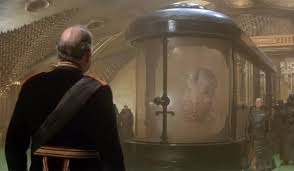
Visually, Lynch’s “Dune” is a masterpiece. From the vast, sweeping landscapes of the desert planet Arrakis to the intricate designs of the various factions’ costumes and technology, every frame is meticulously crafted to transport viewers to a distant and fantastical universe. The use of practical effects and elaborate set designs lends the film a tactile and immersive quality that remains impressive even by today’s standards.
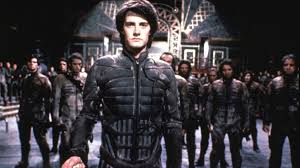
However, where “Dune” truly excels is in its ability to capture the thematic depth and political intrigue of Herbert’s novel. Lynch skillfully navigates the intricate web of alliances, betrayals, and power struggles that define the world of Arrakis, offering a nuanced exploration of themes such as environmentalism, religion, and the corrupting influence of power. The performances, particularly those of Kyle MacLachlan as the young hero Paul Atreides and Kenneth McMillan as the villainous Baron Harkonnen, are equally compelling, adding emotional weight to the film’s grandiose narrative.
That being said, Lynch’s “Dune” is not without its flaws. The film’s ambitious scope often leads to pacing issues, with certain plotlines feeling rushed or underdeveloped. Additionally, Lynch’s surreal and idiosyncratic filmmaking style may not be to everyone’s taste, with some viewers finding the film’s dreamlike atmosphere and nonlinear storytelling confusing or off-putting.
David Lynch’s “Dune” is a film that defies easy categorization. Released in 1984, it remains a testament to both the director’s unique vision and the challenges of adapting complex literary works to the silver screen.
At its core, Lynch’s “Dune” is a sprawling epic that follows the journey of Paul Atreides as he navigates the treacherous politics of the desert planet Arrakis. From the moment the film opens, viewers are plunged into a world of intrigue, betrayal, and cosmic conflict. Lynch’s masterful direction imbues each scene with a sense of foreboding, as if the very sands of Arrakis hold secrets waiting to be unearthed.
Visually, “Dune” is a triumph of design and imagination. From the towering sandworms that roam the desert to the ornate palaces of the noble houses, every aspect of the film’s production design is meticulously crafted to create a sense of wonder and awe. The special effects, while dated by today’s standards, still possess a certain charm and ingenuity that adds to the film’s otherworldly atmosphere.
Yet, for all its visual splendor, “Dune” is a film that thrives on ambiguity. Lynch eschews traditional narrative conventions in favor of a more dreamlike and impressionistic approach, leaving much of the story’s underlying themes and motivations open to interpretation. This ambiguity can be both a strength and a weakness, as it allows for multiple layers of meaning to be gleaned from the film but can also lead to frustration for viewers seeking a more straightforward narrative.
One aspect of “Dune” that has garnered particular attention is its treatment of the source material. Frank Herbert’s novel is a dense and multifaceted work that explores complex themes such as politics, religion, and ecology. While Lynch’s adaptation captures much of the novel’s scope and ambition, it also takes significant liberties with the source material, condensing and altering certain plot elements to fit within the constraints of a feature film. This approach has sparked debate among fans of the novel, with some praising Lynch’s bold reinterpretation and others lamenting the loss of certain key elements.
Lynch’s “Dune” is a bold and visionary adaptation that remains a captivating and thought-provoking cinematic experience. While it may not fully satisfy fans of Herbert’s novel or those unfamiliar with the source material, its stunning visuals, thematic depth, and ambitious scope make it a worthy addition to the science fiction canon. Whether viewed as a flawed masterpiece or a fascinating failure, Lynch’s “Dune” is sure to leave a lasting impression on those willing to embark on its epic journey.
Television Version
David Lynch’s “Dune” has long been a subject of fascination and debate among fans of science fiction cinema. In 1984, Lynch released his ambitious adaptation of Frank Herbert’s seminal novel to a mixed reception, with its sprawling narrative and idiosyncratic style dividing audiences and critics alike. However, decades later, Lynch’s vision of Arrakis underwent a transformation with the release of the TV version, offering fans a new perspective on this enigmatic cinematic journey.
Originally aired as a miniseries on television, the extended version of Lynch’s “Dune” provides viewers with a more comprehensive and cohesive retelling of Herbert’s epic saga. Clocking in at over three hours, the TV version incorporates previously unseen footage and narrative expansions that delve deeper into the complex mythology and characters of the Dune universe. This extended runtime allows for a more leisurely pace, giving the story room to breathe and allowing viewers to immerse themselves fully in the world of Arrakis.
Visually, the TV version of “Dune” retains much of the grandeur and spectacle of its theatrical counterpart. The sweeping vistas of the desert planet, the intricate costumes and set designs, and the otherworldly special effects are all present and accounted for, serving to transport viewers to a distant and fantastical realm. However, the expanded runtime also allows for greater clarity and coherence in the storytelling, with certain plotlines and character arcs benefiting from additional exposition and development.
One of the most significant changes in the TV version of “Dune” is the inclusion of new scenes and subplots that were originally left on the cutting room floor. These additions provide valuable context and insight into the motivations of key characters, as well as fleshing out elements of the story that may have felt underdeveloped in the theatrical release. Additionally, the TV version features a revised ending that offers a more satisfying resolution to certain plot threads, addressing one of the primary criticisms leveled against the original film.
Despite these improvements, Lynch’s “Dune” in its TV incarnation remains a divisive and polarizing work. Its unconventional narrative structure, surreal imagery, and abstract themes are likely to alienate some viewers, particularly those unfamiliar with the source material. However, for fans of Herbert’s novel and aficionados of Lynch’s oeuvre, the TV version of “Dune” represents a fascinating and worthwhile reimagining of a beloved science fiction classic.
Lynch’s “Dune” in its TV form is a captivating and immersive journey into the heart of one of literature’s most enduring sagas. While it may not completely satisfy everyone, its ambition, creativity, and sheer audacity make it a worthy addition to the ever-expanding pantheon of science fiction adaptations. Whether viewed as a flawed masterpiece or a fascinating curiosity, Lynch’s “Dune” in its TV incarnation is sure to leave a lasting impression on those brave enough to venture into its sands.
Special Features & Technical Specs:
- 1080p High-definition presentation on Blu-ray
- Theatrical and Extended TV Version
- Audio Commentary on the Extended TV Version by film journalist Max Evry (2024)
- “The Sleeper Must Awaken: Making Dune” – feature-length documentary – NEW EXTENDED VERSION (93 minutes)
- “Beyond Imagination: Merchandising Dune” – featurette
- “Prophecy Fulfilled: Scoring Dune” – featurette
- “Destination Dune” – featurette
- “Impressions of Dune” – documentary
- “Designing Dune” – featurette
- “Dune Models & Miniatures” – featurette
- “Dune FX” – featurette
- “Dune Costumes” – featurette
- Deleted scenes with introduction by Raffaella de Laurentiis
- Vintage interview with actor Paul Smith
- Vintage interview with production coordinator Golda Offenheim
- Vintage interview with make-up effects artist Christopher Tucker
- Theatrical Trailers and TV Spots
- Image Galleries
- Optional English HOH Subtitles
- Audio DTS-HD Master Audio 5.1
- Aspect Ratio 2.35:1




 spryfilm.com