“Priscilla” (2023)
Drama

Running Time: 113 minutes
Written and directed by: Sofia Coppola
Featuring: Cailee Spaeny, Jacob Elordi and Dagmara Domińczyk
Priscilla: “Was there something you’re hiding?”
Elvis: “I don’t have a goddamn thing to hide! You’re just being too goddamn aggressive and demanding!”
Forget the kangaroos and sunburnt landscapes, folks. This “Priscilla” isn’t your typical Oz road trip. We’re ditching the Outback for the gilded cage of Graceland, because director Sofia Coppola has spun a spellbinding, introspective portrait of Priscilla Presley’s early life with Elvis. Forget biopics, this is a deeply personal tapestry woven with whispers, yearning, and the faint echo of a rock ‘n’ roll dream.
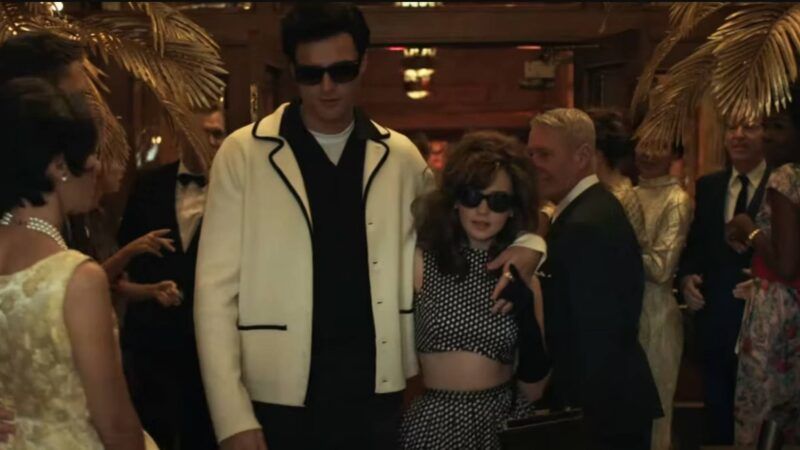
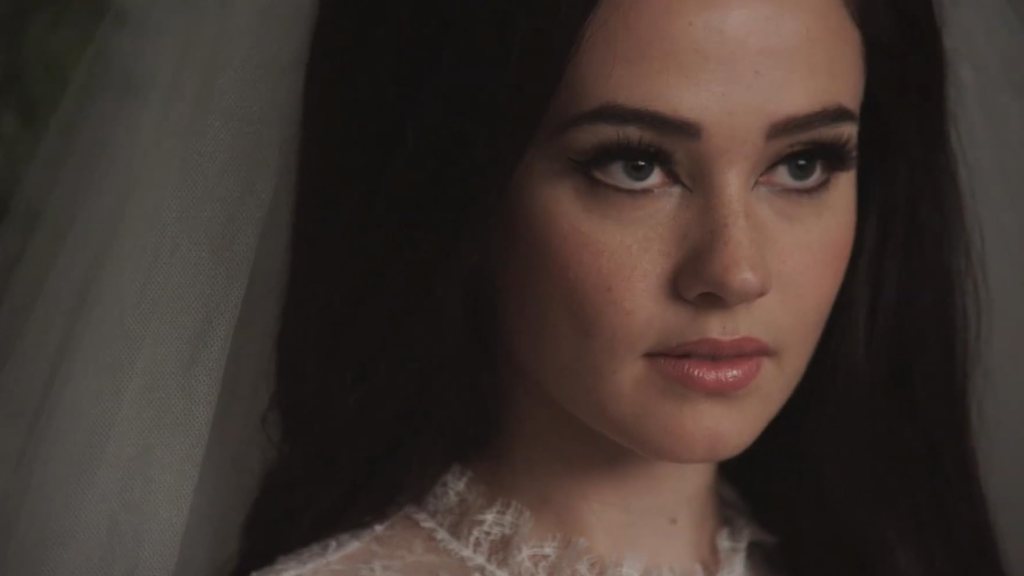
Cailee Spaeny as Priscilla is a revelation. Gone are the flamboyant costumes and dance numbers; instead, we see a shy 14-year-old thrust into the blinding spotlight of Elvis’s world. Coppola captures the claustrophobia and gilded loneliness of life behind the King’s curtain, with long, lingering shots of Priscilla trapped in plush rooms, lost in Elvis’s whirlwind.
Elvis himself, played with brooding intensity by Ansel Elgort, remains an elusive figure. We rarely see him perform, the King’s music merely a distant echo filtering through Priscilla’s world. This choice is brilliant, forcing us to see him through Priscilla’s eyes – not as the idol, but as a complex, troubled man.
The film unfolds like a hazy memory, dreamlike sequences blending with stark realities. We see Priscilla grapple with isolation, navigate a world that constantly objectifies her, and search for her own identity amidst the Presley circus. There’s no villain, no grand drama, just the slow, suffocating pressure of a life lived in someone else’s shadow.
Coppola’s signature pastel palette takes on a newfound melancholic beauty here. The candy-colored Memphis mansions feel more like gilded prisons, while the sun-drenched desert becomes a symbol of Priscilla’s yearning for escape. The soundtrack, a mix of 50s classics and hushed contemporary melodies, further underscores the film’s emotional complexity.
This “Priscilla” is not a spectacle. It’s a slow burn, a quiet meditation on vulnerability, self-discovery, and the cost of living a fairy tale. It’s a film that lingers, its haunting whispers resonating long after the credits roll.
Prepare to be captivated, not by glitter and feathers, but by the profound emotional landscape Coppola paints. This “Priscilla” won’t leave you humming Elvis tunes; it’ll leave you pondering the complexities of love, fame, and the search for oneself within the dazzling cage of another’s dream.
Coppola’s masterful touch within “Priscilla” is like unpacking a velvet-lined treasure chest of emotions. Her signature style injects the film with a unique blend of nostalgia, melancholic beauty, and a quiet intimacy that transcends the typical biopic formula.
Gone are the bombastic concert scenes and glittery spectacle one might expect from an Elvis story. Instead, Coppola opts for a slow, deliberate pace, letting us linger in the hushed spaces between Priscila’s thoughts and desires. The camera lingers on her delicate expressions, capturing the weight of unspoken anxieties and longing that simmer beneath the surface.
Coppola’s signature use of long shots and natural light further amplifies this introspective tone. Priscilla seems dwarfed by the opulent Memphis mansions, her small figure swallowed by the gilded cage of Elvis’s world. The sun-drenched desert landscapes, often stark and silent, mirror the emotional emptiness she grapples with.
Moreover, Coppola’s colour palette is a masterclass in conveying emotional dissonance. While one might expect vibrant Memphis to explode with colour, instead, it’s subdued in pastel hues, creating a sense of unreality and emotional detachment. Conversely, the muted tones of Priscilla’s inner world occasionally burst into saturated flashes of longing, like when she glimpses Elvis onstage or catches a glimpse of her own potential beyond the confines of Graceland.
The soundtrack plays a crucial role in this dance of light and emotion. Instead of bombastic rock ‘n’ roll, Coppola opts for hushed contemporary melodies and Elvis’s music filtered through Priscilla’s ears, often faint and distant. This creates a sense of yearning and isolation, as if Priscilla yearns for a life beyond the echoes of the King’s legend.
Ultimately, Coppola’s direction transforms “Priscilla” from a biopic into a poignant character study. She doesn’t shy away from the complexities of the Presley marriage, but instead, her focus is on Priscilla’s emotional journey, her search for identity within a gilded cage. By eschewing spectacle and embracing silence, Coppola creates a hauntingly beautiful portrait of a young woman lost in a world of fame, yearning for a voice of her own.
This “Priscilla” is not about Elvis; it’s about Priscilla finding her own rhythm in the shadow of the King. And for that, we owe a debt of gratitude to Sofia Coppola’s masterful direction, which paints a haunting, lyrical portrait of yearning, self-discovery, and the quiet echoes of a dream life.




 spryfilm.com