
“The Dresser” (1983)
Drama

Running Time: 118 minutes
Written by: Ronald Harwood
Directed by: Peter Yates
Featuring: Albert Finney, Tom Courtenay, Edward Fox, Zena Walker, Eileen Atkins, Michael Gough and Cathryn Harrison
Sir: “The critics? No, I have nothing but compassion for them. How can I hate the crippled, the mentally deficient, and the dead?”
“The Dresser,” directed by Peter Yates and released in 1983, is a cinematic adaptation of Ronald Harwood’s acclaimed play of the same name. Set against the backdrop of World War II, this film is a poignant exploration of the power dynamics and personal sacrifices within a Shakespearean theater company struggling to keep the show going amidst the chaos of war.
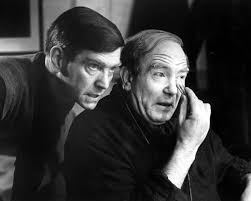
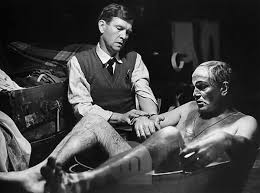
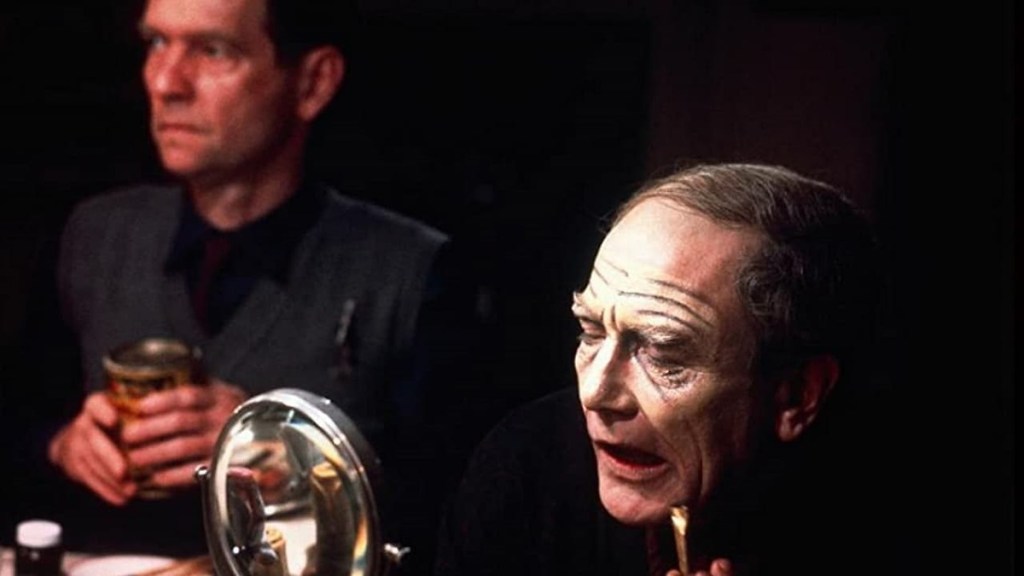
At its core, “The Dresser” delves into the complex relationship between Sir (played by Albert Finney), an aging and temperamental actor-manager, and his loyal but long-suffering dresser, Norman (played by Tom Courtenay). The film unfolds backstage, offering viewers a raw and intimate glimpse into the world behind the curtains, where egos clash, emotions run high, and the line between reality and performance blurs.
Albert Finney delivers a tour-de-force performance as Sir, capturing the mercurial nature of his character with remarkable depth and nuance. From moments of grandiosity to vulnerability, Finney navigates Sir’s emotional spectrum with finesse, making him both a towering figure and a frail human being grappling with his mortality.
Opposite Finney, Tom Courtenay shines as Norman, the devoted dresser who is as much a caretaker as he is a confidant to Sir. Courtenay infuses Norman with a quiet strength and unwavering loyalty that anchors the film, serving as the moral compass amidst the chaos of the theater world. His portrayal is both touching and poignant, capturing the complexities of a man whose life is inextricably tied to the whims of his employer.
The supporting cast, including Eileen Atkins as Madge, the company’s stage manager, and Edward Fox as Oxenby, Sir’s long-suffering fellow actor, further enrich the film with their nuanced performances. Each character brings a distinct perspective to the story, adding layers of depth and authenticity to the ensemble.
One of the film’s greatest strengths lies in its ability to seamlessly weave together moments of humor, pathos, and tragedy. Through sharp dialogue and subtle gestures, “The Dresser” explores themes of ambition, loyalty, and the transformative power of art. It reminds us that even in the darkest of times, the show must go on, and that the bonds forged in the crucible of the theater are often the most enduring.
Visually, “The Dresser” is a masterclass in cinematography, with its intimate framing and evocative lighting capturing the intimacy and intensity of the backstage world. The film’s period setting is brought to life with meticulous attention to detail, immersing viewers in the bygone era of wartime Britain.
In addition to its visual splendor, “The Dresser” is elevated by its haunting score, composed by James Horner. The music serves as a haunting backdrop to the film’s emotional highs and lows, heightening the drama and immersing viewers in the world of the story.
Overall, “The Dresser” is a timeless masterpiece that continues to resonate with audiences decades after its release. With its powerhouse performances, richly drawn characters, and poignant storytelling, it stands as a testament to the enduring power of the human spirit in the face of adversity. Whether you’re a theater aficionado or simply a lover of great cinema, “The Dresser” is a film that demands to be seen.
One of the most compelling elements of the film is its exploration of the symbiotic relationship between Sir and Norman. Their dynamic is not merely that of employer and employee but rather of mentor and protege, surrogate father and son. Sir, with his larger-than-life persona and theatrical prowess, represents the epitome of the old guard, clinging to tradition and the glory days of the theater. In contrast, Norman, with his quiet devotion and unwavering support, embodies the younger generation, eager to prove himself and carry on the legacy of his mentor.
The film delves into the themes of aging and mortality with sensitivity and poignancy. Sir’s declining health and faltering memory serve as a constant reminder of the passage of time and the fragility of life. As the war rages on outside the theater walls, the characters are confronted with their own mortality, forcing them to confront their fears and insecurities in the face of uncertainty.
At its heart, “The Dresser” is a love letter to the theater itself, celebrating its power to transport, transform, and heal. Through the characters’ unwavering dedication to their craft, we witness the redemptive power of art in the midst of chaos and despair. The theater becomes a sanctuary, a place where the characters can find solace and purpose amidst the turmoil of war.
The film also offers a fascinating glimpse into the inner workings of a theater company, from the backstage politics to the rituals and superstitions that govern the lives of its members. Through intimate conversations and behind-the-scenes glimpses, we come to understand the sacrifices and compromises that are made in the pursuit of artistic excellence.
“The Dresser” is a testament to the enduring power of human connection and the resilience of the human spirit. It reminds us that even in the darkest of times, there is light to be found in the bonds of friendship, loyalty, and love. As Sir and Norman navigate the highs and lows of their tumultuous relationship, they ultimately find solace in each other’s company, proving that sometimes the greatest performances are the ones that happen offstage.
“The Dresser” is a cinematic gem that resonates on multiple levels. With its powerhouse performances, rich thematic depth, and stunning visuals, it stands as a timeless classic that continues to captivate audiences around the world. Whether you’re a fan of theater, a lover of great storytelling, or simply someone who appreciates the beauty of the human spirit, “The Dresser” is a film that is not to be missed.



 spryfilm.com