
“Mountains of the Moon” (1990)
Drama

Running Time: 136 minutes
Written by: William Harrison and Bob Rafelson
Directed by: Bob Rafelson
Featuring: Patrick Bergin and Iain Glen
Richard Burton: “Religion? I’ve seen a man raised from the dead in India. I have kissed the holy stone in Kaba and Mecca. I have read Confucius, the Koran and the Kabbalah in the original manuscripts… As for my own spiritual progress… I’m working on it.”
In the vast expanse of cinema, certain films stand out not just for their entertainment value, but for their ability to transport audiences to distant lands, both physical and emotional. One such film is “Mountains of the Moon,” directed by Bob Rafelson. Released in 1990, this epic adventure chronicles the remarkable journey of explorers Richard Burton and John Hanning Speke as they venture into the uncharted territory of Africa in search of the source of the Nile River. With stunning cinematography, powerful performances, and a narrative that delves into the depths of human ambition and friendship, “Mountains of the Moon” is a masterful exploration of both the physical and metaphysical realms.
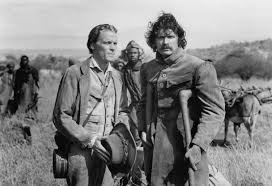
At its core, “Mountains of the Moon” is a tale of exploration—an odyssey into the unknown driven by the insatiable curiosity of its protagonists. Richard Burton, portrayed with captivating intensity by Patrick Bergin, emerges as the charismatic leader of the expedition, driven by a thirst for knowledge and a desire to leave his mark on history. His counterpart, John Hanning Speke, played with equal conviction by Iain Glen, embodies the spirit of adventure, yet is haunted by his own insecurities and the specter of failure.
As the two men journey deeper into the heart of Africa, they are confronted not only by the physical challenges of the terrain but also by the complexities of human nature. Rafelson deftly explores the dynamics of power and friendship, as Burton and Speke navigate the treacherous waters of ambition and betrayal. Their relationship is a complex tapestry of loyalty and rivalry, shaped by their shared goals and divergent paths.
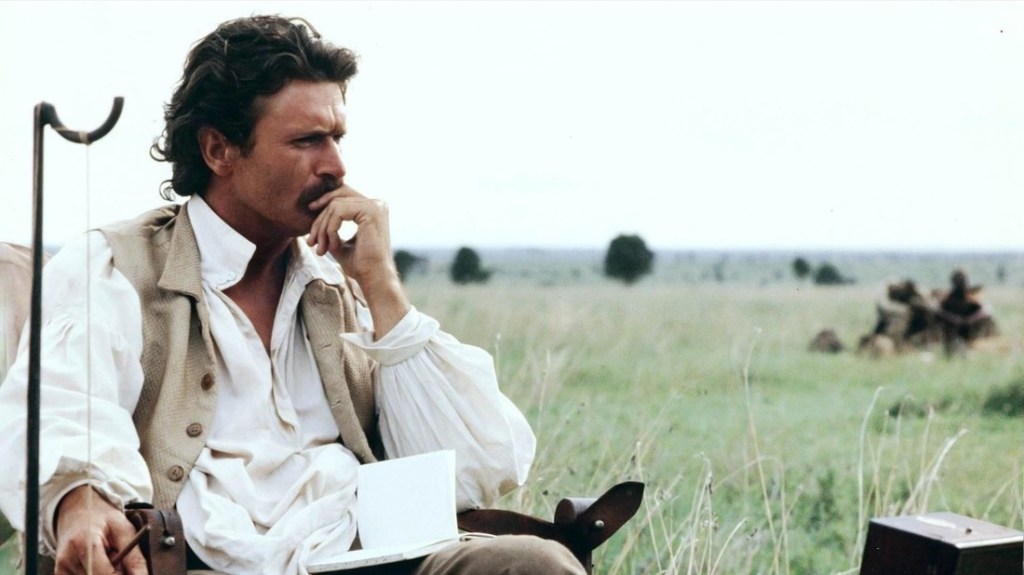
One of the most striking aspects of “Mountains of the Moon” is its breathtaking cinematography. From the sweeping vistas of the African landscape to the intimate moments shared between characters, every frame is imbued with a sense of grandeur and beauty. Cinematographer Roger Deakins masterfully captures the harsh beauty of the wilderness, juxtaposing the awe-inspiring majesty of nature with the fragility of human existence.
The use of light and shadow is particularly striking, as Deakins paints a vivid portrait of the African landscape, bathed in the golden hues of the sun and shrouded in the eerie glow of moonlight. Each shot is meticulously composed, conveying a sense of both the sublime and the surreal. Whether capturing the vastness of the desert or the claustrophobic confines of the jungle, Deakins’ cinematography serves as a visual feast for the eyes, drawing viewers deeper into the world of the film.
While “Mountains of the Moon” is undeniably an epic adventure, it is also a deeply human story, exploring themes of identity, ambition, and the search for meaning. At its heart are the complex characters of Burton and Speke, whose relationship serves as the emotional anchor of the film. Bergin and Glen deliver powerhouse performances, capturing the nuance and depth of their respective roles.
Burton, with his fierce intellect and brooding charisma, is a man driven by a burning desire to conquer the unknown. Yet beneath his steely exterior lies a vulnerability born of past traumas and unfulfilled dreams. Bergin imbues the character with a sense of tragic grandeur, portraying him as a man haunted by his own demons yet unwilling to succumb to despair.
In contrast, Speke is portrayed as a more enigmatic figure, his outward bravado masking a deep sense of insecurity and self-doubt. Glen brings a quiet intensity to the role, capturing Speke’s inner turmoil with subtle yet powerful nuances. As the expedition progresses, Speke finds himself increasingly at odds with Burton, torn between his loyalty to his friend and his own quest for recognition.
At its core, “Mountains of the Moon” is a film about the nature of discovery—not just of the external world, but of the internal landscape of the human soul. Rafelson deftly explores the interconnectedness of the two, drawing parallels between the physical journey of exploration and the emotional journey of self-discovery.
As Burton and Speke traverse the unforgiving terrain of Africa, they are forced to confront not only the harsh realities of the natural world but also the complexities of their own innermost desires and fears. The film is filled with moments of quiet introspection, as the characters grapple with questions of identity, purpose, and the elusive nature of truth.
In the end, “Mountains of the Moon” is a testament to the indomitable spirit of human curiosity and the enduring power of friendship. Through its sweeping vistas and intimate character moments, the film invites viewers on a journey of exploration and self-discovery, reminding us of the boundless potential of the human spirit.
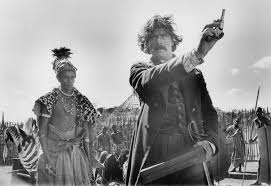
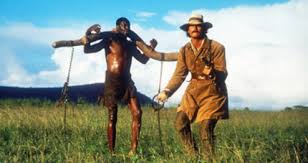
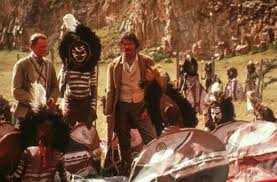
Within the grandeur of exploration lies a darker undercurrent—the theme of colonialism and its impact on indigenous cultures. As Burton and Speke journey deeper into Africa, they encounter various tribes and civilizations, each with their own customs, traditions, and ways of life. Rafelson does not shy away from depicting the complexities of these encounters, highlighting the clash of cultures and the inherent power dynamics at play.
The relationship between the explorers and the indigenous peoples they encounter is fraught with tension and ambiguity. On one hand, there is a sense of wonder and curiosity as Burton and Speke interact with these exotic cultures, eager to learn from them and incorporate their knowledge into their own quest for discovery. On the other hand, there is an underlying sense of superiority and entitlement, as the explorers impose their own values and beliefs onto the native populations, often with devastating consequences.
Rafelson does not pass judgment on either side but instead presents a nuanced portrayal of the complexities of cultural encounter. Through subtle gestures and fleeting glances, he conveys the sense of mutual fascination and apprehension that characterizes these interactions, inviting viewers to reflect on the legacy of colonialism and its ongoing impact on the world today.
At its heart, “Mountains of the Moon” is a quest for truth—a relentless pursuit of knowledge and understanding in the face of uncertainty and adversity. For Burton and Speke, the search for the source of the Nile is more than just a physical journey—it is a metaphorical odyssey into the depths of human consciousness, where the boundaries between reality and perception blur and the quest for truth becomes a matter of existential significance.
Throughout the film, Rafelson explores the nature of truth and its elusive nature, challenging viewers to question their own assumptions and beliefs. What is truth, and how do we know it when we see it? These are the questions that lie at the heart of “Mountains of the Moon,” as Burton and Speke grapple with the conflicting narratives of their own experiences and the world around them.
In the end, Rafelson leaves these questions unanswered, inviting viewers to draw their own conclusions and embark on their own journey of discovery. For Burton and Speke, the search for the source of the Nile may have ended in controversy and disillusionment, but their quest for truth—and the human spirit of exploration it represents—lives on, inspiring future generations to seek out the unknown and challenge the limits of what is possible.
“Mountains of the Moon” is a film of remarkable depth and complexity, weaving together themes of exploration, friendship, colonialism, and the search for truth into a rich tapestry of human experience. Through its stunning visuals, powerful performances, and thought-provoking narrative, the film invites viewers on a journey of discovery and self-reflection, challenging them to confront the complexities of the world and their own place within it.
As Burton and Speke venture into the uncharted territories of Africa, they remind us of the boundless potential of the human spirit and the enduring quest for knowledge that drives us forward. In the end, “Mountains of the Moon” is more than just a story of exploration—it is a testament to the resilience of the human spirit and the transformative power of the unknown.
“Mountains of the Moon” is a cinematic masterpiece that transcends the confines of the adventure genre, offering a profound meditation on the nature of discovery and the human condition. With its stunning visuals, powerful performances, and rich thematic depth, the film stands as a testament to the enduring power of storytelling and the timeless allure of the unknown. Whether viewed as a thrilling adventure or a poignant exploration of the human psyche, “Mountains of the Moon” is a film that lingers in the mind long after the credits have rolled, inviting viewers to embark on their own journey of discovery.

 spryfilm.com