“The Ugly American” (1958)
Drama

Running Time: 120 minutes
Written by: Stewart Stern
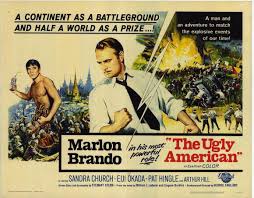
Featuring: Marlon Brando, Sandra Church, Eiji Okada, Pat Hingle, Judson Pratt, Reiko Sato and Arthur Hill
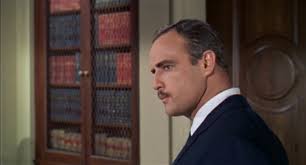
Ambassador Harrison Carter MacWhite: “I’d like to interrupt, eh, gentlemen, to point out that the only thing that is clear so far is that there’s no clarity at all. So if you don’t mind, we’ll stop this squabbling and I’ll present you with some facts. About three hours ago, there were several people trampled to death, a policeman was pistol-whipped until his face looked like raspberry jam, and the man who represents the person of the president of United States was almost killed, along with his wife, and other members of his party. Now I- I don’t mind telling you that I was afraid out there this afternoon, but I didn’t know what fear was until this meeting got started. You gentlemen have given me something to think about. Now, here’s something for you. Confusion, ignorance, and indifference will cease as of this moment. Information about everything that happens in Sarkhan will kept up to date and that’s seven days a week. That’s seven days a week gentleman! And Sundays included, and I don’t give a damn where you live! And the next time that there are six thousand people that begin a riot, or six people, without this embassy being aware of it, those responsible will be on the first plane out of here with my personal recommendation that they be dropped from the foreign service!”
“The Ugly American” is a thought-provoking film that delves into the complexities of foreign diplomacy and cultural clashes. Adapted from the novel of the same name by William J. Lederer and Eugene Burdick, the movie offers a stark portrayal of America’s involvement in Southeast Asia during the Cold War era, particularly in the fictional nation of Sarkhan.
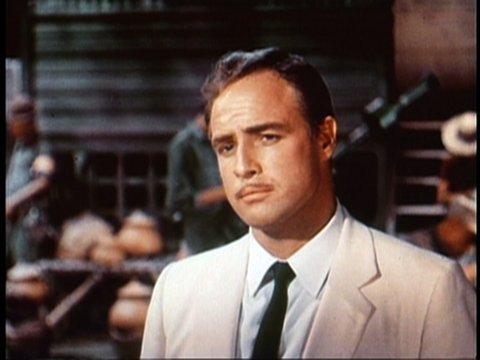
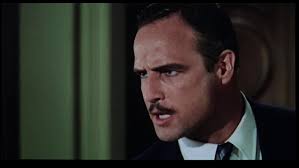
At the heart of the story is the character of Ambassador Harrison Carter MacWhite, brilliantly portrayed by Marlon Brando. MacWhite is a well-intentioned but flawed diplomat who is appointed to Sarkhan with the aim of promoting American interests and countering communist influence in the region. However, his approach is often misguided, reflecting the title of the film – “The Ugly American” – which refers to the negative perceptions of American arrogance and ignorance abroad.
One of the film’s strengths lies in its exploration of cultural differences and the impact of imperialism on indigenous populations. As MacWhite grapples with the challenges of navigating Sarkhanese politics and society, he encounters resistance and resentment from the locals who feel marginalized by American intervention. The film does not shy away from depicting the consequences of Western interference, including the rise of anti-American sentiment and the recruitment of Sarkhanese villagers by communist insurgents.
In addition to its political themes, “The Ugly American” also offers compelling character dynamics and moral dilemmas. MacWhite’s relationship with his aide, Deong, played by Eiji Okada, is particularly compelling, as it evolves from one of mistrust to mutual respect. Deong serves as a voice of dissent, challenging MacWhite’s assumptions and highlighting the hypocrisy of American foreign policy. Their interactions underscore the complexities of power dynamics and the inherent tensions between idealism and pragmatism in diplomacy.
The film is also notable for its strong supporting cast, including Sandra Church as MacWhite’s wife, Marion, and Pat Hingle as Ambassador Sears, MacWhite’s predecessor. Each character brings depth and nuance to the narrative, contributing to the film’s exploration of themes such as loyalty, betrayal, and the personal cost of political ambition.
Visually, “The Ugly American” is striking, with evocative cinematography that captures the beauty and brutality of the Sarkhanese landscape. The film’s score, composed by Jerry Goldsmith, enhances the mood and atmosphere, adding emotional resonance to key scenes.
“The Ugly American” serves as a cautionary tale about the dangers of cultural ignorance and the consequences of imposing one’s values and ideologies on others. Through MacWhite’s journey, the film highlights the importance of empathy, humility, and genuine engagement with foreign cultures. It challenges viewers to question their own assumptions about foreign policy and to recognize the humanity and dignity of people from different backgrounds.
The film’s relevance extends beyond its Cold War context, resonating with contemporary debates about American imperialism, interventionism, and soft power. As the United States continues to grapple with its role on the global stage, “The Ugly American” serves as a timely reminder of the complexities and responsibilities inherent in international relations.
One of the film’s most powerful moments comes towards the end when Mac White reflects on his failures and the disillusionment he feels with American foreign policy. It is a poignant reminder that even well-intentioned actions can have unintended consequences, and that true diplomacy requires listening as much as it does speaking.
“The Ugly American” raises important questions about the role of individuals within larger geopolitical structures. While Ambassador MacWhite is a central figure, the film also depicts the contributions and perspectives of other characters, from embassy staff to Sarkhanese villagers. Each character represents a different facet of the complex web of relationships and interests that shape international diplomacy.
Moreover, the film’s examination of propaganda and media manipulation remains particularly pertinent in today’s digital age. As MacWhite grapples with how best to communicate America’s message to the people of Sarkhan, the film highlights the power of narratives in shaping public perception and the challenges of navigating competing interests in the information landscape.
“The Ugly American” also offers a nuanced portrayal of the human cost of political conflict. Through its depiction of the violence and suffering endured by Sarkhanese civilians caught in the crossfire of ideological struggles, the film emphasizes the importance of prioritizing human welfare over geopolitical ambitions. It serves as a reminder that behind every policy decision and diplomatic maneuver are real people whose lives are profoundly impacted.
“The Ugly American” is a rich and multifaceted film that rewards multiple viewings and deep reflection. Its themes of cultural misunderstanding, political disillusionment, and the search for common ground resonate far beyond its Cold War origins, making it a timeless classic that continues to provoke thought and discussion. Whether viewed as a historical artifact or as a commentary on contemporary geopolitics, “The Ugly American” remains essential viewing for anyone interested in the complexities of international relations and the human stories behind the headlines.
“The Ugly American” is a compelling and timely film that remains relevant in its exploration of the complexities of international relations and the human cost of ideological conflict. With its nuanced characters, thought-provoking themes, and powerful performances, it is a must-watch for anyone interested in political cinema.


 spryfilm.com