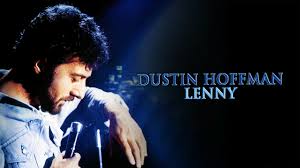
“Lenny” (1974)
Drama

Running Time: 111 minutes
Written by: Julian Barry based on his play
Featuring: Dustin Hoffman and Valerie Perrine
Lenny Bruce: “What’s the worst thing you can say to anybody? ”Fuck you, mister!” That’s really weird, because if l wanted to hurt you, l should say, ”Unfuck you, mister” Because ”fuck you” is really nice, man.”
“Lenny” is a biographical drama film directed by Bob Fosse, released in 1974. It chronicles the life of the controversial stand-up comedian Lenny Bruce, portrayed brilliantly by Dustin Hoffman. The film delves into Bruce’s rise to fame, his struggles with censorship, his legal battles, and his personal life, providing a raw and unflinching portrayal of a complex and troubled individual.
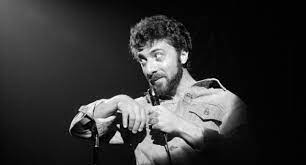
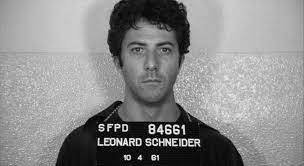
From the very beginning, “Lenny” immerses viewers in the world of 1950s and 1960s America, a time of great social change and upheaval. Fosse’s direction captures the gritty atmosphere of the era, from the smoky nightclubs of Greenwich Village to the courtrooms where Bruce fought for his right to free speech. The film’s visual style, characterized by its use of black-and-white cinematography and stark lighting, adds to its sense of authenticity and immediacy.
At the heart of “Lenny” is Dustin Hoffman’s mesmerizing performance as the titular character. Hoffman completely inhabits the role, capturing Bruce’s wit, intelligence, and vulnerability with remarkable nuance. He delivers Bruce’s incisive monologues with a razor-sharp precision, infusing them with both humor and pathos. Hoffman’s portrayal is nothing short of transformative, earning him critical acclaim and an Academy Award nomination for Best Actor.
Equally impressive is Valerie Perrine as Honey Bruce, Lenny’s wife. Perrine brings depth and humanity to her portrayal of a woman torn between her love for her husband and her frustration with his self-destructive behavior. The scenes between Hoffman and Perrine crackle with chemistry, portraying a complex and often tumultuous relationship with honesty and authenticity.
In addition to its outstanding performances, “Lenny” is also notable for its fearless exploration of controversial subject matter. The film pulls no punches in its depiction of Bruce’s confrontations with authority figures, including his infamous obscenity trials. Through Bruce’s legal battles, the film raises important questions about the limits of free speech and the power of censorship, issues that remain relevant to this day.
However, “Lenny” is not just a courtroom drama; it is also a deeply personal story about one man’s struggle to find his voice in a society that often seeks to silence him. Fosse’s screenplay, based on the book “Lenny” by Julian Barry, offers a nuanced and empathetic portrayal of Bruce, presenting him as a flawed but ultimately sympathetic figure. By exploring Bruce’s inner demons and insecurities, the film invites viewers to empathize with his struggles and understand the forces that drove him to push the boundaries of acceptable speech.
In terms of its technical aspects, “Lenny” is a masterclass in filmmaking. Fosse’s direction is confident and assured, making effective use of flashbacks and montages to weave together the various strands of Bruce’s life story. The film’s editing is crisp and dynamic, keeping the narrative moving at a brisk pace without sacrificing depth or complexity. And the haunting score by Ralph Burns adds an additional layer of emotional resonance to the proceedings, underscoring the film’s themes of alienation and longing.
Beyond its exploration of free speech and censorship, “Lenny” also delves into the darker aspects of fame and celebrity. Bruce’s relentless pursuit of truth and his refusal to compromise his principles ultimately take a toll on his mental and physical health. As he becomes increasingly isolated and ostracized by the mainstream entertainment industry, the film exposes the high cost of speaking truth to power.
Furthermore, “Lenny” offers a poignant commentary on the nature of comedy itself. Bruce’s brand of humor, characterized by its fearless social commentary and willingness to tackle taboo subjects, challenges conventional notions of what is considered acceptable or appropriate. In many ways, Bruce can be seen as a pioneer of modern comedy, paving the way for future generations of comedians to push the boundaries of satire and subversion.
In addition to its thematic richness, “Lenny” also stands out for its innovative storytelling techniques. Fosse employs a non-linear narrative structure, blending scenes from Bruce’s past and present to create a mosaic of memories and experiences. This approach allows the film to explore the complexities of Bruce’s character in depth, revealing the various influences and events that shaped his worldview.
Moreover, “Lenny” is anchored by a strong supporting cast, including performances by Jan Miner as Bruce’s formidable mother, and Stanley Beck as his loyal manager. Each actor brings depth and humanity to their respective roles, adding layers of complexity to the film’s ensemble cast.
One of the most striking aspects of “Lenny” is its refusal to sentimentalize its subject matter. Fosse presents Bruce as a deeply flawed individual, capable of both brilliance and self-destructive behavior. By resisting the temptation to romanticize or idolize Bruce, the film offers a more honest and nuanced portrayal of its protagonist, allowing viewers to engage with his story on a deeper level.
“Lenny” is a powerful and thought-provoking film that offers a compelling portrait of one of the most influential comedians of the 20th century. Anchored by Dustin Hoffman’s tour-de-force performance, the film explores complex themes of free speech, censorship, and personal expression with intelligence and sensitivity. Nearly fifty years after its release, “Lenny” remains a relevant and timely work of cinema that continues to provoke discussion and debate.
Special Features
- 1080p High-definition presentation on Blu-ray
- Audio Commentary by film historian/filmmaker Daniel Kremer and filmmaker Henry Jaglom (2023)
- Audio Commentary by film historians Nick Redman and Julie Kirgo
- Dead Neon: The Many Faces of Lenny Bruce on Film – Video Essay
- On Fosse Time: Editing Lenny – an interview with editor Alan Heim on his collaborations with director Bob Fosse
- Trailers From Hell: Robert Weide on Lenny
- Isolated Music & Effects track
- Theatrical Trailer
- Audio LPCM 2.0
- Original Aspect Ratio 1.85:1
- Optional English HOH Subtitles




 spryfilm.com