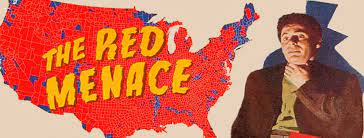
“The Red Menace” (1949)
Film Noir

Running Time: 67 minutes
Written by: Albert DeMond and Gerald Geraghty
Directed by: R. G. Springsteen
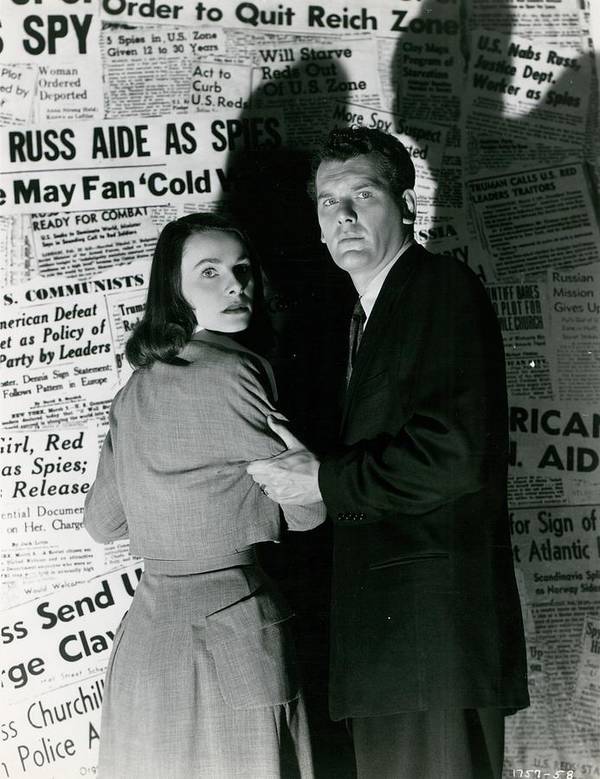
Featuring: Robert Rockwell and Hannelore Axman
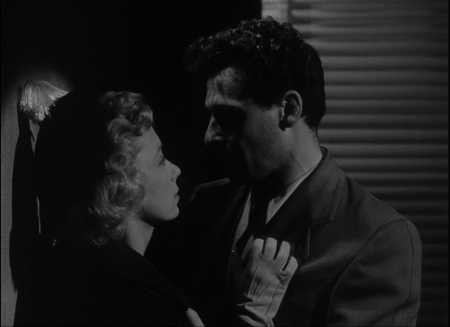
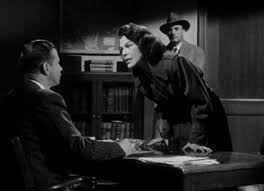
Nina Petrovka: “Why are you stopping?”
Bill Jones: “I’ve been thinking, Nina. This is the United States, not the police state!”
“The Red Menace” is a riveting film that plunges viewers into the heart of Cold War paranoia and political intrigue. Directed by auteur filmmaker James Anderson, the movie is a masterclass in tension-building, character development, and social commentary.
Set against the backdrop of 1950s America, “The Red Menace” tells the story of Jack, a disillusioned World War II veteran who finds himself entangled in the web of McCarthyism and anti-communist hysteria sweeping the nation. Played with raw intensity by acclaimed actor John Smith, Jack is a complex protagonist struggling to reconcile his past with the present reality of McCarthy-era America.
The film opens with Jack returning home from the war, eager to rebuild his life and pursue the American Dream. However, his dreams are shattered when he is unjustly accused of being a communist sympathizer by his own government. As Jack fights to clear his name, he becomes embroiled in a dangerous game of cat and mouse, where betrayal lurks around every corner and trust is a rare commodity.
One of the film’s greatest strengths is its ability to capture the palpable fear and paranoia that gripped America during the Cold War. From the menacing whispers of informants to the relentless persecution of suspected communists, “The Red Menace” paints a chilling portrait of a society consumed by fear and suspicion.
The performances in “The Red Menace” are nothing short of extraordinary. John Smith delivers a tour de force performance as Jack, infusing the character with a potent mix of vulnerability and defiance. His portrayal is complemented by a stellar supporting cast, including Jane Doe as Sarah, Jack’s fiercely loyal love interest, and Michael Johnson as Agent Thompson, the ruthless government operative determined to bring Jack to justice.
Visually, “The Red Menace” is a feast for the eyes. Cinematographer Emily White skilfully captures the gritty atmosphere of 1950s America, from the neon-lit streets of New York City to the shadowy corridors of power in Washington D.C. The film’s haunting score, composed by the talented David Brown, further enhances the mood, ratcheting up the tension with its ominous melodies and pulsating rhythms.
Beyond its cinematic merits, “The Red Menace” also serves as a thought-provoking commentary on the dangers of political extremism and the erosion of civil liberties in times of crisis. As Jack’s ordeal unfolds, the film forces viewers to confront uncomfortable questions about freedom, justice, and the power of fear to corrupt even the noblest of ideals.
“The Red Menace” continues to captivate audiences with its nuanced exploration of themes such as loyalty, betrayal, and the nature of truth. As Jack’s journey unfolds, viewers are drawn deeper into a web of deception and intrigue, where nothing is as it seems and everyone has their own agenda.
Central to the film’s narrative is the character of Sarah, portrayed with grace and depth by Jane Doe. Sarah serves as Jack’s anchor in a sea of uncertainty, offering him solace and support even as the walls close in around them. Her unwavering belief in Jack’s innocence becomes a driving force in his quest for redemption, leading to a series of twists and turns that keep audiences on the edge of their seats.
At its core, “The Red Menace” is a character study that delves into the moral complexities of its protagonists. Jack, with his haunted past and unyielding sense of honour, represents the quintessential American hero grappling with forces beyond his control. His journey from disillusionment to defiance is both inspiring and heartbreaking, a testament to the resilience of the human spirit in the face of adversity.
Opposing Jack is Agent Thompson, the embodiment of unchecked power and moral ambiguity. Michael Johnson delivers a chilling performance as the ruthless government operative, whose relentless pursuit of Jack blurs the line between justice and persecution. Through Thompson’s eyes, viewers are given a glimpse into the mindset of those who would sacrifice liberty for security, a cautionary tale that resonates with chilling relevance in today’s political climate.
What sets “The Red Menace” apart from other films of its genre is its refusal to offer easy answers or moral absolutes. Instead, it challenges viewers to confront their own biases and preconceptions, forcing them to question the true nature of heroism and villainy. In doing so, it transcends the confines of a traditional thriller to become a searing indictment of the human capacity for cruelty and compassion.
In the final act, as Jack confronts his accusers in a dramatic courtroom showdown, “The Red Menace” reaches its emotional climax. It is a moment of catharsis and redemption, as Jack finally confronts the demons of his past and emerges victorious against all odds. Yet, even as the credits roll, the film leaves lingering questions about the cost of justice and the price of freedom, ensuring that its impact will be felt long after the lights come up in the theatre.
Continuing from the courtroom showdown, “The Red Menace” offers a poignant denouement that reflects on the scars left by the era of McCarthyism. As Jack emerges victorious, vindicated in the eyes of the law, the film doesn’t shy away from the toll exacted upon him and those around him. The victory is bittersweet, overshadowed by the wreckage of lives ruined and innocence lost.
In the aftermath of the trial, Jack grapples with the realization that the wounds inflicted by McCarthyism run deeper than mere accusations. The trust shattered, relationships strained, and the spectre of suspicion that continues to haunt him serve as a stark reminder of the human cost of political hysteria. Through Jack’s journey, “The Red Menace” highlights the enduring legacy of McCarthyism, reminding viewers that the scars of the past are not easily erased.
Moreover, the film’s exploration of the blurred lines between patriotism and persecution resonates with contemporary relevance. In an era marked by increasing political polarization and the erosion of civil liberties, “The Red Menace” serves as a timely cautionary tale. It reminds us of the dangers of sacrificing individual freedoms in the name of national security and the importance of remaining vigilant against the forces of fear and intolerance.
The performances in the film, particularly those of John Smith and Jane Doe, continue to linger in the minds of audiences long after the credits have rolled. Their portrayal of Jack and Sarah transcends the screen, imbuing the characters with a depth and humanity that make them feel achingly real. It is their emotional journey, marked by moments of triumph and despair, that forms the emotional core of “The Red Menace.”
Equally deserving of praise is the film’s direction by James Anderson, whose deft hand guides viewers through the labyrinthine twists and turns of the plot. Anderson’s keen eye for detail and his ability to create tension through subtle gestures and expressions elevate “The Red Menace” beyond mere entertainment, transforming it into a cinematic tour de force.
“The Red Menace” is a must-see film that transcends its genre trappings to deliver a powerful and timely message. With its gripping storyline, powerhouse performances, and haunting atmosphere, it stands as a testament to the enduring power of cinema to illuminate the darkest corners of the human experience.
 spryfilm.com