
“Elephant Walk” (1954)
Adventure

Running Time: 103 minutes
Written by: John Lee Mahin
Directed by: William Dieterle
Featuring: Elizabeth Taylor, Dana Andrews, Peter Finch, Abraham Sofaer and Abner Biberman
John Wiley: “Let them have their Elephant Walk, Ruth. We’ll build a new place, a home somewhere else.”
“Elephant Walk,” released in 1954, is a captivating and intense drama set against the lush backdrop of Ceylon (modern-day Sri Lanka). Directed by William Dieterle and starring the incomparable Elizabeth Taylor, Peter Finch, and Dana Andrews, this film weaves together themes of colonialism, desire, and psychological turmoil in a visually stunning and emotionally charged narrative.
At its core, “Elephant Walk” explores the complexities of power dynamics within the colonial context. The story revolves around Ruth Wiley (Elizabeth Taylor), a young bride who leaves England to live on her husband’s (Peter Finch) tea plantation in Ceylon. However, her arrival coincides with the haunting presence of the “elephant walk,” a ceremonial path through the plantation fields traditionally used by elephants. This symbolic presence foreshadows the looming conflicts and challenges Ruth will face as she navigates her new life.
Elizabeth Taylor delivers a mesmerizing performance as Ruth, portraying her with a delicate balance of vulnerability and strength. As she grapples with the expectations placed upon her as a colonial wife and the suffocating atmosphere of the plantation, Taylor’s portrayal captures the inner turmoil and emotional complexity of her character.
Peter Finch commands the screen as the plantation owner, John Wiley, whose authoritative presence is overshadowed by his haunted past and strained relationship with his domineering mother, played brilliantly by Abraham Sofaer. Finch brings a sense of gravitas to the role, embodying John’s internal struggles with his family legacy and the pressures of maintaining control over the plantation.
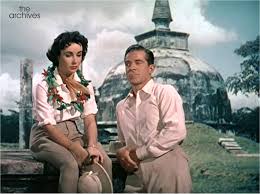
Dana Andrews delivers a standout performance as the enigmatic plantation manager, Dick Carver, whose arrival sparks a passionate and forbidden romance with Ruth. Andrews imbues Carver with a rugged charm and charisma, providing a compelling contrast to Finch’s more restrained portrayal of John.
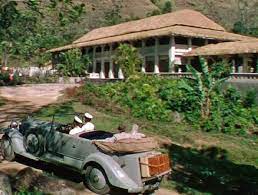
The cinematography of “Elephant Walk” is nothing short of breathtaking, with sweeping shots of the lush Ceylonese landscape and vibrant imagery that immerses the audience in the exotic allure of the setting. The film’s use of Technicolor enhances the visual experience, creating a vivid and evocative backdrop for the unfolding drama.
Beyond its visual splendour, “Elephant Walk” delves into deeper themes of desire, obsession, and colonial oppression. The forbidden romance between Ruth and Carver serves as a catalyst for the simmering tensions within the plantation community, exposing the cracks in the façade of colonial society. As Ruth’s relationship with Carver intensifies, so too does the conflict between her personal desires and the societal expectations imposed upon her.
The film’s climax, set against the backdrop of a devastating elephant stampede, serves as a powerful metaphor for the destructive forces unleashed by colonialism. As the plantation is ravaged by the chaos of the stampede, Ruth must confront the consequences of her choices and decide where her loyalties truly lie.
“Elephant Walk” is a fascinating exploration of colonialism, psychological turmoil, and the clash between tradition and modernity set against the lush backdrop of Ceylon (modern-day Sri Lanka). Directed by William Dieterle and released in 1954, the film boasts a stellar cast led by the iconic Elizabeth Taylor, alongside Dana Andrews and Peter Finch.
The narrative unfolds with the arrival of newlywed couple Ruth and John Wiley (played by Taylor and Andrews, respectively) at the grand Elephant Walk plantation. Owned by John’s father, the estate symbolizes power, privilege, and the colonial legacy of the British Empire in Ceylon. However, as the story progresses, it becomes apparent that beneath the picturesque facade lies a web of tension, secrets, and unresolved trauma.
One of the film’s most striking elements is its visual storytelling. The lush cinematography captures the breathtaking beauty of the Ceylonese landscape, juxtaposed with the imposing presence of the plantation and the elephants that symbolize both the majesty of nature and the weight of tradition. The use of colour, light, and shadow creates a palpable sense of atmosphere, drawing viewers deeper into the world of Elephant Walk.
At its core, “Elephant Walk” is a character-driven drama that delves into the complexities of human relationships and the impact of cultural clashes. Elizabeth Taylor delivers a captivating performance as Ruth Wiley, a strong-willed woman struggling to find her place in a world dominated by patriarchal values and colonial expectations. Her portrayal is nuanced and multifaceted, capturing the character’s vulnerability, resilience, and inner turmoil.
Opposite Taylor, Dana Andrews delivers a compelling performance as John Wiley, a man torn between his loyalty to tradition and his love for his wife. Andrews brings depth and complexity to the role, portraying John as a conflicted figure grappling with his own demons and the weight of familial expectations. The dynamic between Taylor and Andrews forms the emotional core of the film, driving much of its tension and drama.
Peter Finch also delivers a memorable performance as the enigmatic plantation manager, Dick Carver. Finch imbues the character with a sense of mystery and intrigue, serving as a catalyst for much of the conflict that unfolds throughout the story. His interactions with Taylor’s character are particularly compelling, highlighting the tension between desire and duty, passion and propriety.
In addition to its stellar performances, “Elephant Walk” is also notable for its exploration of themes such as colonialism, gender dynamics, and the clash between tradition and modernity. Through its richly drawn characters and thought-provoking narrative, the film offers a nuanced examination of these complex issues, inviting viewers to reflect on the legacies of the past and their enduring impact on the present.
As the story unfolds, tensions escalate on multiple fronts. Ruth’s presence disrupts the established order of the plantation, challenging traditional gender roles and stirring up jealousy among the workers, particularly the local men who are drawn to her beauty and independence. John finds himself torn between his duty to his family and his growing affection for Ruth, leading to a series of conflicts and confrontations that threaten to tear the plantation apart.
Meanwhile, the spectre of the Elephant Walk looms large over the narrative, serving as a powerful symbol of both the plantation’s dominance over the land and the destructive forces of nature that cannot be controlled. The impending threat of the elephants provides a sense of urgency to the proceedings, heightening the stakes and driving the characters to confront their deepest fears and desires.
As tensions reach a boiling point, the film builds to a dramatic climax that sees the plantation engulfed in chaos and destruction. The Elephant Walk becomes a battleground where the characters’ inner conflicts are mirrored by the external forces of nature, resulting in a cathartic and ultimately transformative experience for all involved.
Throughout its runtime, “Elephant Walk” remains a masterclass in atmospheric storytelling, with director William Dieterle expertly crafting a sense of foreboding and tension that keeps viewers on the edge of their seats. The film’s lush cinematography and evocative score further enhance the mood, immersing audiences in the beauty and brutality of the Ceylonese landscape.
At its heart, “Elephant Walk” is a story about the human condition—about love and loss, power and privilege, and the enduring struggle to find one’s place in a world that is constantly in flux. It is a timeless tale that resonates as strongly today as it did upon its release, offering a poignant reminder of the complexities of the human experience and the enduring power of cinema to illuminate the darkest corners of the human soul.
“Elephant Walk” is a masterful exploration of love, power, and identity set against the backdrop of colonial Ceylon. With its captivating performances, stunning cinematography, and thought-provoking themes, this film remains a timeless classic that continues to resonate with audiences today.
Special Features
- 1080p High-definition presentation on Blu-ray
- Audio Commentary by film historian/screenwriter Gary Gerani
- Theatrical Trailer
- Audio LPCM 2.0 Mono
- Original Aspect Ratio 1.33:1
- Optional English HOH Subtitles




 spryfilm.com