
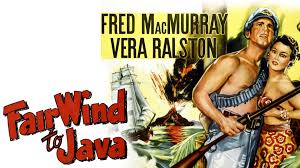
“Fair Wind to Java” (1953)
Adventure

Running Time: 92 minutes
Written by: Garland Roark
Directed by: Joseph Kane
Featuring: Fred MacMurray and Vera Ralston
Tagline: “ADVENTURE…SPECTACLE…SAVAGE LOVE!”
Critical Commentary
“Fair Wind to Java” is a classic adventure film released in 1953, directed by Joseph Kane and starring Fred MacMurray, Vera Ralston, and Robert Douglas. Set in the early 19th century, the movie takes viewers on a thrilling journey through the treacherous waters of the Java Sea, where a group of adventurers seeks to recover a valuable cargo from a sunken ship.
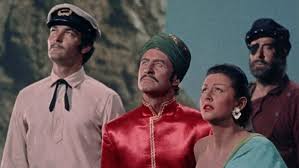
The film opens with Captain Boll (Fred MacMurray), a rugged and experienced seafarer, who is hired by wealthy plantation owner Beauregard Burnside (Robert Douglas) to salvage a shipment of priceless pearls lost in a shipwreck off the coast of Java. Boll, eager to redeem his tarnished reputation and make a fortune, assembles a diverse crew of sailors, including the resourceful Malay princess Kim Kim (Vera Ralston), the grizzled first mate O’Brien (Victor McLaglen), and the charming Dutch officer Van Weyden (John Russell).
As the crew sets sail aboard the schooner “Dragon,” they encounter a series of challenges and obstacles that test their courage, skill, and loyalty. From fierce storms and deadly sea creatures to rival treasure hunters and hostile natives, Captain Boll and his companions must navigate a perilous course fraught with danger at every turn.
One of the film’s most captivating elements is its breathtaking cinematography, which captures the beauty and brutality of the ocean in stunning detail. The vast expanse of the Java Sea is rendered with breathtaking realism, immersing viewers in the majesty of the maritime world and the awe-inspiring power of nature. From sweeping aerial shots of the schooner sailing across the open water to intense close-ups of the crew battling the elements, every frame is a testament to the skill and artistry of the filmmakers.
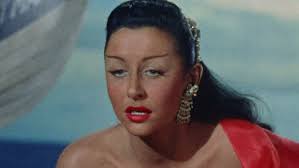
In addition to its visual spectacle, “Fair Wind to Java” boasts a strong cast of characters whose individual quirks and conflicts drive the narrative forward. Fred MacMurray delivers a commanding performance as Captain Boll, portraying him as a ruggedly charismatic leader whose steely determination is matched only by his fierce loyalty to his crew. Vera Ralston shines as the resourceful and independent Kim Kim, whose sharp wit and cunning instincts make her a formidable ally in the quest for treasure. And Robert Douglas brings a touch of villainy to the role of Beauregard Burnside, whose ruthless pursuit of wealth threatens to tear apart the fragile bonds of trust and camaraderie that hold the crew together.
At its core, “Fair Wind to Java” is a classic tale of adventure and redemption, a timeless story of ordinary men and women pushed to the limits of their endurance in pursuit of a dream. As Captain Boll and his crew battle against the forces of nature and the machinations of their enemies, they discover within themselves the courage, resilience, and sense of purpose needed to overcome seemingly insurmountable odds. And in the end, they emerge victorious not only in their quest for treasure but also in their journey towards self-discovery and self-realization.
Beyond its surface adventure, “Fair Wind to Java” also delves into deeper themes of camaraderie, sacrifice, and the pursuit of dreams. Each character aboard the “Dragon” represents a different facet of the human experience, from Captain Boll’s unwavering determination to Kim Kim’s resilience in the face of adversity.
One of the film’s most compelling aspects is its exploration of cultural diversity and cooperation. The crew of the “Dragon” is comprised of individuals from various backgrounds and nationalities, including Americans, Malays, Dutch, and others. Despite their differences, they must learn to work together as a cohesive unit in order to achieve their common goal. This message of unity and solidarity is particularly relevant in today’s increasingly interconnected world, where cooperation and understanding among people of different cultures and backgrounds are more important than ever.
Moreover, “Fair Wind to Java” offers a fascinating glimpse into the historical context of the early 19th century, a time of great upheaval and exploration in the maritime world. The film’s depiction of life aboard a sailing vessel, complete with authentic period costumes, sets, and props, provides viewers with a vivid sense of the challenges and hardships faced by sailors during this era. From the intricacies of navigation and seamanship to the harsh realities of life at sea, every aspect of maritime life is brought to life with remarkable attention to detail.
In addition to its historical and cultural significance, “Fair Wind to Java” also delivers plenty of pulse-pounding action and suspense. From thrilling ship-to-ship battles to heart-stopping encounters with deadly sea monsters, the film is packed with edge-of-your-seat excitement that will keep viewers on the edge of their seats from start to finish. The climactic salvage operation, in which Captain Boll and his crew must brave treacherous waters and outwit their adversaries to recover the lost pearls, is particularly exhilarating and showcases the film’s technical prowess and visual effects.
As the story of “Fair Wind to Java” unfolds, the characters undergo profound personal transformations, deepening the emotional resonance of the film. Captain Boll, initially driven solely by his desire for redemption and riches, gradually learns the true value of friendship, honor, and sacrifice through his interactions with his diverse crew. His journey from a hardened, solitary figure to a compassionate leader willing to risk everything for the sake of his comrades is both inspiring and heartwarming.
Similarly, Kim Kim evolves from a cunning opportunist motivated by self-interest to a selfless heroine who puts the needs of others above her own. Her growing bond with Captain Boll and the rest of the crew reflects the film’s underlying message of unity and cooperation, demonstrating that even the most unlikely allies can come together to achieve extraordinary things.
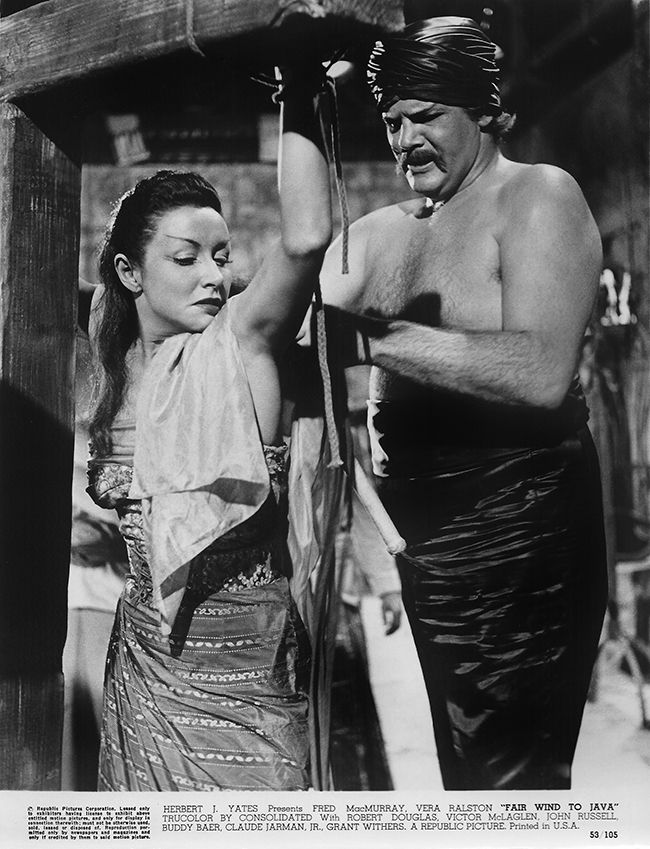
At the same time, the film does not shy away from exploring the darker aspects of human nature, particularly greed and betrayal. Beauregard Burnside, the film’s primary antagonist, serves as a cautionary tale of the corrosive effects of unchecked ambition and moral corruption. His relentless pursuit of wealth and power ultimately leads to his downfall, serving as a stark reminder of the consequences of selfishness and hubris.
In its final act, “Fair Wind to Java” delivers a satisfying conclusion that ties up loose ends while leaving room for reflection and contemplation. The successful salvage of the lost pearls represents not only a triumph of skill and ingenuity but also a victory of the human spirit over adversity. As the crew of the “Dragon” sails off into the sunset, their future uncertain but filled with promise, viewers are left with a sense of hope and optimism that transcends the confines of the screen.
“Fair Wind to Java” is a thrilling and immersive cinematic experience that transports viewers to a bygone era of seafaring adventure and exploration. With its stunning visuals, memorable characters, and pulse-pounding action, it is a film that continues to captivate audiences over half a century after its original release. Whether you’re a fan of classic cinema, a lover of high-seas adventure, or simply looking for an exhilarating escape from reality, “Fair Wind to Java” is a voyage well worth taking.
Special Features
- 1080p High-definition presentation on Blu-ray from a 4K scan of a 3-strip Trucolor negative (2017)
- NEW Audio Commentary by film historian Samm Deighan
- Audio LPCM 2.0 Mono
- Original Aspect Ratio 1.37:1
- Optional English HOH Subtitles


 spryfilm.com