
“For a Few Dollars More” (1965)
Western

Running Time: 132 minutes
Written by: Luciano Vincenzoni and Sergio Leone
Directed by: Sergio Leone
Featuring: Clint Eastwood, Lee Van Cleef, Gian Maria Volonté, Mara Krup, Luigi Pistilli, Klaus Kinski, Josef Egger, Panos Papadopulos, Benito Stefanelli, Robert Camardiel, Aldo Sambrell, Luis Rodríguez and Mario Brega
Title card: “Where life had no value, death, sometimes, had its price. That is why the bounty killers appeared.”
Critical Commentary
“For a Few Dollars More” stands as a pivotal masterpiece within the Spaghetti Western genre, solidifying Sergio Leone’s reputation as one of the greatest directors in cinema history. Released in 1965, it’s the second instalment in Leone’s “Dollars Trilogy” and serves as a quintessential example of the genre’s gritty, morally ambiguous storytelling, iconic cinematography, and unforgettable musical score.
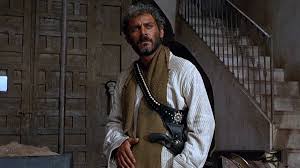
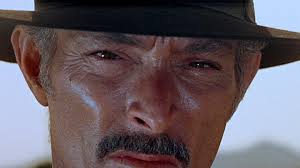
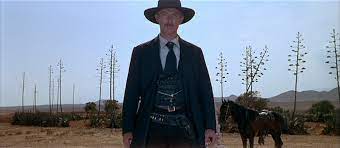
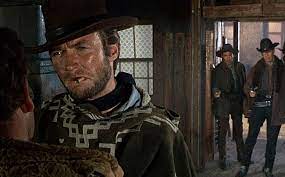
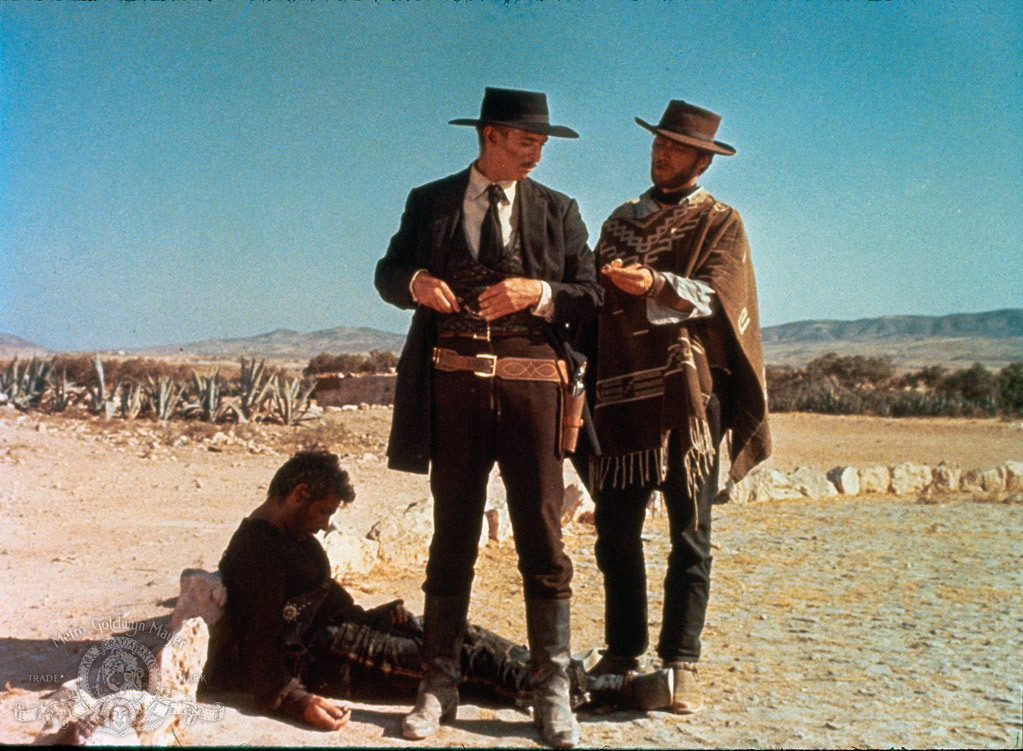
At its core, “For a Few Dollars More” is a tale of two bounty hunters, played impeccably by Clint Eastwood as the enigmatic “Man with No Name” and Lee Van Cleef as the seasoned and relentless Colonel Douglas Mortimer. Their paths cross in pursuit of the notorious outlaw, El Indio, portrayed with chilling intensity by Gian Maria Volontè. The film’s narrative intricately weaves together themes of vengeance, greed, and redemption against the backdrop of the unforgiving landscape of the American West.
Leone’s direction is nothing short of masterful, employing his trademark use of extreme close-ups, sweeping vistas, and prolonged silences to create a palpable sense of tension and atmosphere. The film’s pacing is deliberate, allowing each scene to unfold with a sense of impending doom, building towards the climactic showdown between Eastwood and Van Cleef, which remains one of the most iconic duels in cinematic history.
Ennio Morricone’s haunting musical score is integral to the film’s success, with its unforgettable whistling motif and twangy guitar riffs perfectly capturing the essence of the Wild West and elevating the film to a level of mythic grandeur. Morricone’s score not only complements the action on screen but also serves as a character in its own right, imbuing each moment with an additional layer of depth and emotion.
One of the film’s greatest strengths lies in its character development, particularly the dynamic between Eastwood and Van Cleef’s characters. Despite their initially adversarial relationship, the film gradually reveals the complexities of their respective motivations, ultimately leading to a begrudging respect and camaraderie that transcends the boundaries of the law.
The supporting cast, including Klaus Kinski as the deranged hunchback Wild, and Mario Brega as the sadistic gang member Nino, deliver memorable performances that further enrich the film’s rich tapestry of characters. Each actor brings a distinct presence to their role, adding depth and nuance to the film’s exploration of morality and justice in the lawless frontier.
The film’s exploration of morality is particularly fascinating, as it portrays a world where the distinction between right and wrong is often muddled by the harsh realities of survival. Eastwood’s character, often referred to simply as “Manco” or “The Man with No Name,” operates within a morally grey area, driven by personal gain rather than a sense of righteousness. Yet, as the story unfolds, glimpses of his underlying code of honour and empathy emerge, complicating the audience’s perception of him as a mere mercenary.
Similarly, Van Cleef’s Colonel Mortimer is a man driven by a deep-seated desire for revenge, fuelled by the tragic loss of his sister at the hands of El Indio. His pursuit of justice is relentless, yet tempered by a sense of duty and integrity that sets him apart from the more morally bankrupt characters populating the film’s world.
The character of El Indio himself is a fascinating study in villainy, portrayed with a magnetic charisma and a chilling disregard for human life. Volontè imbues the character with a sense of unpredictability and menace that makes him both captivating and terrifying to watch. His interactions with Eastwood and Van Cleef are fraught with tension, as they navigate a delicate dance of deception and manipulation in their quest to outsmart one another.
Leone’s use of symbolism and visual metaphor further enriches the film’s narrative, with recurring motifs such as timepieces and musical instruments serving as powerful thematic devices. The motif of the pocket watch, in particular, serves as a poignant reminder of mortality and the passage of time, echoing the film’s exploration of the cyclical nature of violence and revenge.
From its breathtaking opening sequence to its explosive climax, “For a Few Dollars More” is a cinematic tour de force that continues to resonate with audiences today. Its influence can be felt in countless films and filmmakers who have sought to capture the same blend of style, substance, and spectacle that Leone so masterfully achieved.
Visually stunning and thematically resonant, “For a Few Dollars More” remains a timeless classic that continues to captivate audiences over half a century after its initial release. With its ground-breaking cinematography, unforgettable score, and compelling performances, it stands as a testament to the enduring power of cinema to transport viewers to another time and place, where the line between hero and villain is blurred, and justice is often found at the barrel of a gun.
Technical Commentary
Video
Arriving on Blu-ray “For a Few Dollars More” is presented in 1080p MPEG-4 AVC encoded high definition presentation in the original theatrical aspect ratio of 2.35:1 widescreen. The restoration looks remarkable at times. The colours are well reproduced and the cinematographic style is fantastic.
Audio
The release includes a selection of audio options: English DTS-HD Master Audio 5.1, and English DTS-HD Master Audio 2.0 Stereo. I suggest viewers opt for the original mono or stereo audio options instead. Optional English subtitles are provided.
Special Features
- Audio Commentary by Professor Sir Christopher Frayling
- The Christopher Frayling Archives: For a Few Dollars More
- A New Standard – Sir Christopher Frayling on For a Few Dollars More
- Back For More – Clint Eastwood Remembers For a Few Dollars More
- Tre Voci / Three Voices Remember For a Few Dollars More
- For a Few Dollars More: The Original American Release Version – featurette
- For a Few Dollars More Location Comparisons: Almeria, Spain 1965-2004 & 2005
- Radio Spots
- Theatrical Trailers
- Double Bill Trailer

 spryfilm.com